How to Care for Bullet-Casing and Brass Jewelry in 2026
Keep spent-bullet brass beautiful with simple daily habits, cautious cleaning (no soaking), and annual professional checks to preserve patina and prevent green residue.

1. Why bullet-casing brass deserves deliberate care
Each piece begins with a story: Reload Love writes that “each piece of our brass jewelry begins as a spent bullet casing, melted down and reborn into something new, carrying a quiet strength and a golden glow.” Brass is a living metal that will deepen in color over time; as Reload Love puts it, “with time and wear, your jewelry will deepen in color, developing a soft patina that tells its own story.” That patina is part of the appeal, but preserving whatever finish you prefer, bright shine or aged warmth, starts with everyday handling and cleaning choices.
2. Adopt prevention as your first line of defense
“Good care isn’t just about cleaning, it’s also about prevention,” a 2026 maintenance guide reminds readers. Simple daily habits make the biggest difference: wipe brass and copper pieces with a dry cloth before putting them away, and avoid prolonged contact with lotions, perfumes and chlorinated pools that accelerate oxidation. The original brand-post guidance specifically advises removing brass jewelry for showers, workouts and chlorinated water to minimize reaction and discoloration.
3. Remove jewelry for sweat, water and heavy activity
Oakcitygallery is blunt: “If you've had a day where you find yourself hot and sweaty, take your jewelry off, quickly rinse it with water then immediately dry your jewelry and put it away.” That same practical approach applies when you swim, shower, or do heavy manual work, situations the maintenance guide flags for removal. Treat sweaty or wet exposure as a trigger: remove, rinse if needed, and dry completely to prevent the chemical deposits that lead to green residue and accelerated tarnish.
4. How to dry bullet pendants properly (bail vs side-drill)
Practical orientation matters for bullet pendants. Oakcitygallery instructs: “If you forget and wear your bullet pendant in the shower wipe it dry immediately. If your bullet pendant has a bail, turn your pendant upside down and let any water drain out. If it's a side drill, turn it sideways. You may want to prop the bullet up for several minutes, then dry it with a soft cloth.” Those few minutes of drainage and gentle drying prevent trapped moisture around bails or through-drilled holes, which otherwise encourages oxidation and tarnish.
5. Quick cleaning: cloths and surface polish
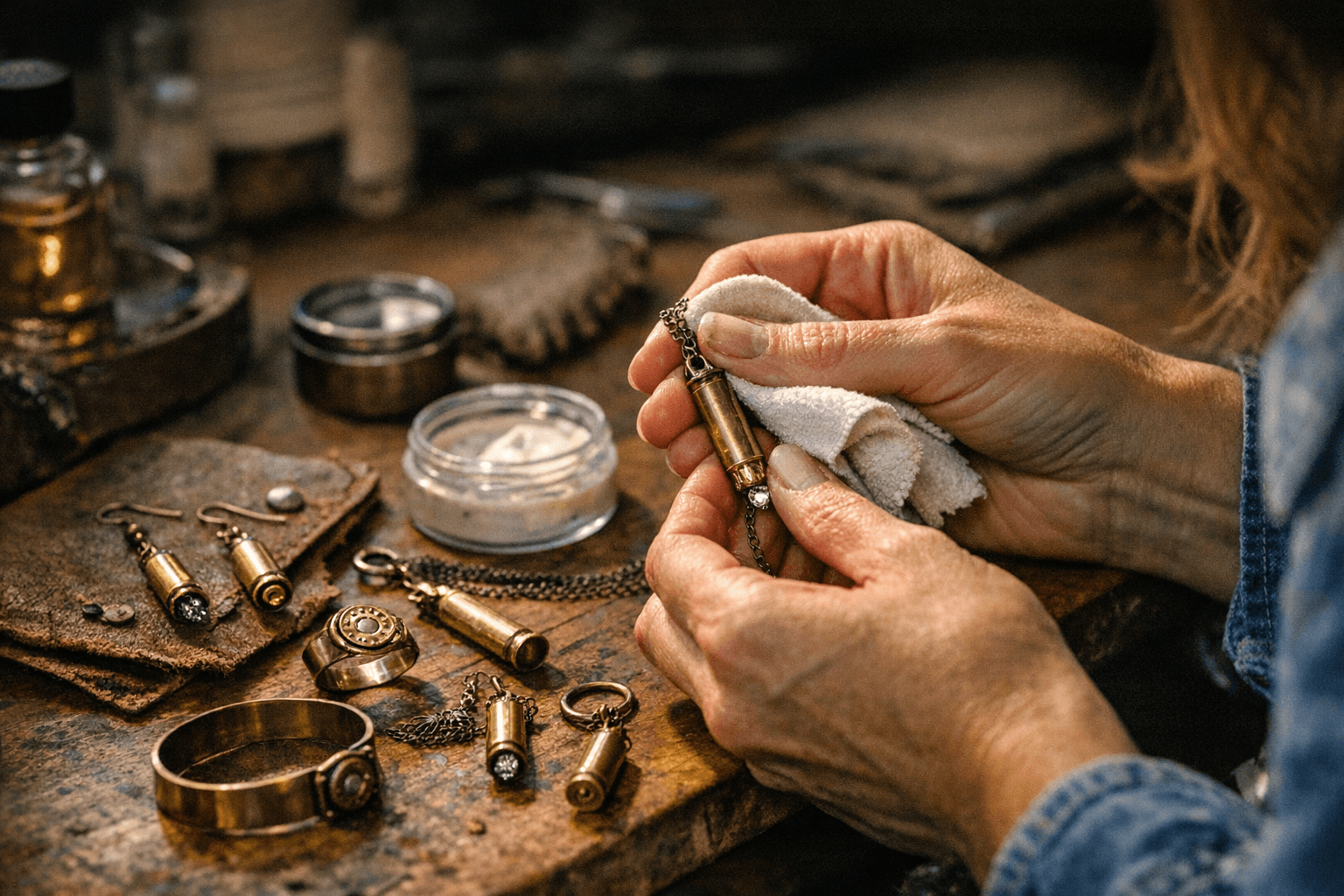
For routine refreshes, keep a soft polishing cloth on hand. Reload Love recommends a “Sunshine cloth” for quick polishing; First Class Watches advises silver owners to “Use a silver-specific polishing cloth. Avoid harsh chemical dips for frequent use.” For textured or detailed surfaces, work gently into crevices with a cloth or soft brush rather than aggressive scrubbing to lift surface tarnish without abrading softer finishes or platings.
6. Brand-recommended natural cleaner ingredients (know the limits)
Reload Love lists a “Natural Brass Cleaner Recipe” and names vinegar, salt and flour among the ingredients they use for a gentle homemade option; their materials note the formula is intended to “lift away tarnish and restore your jewelry’s glow.” The site’s excerpts include ingredients only; the step-by-step method was not supplied here, so do not attempt a full recipe unless you obtain and follow the brand’s exact instructions. If you trial any homemade cleaner, spot-test on an inconspicuous area and avoid use on any piece with delicate finishes or porous gemstones.
7. Strong cautions: no soaking, avoid harsh dips, and protect porous gems
Oakcitygallery warns directly: “Don't clean your bullet by soaking it in any kind of liquid cleaner.” That warning is aimed at porous gemstones and softer inlays that can absorb cleaners and be permanently damaged: “Porous gemstones will absorb cleaning chemicals and possibly damage the gemstone, dull or discolor them. Once this happens you'll most likely never get your gemstone back to its original condition.” First Class Watches echoes the caution for metal care: “Avoid harsh chemical dips for frequent use.” In short, clean brass topically and gently; never immerse mixed-metal, gem‑set pieces with unknown stone types.
8. Gemstone-specific rules you must follow
When brass jewelry includes stones, follow stone-specific guidance. First Class Watches lists stones “Safe for gentle soap and water: Diamonds, Sapphires, Rubies.” Conversely, they warn to “Avoid soaking or water exposure: Pearls, Opals, Emeralds, Turquoise.” Oakcitygallery’s porous-stone warning reinforces that soaking and strong cleaners can permanently dull or discolor vulnerable gems. If you’re unsure of a stone’s porosity or setting security, professional cleaning is the safer route.
9. Storage: airtight for brass shine, anti‑tarnish for silver
Store cleaned brass to lock in the finish: Oakcitygallery recommends that “Once you've cleaned your bullet casing, you'll want to retain the shine by storing it in an air tight baggie or container.” For silver elements, First Class Watches advises storing “in anti-tarnish pouches when not worn.” Keep treated and untreated pieces separated, especially those with platings or sealants, so finishes don’t rub against one another in storage and risk abrasion or transfer.
10. Know your finish: ProtectaClear, gold plating, and product disclosures
Some manufacturers apply protective treatments. Reload Love notes some pieces “receive a clear protective coat of ProtectaClear or a layer of gold plating to help preserve their finish, particularly for pieces that rest directly against the skin.” They explicitly state that treated items “will always be noted in its description on our website,” so check product listings before you buy. If a piece is plated or sealed, follow the brand’s care notes for that finish rather than generic brass advice.
11. When to take it to a professional, services and frequency
“While home care is important, it doesn’t replace professional expertise. Annual or bi-annual servicing can prevent costly repairs down the line,” First Class Watches counsels. Professional services commonly include ultrasonic and steam cleaning; stone tightening and setting checks; clasp and chain inspections; polishing and refinishing; and rhodium plating for white gold. First Class Watches adds that “Professional jewellers can identify issues you may not see, such as weakened prongs or hairline cracks,” making a periodic check essential for any gem-set or frequently worn piece.
12. Practical tools, provenance notes and a final word on gifting
Keep a small kit: a soft Sunshine cloth, a silver-specific polishing cloth if you also own silver, and a soft brush for textured work. Be mindful of provenance and product notes, Reload Love frames its pieces as recycled spent casings with a patina-forward aesthetic, and lists a physical address at 4001 Osuna Rd. NE, Albuquerque, NM 87109 on its site. The brand also runs promotions such as “FREE SHIPPING on all orders over $100.” If you’re gifting brass jewelry, remember that service is part of the present: “If you’re gifting jewellery in 2026, maintenance is part of the gift. Including care instructions or a professional cleaning service shows foresight and care. It also helps your gift remain meaningful for years,” the maintenance guide advises.
Conclusion Brass made from spent bullet casings is resilient and characterful, but it’s not maintenance-free. Keep it dry, wipe it after wear, polish gently with the right cloth, avoid soaking, especially around porous gems, and bring it to a professional annually or bi‑annually for inspections. Follow manufacturer notes (ProtectaClear or plating disclosures), and you’ll preserve both the metal’s glow and the story the piece carries.
This article was produced by Prism’s automated news system from verified source data, official records, and press releases, then run through automated quality and moderation checks before publishing. The system is built and supervised by the people who set the standards it runs under. Read our full AI policy.
Did this article answer your question?