How to Clean and Protect Heirloom Jewelry for Future Generations
Wrong cleaning technique can destroy an heirloom in minutes. Here's exactly how to clean, protect, and store pieces that carry both memory and material value.
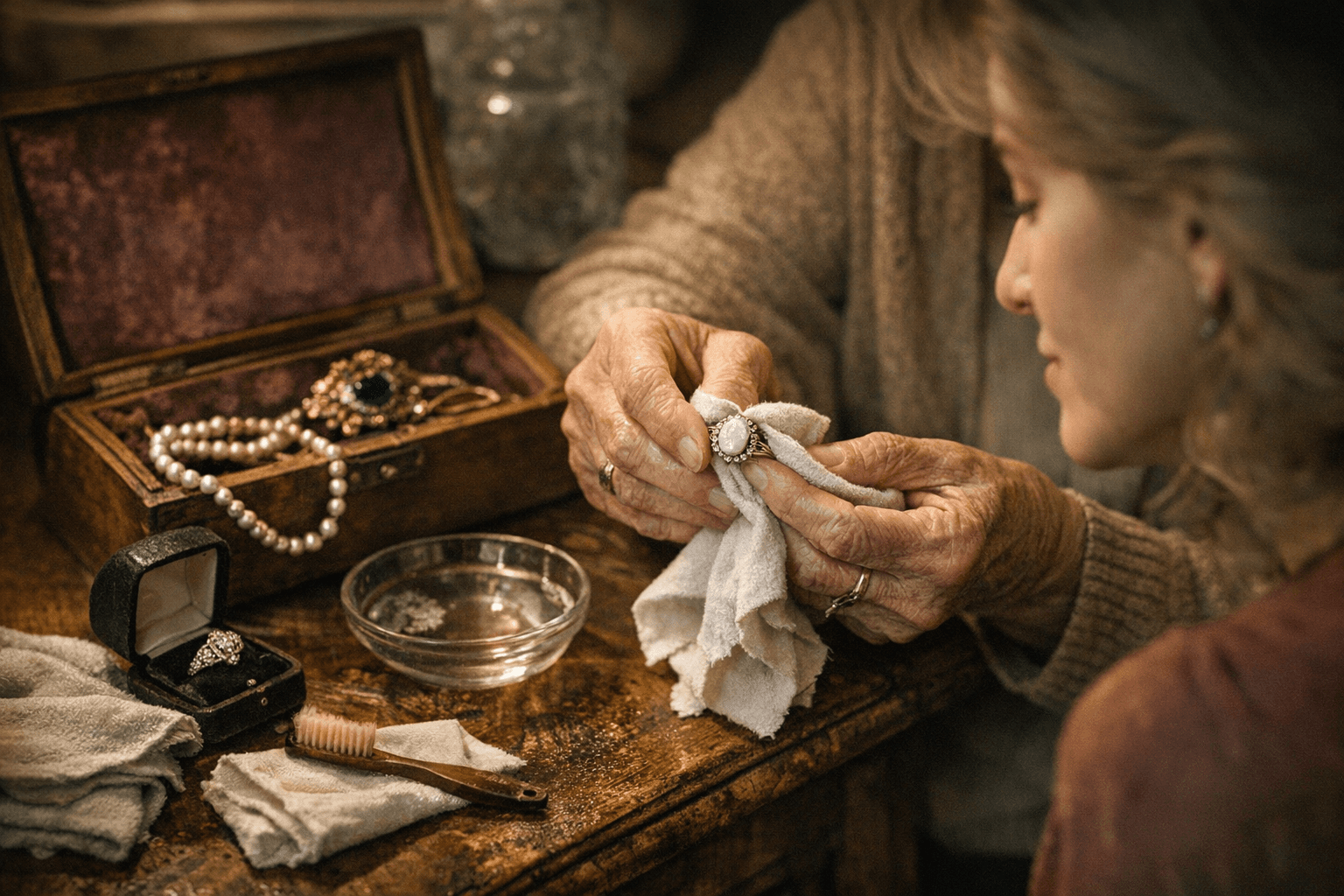
Heirloom jewelry is more than an accessory. Whether it's a simple gold bracelet passed down through three generations or an intricate antique ring set with stones whose provenance traces back decades, the physical piece holds something impossible to replace: memory. That dual weight, sentimental and material, is precisely why cleaning and caring for these pieces demands a more conservative, more considered approach than everyday jewelry maintenance.
Why Conservative Care Matters
Older and heirloom jewelry often has weaker settings or glued components that can come loose, and ultrasonic vibrations, for example, can dislodge stones or damage solder points. What works perfectly well on a modern platinum ring could destroy a century-old piece with a foiled backing or a heat-treated stone. The starting principle for any heirloom is restraint: when in doubt, do less. Keeping heirloom jewelry clean is crucial for maintaining its beauty and preventing long-term damage, but the right method depends entirely on the materials involved.
The At-Home Cleaning Protocol
For most pieces, the safest and most effective at-home method remains disarmingly simple. A solution of warm water and mild, non-abrasive soap works well for most types of jewelry, according to Kenworks Jewelry. Use a soft brush, such as a toothbrush with gentle bristles, to remove dirt and debris from crevices and intricate settings. The toothbrush's bristle flexibility makes it ideal for navigating prong settings and engraved surfaces without applying the kind of pressure that could warp delicate metalwork.
After cleaning, pat the piece dry with a soft, lint-free cloth rather than rubbing. Pat the jewelry dry and leave it to air dry. Rushing the drying process with heat, including a hair dryer on even a low setting, introduces exactly the kind of thermal risk you're trying to avoid.
Cleaning frequency is worth thinking about deliberately. Once every six weeks should be sufficient, or depending on wear, tear, and storage. If you can see visible buildup around a setting or along a chain link, that's your cue; don't wait for a scheduled clean if the piece looks like it needs one.
Gemstone-Specific Cautions: Check Before You Clean
Before applying any cleaning solution to a piece set with stones, Kenworks Jewelry advises ensuring the gemstones are securely mounted. A loose stone in a cleaning bath can be lost entirely. Run a fingernail gently around each setting and listen for any movement or clicking; that's a sign the piece needs a professional inspection before cleaning proceeds at home.
Knowing which stones tolerate which methods is equally important. The GIA advises that many gems are susceptible to heat and temperature changes; these include tanzanite, feldspar (sunstone and moonstone), fluorite, iolite, kunzite, lapis lazuli, malachite, opal, topaz, turquoise, and zircon. For such stones, even warm-water soaks should be kept brief. Some gemstones, such as emeralds, rubies, and sapphires, receive oil treatments to enhance their color and transparency, and certain cleaning processes can drive out that oil, producing some very sorry versions of your prized treasures in need of professional re-oiling.
One category deserves special mention: organic gem materials. Pearls, coral, tortoise shell, ivory, shell cameos, jet, and amber should not be put in an ultrasonic cleaner. For pearl strands specifically, the soap-and-water method works, but ensure the piece is fully dry before returning it to storage, as moisture trapped in the silk thread can weaken the strand over time.
When to Call a Professional
Kenworks Jewelry is direct on this point: for more delicate or valuable items, professional cleaning may be the safest option. That category is broader than most people assume. It encompasses pieces with glued settings, older prong work, enamel decoration, foiled-back stones, and any item you cannot fully identify by metal type and gemstone variety.
Two advanced methods, steam cleaning and ultrasonic cleaning, can restore a piece's brilliance without risking damage, but they should only be performed by experienced professionals. Professional jewelers have the training and expertise to know which method is safe for each specific piece of jewelry; using an ultrasonic cleaner on the wrong gemstone can crack it, and using steam on a heat-treated stone can damage it.
Antique or heirloom jewelry with older settings may not withstand the vibrations of ultrasonic cleaning and should be cleaned with gentler methods. If you're uncertain about a piece's construction, err firmly on the side of the soap-and-water method or a jeweler's bench.
It is important to consult a gemologist or a professional jeweler when in doubt, ensuring you preserve the integrity and beauty of your precious pieces. A GIA-certified gemologist can identify treatments and inclusions that aren't visible to the naked eye, information that determines which cleaning method is safe and which could cause irreversible damage.
Chemicals to Avoid Entirely
The at-home environment is full of hazards for antique and heirloom jewelry that most people never consider. Chlorine and bleach will damage gold; both are powerful oxidizing agents with the capacity to dissolve gold and tarnish silver, and even prolonged exposure to chlorinated pool water can make gold brittle. Do not clean antique jewelry with hydrogen peroxide, as it will tarnish silver and discolor antique gem foiling; ammonia can damage porous gems like opal, lapis, malachite, and pearls. Remove any heirloom piece before swimming, cleaning the house, applying perfume, or using nail polish remover.
Store Jewelry Properly: The Details That Prevent Damage
Proper storage is another key factor in preserving heirloom jewelry. Pieces stored improperly can become scratched, tarnished, or damaged over time, notes Kenworks Jewelry. The solution is both specific and low-cost: store each piece individually in soft cloth pouches, or in a jewelry box with compartments lined with fabric. That separation prevents items from rubbing against one another and causing scratches. Fine jewelry made from soft materials such as high-karat gold and soft porous stones are susceptible to scratch and wear, and diamonds from a neighboring piece can leave scratches.
Beyond separation, the environment itself matters. Keep humidity levels stable between 45 and 50 percent and temperatures between 65 and 75 degrees Fahrenheit. Store jewelry away from direct sunlight and heat, as prolonged exposure can accelerate tarnishing, especially for certain metals; a cool, dark place is ideal for preserving quality.
For silver pieces, anti-tarnish strips are a practical addition. Anti-tarnish tissues neutralize harmful compounds in the air, while silica gel packets absorb moisture. Replace anti-tarnish strips every six to twelve months for maximum effectiveness.
One nuance worth knowing for antique pieces specifically: antique jewelry should be left as-is whenever possible; the tarnish on old gold and silver can be an important mark of authenticity and charm, and antique gold in particular will develop a warm patina over time that will be lost if the piece is subjected to tarnish removal. Not every sign of age is damage.
Documenting What You're Protecting
A piece of heirloom jewelry carries meaning that outlasts its wearer, and that meaning is easier to pass on when it's written down. Photograph the item and make a record of who owned it; if you aren't sure, research the style by exploring vintage jewelry resources, and by making such documentation, the family history associated with the item will be permanently saved in physical form, even if some accident should befall the piece. A professional appraisal adds an additional layer: it establishes monetary value, informs insurance decisions, and gives future generations a foundation for understanding what they've inherited.
Caring for heirloom jewelry requires a combination of attention to detail, regular maintenance, and thoughtful storage. These efforts protect the physical beauty of a piece while safeguarding the sentimental value it holds. Whether it's a simple gold bracelet or an intricate antique ring, thoughtful care ensures that these treasures continue to shine brightly for generations. The most important cleaning tool isn't a brush or a solution; it's knowing when to leave the piece alone, and when to put it in the hands of someone who understands it as well as you do.
This article was produced by Prism’s automated news system from verified source data, official records, and press releases, then run through automated quality and moderation checks before publishing. The system is built and supervised by the people who set the standards it runs under. Read our full AI policy.
Did this article answer your question?