How to Commission Bespoke Jewelry That Tells Your Family Story
The strongest heirloom commissions begin not with a design but with a story; here is the complete playbook, from emotional brief to contract red flags, to get yours right.
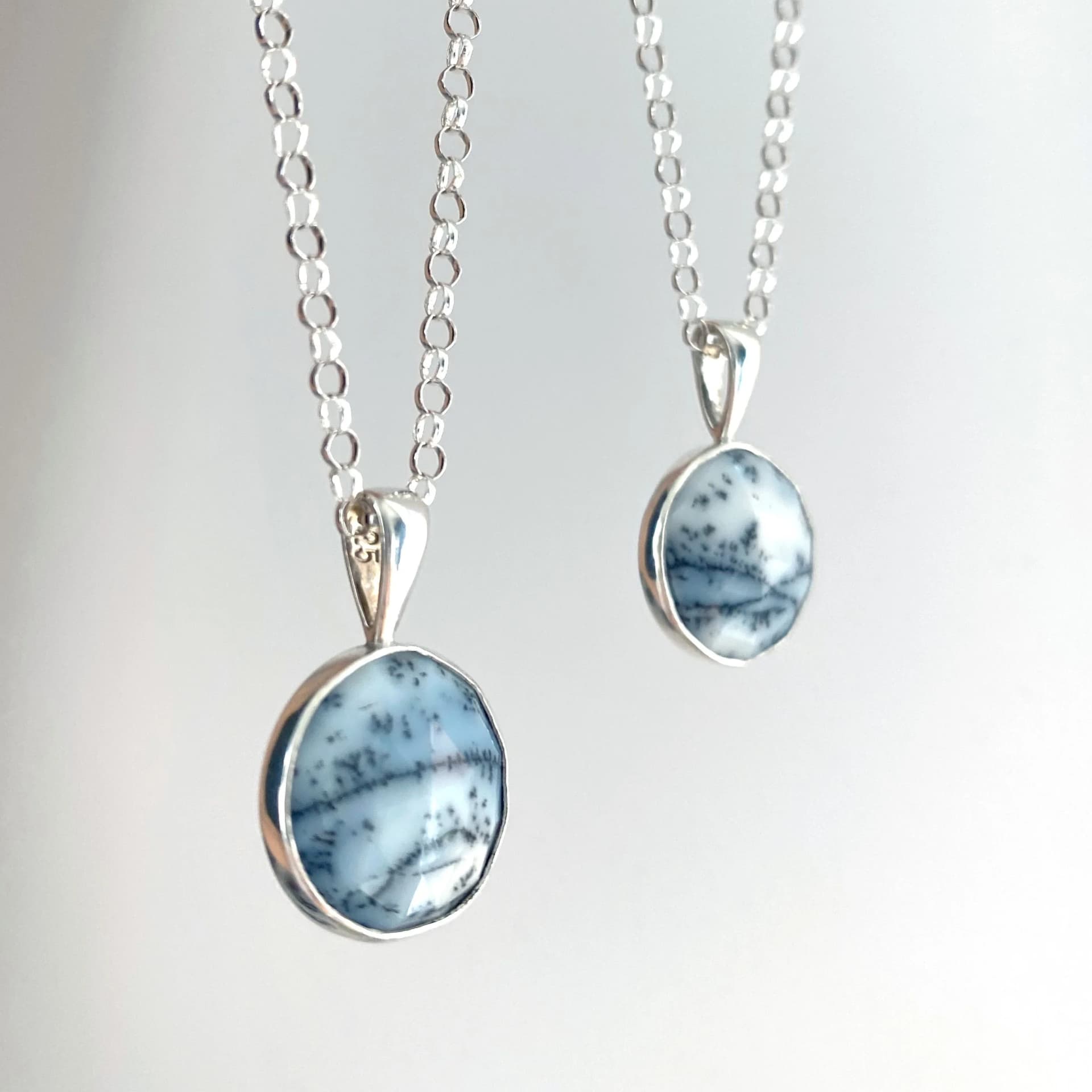
Every family has a piece of jewelry that carries more weight than gold can account for. A grandmother's ring, worn thin at the shank from decades of dish-washing and garden work. A brooch passed from mother to daughter on the morning of a wedding. These objects outlive the people who wore them because someone, at some point, chose to make something that was meant to last. Commissioning bespoke jewelry is how you add a new chapter to that story rather than simply inheriting someone else's.
The process is more navigable than most people assume, but it rewards preparation. What separates a piece that becomes a true heirloom from one that simply looks expensive is almost always the quality of the brief you bring to your jeweler, not the size of the budget.
Start With the Emotional Brief, Not the Design
Before you think about metal alloy, setting style, or stone cut, answer this question in writing: what must this piece represent? Not what you want it to look like, but what it must mean. This is your emotional brief, and it is the single most important document in the entire commission.
A good emotional brief addresses these core questions:
- What story, moment, or person is this piece meant to honor?
- Who will wear it, and on what occasions — daily, ceremonial, or as a future heirloom stored more than worn?
- What symbols, motifs, or materials already carry meaning for your family: a specific stone, a recurring flower, a place, an inscribed date?
- Should it incorporate any existing heirloom elements, such as a stone from a ring that can no longer be worn comfortably?
- What feeling should the wearer have when they put it on?
Write this brief in two to three sentences of plain language, then supplement it with a visual mood board. A curated folder of saved images, whether of antique jewelry, architectural details, botanical illustration, or even a landscape that matters to the family, gives a skilled jeweler the emotional register of what you are after. This combination of narrative and visual reference is what distinguishes a meaningful commission from a shopping transaction.
The Commission Brief Template
Keep this template and return to it at every stage of the process. It is designed to be filled in before your first consultation and refined after it.
*Personal narrative:* In two to three sentences, describe the story or person this piece is meant to represent.
*Occasion and wearer:* Who will wear this, and when? Daily wear places different demands on setting style and metal hardness than a piece worn only on significant occasions.
*Symbols and motifs:* List any specific elements that must be incorporated. Include heirloom materials — stones to be reset, a metal to be melted down and recast.
*Style references:* Attach three to five images that capture the aesthetic direction, even if they are not jewelry images at all.
*Metal preference:* State your first and second choices (for example: 18-karat yellow gold; alternatively, 14-karat rose gold). Note whether recycled metal matters to you.
*Stone preference:* Name any specific stones. Note whether you require ethical certification: Fairtrade Gold, Fairmined certification, Kimberley Process compliance for diamonds, or a supplier certified by the Responsible Jewelry Council.
*Budget range:* State the range you are working within, not a single ceiling figure. A range enables a more honest conversation about what is achievable at each tier.
*Timeline:* Note any hard deadlines. Custom jewelry typically takes four to six weeks from an approved design to delivery; pieces involving complex stone sourcing or intricate fabrication can take considerably longer. Plan accordingly.
*Resizing and repair:* Note whether you want the jeweler to include future sizing and maintenance terms in the commission contract.
Setting a Realistic Budget
Bespoke jewelry pricing is layered. You are paying for design time, sourcing, skilled bench labor, metal weight, and stone cost — and those proportions shift significantly depending on the piece. As a rough orientation: simple commissions in sterling silver with semi-precious stones can begin around $500 to $1,000. Pieces in 18-karat gold with certified diamonds typically start at $3,000 to $5,000 and rise with complexity, carat weight, and the maker's reputation. Platinum commands a further premium because of its density and the additional bench skill required to work it. Share your range with the jeweler early; asking them to quote first, without context, almost always produces an uncomfortable conversation that could have been avoided.
Selecting the Right Maker
The best jeweler for your commission is not necessarily the most prominent. It is the one whose existing work demonstrates the specific skills your piece demands. A jeweler who excels at organic, nature-inspired forms may not be the right choice for a precise geometric design, and vice versa. Ask to see examples of comparable commissions, not just portfolio highlights. Pay attention to how they discuss previous clients' briefs: a jeweler who can articulate why certain design decisions were made is one who listens.
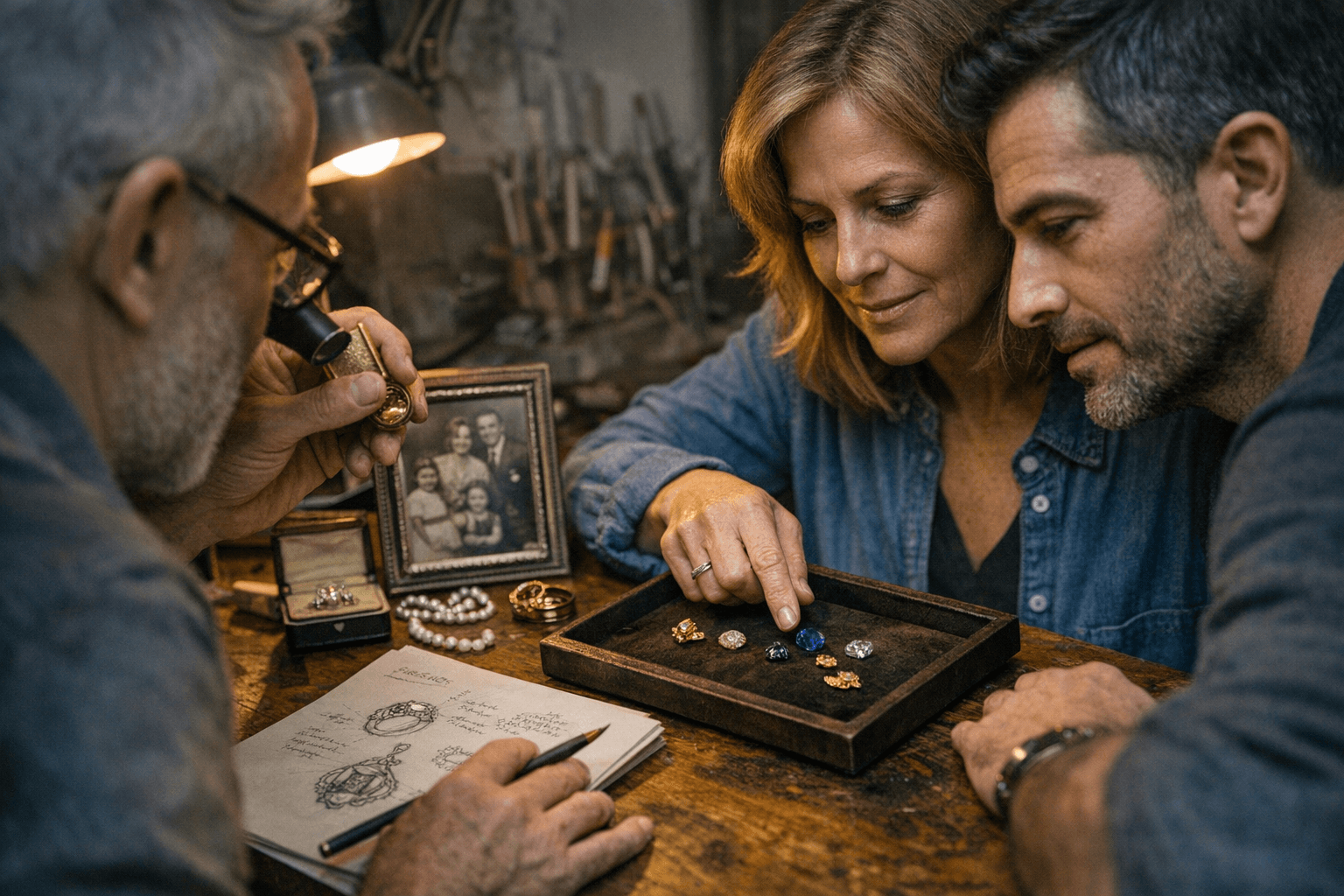
Questions worth raising in an initial consultation:
- How many rounds of revisions are included before additional design fees apply?
- Can I review CAD renders or a wax or silver prototype before final fabrication begins?
- Do you work with recycled metals or stones certified through Fairmined, Fairtrade, or an RJC-certified supplier, and can you provide documentation?
- What is your policy if a piece needs resizing or repair in five or ten years?
- How do you handle heirloom materials that a client brings in for incorporation?
The answers will tell you as much about the working relationship as they will about the finished piece.
The Commission Process: Sketch to Setting
Once you have agreed on a direction and budget, the process moves through several distinct stages. Each deserves your full attention.
1. Design review. The jeweler presents initial sketches or CAD renders based on your brief.
This is the moment to push back on anything that does not feel right. Reputable jewelers typically include at least two rounds of revisions before charging additional fees; confirm this in writing before you pay a deposit.
2. Prototype review. Many jewelers offer a wax or silver casting model before committing to the final metal.
For any complex or high-value piece, this step is not optional — it lets you assess proportion, weight, and wearability before fabrication locks in decisions that cannot easily be undone. Request this stage explicitly in your contract if it is not standard practice for the maker you have chosen.
3. Material approval. Before fabrication begins, confirm the specific metal alloy, stone specifications (cut, carat, color, and clarity for diamonds; origin and treatment disclosure for colored stones), and any surface finishes in writing.
This is also the moment to request provenance documentation or recycled metal certification if that matters to you.
4. Fabrication and quality check. The piece is made and should undergo an inspection before delivery.
Ask whether the jeweler photographs finished pieces before handover, and whether they share that documentation with clients as part of the record.
5. Delivery and aftercare briefing. At handover, expect care instructions, cleaning guidance, and advice on maintenance intervals.
A maker who is serious about longevity will also advise on storage, particularly for pieces with softer stones (opals, emeralds, and pearls all require specific conditions) or intricate pavé settings where prongs need periodic checking.
Signing the Contract: What to Insist On
A commission contract is not a formality; it is the document that protects both parties if anything goes wrong. Before paying any deposit, confirm the following are written into the agreement:
- A timeline with milestone dates: design approval, prototype review, fabrication start, and expected delivery.
- A clear payment schedule. A deposit of 30 to 50 percent upfront is standard in the industry; what matters is that the structure is documented.
- An explicit statement of what the deposit covers and whether any portion is refundable if you decline to proceed after reviewing the initial design.
- A revision policy stating how many changes are included and at what point additional fees apply.
- Ownership of materials: if you supply heirloom stones or metal for melting, the contract must confirm they remain your property throughout.
- Terms covering future resizing, repair, and maintenance.
Red-Flag Contract Terms
Be cautious if you encounter any of the following:
- A blanket "no refunds on custom orders" clause with no carve-out for cases where the finished piece materially departs from the agreed design.
- No written timeline at all, with delivery described only as "when complete."
- Verbal assurances about refund policy that contradict the written terms. The written document controls in any dispute; if a jeweler says one thing and writes another, trust what is written and ask for the discrepancy to be resolved before signing.
- No provision for a prototype review on a complex or high-value piece.
- A price quote with no itemization. You are entitled to understand whether you are paying primarily for stone cost, bench hours, or design time.
Ethics, Sourcing, and the Provenance Question
For a piece meant to be passed down, the sourcing story matters alongside the design story. Ask your jeweler whether they work with Fairmined or Fairtrade-certified gold, both of which guarantee fair labor practices and environmentally responsible mining. For diamonds, Kimberley Process compliance is the baseline; for colored stones, ask specifically about origin and any treatments applied, which can affect both value and durability. The Responsible Jewelry Council certifies businesses across the entire supply chain and is a credible, independently audited indicator of a maker's commitment to traceability. Recycled metals carry no penalty in craftsmanship terms and many jewelers now use recycled gold or silver as a default rather than an exception.
Aftercare and Insurance
A bespoke piece built to outlast its maker deserves the infrastructure to support that ambition. Have the piece independently appraised within three months of delivery by an appraiser who was not involved in the commission. Use that valuation to add the piece to a specialist jewelry insurance policy or a rider on your existing home coverage. Plan for professional cleaning and inspection every one to two years; prongs loosen, pavé stones work free, and clasps wear in ways that are invisible until they are not. Building that maintenance relationship into your agreement with the jeweler from the start, rather than as an afterthought, is one of the clearest markers of a commission that was designed to endure.
The deepest heirlooms are not simply old. They are pieces that someone thought carefully about before they were made, that were built to withstand generations of wear, and that carry enough specific meaning to make the next person who inherits them want to understand the story. Your commission brief is where that intention begins.
This article was produced by Prism’s automated news system from verified source data, official records, and press releases, then run through automated quality and moderation checks before publishing. The system is built and supervised by the people who set the standards it runs under. Read our full AI policy.
Did this article answer your question?