Italian Jeweler Alessandro Bernini Crafts Bespoke Pieces for Rap's Biggest Stars
At 26, Parma-born Alessandro Bernini is dressing rap royalty and Monaco's actual royals, one bespoke stone-sourced piece at a time.
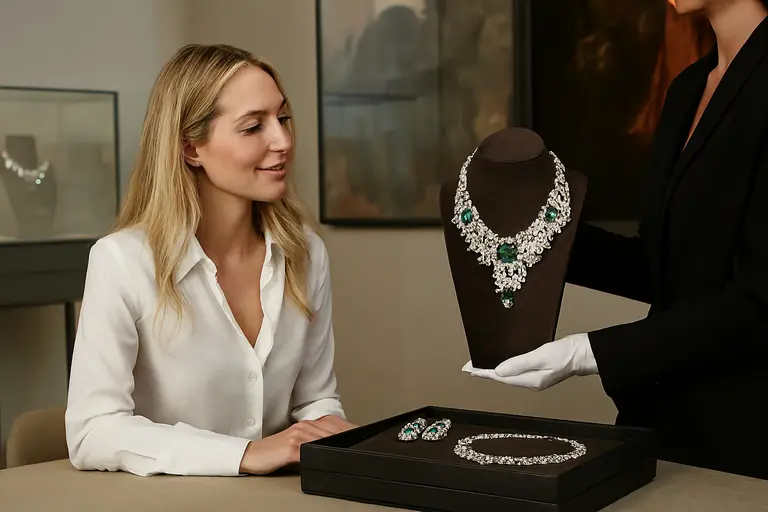
At 26, Alessandro Bernini has already done something that takes most jewelers a lifetime: built a client list that runs from Italian rap's biggest names to the Monaco royal household. The Parma-born designer operates in a corner of European high jewelry that almost nobody else occupies, and the story of how he got there moves with the momentum of a well-cut stone catching light.
From Parma to the Spotlight
Bernini's entry into the world of celebrity jewelry followed a path that, in retrospect, looks almost inevitable. His first major design was for Italian rapper and singer Tedua, a commission that introduced him to the world of music-industry clients. The piece that truly changed everything, however, came next: a commission for Fedez, the Milan-based rapper and cultural fixture, which, as Wanted in Rome reported, "catapulted him into the spotlight." After those two early works landed, the calls began coming in for Bernini in earnest. Commissions from other rising Italian figures followed, including Tony Effe and Sfera Ebbasta, extending his reputation through the tight, highly visible network of Italian rap and pop.
What is striking about this trajectory is how organically it compounded. In the world of high jewelry, a single well-placed piece on the right wrist at the right moment can rewrite a designer's career. Bernini understood that, and the Italian rap scene, which has an intensely devoted and style-conscious audience, amplified each placement.
A New Kind of European High Jeweler
What separates Bernini from the established houses is not simply his clientele; it is his position within the production chain. Wanted in Rome describes his approach plainly: "By removing the middleman, Bernini is involved in every step of the creation process, including sourcing the gemstones and overseeing the manufacturing of each piece." This is a significant operational distinction. Most designers working at the bespoke level in Europe maintain relationships with external gemstone dealers, stone setters, and polishers, coordinating between specialists rather than controlling each stage directly. Bernini's hands-on model means that a client commissioning a piece is dealing with the same person who selects the rough material, oversees cutting decisions, and supervises the setting.
"His work goes beyond the design and delivery of the piece," Wanted in Rome noted, framing his process as a holistic commitment rather than a transactional service. Whether that translates to better quality control, faster turnaround, or simply a more coherent design vision is a question worth putting directly to Bernini, but the model is unusual enough that the magazine characterized him as "one of the few individuals in European high jewelry moving in this direction."
That direction, at its core, is the intersection of old-world Italian craft tradition and the global reach of rap culture. "Bernini has quickly mastered the harmony between old-world tradition and the globalization of rap culture," Wanted in Rome observed. That framing is worth interrogating slightly: Parma is not traditionally associated with Italy's jewelry centers the way Valenza, Vicenza, or Florence are, which makes Bernini's emergence from there an interesting detail in its own right. His training, apprenticeship history, and workshop setup remain publicly undocumented at this stage, and understanding the infrastructure behind his process would add considerable texture to his origin story.
The International Turn
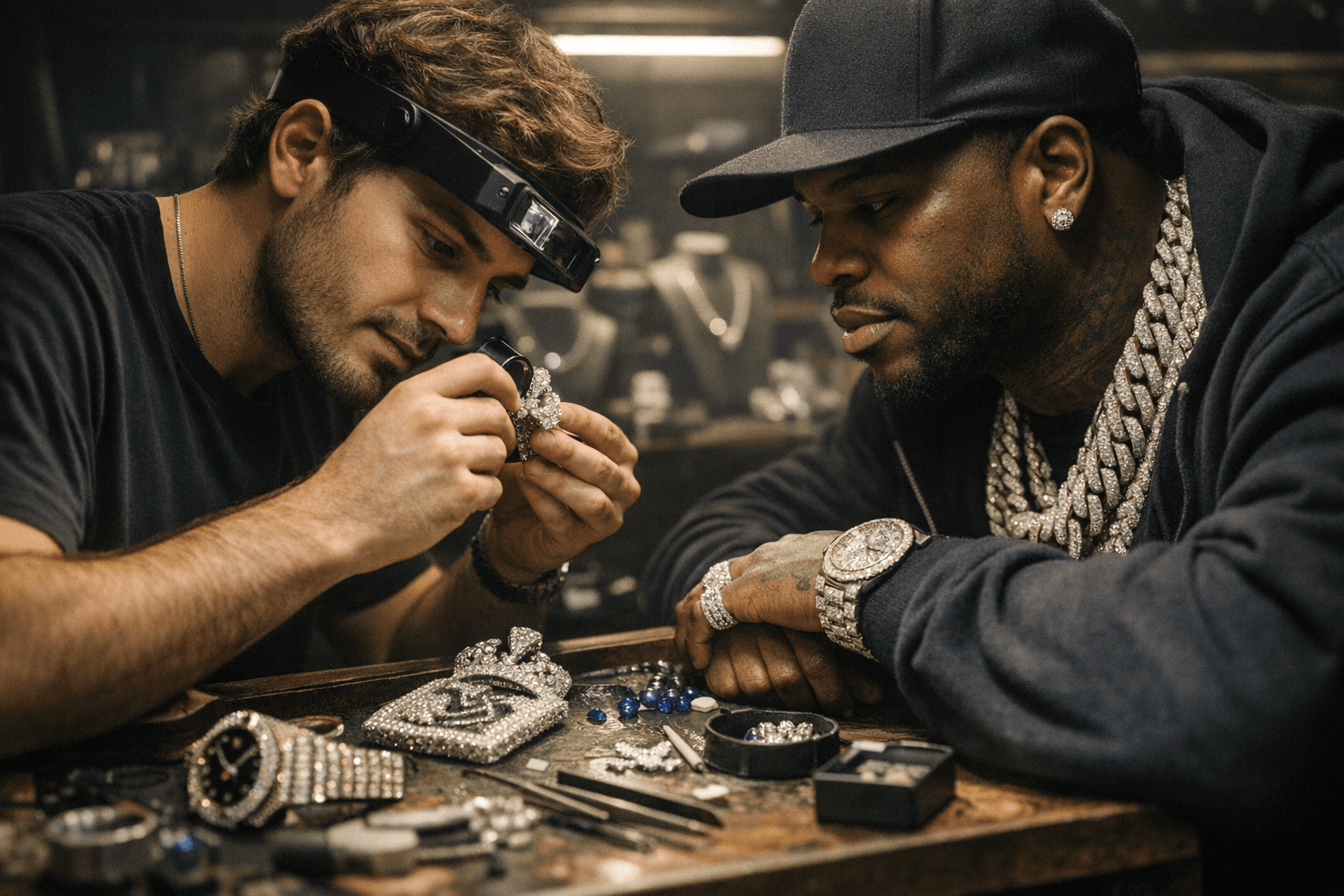
The step from Italian celebrity clients to international ones came through geography as much as reputation. American rappers including Travis Scott, A$AP Rocky, and Drake began acquiring pieces while visiting Monaco and Milan, according to Wanted in Rome. The specifics of those acquisitions, which pieces, what stones, what designs, and when exactly these transactions occurred, have not been confirmed publicly, and it would be worth seeking corroboration from the artists' representatives or photographic documentation of the pieces being worn. That said, the mechanism described is entirely plausible: Monaco and Milan are natural contact points between European designers and globally touring musicians, and bespoke jewelry moves frequently through personal introductions at that level of the market.
The presence of those three names on any jeweler's client list would, if confirmed, represent a remarkable acceleration for a designer who appears to have been working for only a few years at scale. Travis Scott, A$AP Rocky, and Drake are not simply celebrities who happen to wear jewelry; each has a documented history of engaging with high-end custom pieces and treating jewelry as a core element of their public identity. Being associated with any one of them can reframe a designer's market positioning overnight.
A Royal Commission
The most striking milestone in Bernini's reported career to date is also the one that requires the most careful handling. Wanted in Rome states that he "received a request on behalf of Charlene, Princess of Monaco, for a Christmas gift for Prince Albert." The magazine does not confirm whether the piece was completed, delivered, or accepted, and no timeline is given for when the request arrived. Royal commissions, even at the level of a request, carry significant weight as status markers within European luxury, and the detail is notable. It has not, however, been independently confirmed by the palace or by Bernini in any public statement available at the time of writing, and should be read accordingly.
If verified, it would place Bernini in a lineage of jewelers who have worked at the intersection of celebrity culture and aristocratic patronage, a positioning that historically carries considerable commercial and reputational value in the European market.
What the Research Doesn't Tell Us
Being precise about what is known and what is not matters when covering a designer at this stage. No descriptions of Bernini's actual pieces are publicly available: no materials listed, no carat weights, no photographs, no price points. His workshop location beyond Parma, whether he operates alone or leads a small atelier, and the specifics of his gemstone sourcing relationships all remain undocumented in public sources. His training history and jewelry education have not been reported.
These are not minor gaps. In high jewelry, the credibility of a piece rests on the provenance of its materials, the qualifications of its maker, and the traceability of its production. The claim that Bernini sources gemstones directly and oversees manufacturing personally is compelling, but it invites specific questions: Does he source directly from dealers or mines? Does he work with certified suppliers? Are there any third-party verifications of his process? These are the details that distinguish a bespoke designer with genuine craft accountability from one whose brand is built primarily on association.
Why This Story Matters Now
Bernini's rise points to a broader shift in how fine jewelry reaches its most visible clients. The traditional gatekeeping structures of European high jewelry, the established houses, the curated boutiques, the auction-house adjacencies, are being bypassed by designers who build trust and reputation directly within cultural communities. Rap and hip-hop have long driven demand for custom jewelry in the American market; the emergence of Italian-trained designers who understand both that appetite and the craft language of old-world goldsmithing represents something genuinely new in the European context.
At 26, Bernini is clearly at an early point in a career that is moving quickly. The full picture of his work, its materials, its aesthetics, its pricing, and its verified client history, deserves more documentation than currently exists in the public record. But the arc of his story so far, from a first commission for Tedua to a reported request from Monaco's royal household, is the kind of trajectory that the industry tends to watch closely.
This article was produced by Prism’s automated news system from verified source data, official records, and press releases, then run through automated quality and moderation checks before publishing. The system is built and supervised by the people who set the standards it runs under. Read our full AI policy.
Did this article answer your question?