JCK's March Jewelry Picks Highlight Pieces Built for Heirloom Meaning
JCK's March picks offer more than a shopping list; they reveal how to spot jewelry built to outlast you.
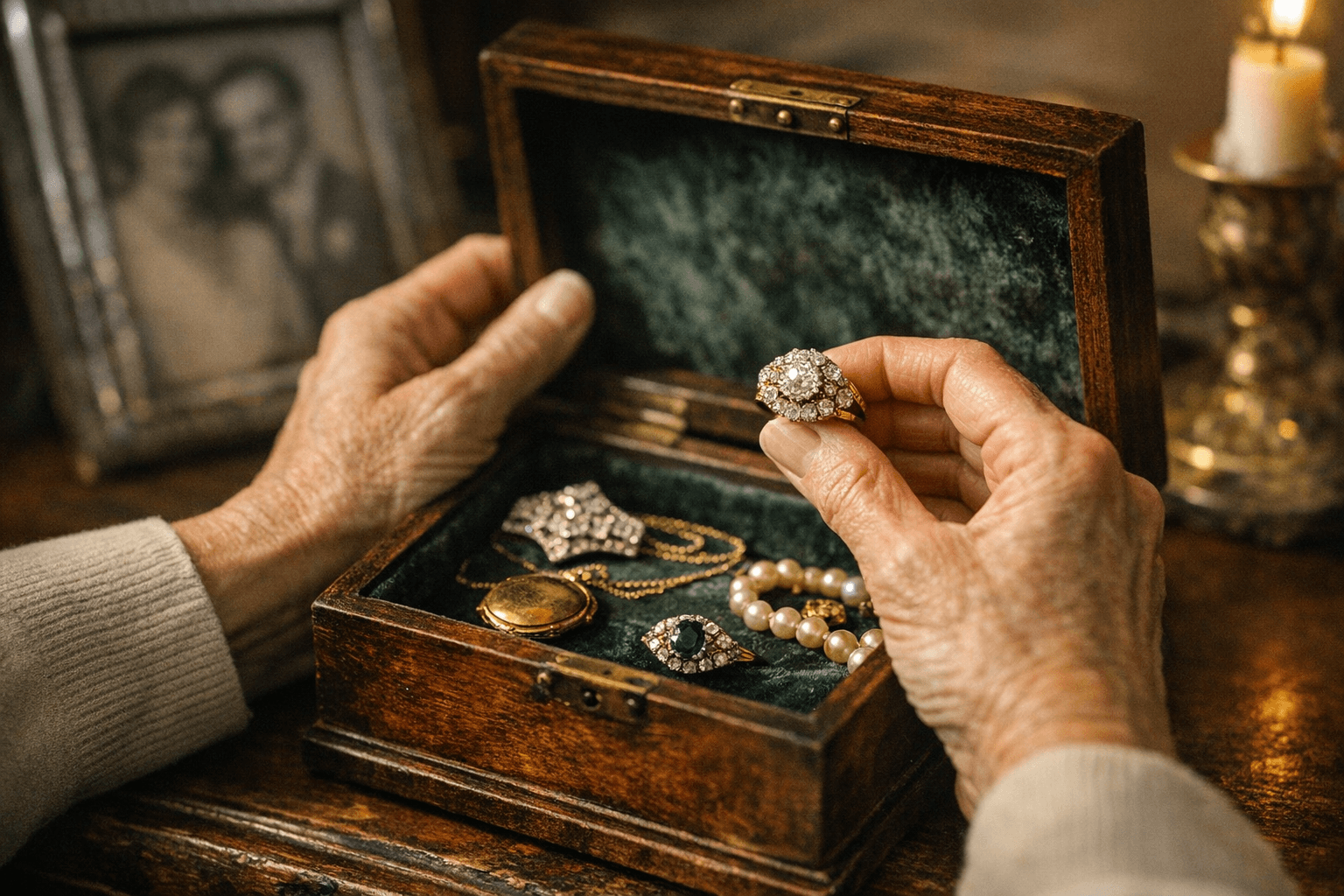
The stone assigned by the calendar accident of your birth is, on its face, a piece of arbitrary numerology. But the birthstone tradition has real staying power precisely because it converts coincidence into meaning. When JCK's monthly "Jewels From My Inbox" feature spotlighted aquamarine among its March 2026 standouts, it wasn't simply acknowledging seasonal relevance. It was pointing to something more durable: the way a stone chosen for you by birth month carries an identity marker that makes a piece genuinely personal rather than decoratively pleasing.
That distinction, between jewelry that is beautiful and jewelry that is meaningful, is exactly what the March 2026 edition of "Jewels From My Inbox" is built around. The feature, a curated editorial buying radar published each month by JCK, functions as a field guide to the current market: what to watch for, which makers are producing emotionally resonant work, and how vintage finds, signed designs, and gemstone-forward contemporary pieces can be integrated into a modern heirloom strategy.
The picks in this edition range from aquamarine pieces timed to March's birthstone moment to antique diamonds set on contemporary chains to small-batch work from independent designers producing objects that read, unmistakably, as keepsakes. What ties them together isn't price point or provenance. It's a specific quality that separates a piece worth keeping from one worth wearing for a season. Call it heirloom potential, and it turns out there are five reliable ways to spot it.
Maker Credibility: Who Made It, and Can You Reach Them?
The independent designer category in JCK's March roundup is telling. Small-batch jewelry produced by named makers occupies a different category than anonymous retail product, and not just for sentimental reasons. When you know who designed a piece, and when that designer is reachable, working, and building a body of recognizable work, you have something rare in the modern market: accountability.
Maker credibility matters for heirloom purposes because it anchors provenance. A piece signed by a living independent designer carries documentation that department store jewelry typically cannot match: the maker's name, their aesthetic signature, and their ability to repair or replace components decades from now. Unsigned pieces from small-batch designers featured in a publication like "Jewels From My Inbox" gain a secondary layer of credibility simply by appearing there; the editorial selection process does part of the authentication work for you.
When evaluating a piece for heirloom potential, ask whether the designer has an established archive, a consistent aesthetic you can trace across multiple collections, and a direct line of contact. A maker whose work you can follow over time is a maker whose work will have a story to tell.
Design Longevity: The Antique Diamond Standard
Few things test the concept of design longevity more rigorously than placing an antique stone in a modern context. JCK's March feature spotlights antique diamonds paired with contemporary chains, a combination worth examining closely because it does something quietly radical: it proves a stone's staying power by asking it to hold its own against current design language.
Antique diamonds, cut in the old mine or European styles that predate the precision of modern brilliant cuts, have a warmth and depth that reads differently in person than any photograph can capture. They were not designed for the lighting conditions of the twenty-first century. And yet they survive the translation. That resilience is precisely what you want in a piece intended to outlast its original owner.
The modern chain pairing is significant from a design-longevity perspective because it separates the permanent from the replaceable. If a chain goes out of fashion, it can be swapped out. If the stone is extraordinary, it endures. This is a practical philosophy, not just an aesthetic one, and it explains why antique stones consistently anchor serious heirloom collections regardless of the era they pass through.
Service and Repairability: The Question Nobody Asks at Purchase
A piece of fine jewelry is not a finished object. It is the beginning of a relationship with a goldsmith. Prongs wear. Bezels loosen. Chains develop weak links. The question of whether a piece can be repaired, and by whom, is one that most buyers neglect entirely at the point of purchase, and it is among the most consequential criteria for long-term ownership.
This is particularly relevant for vintage and antique pieces, which require jewelers with period-specific expertise. A bench jeweler comfortable working on contemporary tension settings may not have the skills to re-tip the prongs on an Edwardian cluster ring. Before committing to a vintage purchase, the more practical question is not "how old is this?" but "who in my city or region can maintain it?"
Independent designers featured in curated roundups like "Jewels From My Inbox" typically offer repair services directly or can recommend trusted bench jewelers by name. That direct line of service is a genuine differentiator. Mass-market pieces, even expensive ones, often funnel repairs through customer service channels that prioritize replacement over restoration, a philosophy antithetical to heirloom thinking.
Sentiment Hooks: Birthstones, Engraving, and the Machinery of Meaning
Aquamarine's prominence in the March 2026 roundup is not purely coincidental. The stone is having a design moment, appearing in everything from delicate faceted drops to substantial statement pieces that command attention in a way its cool, translucent color might not immediately suggest. But the deeper reason aquamarine works as a potential heirloom is structural, not seasonal.
Birthstones are sentiment hooks built directly into a stone's identity. They convert a mineral into a biography. When you give or receive a piece centered on a birthstone, the stone itself carries an explanation for why this particular gem was chosen, something that a more arbitrary selection cannot replicate. Thirty years from now, the recipient of an aquamarine piece given in March will understand, without a card or a note, exactly why that stone was selected.
Engraving performs a similar function at lower cost and with greater flexibility. A date, an initial, a short phrase inscribed on the interior of a band or the back of a pendant converts a decorative object into a document. The most durable heirlooms tend to combine both mechanisms: a stone that carries intrinsic identity and an inscription that records a specific moment in time. Together, they make a piece legible to someone who has never met the original giver.
Resale and Inheritance Friendliness: The Unsentimental Calculus
Not every piece that enters a collection will stay in the family. Some will be sold to fund other purchases. Some will be inherited by people who didn't choose them and may not want them in their original form. A genuinely heirloom-worthy piece should survive both scenarios with its value, material and emotional, intact.
This is where the distinction between signed and unsigned work becomes financially meaningful. A signed piece by a recognized designer, even an independent one with a growing following, carries provenance that affects resale value in ways that anonymous retail jewelry simply cannot match. An antique diamond with certification from a recognized gemological laboratory holds its value across ownership changes in a way that trend-driven fashion jewelry rarely sustains.
The pieces highlighted in JCK's March 2026 "Jewels From My Inbox" suggest an editorial posture that takes this calculus seriously. Vintage finds, signed designs, and gemstone-forward work from independent makers are not the categories dominating trending retail feeds. They are, however, the categories that consistently surface in estate sales and inheritance conversations, and that distinction matters enormously when thinking about what a piece will mean not just now but in twenty or fifty years.
The modern heirloom is not necessarily old, and it is not necessarily expensive. It is a piece chosen with enough intentionality to outlast the moment of purchase: by a maker whose credibility can be verified, in a design that operates outside of trend, from a material that holds its worth. March's aquamarine and antique diamond picks are specific; the framework they illuminate is one you can carry into any jeweler, at any price point, for the rest of your collecting life.
This article was produced by Prism’s automated news system from verified source data, official records, and press releases, then run through automated quality and moderation checks before publishing. The system is built and supervised by the people who set the standards it runs under. Read our full AI policy.
Did this article answer your question?