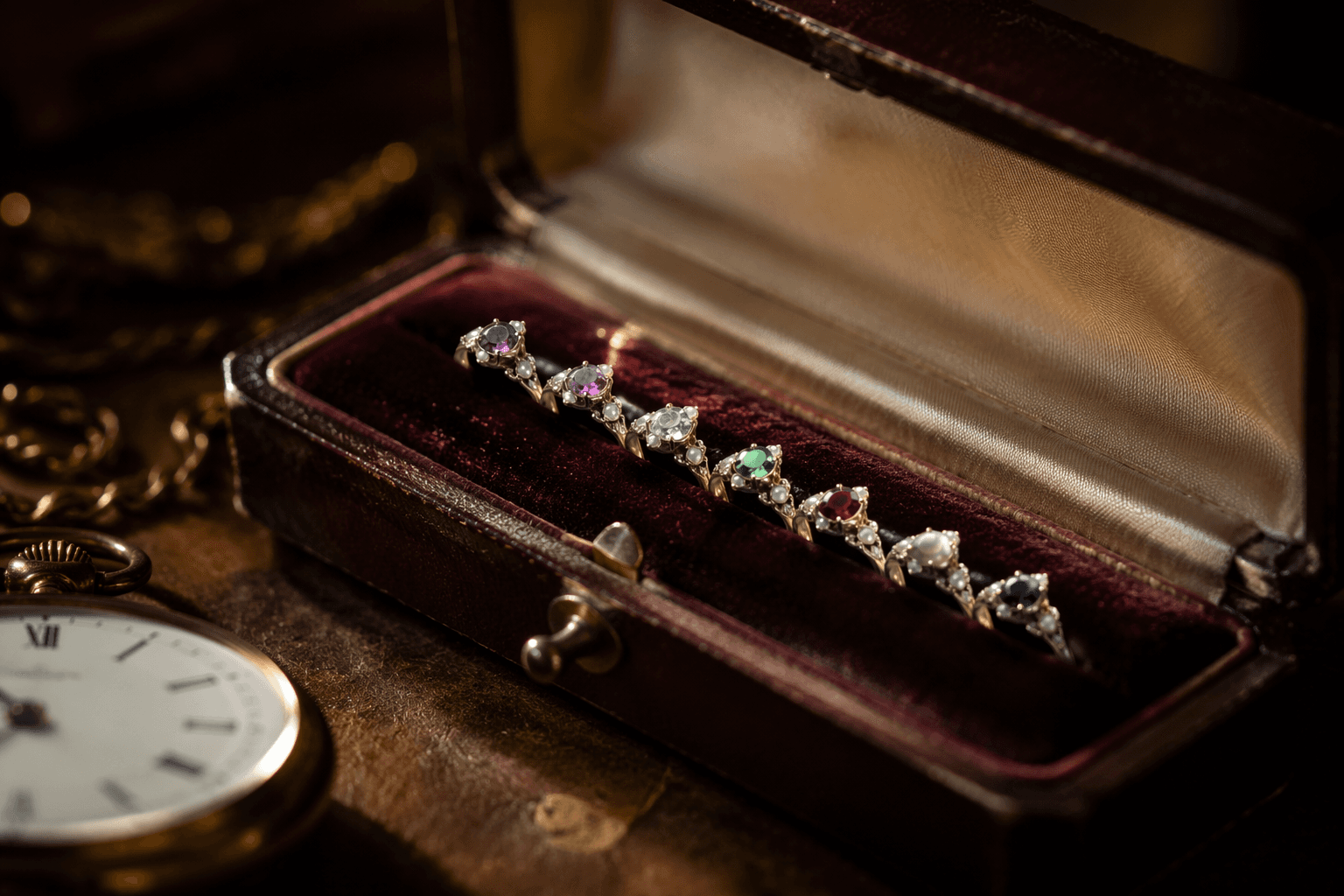
Khepri Jewels finds momentum with emeralds and fancy-color diamonds
Khepri Jewels shows why emeralds and fancy-color diamonds feel personal: color reads as identity, and the category has staying power.

The strongest jewels do more than sparkle. Khepri Jewels has found momentum by treating emeralds and fancy-color diamonds as declarations of taste, mood, and self-possession, not as mere ornament. Reema Chopra, who moved from banking and the diamond business into jewelry design, has built a house language around stones that feel chosen for character first and convention second.
Color as signature
What makes Khepri compelling is not that it works with color, but that it uses color as a point of view. In a market long trained to worship the white diamond as the default, fancy-color stones offer something far more intimate: they read like a decision, not a compromise. That is why emeralds, colored diamonds, and the kind of pieces that carry names like cartouche charm feel so resonant now. They suggest identity, symbolism, and a bit of private language.
Khepri’s colored-diamond necklace, priced at $286,000 in JCK’s Jewelers’ Choice coverage, captures that shift neatly. A cartouche already carries the sense of inscription and protection; set with fancy-color diamonds, it becomes less a status object than a wearable emblem. This is the kind of jewel that does not rely on classic white brilliance to prove its worth. It relies on color to give it meaning.
Why fancy-color diamonds read differently
Gemologically, fancy-color diamonds live by different rules than D-to-Z stones. In the traditional white-diamond scale, value generally softens as color becomes more visible. In fancy colors, the direction reverses: stronger, purer color usually means greater value. That is the key reason the category feels so compelling to collectors and to designers looking for a visual signature that cannot be mistaken for anything else.
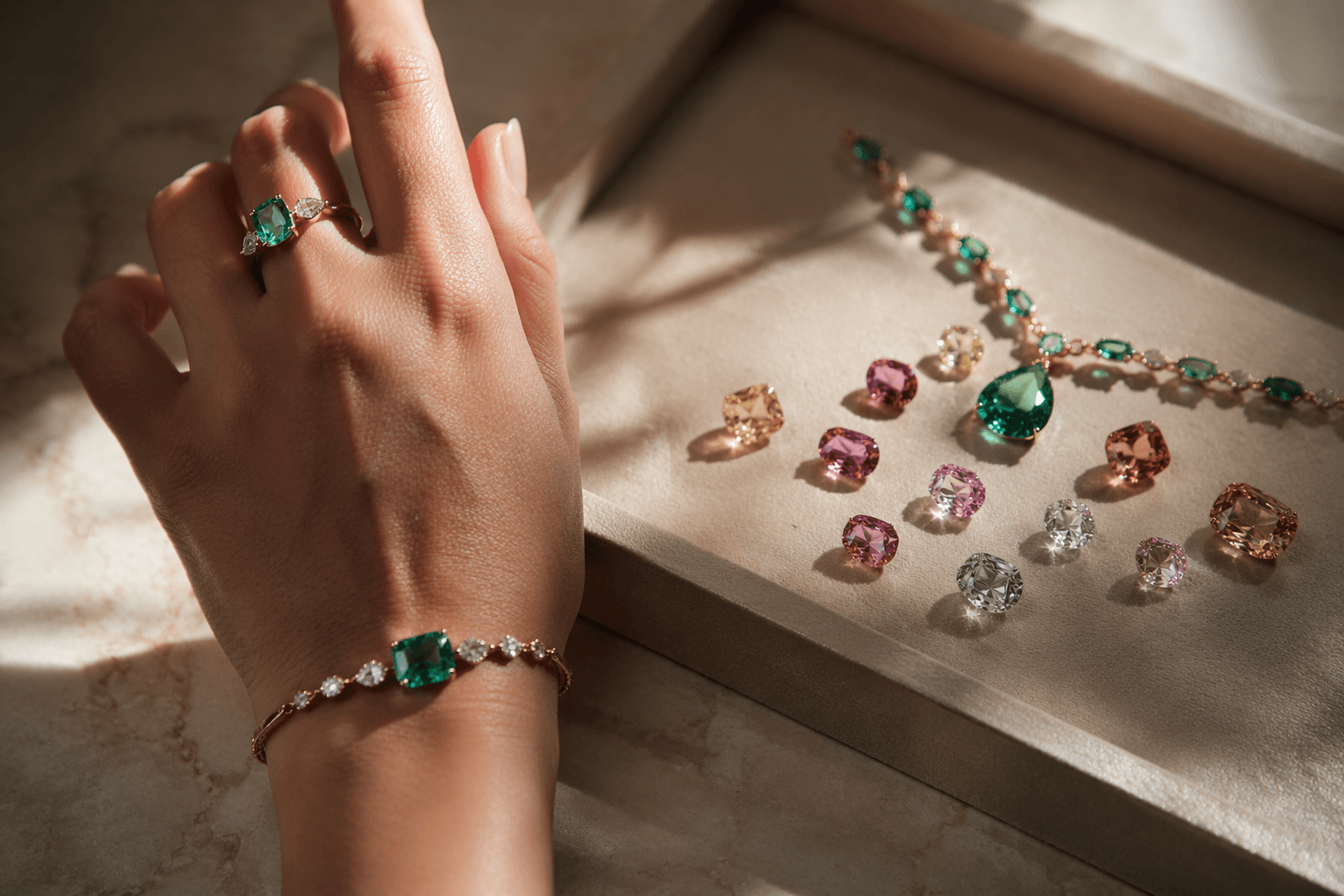
The palette itself is broader than many buyers realize. Fancy-color diamonds can appear blue, green, pink, red, yellow, orange, purple, gray, black, and even fancy white. Each shade carries a different emotional register. Pink can feel romantic and lyrical, yellow radiates brightness, green has an almost botanical depth, and blue brings a cooler, rarer kind of tension. In a jewel like Khepri’s, that range matters because it gives the designer room to compose a mood rather than simply mount a stone.
The market tells a parallel story
The numbers help explain why the category has moved from niche fascination to serious collector territory. Rapaport put the estimated wholesale value of fancy-color diamonds entering the market in 2024 at more than $4.5 billion, while the Fancy Color Research Foundation says prices have grown at a compound annual rate of 5.7% over the past 20 years. That combination of scale and long-term price growth gives color the kind of credibility buyers look for when they want beauty with ballast.
The index figures also show a market that has held up better than many luxury categories through a choppier economy. Rapaport reported a 0.7% year-over-year decline in the fancy-color diamond index in the second quarter of 2024, followed by a 0.5% decline in the third quarter of 2024 and a 1.0% decline in 2025. Those are soft moves, not a collapse, and they point to a segment with resilience even under broad economic uncertainty.
Provenance still matters, especially with color
Fancy-color diamonds are not a modern invention; they have a deep geographic history. GIA identifies India, South Africa, and Australia as the best-known historical and current sources, with additional deposits in Brazil, Venezuela, Guyana, and Indonesia. That matters because provenance adds another layer to the emotional charge of color: a stone is not only chosen for how it looks, but for the story embedded in where it came from.
For shoppers, that can make fancy-color diamonds feel more personal than standard white stones. A rare yellow or pink diamond already feels less expected; when it also carries the romance of a recognized source, it becomes easier to imagine as an heirloom in the making. Khepri’s appeal sits in that overlap between rarity and narrative, where origin and style reinforce each other.
Reema Chopra’s point of view
Chopra’s path helps explain why Khepri’s jewels feel considered rather than calculated. She came into jewelry after time in banking and the diamond trade, so she brings both financial discipline and gem-world fluency to the work. JCK’s January 15, 2025 profile noted that emeralds rank among her favorite gemstones, and that preference shows in the way Khepri’s identity has developed around colored stones with strong personalities.
That same sensibility extends to rubies, diamonds, and emeralds, the stones that anchor the brand’s language. Yet the trade has increasingly noticed Khepri’s colored-diamond work in particular, which suggests that Chopra understands where expressive luxury is headed. She is not chasing color as novelty. She is treating it as structure, letting the stone lead and letting the setting support the idea.
What is resonating now
The shades that resonate most right now are the ones that feel intentional rather than decorative. Emerald green has the gravitas of a statement and the intimacy of a talisman. Fancy-color diamonds, with their spectrum of blues, pinks, yellows, greens, and more unusual tones, offer collectors a way to wear individuality without losing the rigor that makes a jewel serious.
That is why Khepri Jewels lands where it does. It gives color a point of view, and it makes the case that a diamond’s value is not only in its size or clarity, but in the conviction of its hue.
This article was produced by Prism’s automated news system from verified source data, official records, and press releases, then run through automated quality and moderation checks before publishing. The system is built and supervised by the people who set the standards it runs under. Read our full AI policy.
Know something we missed? Have a correction or additional information?
Submit a Tip