Lab-Grown Diamonds Are Redefining What Engagement Rings Mean Today
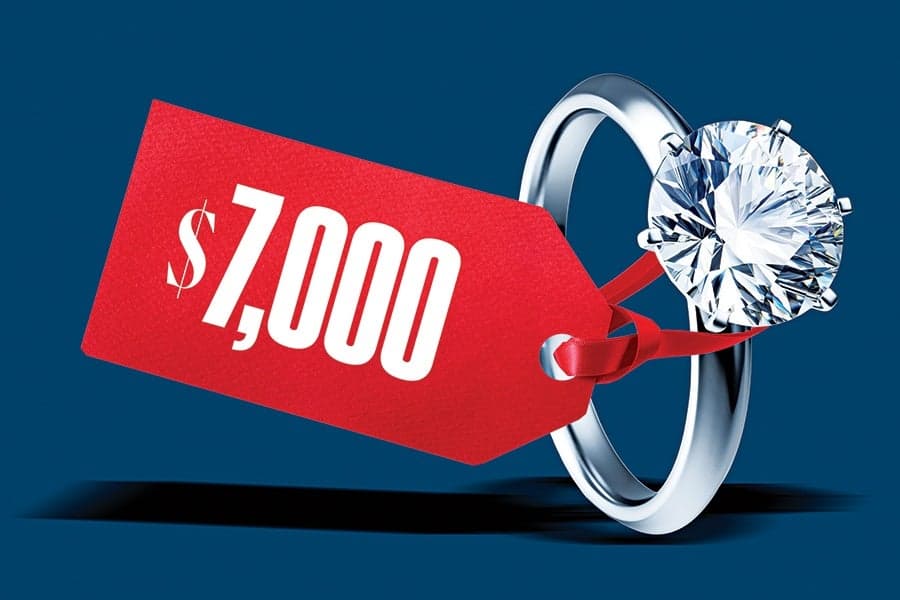
A $7,000 lab-grown diamond is now indistinguishable from a $70,000 mined one. For the first time ever, more than half of engaged couples chose one.
The Shift That Changed Everything
The engagement ring has always been, at its core, a vessel for meaning. De Beers built an industrial mythology around geological scarcity and romantic permanence, and it held for most of the 20th century. Then something quietly cracked: a lab-grown diamond became optically, chemically, and physically indistinguishable from its mined counterpart, at a fraction of the cost, and buyers began to question whether they were paying for a stone or for a story they hadn't personally chosen.
For the first time ever, more than half of couples reported their engagement ring features a lab-grown stone, according to The Knot's 2025 Real Weddings Study, with lab-grown diamonds growing 40% more popular since 2019. Two-thirds of Gen Z engagement ring purchasers now opt for lab-grown stones, and the average center stone has grown from 1.31 carats in 2019 to 2.45 carats in 2025, an 87 percent increase, as freed-up budget flows directly into size and quality. In 2015, lab-grown diamonds accounted for just one percent of the overall market; by 2024, that figure had climbed to 20 percent, and natural-stone prices have declined as demand shrinks.
The question facing couples today is not whether lab-grown diamonds are real. It is what you want your ring to mean, and which combination of stone, setting, and maker best carries that intention.
What "Lab-Grown" Actually Means
A lab-grown diamond is not a simulant. Both methods of production, HPHT (High Pressure High Temperature), which subjects carbon to roughly 1.5 million pounds per square inch and temperatures exceeding 2,700°F, and CVD (Chemical Vapor Deposition), which builds a diamond layer by layer from carbon-rich gas onto a seed crystal, yield stones with the same crystal structure, hardness, brilliance, and chemical composition as a mined diamond. CVD diamonds tend to have fewer metallic inclusions and offer greater control over the final product, which is why most engagement ring diamonds today come from CVD processes.
In 2025, 85.9 percent of all lab-grown diamonds sold were colorless, up from just 37.7 percent in 2020, reflecting dramatic improvements in production consistency. Both IGI and GIA certify lab-grown stones using the same grading criteria applied to natural diamonds, so any reputable seller should be able to provide full documentation on cut, color, clarity, and carat weight.
The Meaning Migration: From Rarity to Intentionality
What has genuinely changed is not the stone but the story attached to it. Mikaela Smith worked with Wright Jewelry & Design Company in Hudson, Massachusetts, a family-owned store carrying a 92-year legacy, to customize a 2-carat oval lab-grown diamond with side stones for around $7,000. "I didn't really care about the heirloom aspect," she said. "What mattered was how it looked. And it was really cool to support a local business and get a custom design."
That framing, design over dynasty, local maker over inherited narrative, describes a broader cultural realignment. Alyson Iarrusso, who runs New England-based Cove Fine Jewelry, puts it precisely: "Lab-grown diamonds tend to resonate because they allow [buyers] to invest in something that's still certified and has a quality design. It's really gone from 'What can I afford?' to 'What do I want?'" She adds that the social calculus around diamond size has shifted as well: "For a long time, the size of the diamond signaled what someone spent. Lab-grown diamonds are changing that equation."
Hannah Florman, a custom jeweler with a boutique on Boston's Newbury Street, sees two distinct camps walk through her door: couples in health and science fields who are genuinely excited by the lab-grown concept and those who are eco-conscious on one side, and clients concerned about the heirloom quality of their purchase on the other. Natural diamonds, she notes, tend to retain long-term value because they're tied to the whims of mining and availability, while lab-grown diamonds, which can be produced readily, don't command the same scarcity-driven prices.
Both positions are legitimate. The decision framework has simply grown more honest.
The Decision Variables
Budget and Size
A lab-grown diamond can cost 80 to 95 percent less than a natural diamond of the same size and quality in 2026. A 1-carat lab-grown stone averages around $1,000, while a comparable natural diamond can run $4,000 to $10,000 or more depending on grade. The average engagement ring price has already declined from roughly $6,000 in 2021 to $5,200 in 2024, a more than 15 percent drop, largely driven by the adoption of lab-grown stones. If size and quality per dollar are your priorities, the math is straightforward.
Ethics and Origin
Lab-grown diamonds are produced in traceable, controlled environments, bypassing the labor and conflict concerns historically associated with mined diamonds. The Kimberley Process has been criticized for leaving gaps in oversight, even as it was meant to keep conflict diamonds off the market; lab-grown diamonds circumvent that system entirely. For couples who weight sourcing ethics heavily, this distinction carries real weight independent of price.
Resale Value and Long-Term Investment
The secondary market for lab-grown diamonds in 2026 tells a sobering story. While these stones are chemically identical to natural diamonds, resale offers typically hover between 10 and 30 percent of the original purchase price, and some assessors describe the market as treating lab-grown diamonds the way it treats consumer electronics: depreciating commodities rather than assets. Natural diamonds retain better long-term resale value, typically between 20 and 60 percent of original purchase price.
Critically, neither category should be purchased as a financial investment. Virtually all diamonds depreciate from the moment of retail purchase. The real decision is which story you want to own, not which return you expect to realize.
Insurance and Practical Costs
A 2-carat lab-grown engagement ring will usually cost around $50 to $60 per year to insure, whereas a comparable mined diamond ring can cost upwards of $250 to $300 annually. Over a decade, that gap compounds meaningfully. Both stone types are widely insurable and are typically assessed at replacement value rather than resale value, so the appraisal process is broadly similar.
Settings, Durability, and Repairability
The setting has as much impact on long-term wearability as the stone itself, and it deserves as much scrutiny.
A bezel setting, in which a continuous metal rim encircles the diamond's girdle, offers maximum protection against chipping and everyday impact, making it excellent for active wearers. The tradeoff is a slight reduction in brilliance because the surrounding metal limits light entry from the sides. A prong setting, by contrast, maximizes light exposure and sparkle but requires periodic inspection since prongs can thin or loosen over time. Pavé bands, which line small diamonds closely along the band, are visually striking but should be inspected annually; loose stones are a known risk with daily wear over many years.
Jewelers have been raising the quality of metalwork to maintain margins as diamond prices drop, with 18-karat gold settings growing 52.5 percent in popularity between 2020 and 2025. Platinum remains the most durable daily-wear metal. Local jewelers with on-site craftspeople offer a meaningfully different repair and resize relationship than a chain or online retailer, a practical consideration that compounds over decades of ownership.
The Alternatives Worth Considering
Lab-grown is not the only departure from the traditional white solitaire. Vintage-inspired styles are making a strong comeback, with delicate filigree details, milgrain edges, and ornate halo settings evoking the glamour of earlier eras. These designs often pair historical aesthetics with contemporary materials like platinum or rose gold for added durability.
Colored gemstones are also staging a significant return, with sapphires, emeralds, and rubies leading the charge as bold alternatives to classic white stones. Softer romantic hues like morganite and peach sapphire appeal to buyers who want warmth and individuality rather than conventional brilliance. It's worth noting that colored stones were the engagement ring standard before mid-20th-century diamond marketing normalized the white diamond as the default. Fancy colored lab-grown diamonds, particularly yellows and pinks, represent an emerging sub-category: production control allows for consistent color saturation at prices that make natural fancy-colored stones seem almost inaccessible by comparison.
A pre-owned antique ring offers yet another path: you will not find a lab-grown diamond at an antique jewelry store, but as one jeweler noted, that doesn't make them less meaningful. A vintage natural diamond removes new-mining concerns while preserving geological rarity. The meaning, again, comes from the intention.
Questions to Ask Before You Buy
Press your jeweler on these before you commit:
- Is this stone certified, and by which laboratory? IGI and GIA are the recognized grading authorities. Any reputable seller should produce documentation with full 4Cs detail.
- What is your upgrade or trade-in policy? Some independent jewelers offer credit toward future purchases; most chains and online retailers do not. Know this in advance.
- What is the realistic resale expectation for this stone type? Honest jewelers acknowledge that both categories depreciate; anyone promising appreciation is overselling.
- What setting suits my lifestyle? An active wearer, a surgeon, a gardener, needs a bezel. A buyer who prioritizes maximum sparkle and is prepared for annual maintenance has more setting flexibility.
- What does ongoing maintenance cost? Prong re-tipping, pavé stone replacement, and rhodium re-plating on white gold all add to lifetime ownership cost. Factor them in.
- Can this ring be resized and repaired in-house? A jeweler with an on-site bench craftsperson offers a relationship that a purely online or big-box retailer cannot replicate.
- How should I insure this piece, and at what appraised value? Insurance appraisals reflect replacement cost, not resale value; make sure you understand the difference before you pay a premium.
The New Heirloom Logic
The old engagement ring narrative depended on a specific kind of scarcity: geological, financial, generational. The new one is built on deliberate choice. A ring customized with a specific jeweler, in a specific town, at a specific moment in a couple's financial and ethical life, carries its own form of singularity. It may not have spent billions of years underground, but the value, as many jewelers now say, is in the intention. In a category that has always traded on story, that may be the most durable currency of all.
This article was produced by Prism’s automated news system from verified source data, official records, and press releases, then run through automated quality and moderation checks before publishing. The system is built and supervised by the people who set the standards it runs under. Read our full AI policy.
Did this article answer your question?