Lucky Symbols Drive Bold Jewelry Trends This St. Patrick's Day
Jenna London's $385 four-leaf clover signet ring proves lucky symbols have never felt more personal — or more wearable — than they do right now.
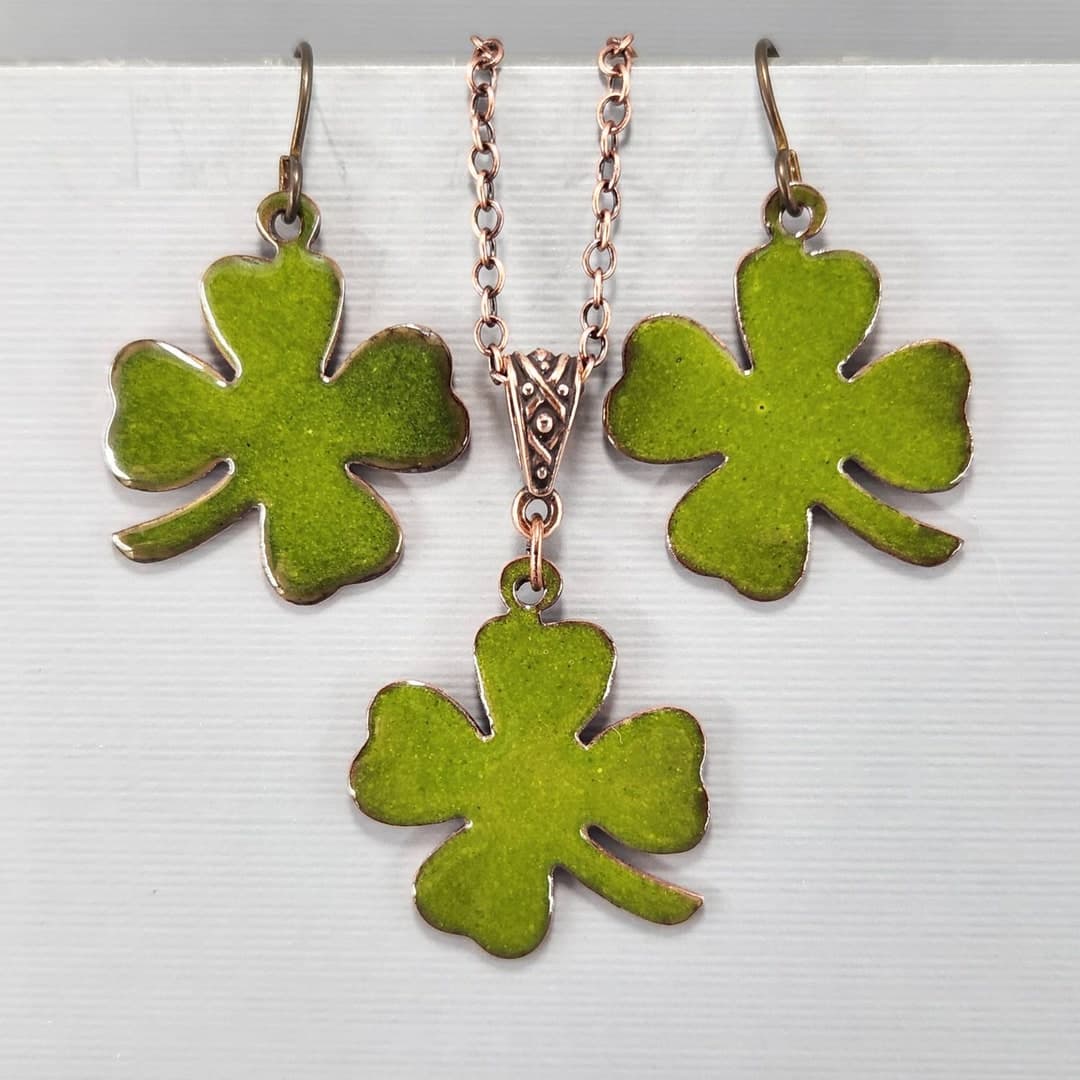
Every few years, a cultural moment reminds the jewelry industry that meaning sells as reliably as diamonds. St. Patrick's Day is one of those moments, and designers are treating it less as a novelty occasion and more as a genuine opening: a chance to revisit the full lexicon of luck and translate ancient symbols into pieces people actually want to wear year-round.
The impulse is real and timely. As JCK's Karen Dybis observed in her March 2026 dispatch on the trend, "there are plenty of elevated jewelry pieces available from designers who are doing fresh takes on traditional lucky symbols." What distinguishes this season's offerings from past holiday novelties is the seriousness of the craft behind them — these are not green enamel trinkets. They are signet rings, brooches, charm bracelets, and pendants built around motifs with roots that run centuries deep.
The Symbols and What They Carry
The four-leaf clover is the obvious anchor for St. Patrick's Day jewelry, but it is only the beginning of a much richer symbolic conversation. The horseshoe, long associated with good fortune across Western Europe, translates naturally into ear hardware and pendant forms. The wishbone, another Anglo-American luck token, lends itself to delicate gold interpretations that work as everyday wear.
Two symbols in particular deserve a closer look for what they bring to fine jewelry beyond their Irish-holiday association. The cornicello, also known as the corno portafortuna, is an Italian amulet traditionally worn to protect against the evil eye and bad luck. It takes the form of a twisted horn-shaped charm, often made of gold, silver, or red coral. Over time, it has evolved from a traditional amulet into a fashionable statement piece, appreciated for both its history and its stylish appeal. Its elongated, sculptural silhouette is ideal for pendant and charm work, and its Mediterranean origins give it a layering versatility that crosses cultural communities.
The Hebrew character chai, which figures prominently in Jewish culture, is formed by two letters of the Hebrew alphabet and translates to "alive" or "living." It is often worn as a talisman, believed to bring good luck, protection, and blessings, and in Jewish numerology known as Gematria, its letters add up to 18, considered a lucky number. The symbol frequently appears on pendants and other jewelry, making it a natural candidate for designers who understand that the best lucky pieces carry genuine weight, not just visual charm.
Jenna London: The Case for the Elevated Talisman
The Chicago-based brand Jenna London arrives at this moment with a focused collection that demonstrates exactly how to handle lucky motifs without condescension. For this St. Patrick's Day season, the brand is centering the four-leaf clover across three distinct product expressions: a delicately etched, two-tone sterling silver signet ring, a matching pair of earrings, and an openwork charm bracelet.
The standout piece is the four-leaf clover Bold Oval signet ring, priced at $385 in two-tone sterling silver. The signet format is a considered choice: a signet ring carries the weight of a personal seal, something you press into the world with intention. Pairing that gravitas with a clover motif that most people associate with childhood whimsy is a genuine creative maneuver. The Basket Clover bracelet, at $525, renders the same motif in 14k gold vermeil — a step up in warmth and richness that justifies the price difference and makes the two pieces work as a coherent set rather than a matching set.
Founder and designer Jenna Mendelsohn articulates the philosophy behind the work with clarity: "Lucky symbols have always fascinated me because they're deeply personal yet universally understood. I love reinterpreting motifs like four-leaf clovers so Jenna London jewelry feels both wearable and timeless. It adds an ease to the pieces, making each one feel like a small personal talisman — a reminder you carry with you something that holds meaning, intention, or even just a bit of optimism."
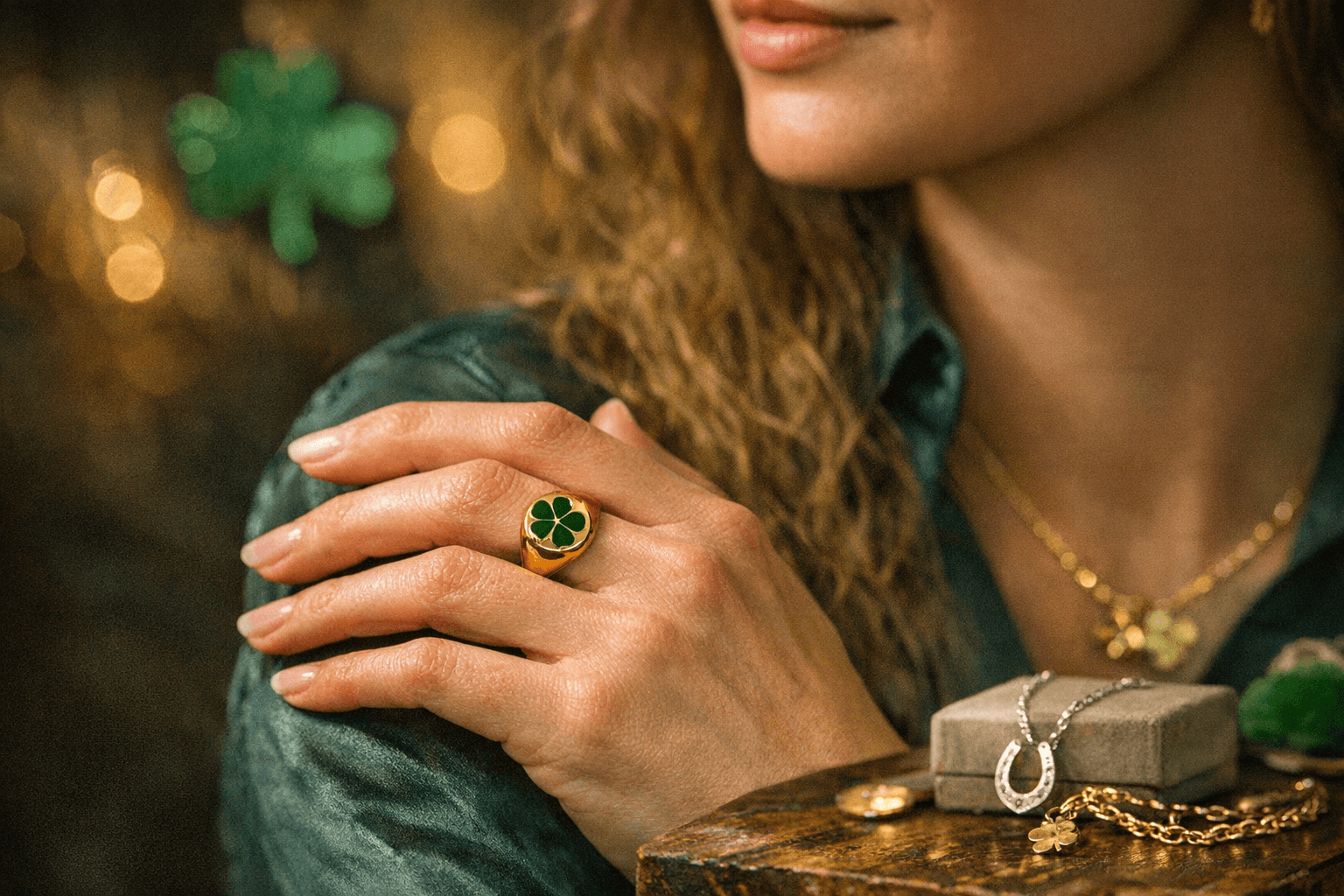
The phrase "small personal talisman" is worth holding onto. It captures precisely what separates this tier of lucky jewelry from the seasonal impulse buy: the idea that the piece carries something forward, long after the day itself has passed.
A Broader Field of Bold Interpretations
Jenna London is not alone in recognizing the opportunity. Several other designers have brought their own readings of the lucky-symbol canon to the season. Lionheart is working in two distinct symbol registers, offering a chai piece alongside horseshoe earrings — a pairing that speaks to the brand's interest in crossing cultural traditions within a single collection. Marlo Laz, a label known for its charm-forward sensibility and layered storytelling, is represented with a luck-themed piece that fits squarely within its narrative approach to fine jewelry.
KIL's contribution, the stoned Skullicello, deserves particular attention for the sheer audacity of the concept: the name fuses skull iconography with the cornicello's Italian horn DNA, which suggests a piece that treats luck and mortality as two sides of the same amulet. It is the kind of design move that works precisely because it refuses to be decorative.
Oak Luna's offering plays in the luck territory as well, while Seal Scribe rounds out the field with a birds-themed piece — a motif that carries its own deep associations with freedom, fortune, and omen across dozens of cultures. The Tourmaline Clover Brooch, rendered in one of the most chromatically expressive gemstones available, brings the clover into brooch format: a category experiencing a genuine critical revival as jewelry enthusiasts rediscover the shoulder and lapel as placement points.
Why Lucky Jewelry Is Never Really About Luck
The signet ring, the charm bracelet, the horn pendant, the chai — what connects these forms across cultures and centuries is not superstition but something more durable: the human desire to carry meaning on the body. The best pieces in this space succeed because they understand that distinction. A clover etched into sterling silver means nothing on its own; a clover etched by a designer who has genuinely reckoned with why it matters, set into a format with centuries of intentional use behind it, becomes something a person wears every day and eventually passes on.
St. Patrick's Day gives the market a moment to surface these pieces, but the pieces themselves, when made well, outlast the occasion by years.
This article was produced by Prism’s automated news system from verified source data, official records, and press releases, then run through automated quality and moderation checks before publishing. The system is built and supervised by the people who set the standards it runs under. Read our full AI policy.
Did this article answer your question?