Meaningful Jewelry Rises as a Mindful Alternative to Fast-Fashion Accessories
Consumers are choosing jewelry with provenance, purpose, and emotional weight over disposable accessories, and the brands meeting that demand are rewriting what fine jewelry means.
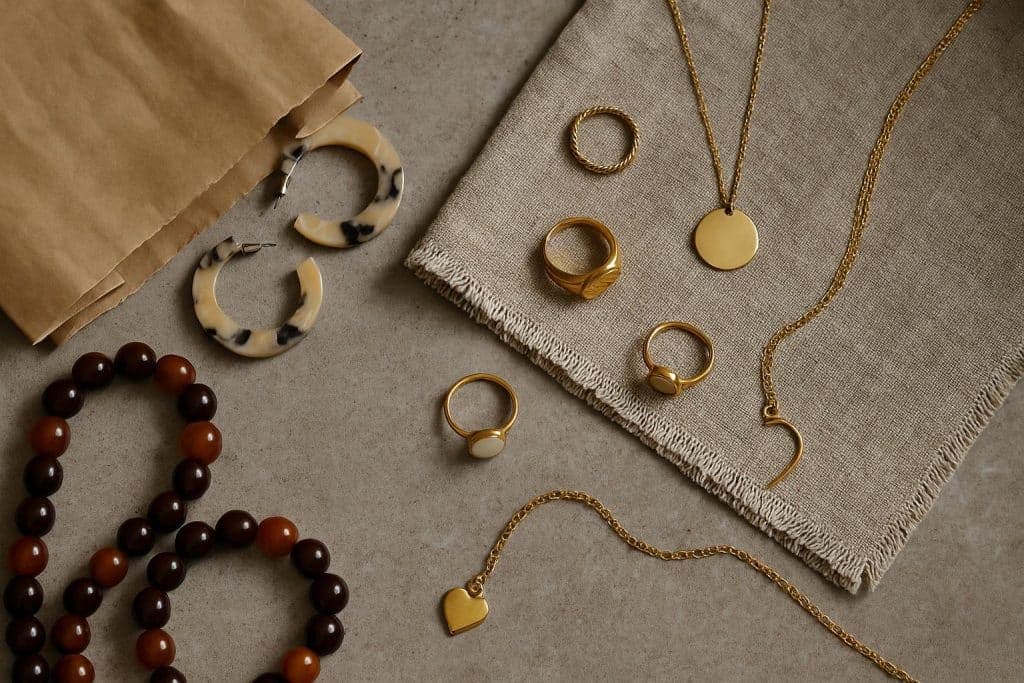
Fast fashion's grip on accessories is loosening. After years of fast fashion, mass production, and trend fatigue, consumers are gravitating toward pieces that feel personal, soulful, and enduring. The shift isn't subtle: consumers are moving away from "mindless" consumption toward purchases that serve a function in their mental well-being. Jewelry, more than almost any other category, is uniquely positioned to fill that space. A ring engraved with a date, a necklace set with a birthstone, a bangle worn as a daily ritual: these aren't accessories so much as anchors.
Why Meaningful Jewelry Is Winning
Luxury in 2026 is defined less by logos and more by emotional value. The drivers behind this shift are layered: sustainability, emotional attachment, and durability all play a role. Consumers are moving away from disposable fashion jewelry. Pieces are chosen with care, layered slowly, worn repeatedly, and styled thoughtfully. There's also a quiet recalibration of what constitutes value. It appeals to those who prefer investing in fewer but meaningful pieces instead of following fast fashion; meaningful jewelry is also increasingly chosen as a thoughtful and lasting gift.
This year, the focus moves away from fleeting aesthetics toward "emotional durability," jewelry that not only looks exquisite but also enhances psychological well-being. That framing has found an audience well beyond fine jewelry collectors. First-time buyers, often in their twenties, are skipping the fast-fashion jewelry loop entirely and going straight to pieces built to last decades.
The Everyday-Wear Imperative
One of the most significant practical shifts is the move toward jewelry designed for daily wear rather than occasional display. The jewelry trend of 2026 signals a definitive pivot to Everyday Luxury. The modern consumer views jewelry as a daily fashion essential rather than a locked-away asset, driving the popularity of 18K solid gold, which offers the perfect balance of purity at 75% gold and genuine durability.
Personalization continues to be one of the most powerful drivers in jewelry purchasing, and in 2026 it's all about storytelling. These designs go beyond aesthetics, allowing wearers to carry names, dates, symbols, and milestones close to the heart. Engraved initials, meaningful dates, birthstones, symbolic shapes, and subtle design elements transform jewelry into deeply personal keepsakes.
Stuller, one of the industry's most closely watched trend indicators, notes that this personalization impulse is reshaping entire product categories. Birthstones are especially influential, appearing in everything from stacked rings and pendants to bracelets and earrings, giving consumers a tangible way to honor loved ones, commemorate milestones, or mark new beginnings.
What Sustainable Actually Means (and What It Doesn't)
The word "sustainable" gets overused, so precision matters here. True sustainability in jewelry requires complete supply chain transparency, allowing consumers to trace their pieces back to their origins. It's not enough for a brand to claim their jewelry is "eco-friendly": they must provide verifiable proof of their sourcing practices, manufacturing processes, and environmental impact.
The material choices divide broadly into metals and stones. Rather than resorting to mined minerals, sustainable jewelry brands use recycled precious metals like gold and silver, which reduces the demand for new mining and lessens environmental disruption. A common misconception is that recycled gold is somehow inferior: recycled gold is chemically identical to newly mined gold once refined to the same purity level. The molecular structure and properties are indistinguishable. The only difference is environmental impact: recycled gold eliminates mining's destructive effects while maintaining identical quality and durability.
On the stone side, lab-grown diamonds and gemstones have moved from alternative to norm-setting in many categories; they are physically, chemically, and optically identical to mined counterparts and often cost substantially less. The price differential is striking: a GIA-certified 1.51ct, D Color, VVS1 ideal-cut natural diamond runs around $16,530 compared to approximately $2,390 for its lab-grown equivalent, with lab-grown diamonds now capturing 56.8% of the 1-carat engagement ring market in the US. However, the best practice is to validate the lab's energy sources and published impact data rather than assume every lab-grown stone is low-carbon.
Certifications Worth Knowing
Not all ethical claims are equal. The industry conversation has matured from "should we" to "how we prove it," with the Responsible Jewellery Council (RJC), Fairmined, Fairtrade, and the Kimberley Process supporting traceability and worker safeguards. Here's what to look for on a brand's sourcing page:
- Fairmined or Fairtrade Gold: Certified gold sourced from responsible small-scale mines that meet strict social, environmental, and labor standards.
- Conflict-free diamonds: Diamonds verified through the Kimberley Process or sourced from suppliers with transparent, traceable supply chains.
- RJC certification covers overall sustainability standards; B Corp certification covers comprehensive social and environmental performance; SCS Global Services offers verified recycled content claims.
- The SCS-007 Sustainability Rated Diamonds certification, developed by SCS Global Services, represents one of the most comprehensive standards available for diamonds specifically.
Be wary of vague language. If a brand avoids giving details about sourcing, that's a red flag. True ethical jewelry brands are proud to show their supply chain.
Brands Setting the Standard
Several names are leading by example with verifiable practices, not marketing language. Savannah Friedkin's fine jewelry brand, which only launched in spring 2024, features 100 percent certified recycled precious metals and climate-neutral lab-grown diamonds. The label distinguishes itself as one of the earliest adopters of the SCS-007 Sustainability Rated Diamonds certification, and Friedkin personally audits suppliers to ensure ethical practices, including renewable energy use and fair labor standards.
Bario Neal, founded by designers Anna Bario and Page Neal, is known for its quality handmade pieces and progressive manufacturing processes. Each item is carefully crafted in their Philadelphia flagship store using Fairmined gold, reclaimed precious metals, and ethically sourced stones. Bario Neal's jewelry transcends heteronormative ideals, with gender and size inclusivity at the forefront of its design ethos.
Pandora has committed to using 100 percent recycled silver and gold across its jewelry, significantly reducing the environmental impact tied to metal extraction. The brand has also set science-based climate targets aligned with the Paris Agreement and publicly reports on progress related to emissions, sourcing, and labor standards. For buyers seeking accessibility without sacrificing accountability, that kind of public reporting sets a meaningful bar.
UK-based Alighieri uses entirely recycled bronze and silver before plating and casting with gold. The result is heavy, sentimental pieces that transcend time and trends. Meanwhile, Los Angeles-based Bagatiba specializes in timeless, handcrafted sustainable pieces, spearheading closed-loop upcycling initiatives that include managing energy consumption, using recycled metals, eliminating single-use plastics, and using recyclable and biodegradable packaging.
The Long-View Case for Buying Better
The economics of meaningful jewelry hold up under scrutiny. Sustainable jewelry pricing reflects fair artisan wages, ethical material sourcing premiums, transparent supply chains, quality construction methods, and smaller production volumes. However, superior durability delivers better long-term value. A well-made piece in solid 18K gold or recycled sterling silver will outlast dozens of plated alternatives, and the jewelry industry is increasingly embracing circular economy principles: designing for longevity, repair, refurbishment, and eventual recycling.
Longevity also comes from professional maintenance. Prong retipping, secure solder joints, gemstone replacement, pearl stringing, and watch servicing keep heirloom and daily-wear pieces out of the waste stream. When buying, request repair guidance and recommended intervals, and consider whether the design allows future resizing and stone changes.
Blockchain technology is emerging as the verification standard for ethical jewelry claims, enabling consumers to trace materials from source to finished product. As that infrastructure matures, the gap between a brand that claims sustainability and one that proves it will become impossible to ignore. The pieces worth wearing every day, passing down, and investing in are the ones with nothing to hide.
This article was produced by Prism’s automated news system from verified source data, official records, and press releases, then run through automated quality and moderation checks before publishing. The system is built and supervised by the people who set the standards it runs under. Read our full AI policy.
Did this article answer your question?