Modular Jewelry Designs Reshape Personal Expression, Redefining the Market
Nomination s.r.l. is at the center of a shift redefining how people wear jewelry: as a curated, modular life-history rather than a status symbol.
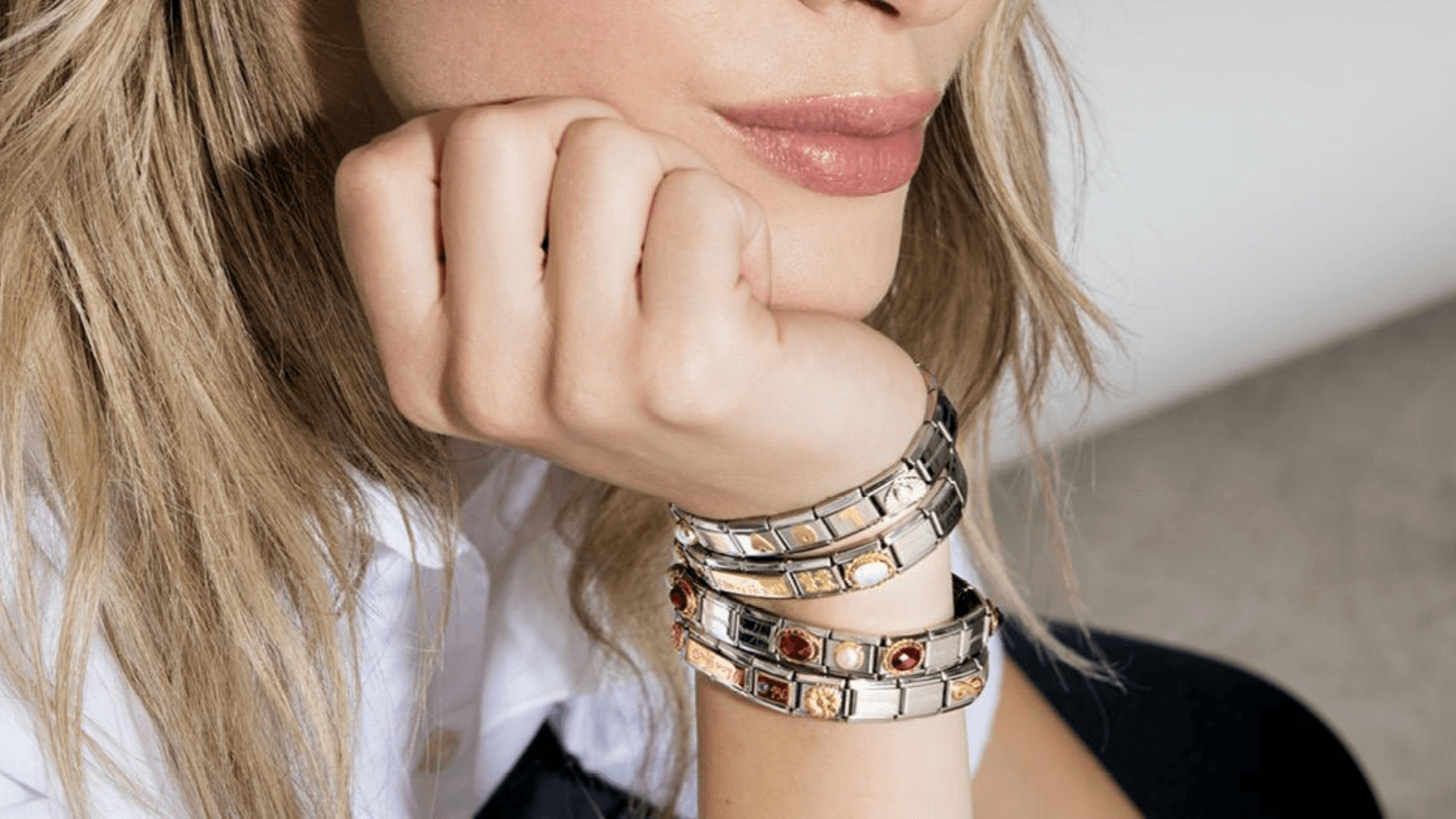
Nomination s.r.l. built its reputation on a deceptively simple premise: a stainless steel bracelet with interchangeable links, each one a small window into a person's story. That premise, once a niche novelty, has become the organizing logic of how a growing number of consumers think about jewelry altogether. The "Made in Italy" label used to conjure formal gold chains or high-fashion leather goods. By 2026, it increasingly signals something more intimate: modular, customizable systems designed not to impress at a distance but to accumulate meaning over time.
The Rise of the Curated Wrist
The current popularity of customizable jewelry traces back to something deeper than aesthetics. "In a digital era dominated by ephemeral trends, there is a measurable demand for physical objects that hold specific, personal meaning." That observation cuts to the heart of why link bracelets and modular charms are outpacing conventional accessories in consumer interest. When your social feeds reset every 48 hours and your algorithm-driven wardrobe shifts seasonally, a bracelet you've been building since your first trip abroad, or the birth of a child, or a career milestone, becomes a rare fixed point.
Modular systems allow the wearer to function as an editor of their own collection rather than a passive recipient of a designer's vision. Brands like Nomination have popularized this approach through link-based bracelets where each insert, whether enamel, stone, or engraved metal, occupies a discrete visual slot. The result is a piece that is always unfinished in the best sense: open to revision, expansion, and reinterpretation as life changes. This "personal editor" phenomenon repositions the jewelry buyer not as a consumer of finished objects but as a curator assembling a tactile life-history, link by link.
What makes this meaningful from a provenance standpoint is that the editing process is traceable. Each charm or insert a buyer adds carries a specific occasion. The bracelet becomes, in effect, a physical timeline worn on the wrist, one that requires no caption or context to communicate something true about the person wearing it.
Nostalgia and the New Vintage Aesthetic
The generational appetite driving this shift is worth examining closely. The "New Vintage" trend, favored by Gen Z and Millennial consumers, draws on the visual language of the early 2000s, a period when charm bracelets and link systems were ubiquitous in mall jewelry stores and teen accessories. But the demand this time is categorically different. These same consumers are now insisting on higher production quality, durable materials, and transparent manufacturing origins. Early 2000s aesthetics with 2026 standards: that is the brief, and it is a genuinely difficult one to meet.
Italian-built modular systems sit well within that brief. Stainless steel components, when manufactured with precision, offer both durability and a clean, contemporary finish that holds up against the layered, eclectic styling that defines how younger consumers wear jewelry today. The nostalgia is real, but it is selective. The chunky plastic links of 2003 have been replaced by engineered metal systems where tolerances and finish quality matter, and where the "Made in Italy" designation carries weight precisely because it implies accountability to a craft tradition.
This is where the ethical dimension of the trend becomes legible. The rejection of mass-produced accessories, which the shift toward modular jewelry represents, is partly aesthetic but also partly ethical. Consumers asking "where was this made?" and "can I wear this for twenty years?" are asking the same question in different registers. A modular system you add to over a decade is, by definition, a more sustainable relationship with jewelry than a drawer full of trend-driven fast-fashion pieces replaced each season.
The Foundation of Regional Craftsmanship
In the landscape of American fashion, the "Made in Italy" designation has long carried a specific weight. Historically, that weight attached itself to formal gold pieces and luxury leather goods, categories where Italian craftsmanship was the benchmark and the premium was unquestioned. The shift underway by 2026 extends that authority into a new category: modular and customizable stainless steel components, a sector that until recently sat beneath the attention of traditional luxury houses.
This transition has fueled renewed interest in Italian jewelry specifically, as shoppers move away from mass-produced accessories toward pieces that can be modified to reflect individual milestones and aesthetic preferences. Stainless steel, often underestimated as a fine jewelry material, offers corrosion resistance, hypoallergenic properties, and a surface hardness that gold cannot match at comparable price points. When that steel is precision-cut and finished in a regional Italian workshop with a traceable production chain, the material argument for it becomes considerably stronger.
The regional craftsmanship story also matters because it answers a question that responsible jewelry buyers increasingly ask: not just "what is this made of?" but "who made it, and under what conditions?" The "Made in Italy" designation, when it reflects genuine domestic manufacturing rather than finishing-only assembly, provides a degree of answer to both questions. It is not a full accounting, and diligent buyers should still ask whether a brand's "Made in Italy" claim covers the entire production process or only the final steps. But as a baseline indication of craft standards and supply chain accountability, it carries more signal than a generic import label.
What to Look for in a Modular Jewelry System
If you are considering building a modular collection, the questions worth asking before you invest are practical and principled in equal measure:
- Where are the components manufactured, and does the brand provide documentation of its production origin?
- What material grade is the stainless steel, and has the brand disclosed its hypoallergenic certifications?
- Are replacement and expansion links available years after purchase, or is the system designed with planned obsolescence?
- Does the brand offer a repair or refurbishment program, which is the clearest signal that a product is built to last?
- Is the "Made in Italy" claim verifiable, meaning does it cover fabrication and finishing, or only final assembly?
A modular system that scores well across those questions is not just a more ethical purchase; it is a more intelligent one. A bracelet you build over fifteen years, adding a link for a child's birthday or a country visited or a decade survived, is jewelry functioning at its most intentional. That is what the best Italian modular systems, Nomination's among them, have understood for decades and what the broader market is only now catching up to appreciate.
The category is still maturing. Hard sales data on the modular jewelry segment's growth rate, pricing comparisons between stainless steel modular systems and gold-link alternatives, and independent verification of specific brands' manufacturing claims are all areas where more transparent industry reporting is needed. For now, the cultural signal is clear: the jewelry buyer of 2026 is less interested in wearing a brand's story and more interested in wearing their own.
This article was produced by Prism’s automated news system from verified source data, official records, and press releases, then run through automated quality and moderation checks before publishing. The system is built and supervised by the people who set the standards it runs under. Read our full AI policy.
Did this article answer your question?