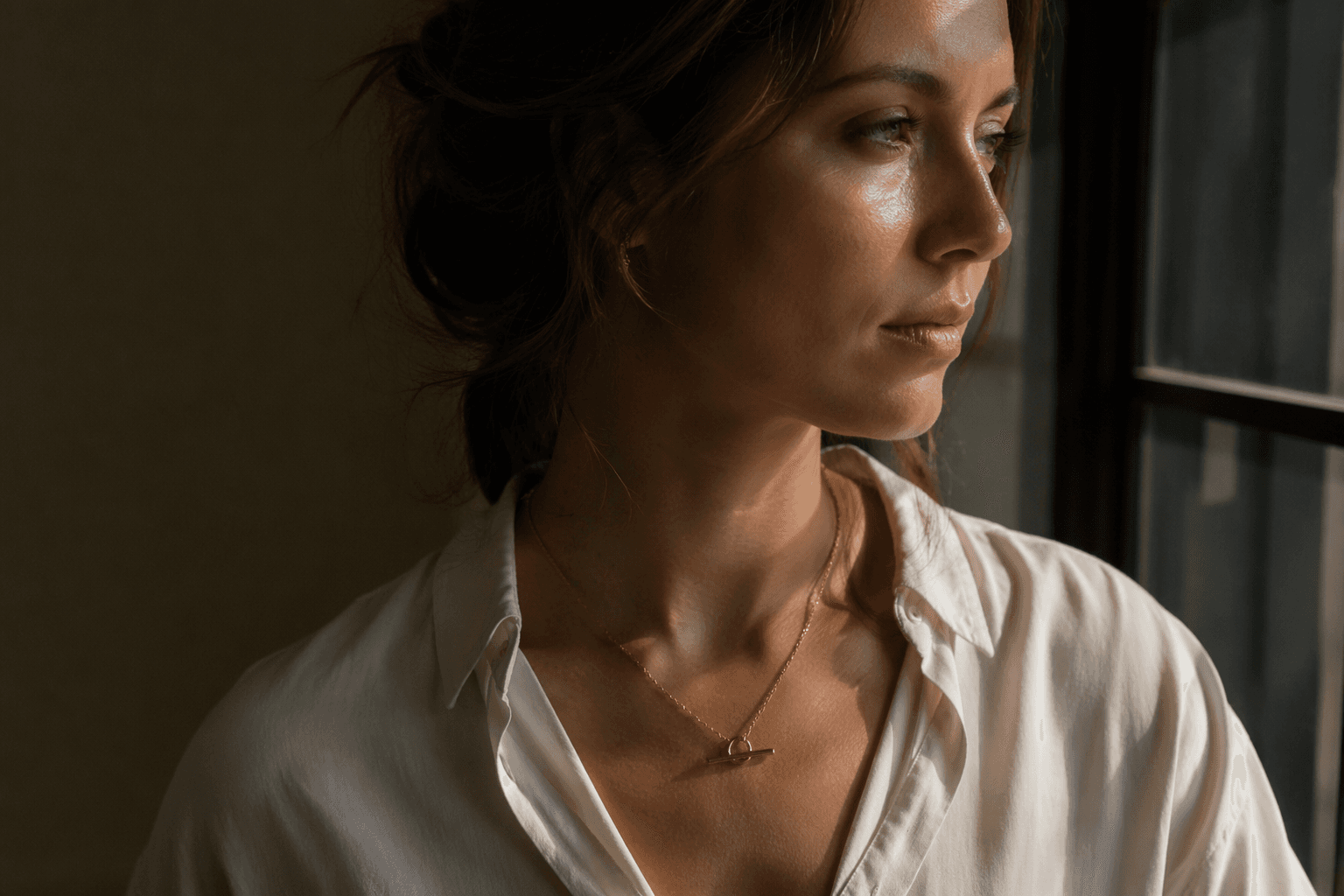
Oscars 2026 Spotlights Colored Gems, Chokers, and Brooches as Meaningful Jewelry Trends
Forbes spotlights three Oscars 2026 accessory trends redefining meaningful jewelry: colored gems, chokers, and brooches worn as personal storytelling.

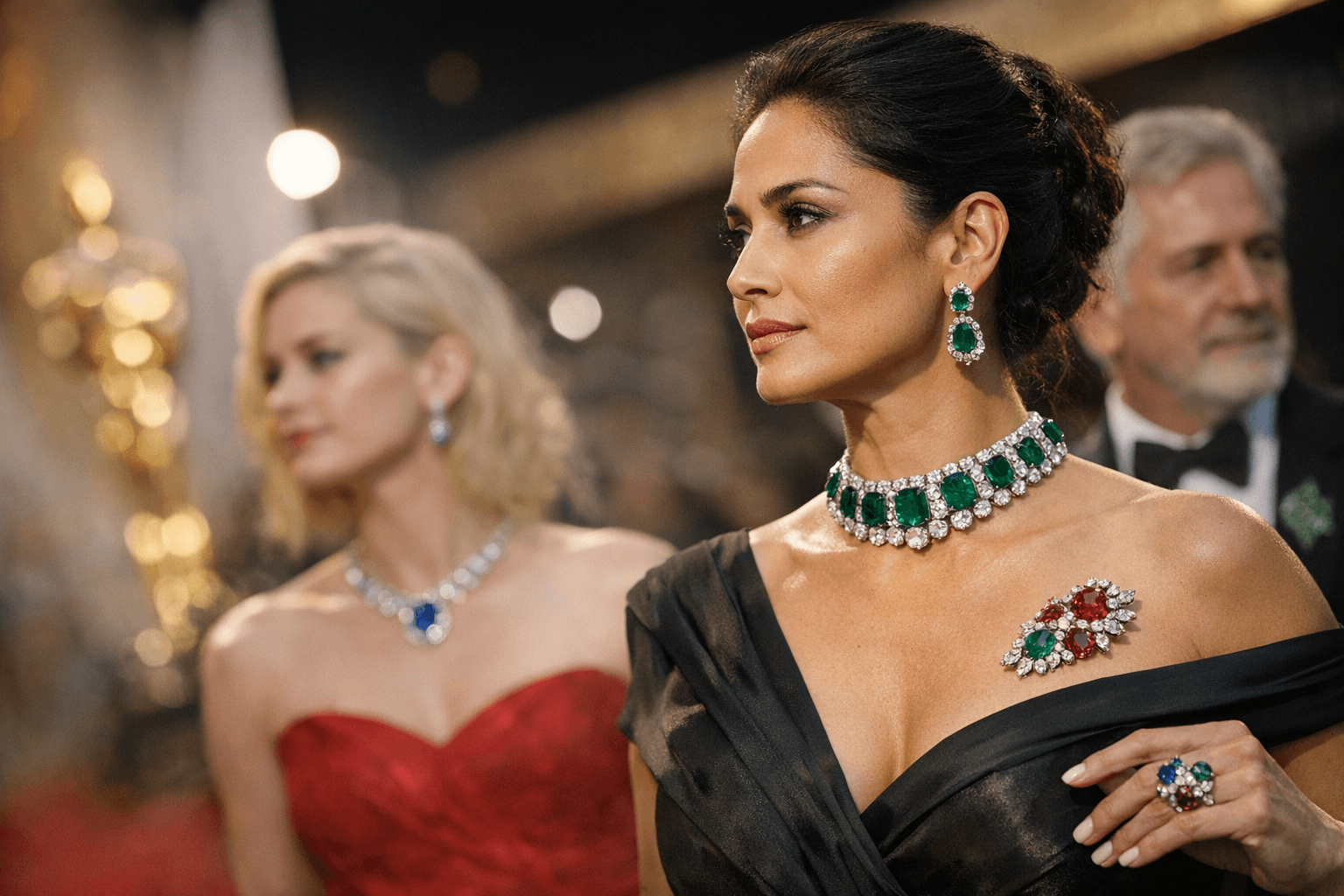
Forbes named three accessory trends emerging from the Oscars 2026 red carpet that speak directly to how fine jewelry functions as personal narrative: colored gemstones worn as emotional signifiers, the choker's return as a storytelling device for the neck, and the brooch reasserting itself as an identity-forward statement. The magazine's March 17 analysis arrived two days after the ceremony, and its framing is worth noting: rather than cataloguing which celebrities wore which pieces, it organized the conversation around meaning. These are not trends about aesthetics alone. They are trends about what jewelry communicates, and why that communication matters now.
Colored Gemstones: Emotion Made Tangible
There is a reason rubies have historically signified passion and sapphires have carried associations with wisdom and fidelity. Colored gemstones carry centuries of symbolic weight, and the Oscars red carpet has long been a stage where that symbolism is performed in public. What Forbes identified in 2026 is a shift in how that performance reads: colored stones are no longer simply decorative choices calibrated to complement a gown. They are being selected and styled as emotional signifiers, stones chosen for what they mean rather than merely how they look.
This distinction matters gemologically as much as culturally. A ruby is not just red; it is a chromium-colored corundum with a saturation and hue that reads differently than a spinel, a garnet, or a tourmaline in the same color family. When a stylist or jeweler selects a specific stone, the choice encodes a specific intention. The move toward colored gems as meaning-carriers invites a more literate conversation about stones: their origins, their treatments, their individual characters. A Colombian emerald with its characteristic jardin, the garden of internal inclusions visible to the naked eye, tells a different story than a clean, heavily treated stone. Origin matters. Provenance matters. The gem becomes a text.
For collectors and buyers, this trend represents an opportunity to engage with stones on terms that go beyond the four Cs. Ask where a stone came from. Ask what it has historically meant. Ask whether its color is natural or heat-enhanced, and what that distinction means for value and for narrative. The Oscars made colored gems aspirational; the real work is understanding what you are investing in.
The Choker's Return: The Neck as Storytelling Canvas
The choker's cultural biography is long and contradictory. It has read as aristocratic, punk, gothic, and girlish at various moments across several centuries. Its return to the Oscars red carpet in 2026 carries a different register: Forbes frames it as the neck becoming a storytelling canvas, a site where jewelry does deliberate narrative work rather than simply adorning a décolletage.
This framing invites attention to construction in a way that longer necklaces rarely demand. A choker sits at the throat, a location where movement, breathing, and speech all converge. The setting style becomes critical: a rivière of old-cut diamonds in a shared-prong setting moves differently and reads differently than a rigid collar of bezel-set cabochon rubies or a velvet ribbon hung with a single antique charm. The materials speak. A high-polished gold mesh choker communicates fluidity and modernity; an Edwardian diamond choker reconstructed from a tiara speaks to lineage and transformation. Neither is simply decorative.
From a craftsmanship standpoint, chokers demand technical precision that longer necklaces can obscure. The clasp must be both secure and elegant, because it is often visible. The interior edges, which rest directly against the skin, must be finished without sharp prongs or rough bezels. The length must be calibrated with unusual care, because a millimeter too tight reads as restraint while a millimeter too loose loses the architectural quality that defines the silhouette. These are details a maker either masters or doesn't, and the Oscars red carpet, where the camera is merciless, makes the distinction visible.
The meaningful jewelry reading here is compelling: the choker positions a piece at the literal site of voice, of speech, of self-expression. That proximity is not incidental. It gives the jeweler, the stylist, and the wearer a pointed argument for intentionality in the choice of stone, setting, and design.
The Brooch: Identity in a Single Pin
Of the three trends Forbes identified, the brooch carries perhaps the longest and most layered history as a vehicle for meaning. Medieval brooches were legal documents of a kind, marking rank and allegiance. Victorian mourning brooches held hair. Suffragette brooches deployed green, white, and purple stones as coded political speech. The brooch has never simply been an ornament; it has always been an argument.
Its return to the Oscars in 2026, framed by Forbes as expressive and identity-forward, sits within that tradition while reflecting something particular about this cultural moment. The brooch refuses the logic of the necklace or the bracelet, which follow the body's natural lines. A brooch punctuates. It is placed deliberately on a lapel, a shoulder, a sash, and that placement is itself a statement. The wearer decides where emphasis lands. The brooch is the most editorial of all jewelry formats.
Gemologically, brooches reward examination at close range in a way that earrings and bracelets do not always invite. A well-made brooch is a miniature sculpture: the setting might incorporate pavé-set diamonds around a central cabochon, milgrain detailing along the edges, and a hand-engraved back plate that no audience will ever see. That invisible craftsmanship is the mark of a piece made to last across generations rather than a season.
The identity-forward framing Forbes applies is significant. Wearing a brooch is an active choice in an era when most jewelry defaults to the understated. It declares something. It says: I know what this means, and I mean it. That quality makes the brooch one of the most resonant formats for meaningful jewelry as a practice: a piece chosen not for trend compliance but for what it communicates about the person who pins it on.
What the Oscars Red Carpet Actually Tells Us
The Oscars red carpet has always functioned as a cultural mirror, reflecting anxieties and aspirations in real time. What Forbes's March 2026 analysis reveals is that the jewelry conversation has shifted from spectacle to significance. The stories being told through colored gems, chokers, and brooches are stories about emotion, identity, and the deliberate use of adornment as language.
For anyone navigating the fine jewelry market with intention, these three trends offer a useful frame: choose stones for what they mean and where they come from; treat the neck as a considered site of expression rather than simply a surface for a chain; and remember that the brooch, the oldest and most argumentative of jewelry forms, is ready to make your case. The red carpet confirmed it. The question now is what you want to say.
This article was produced by Prism’s automated news system from verified source data, official records, and press releases, then run through automated quality and moderation checks before publishing. The system is built and supervised by the people who set the standards it runs under. Read our full AI policy.
Did this article answer your question?