Sotheby's Paris Sale Hits $7.4M as Signed Pieces, Provenance Drive Record Results
A Cartier ruby ring sold for eight times its estimate at Sotheby's Paris, as signed pieces powered a €6.4M sale total.
The pieces that command the rooms at fine jewelry auctions share one quality before any gemological consideration: they carry a name. That name is not decoration. It is a compressed argument, pressed in letters stamped inside a shank, for design integrity, historical continuity, and a chain of custody that collectors can trace. At Sotheby's Paris on March 31, that argument was made in numbers.
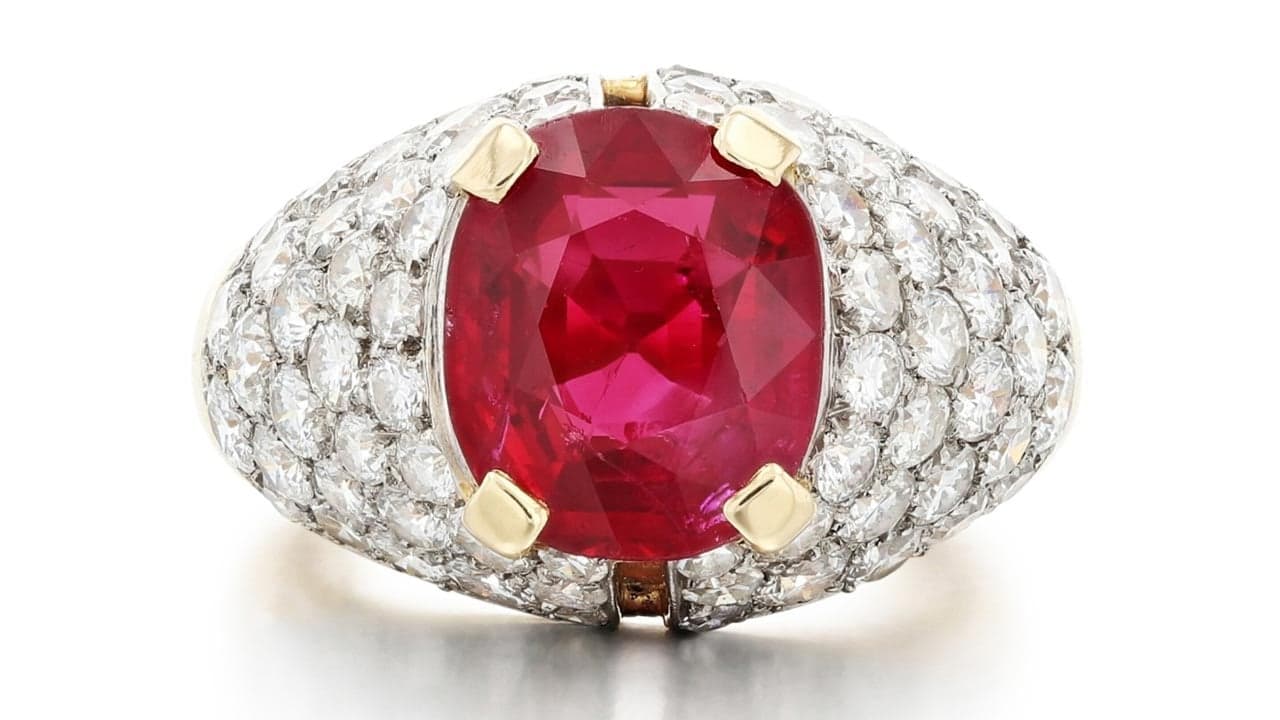
The sale totaled €6.4 million ($7.4 million), and signed pieces drove the most dramatic results of the day. The headline was a Cartier ruby and diamond bombé ring that realized €486,400 ($560,322), more than eight times its high presale estimate of €60,000 ($69,119). The ring centers an oval cushion-shaped, 4.12-carat Burmese ruby, surrounded by brilliant- and single-cut diamonds in the rounded, dome-shaped architecture that Cartier's mid-century ateliers perfected. Before that lot closed, the presale estimate implied a fine colored-stone ring. When bidding stopped, it had become a case study in what a Cartier signature can do to a price.
The rest of the top lots reinforced the pattern. A 33-pearl natural pearl necklace with an octagonal rhodolite garnet and diamond clasp sold for €409,600 ($471,851), against a high estimate of €260,000, a 57 percent premium over the top of the range. A Dinh Van ring set with a rectangular step-cut, 13.80-carat Burmese sapphire in an openwork mount realized €364,800 ($420,242), more than 2.6 times its €140,000 high estimate. A Harry Winston ring bearing a rectangular cut-cornered, 7.83-carat, E-color, VS1-clarity diamond between baguette-cut stones sold for €243,200 ($280,166). Alongside Cartier and Dinh Van, the sale drew pieces from Chaumet, Harry Winston, and Van Cleef & Arpels.
What the Cartier lot illustrates for anyone buying jewelry at any budget is that a signature contributes four distinct layers of value, none of which appear on a stone's grading certificate.
The first is design language. Cartier's bombé construction is not a generic dome ring. The silhouette appears in the house's archive, in reference books, and in prior auction results. Collectors can place it within a decade, cross-reference it against comparable lots, and build a rational argument for its value trajectory. An unsigned ring of identical materials offers none of that scaffolding.
The second is provenance traceability. A signed piece by a major maison carries workshop records, serial numbers, or signed documentation that can be independently verified. This matters especially for Burmese rubies, which carry a significant premium over stones from other origins. The 4.12-carat ruby in the Cartier ring is documented as Burmese, and the combination of origin certification with the Cartier atelier attribution creates two converging provenance chains. Serious bidders verified both before raising a paddle.
The third is serviceability. Cartier, Van Cleef & Arpels, and Harry Winston operate conservation and restoration programs that allow a signed piece to be returned to the original maker for prong re-tipping, rhodium refinishing, or period-appropriate stone replacement. That is not a marginal point for a piece someone intends to wear. It directly affects long-term condition and, by extension, resale value.
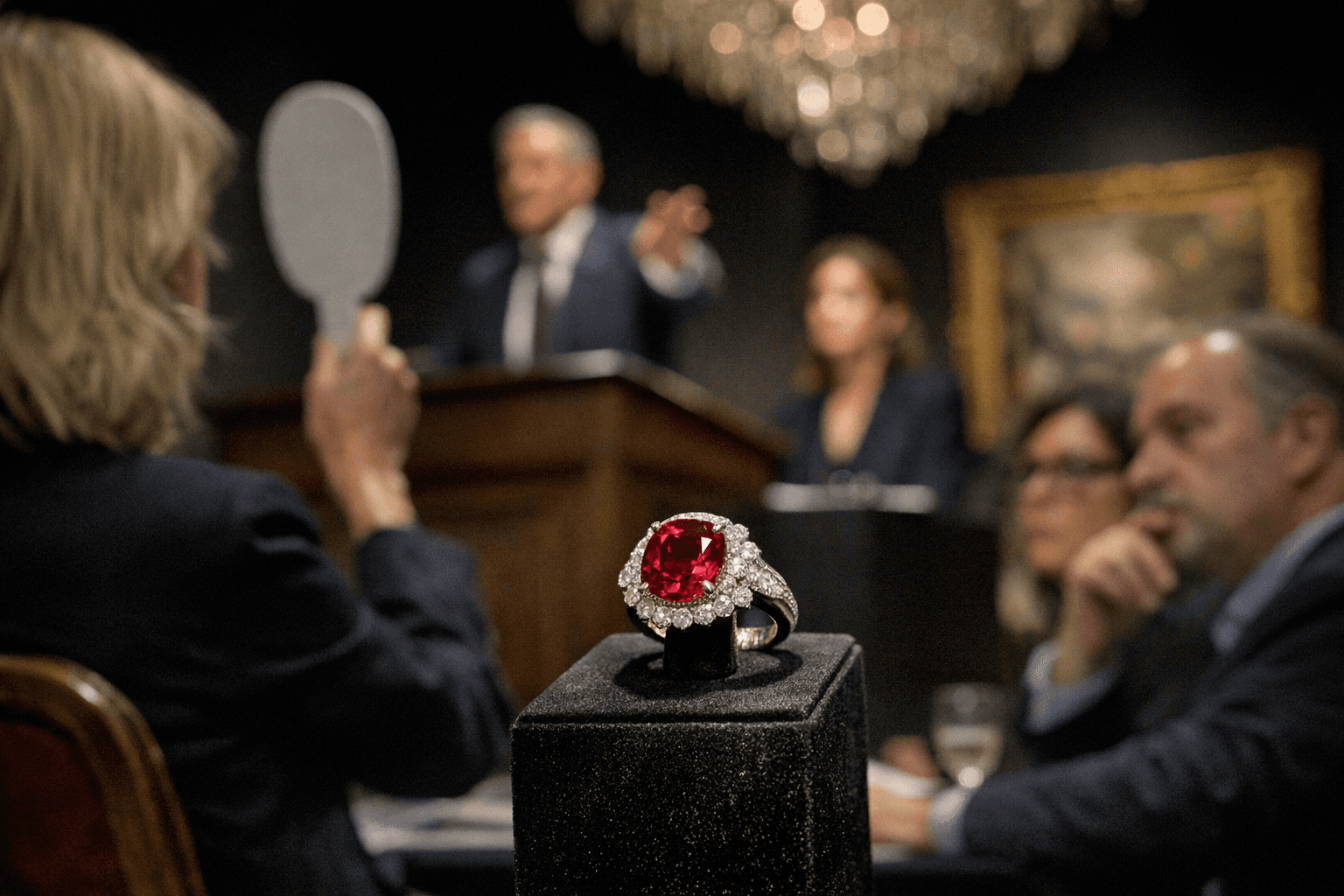
The fourth is collector demand. When a signed piece appears at auction, it activates a sub-market of house collectors who track pieces by maison rather than by stone quality alone. The Cartier bombé ring entered a room of bidders already predisposed to want it specifically, a dynamic that unsigned rings, however fine their stones, simply cannot replicate.
For readers evaluating colored-stone rings at any price tier, the March 31 results offer a practical framework. Start with origin documentation for the stone, from an independent laboratory such as Gübelin, GRS (Gemmological Research Switzerland), or GIA. For rubies in particular, Burmese origin and an unheated designation each carry a premium. The Sotheby's lot carried both. Then examine the ring itself for maker's marks. On French pieces, these typically appear stamped inside the shank alongside the eagle's head hallmark, which indicates 18-karat gold, and the maker's cartouche. The presence of both confirms material purity and workshop attribution simultaneously.
A condition report, from the auction house or, for a private purchase, from an independent appraiser, should note prong integrity, any prior re-tipping, stone security, and finish consistency. Signed pieces with evidence of unapproved repairs or replaced stones lose part of their provenance argument, and price should reflect that. For pieces attributed to specific maisons, third-party authentication can confirm whether a signature is genuine and whether the construction is consistent with the period claimed.
The Dinh Van sapphire ring is worth examining in this context as well. Dinh Van, the Paris designer, is less universally recognized than Cartier, but the ring's openwork mount is a signature construction for the house, and the 13.80-carat Burmese sapphire is a gem-quality stone in any attribution. Its performance, more than 2.6 times estimate, shows that design coherence and stone quality can outperform expectations even when the maison name is not the most famous in the room.
Rubies have been particularly strong across recent Sotheby's Paris cycles. Burmese origin drives significant premiums, and unheated stones command further separation from the heat-treated majority of the market. At this level, buyers should expect certification from at least one recognized laboratory confirming origin and treatment status. For stones at more accessible price points, the same principles apply at reduced scale: origin matters, treatment history matters, and a verifiable chain of custody from a known retailer or prior auction adds a premium that no certificate alone can replicate.
What March 31 clarified is that the jewelry market at its most active rewards narrative coherence. A 4.12-carat Burmese ruby in a Cartier bombé ring, signed and documented, is not simply the sum of its carats and setting. Every element tells the same story in the same direction, and when that alignment is present, the bidding room responds accordingly.
This article was produced by Prism’s automated news system from verified source data, official records, and press releases, then run through automated quality and moderation checks before publishing. The system is built and supervised by the people who set the standards it runs under. Read our full AI policy.
Did this article answer your question?