Spring 2026 Jewelry Trends: Stylists Predict Mixed Metals, Layering, and Sculptural Styles
Stylists are calling five jewelry directions for spring 2026, and the common thread is intention: every piece should feel personal, purposeful, and worth keeping forever.
The jewelry conversations happening in stylist studios this spring share a single undercurrent: every piece should earn its place. Not as an afterthought pinned to a lapel, but as something chosen with the deliberateness of a signature. Across five distinct directions, spring 2026 jewelry moves away from decoration for its own sake and toward adornment that communicates, functions, and endures.
Mixed Metals and Layering: The Art of Accumulation
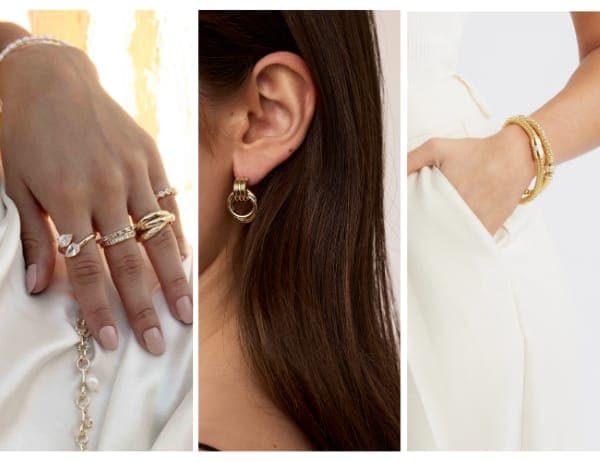
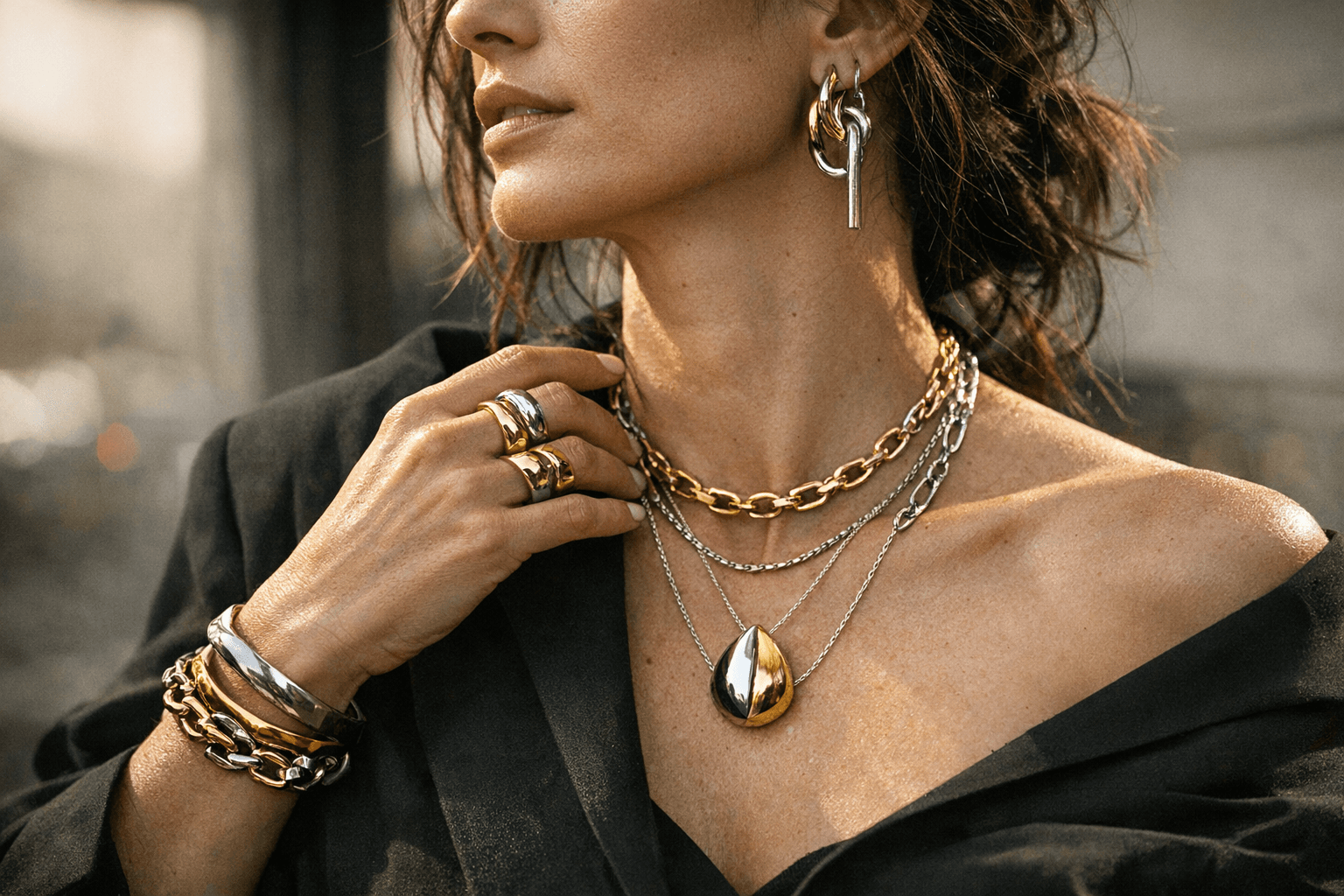
Mixed metals and layering remain powerful ways to make jewelry feel personal, and that observation cuts to the heart of why this direction keeps returning. Layering is not about piling on; it is about curation. A diamond line bracelet stacked against a yellow gold bangle creates a tension that neither piece achieves alone — the cool precision of the diamonds playing against the warmth of the metal. Stacking remains strong for 2026 precisely because it rewards commitment to a personal aesthetic over time. Each addition tells a chapter of the story.
The practical case for mixed metals is also worth making plainly: rigid matching rules have been set aside entirely. White gold, yellow gold, rose gold, and platinum can coexist on the same wrist or neckline, and the result reads as considered rather than careless when the proportions are right. Think of a slim yellow gold chain worn alongside a white gold pendant, or oxidized silver layered beneath a brushed gold cuff. The contrast, not the uniformity, is the point.
Meaning and Storytelling: Totems, Talismans, and Symbols
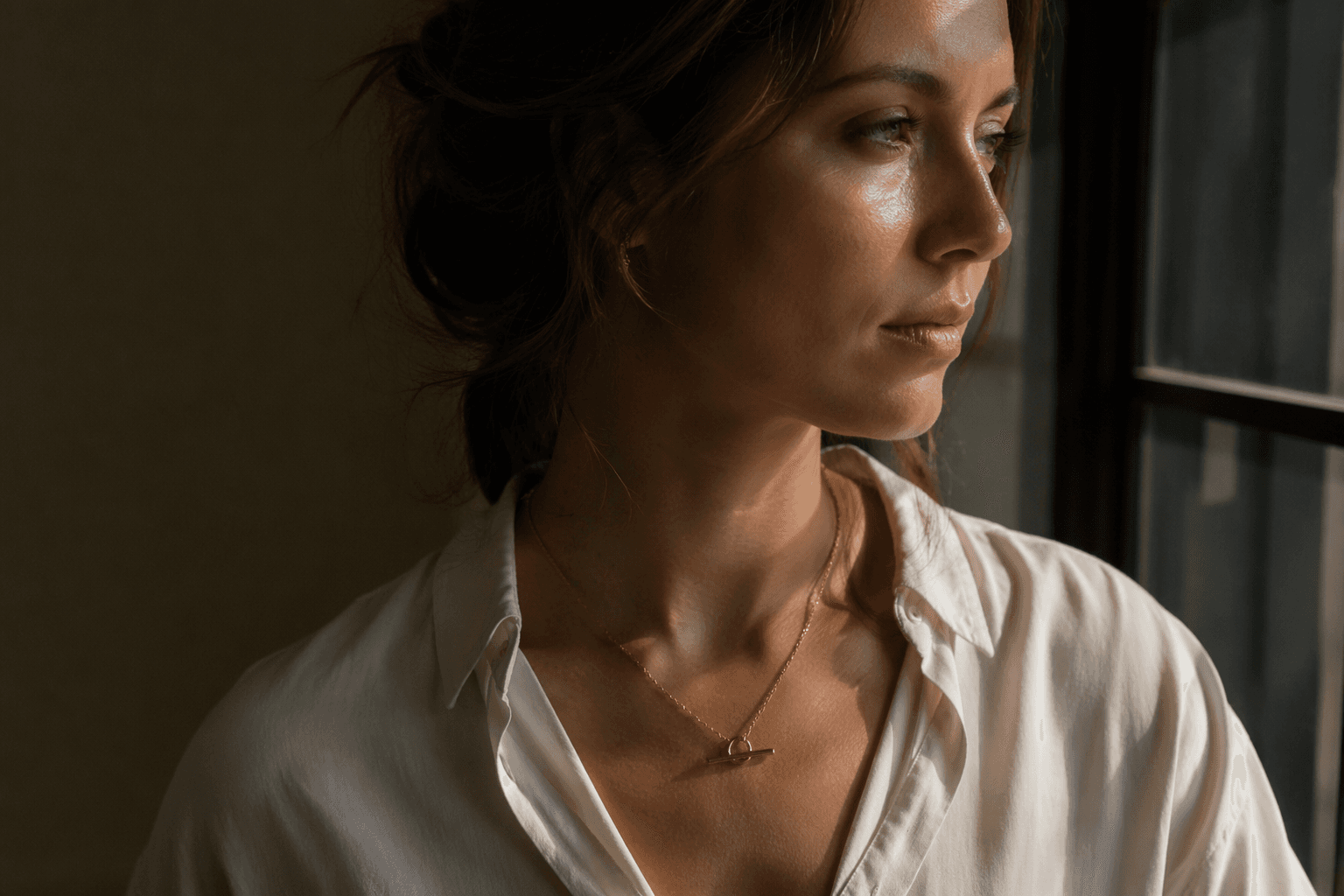
Statement pendants are back — but not as basic add-ons. They are styled as protective, sentimental totems, often worn long over simple tops, tanks, and tailoring. That shift in framing matters enormously. A pendant worn as a totem is chosen for what it means, not merely what it costs, and the styling reflects that: close to the body, unhurried, occupying space at the sternum or below.
Temple St. Clair is one of the most natural fits for that movement. The brand's new arrivals are filled with rare-color gemstones and emblematic motifs, serpents, owls, and lunar themes, made expressly for the season's talisman trend. The Delphi Serpent pieces offer a confident, sculptural statement; the lunar and owl lockets speak directly to the totem pendant trend and create a gorgeous layering story when combined. The styling directive here is disarmingly simple: a single symbolic pendant worn long over a white tee, exactly as runway styling suggests for 2026 pendants. The restraint of the surrounding outfit amplifies the weight of the piece itself.
Totemic pendants and symbolic jewelry are a defining 2026 direction, pieces that feel personal, protective, and storied. The distinction between a talisman and a pendant is ultimately one of intention, and that intention is readable to anyone who sees it worn.
High-Fashion Function: Utility as Luxury
From wallet necklaces to hardware-inspired pieces, fashion continues to merge adornment with practicality without sacrificing luxury. This direction asks a more interesting question than most trend conversations do: what if the jewelry also did something? Wallet necklaces, which hold cards or currency in a fine-metal envelope worn at the chest, collapse the boundary between accessory and object. Hardware-inspired closures and clasps bring the visual language of architecture and industrial design into fine jewelry, with results that feel graphic and purposeful rather than decorative.
The luxury dimension is non-negotiable in this context. The appeal is not utility stripped of beauty; it is the conceptual surprise of a piece that is both exquisite and useful. That duality is what distinguishes high-fashion function from simply practical accessories. When a wallet necklace is executed in 18-karat gold with a refined clasp mechanism, the function elevates the luxury rather than undermining it.
Sculptural Statements: Form as the Argument
The sculptural direction operates on the premise that a piece of jewelry can be read as three-dimensional art before it is read as adornment. Temple St. Clair's Delphi Serpent pieces are the clearest available expression of this: the serpent coiling with intention, the form carrying narrative weight, the setting itself becoming the statement. The serpent motif has deep roots in jewelry history, appearing across Greek, Roman, and Victorian traditions, but in its current iteration it reads as forward rather than retrospective, sinuous and confident rather than antique.
Sculptural jewelry rewards close attention in a way that flat, two-dimensional pieces often do not. The interplay of light across a formed surface, the way a coiled shape catches and releases shadow, the physical presence of a piece that has genuine volume: these qualities distinguish sculptural work from pieces that are merely bold in scale. For spring 2026, this direction pairs naturally with minimal, structured clothing, where the jewelry can occupy its rightful place as the dominant visual element.
Wearable, Intentional Sparkle: The Kwiat Argument
Spring jewelry trends may be bold, but the execution in fine jewelry is often about clean sparkle, refined settings, and pieces you will keep forever. That is Kwiat's wheelhouse, and it describes a particular kind of confidence in jewelry buying: the choice to invest in something quiet rather than loud, permanent rather than seasonal.
Recent retail coverage notes new Kwiat selections emphasizing the Starry Night direction and bezel-set designs, two approaches that align with spring's move toward wearable, intentional sparkle and a slightly more modern, graphic feel. The bezel setting, in which the diamond is encircled by a continuous rim of metal rather than held by prongs, offers both a cleaner visual profile and practical durability. For everyday wear, the bezel is the intelligent choice: it protects the stone's girdle, eliminates the snagging risk of prongs, and gives the piece a contemporary, architectural edge. Bezel-set diamond earrings deliver everyday polish without effort. Diamond line bracelets layered with gold bangles extend that logic to the wrist, where stacking remains strong for 2026 and the combination of refined sparkle against warmer metal creates exactly the kind of personal, layered story that defines the season.
Color as Context
Any account of spring jewelry that ignores color is incomplete. Spring/Summer 2026 color trends highlight energetic hues, violet, cobalt, cherry red, ballet pink, and unexpected clashes, and these are perfect for gemstone jewelry and mixed-metal styling. Violet sapphires and tanzanite step into their moment alongside cobalt-adjacent blue topaz; cherry red spinel and garnet read newly urgent; ballet pink morganite and rose quartz soften without going saccharine. The unexpected clashes are perhaps the most interesting directive: a cherry red pendant against a cobalt-blue outfit, or a violet stone set in yellow gold against a mixed-metal stack. Color worn with confidence is its own form of sculptural statement.
The five directions taken together describe a spring season that values permanence, personal meaning, and formal intelligence. Buccellati diamond hoop earrings worn alongside a diamond band ring at the ocean, Temple St. Clair's emblematic motifs held close at the throat: these are not trend moments. They are the kind of pieces that, decades from now, still make complete sense.
This article was produced by Prism’s automated news system from verified source data, official records, and press releases, then run through automated quality and moderation checks before publishing. The system is built and supervised by the people who set the standards it runs under. Read our full AI policy.
Did this article answer your question?