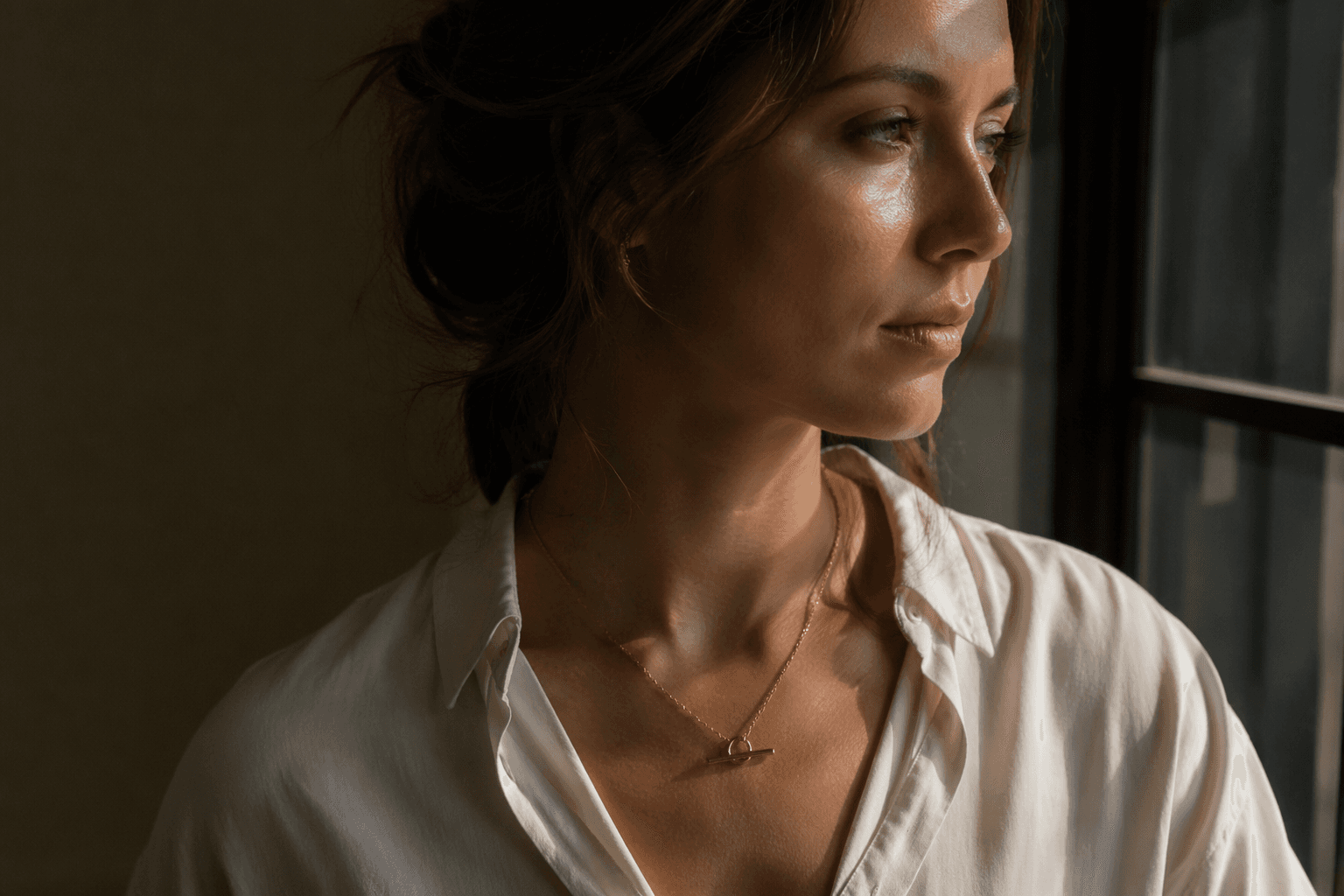
Symbolic Jewelry Gifts Deepen Bonds Beyond Traditional Relationship Milestones
Jewelry gifting is quietly breaking free from the wedding-anniversary calendar — couples now mark moving in together, personal goals, and quiet everyday moments with pieces chosen for meaning, not size.

Where once a diamond solitaire or engraved anniversary band represented the full vocabulary of jewelry as an emotional gesture, the grammar has expanded considerably. Rings, pendants, and delicate chains are now being exchanged on a Tuesday after a hard year, on a moving day, or the morning after a long-fought personal victory. The occasion isn't on any calendar. That's precisely the point.
This shift reflects a deeper understanding of relationships as ongoing journeys rather than a series of predefined milestones. Instead of waiting for a specific occasion, people are embracing the idea that meaningful gestures can happen at any time, and a simple, thoughtfully chosen piece can carry just as much significance as a traditional milestone gift, if not more.
Beyond the Wedding Calendar
Couples are now celebrating a wider range of experiences: moving in together, overcoming challenges, achieving personal goals, or simply marking a meaningful moment in time. Jewelry is often chosen as a way to capture these experiences in a tangible form. The engagement ring and the anniversary necklace still matter deeply, but they no longer hold a monopoly on the form. A recovery milestone, a career pivot, a friendship that survived something difficult — all of these have become legitimate occasions for a piece that will be worn and remembered long after the moment has passed.
Once dominated by traditional luxury codes and occasion-based purchases, modern jewelry consumption is increasingly driven by identity, storytelling, and personal symbolism. The question buyers are asking has changed, too. In a world where many products are easily accessible and quickly replaceable, meaning has become the true differentiator. People are increasingly asking not just "What should I buy?" but "What does this represent?" — a shift that reflects a broader cultural movement toward mindfulness and emotional awareness.
Jewelry as a Vehicle for Meaning
Symbolic gifting is reshaping how people express love, appreciation, and connection. By focusing on meaning rather than material value, individuals are creating deeper and more lasting emotional bonds through the act of giving.
What makes jewelry particularly well-suited to this role is its physical permanence. This transformation is particularly evident in the increasing popularity of symbolic jewelry. Rather than being viewed as purely decorative, jewelry is now being chosen for what it represents, having become a medium through which people express love, identity, commitment, and personal milestones in ways that feel authentic and enduring.
Symbolic gifts stand out because they carry intention. They go beyond surface-level appeal and communicate something deeper about the relationship between the giver and the recipient. A carefully chosen piece of jewelry, for example, can represent a shared memory, a promise, or even a personal transformation.
Another important aspect of modern symbolic gifting is versatility. Jewelry is no longer reserved for special occasions — it is meant to be lived in. Pieces are chosen not just for how they look, but for how they fit into daily routines and ongoing narratives.
The Design Shift: Unconventional Stones, Minimal Settings, Personal Symbolism
The move toward meaning-driven gifting is reshaping what people actually choose at the counter. The demand for unique engagement rings and personalized jewelry highlights this evolution. Rather than defaulting to conventional round-cut diamonds in prong settings, buyers are gravitating toward stones and forms that say something specific. This might mean a morganite for softness and new beginnings, a sapphire in a shade that matches a shared memory, or a plain gold signet ring engraved with coordinates that only two people understand.
This approach allows for greater creativity and personalization. Without the constraints of tradition, individuals can choose pieces that truly resonate with their unique story rather than conforming to expectations.
Color continues to play a large role in jewelry design, not just for its visual appeal, but also for its symbolism. Richly saturated gemstones, birthstones, and expressive color combinations allow customers to connect sentiment with style. Birthstones remain especially influential, offering a tangible way to represent loved ones or life chapters. Beyond that, consumers are increasingly drawn to stones with specific associations: protection, love, luck, guidance, or strength.
Personalization continues to be one of the most powerful drivers in jewelry purchasing, and in 2026, it's all about storytelling. These designs go beyond aesthetics, allowing wearers to carry names, dates, symbols, and milestones close to the heart. Engraved initials, meaningful dates, birthstones, symbolic shapes, and subtle design elements transform jewelry into deeply personal keepsakes, whether commemorating relationships, achievements, or self-expression.
In 2026, the most meaningful jewelry tells an individual story. Name necklaces, custom engravings, and birthstone jewelry transform beautiful objects into meaningful keepsakes. Engravable pendants and bangles provide space for important dates, coordinates, or messages, while birthstone jewelry highlights these meaningful gems in sophisticated, contemporary settings.
The Craftsmanship Question
The emphasis on meaning over mass appeal has also reset expectations around how a piece is made. One of the most defining trends shaping the jewelry market is the shift toward meaningful and symbolic design. Modern consumers increasingly view jewelry as an extension of identity; instead of buying pieces solely based on precious materials or price points, they are drawn to jewelry that reflects personal beliefs, cultural heritage, or emotional milestones.
Today's consumers are placing greater value on meaning over mass appeal. In an era where everything feels customizable, buyers are seeking personalization that feels intentional rather than decorative. Jewelry has become a way to mark life chapters — relationships, self-discovery, growth, and remembrance — making pieces with layered meaning especially compelling.
The appetite for hand-crafted, thoughtfully constructed pieces is borne out in the market's numbers. The customized jewelry market grew from USD 36.98 billion in 2025 to USD 42.25 billion in 2026 and is expected to continue expanding at a CAGR of 16.06%, ultimately reaching USD 104.89 billion by 2032. That growth is not incidental; it is the direct commercial expression of a cultural preference. Research shows that 69% of consumers consider personalization important in jewelry purchases, often seeking meaningful symbols, initials, or dates.
After a year defined by layered looks and bohemian charm, the focus is shifting toward statement pieces with presence, purpose, and longevity. The result is a new era of fine jewelry: bold in expression, intentional in design, and crafted to be worn for years, not seasons.
49% of U.S. shoppers who purchased jewelry or watches in the past month said they would rather buy from a small business than a large vendor, and 55% of respondents said they would pay more for sustainably sourced items. For buyers already motivated by meaning, provenance matters. A piece whose origins are traceable — whose maker is known, whose materials are responsibly sourced — carries an additional layer of integrity that aligns with the philosophy of intentional gifting.
What to Look for When Choosing a Symbolic Piece
If you're navigating this kind of purchase for the first time, a few principles can help focus the search:
- Prioritize personal symbolism over trend. A stone, setting, or motif that references something specific to the recipient will outlast any design trend. Consider birthstones, protective symbols, or stones tied to the occasion's emotional meaning.
- Seek out craftsmanship markers. Hand-engraving, hand-set stones, and artisan-made settings are tangible evidence of the thoughtfulness that symbolic gifting demands. Ask the jeweler directly about how a piece was made.
- Consider wearability. Another defining feature of meaningful jewelry is wearability: pieces are designed to move easily from celebration to everyday life. A symbolic gift that lives in a box doesn't do its work.
- Ask about customization depth. Custom-made jewelry continues to grow in appeal. From choosing specific stones to refining proportions or incorporating symbolic elements, custom pieces allow the giver to participate in the creation process. The result feels deeply intentional, as though the jewelry could only belong to one person.
- Verify sourcing where possible. Given the emphasis on authenticity that drives this entire movement, it is worth asking whether metals are recycled, whether stones are responsibly sourced, and whether the maker can speak to their supply chain. Symbolic jewelry resonates particularly strongly with younger consumers; Gen Z buyers increasingly prioritize self-expression and authenticity, favoring jewelry that aligns with their personal values and life stories rather than traditional status symbols.
The Lasting Argument for Intention
The shift away from milestone-locked gifting isn't a rejection of tradition — engagements and anniversaries still hold their weight. It's an expansion of when and why a piece of jewelry earns its place. Engraved initials, meaningful dates, birthstones, and symbolic details transform jewelry into keepsakes that mark relationships, achievements, growth, and remembrance. These pieces often carry layered meaning — something only the wearer fully understands.
Jewelry, in particular, has become a powerful tool in this transformation. Its ability to carry personal significance, adapt to modern lifestyles, and reflect individuality makes it uniquely suited to this new approach. The most durable pieces in any collection aren't necessarily the most expensive. They're the ones that were given with precision — chosen not because a date on the calendar demanded it, but because a moment did.
As relationships continue to evolve, so too will the way we celebrate them. And in this landscape, the most meaningful gifts will always be those that tell a story — quietly, beautifully, and with lasting intention.
This article was produced by Prism’s automated news system from verified source data, official records, and press releases, then run through automated quality and moderation checks before publishing. The system is built and supervised by the people who set the standards it runs under. Read our full AI policy.
Did this article answer your question?