V&A's Schiaparelli Exhibition Explores How Jewelry Bridges Fashion and Art
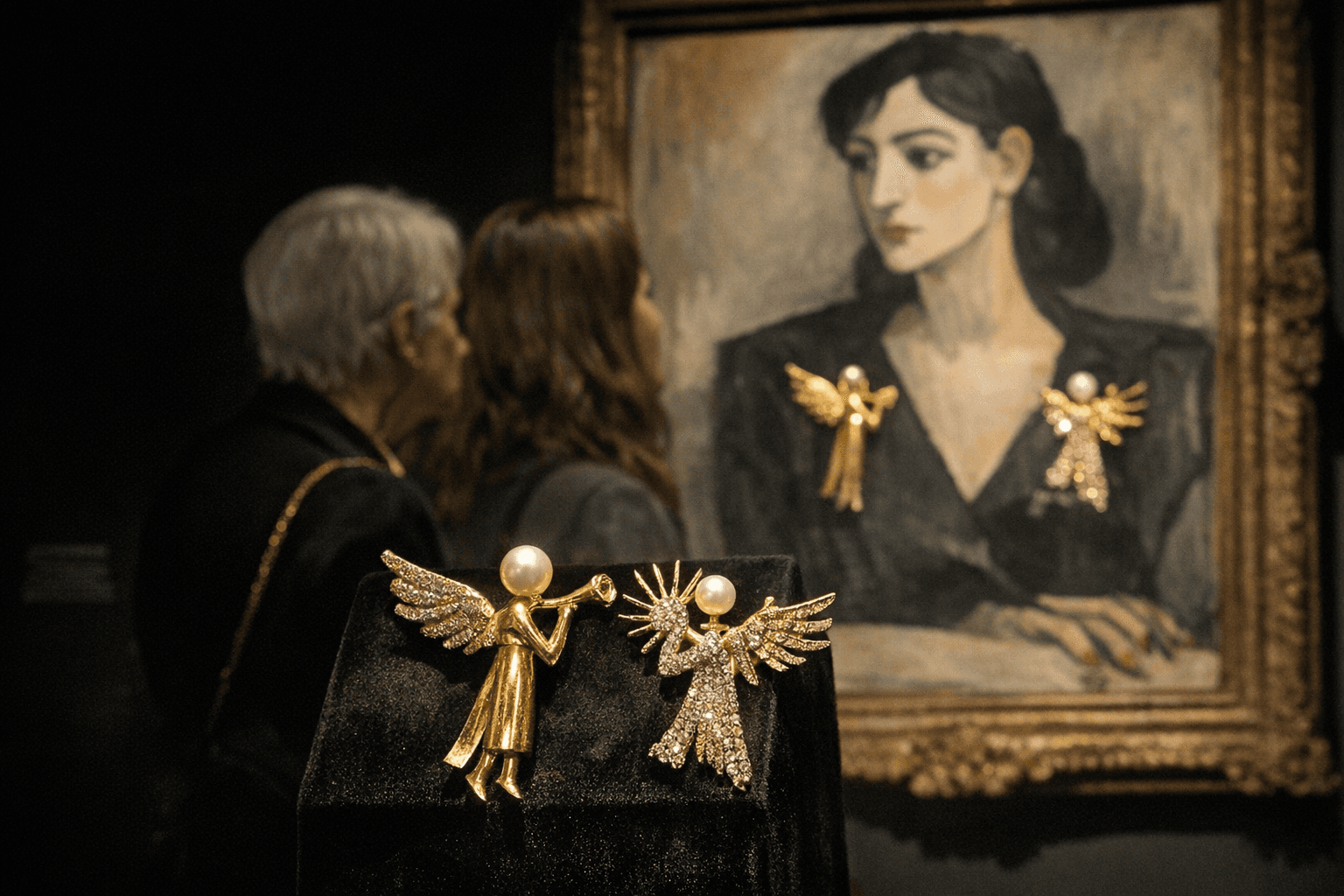
At London's V&A, a pair of Giacometti-designed angel brooches captured in a Picasso portrait distills what the UK's first Schiaparelli exhibition argues most forcefully: jewelry was always fine art.
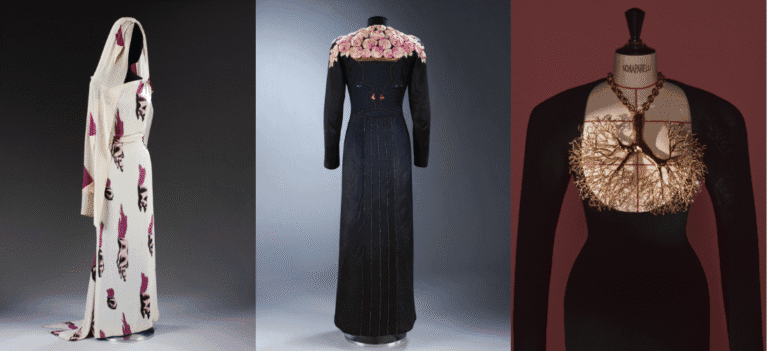
When Pablo Picasso painted Surrealist artist Nusch Éluard in 1937, he included, at her collar, a pair of angel brooches that Alberto Giacometti had designed for Elsa Schiaparelli's couture house. That portrait, borrowed from Musée Picasso in Paris and now hanging at the Victoria and Albert Museum alongside the jewelry it immortalized, is the exhibition's most concentrated argument. Curator Rosalind McKever called it something that "really embodies the title of the exhibition, 'Fashion Becomes Art.'"
"Schiaparelli: Fashion Becomes Art," which opened at the V&A on Saturday March 28, is the UK's first exhibition dedicated entirely to the Italian couturier, and it runs through November 8. The show took seven years to assemble, drawing on more than 400 objects spanning garments, jewelry, paintings, photographs, sculpture, furniture, and perfume. Curators Sonnet Stanfill, Lydia Caston, and McKever organized it into four sections tracing the house from its Paris founding in the late 1920s through to the present creative directorship of Daniel Roseberry.
Giacometti's contribution to Schiaparelli's vocabulary is one of the exhibition's quieter revelations. Beyond the Éluard portrait brooches, he designed buttons, pins, and pendants in the forms of birds, sphinxes, and horses for the house's garments, objects that moved fluidly between the couture atelier and the Surrealist salon. London gallerist Didier Haspeslagh, who specializes in artist jewelry and loaned pieces to the show, recalled that Giacometti also designed the salon's uplighting, concealed in shell-like plaster forms, and said "he made the whole thing look ethereal." Dalí, for his part, "considered her premises at Place Vendôme to be the beating heart of Surrealist Paris."
The larger theatrical pieces reinforce that idea. The 1938 Skeleton Dress, the only known surviving example and part of the V&A's permanent collection, is displayed alongside Dalí's original sketches of three female skeletons posed as fashion figures. The 1937 Lobster Dress, which preceded and inspired Dalí's Lobster Telephone, and the 1938 Tears Dress anchor the central section of the exhibition. An evening coat designed with Jean Cocteau, its black silk jersey surface traced with mirrored facial profiles in gold thread, shows how thoroughly these collaborations dissolved the idea that art belonged on a wall and fashion belonged on a body.
Stanfill, the V&A's senior curator of fashion, put the distinction plainly: "It wasn't just Schiaparelli appropriating Surrealist images and sticking them on her clothes. She was someone who was embedded in the creative process, and there was a true collaborative, creative exchange." Schiaparelli herself had said as much: "dressmaking, for me, is not a profession, but an art."
The final room hands that argument to Roseberry, whose work includes the Ariana Grande gown worn to the 2025 Academy Awards, its bodice carrying 50,000 hand-embroidered sequins and crystals. The Giacometti brooches that opened the circuit in 1937 find their answer there, decades later, in an entirely different medium, still insisting on the same terms.
Know something we missed? Have a correction or additional information?
Submit a Tip