Vicenzaoro 2026 to Champion Recycled Metals, Lab-Grown Diamonds, and Traceability Solutions
Vicenzaoro January 2026 opened in Vicenza with 1,300 brands and a sustainability agenda centered on recycled metals, lab-grown diamonds, DNA-based traceability, and low-waste manufacturing technology.
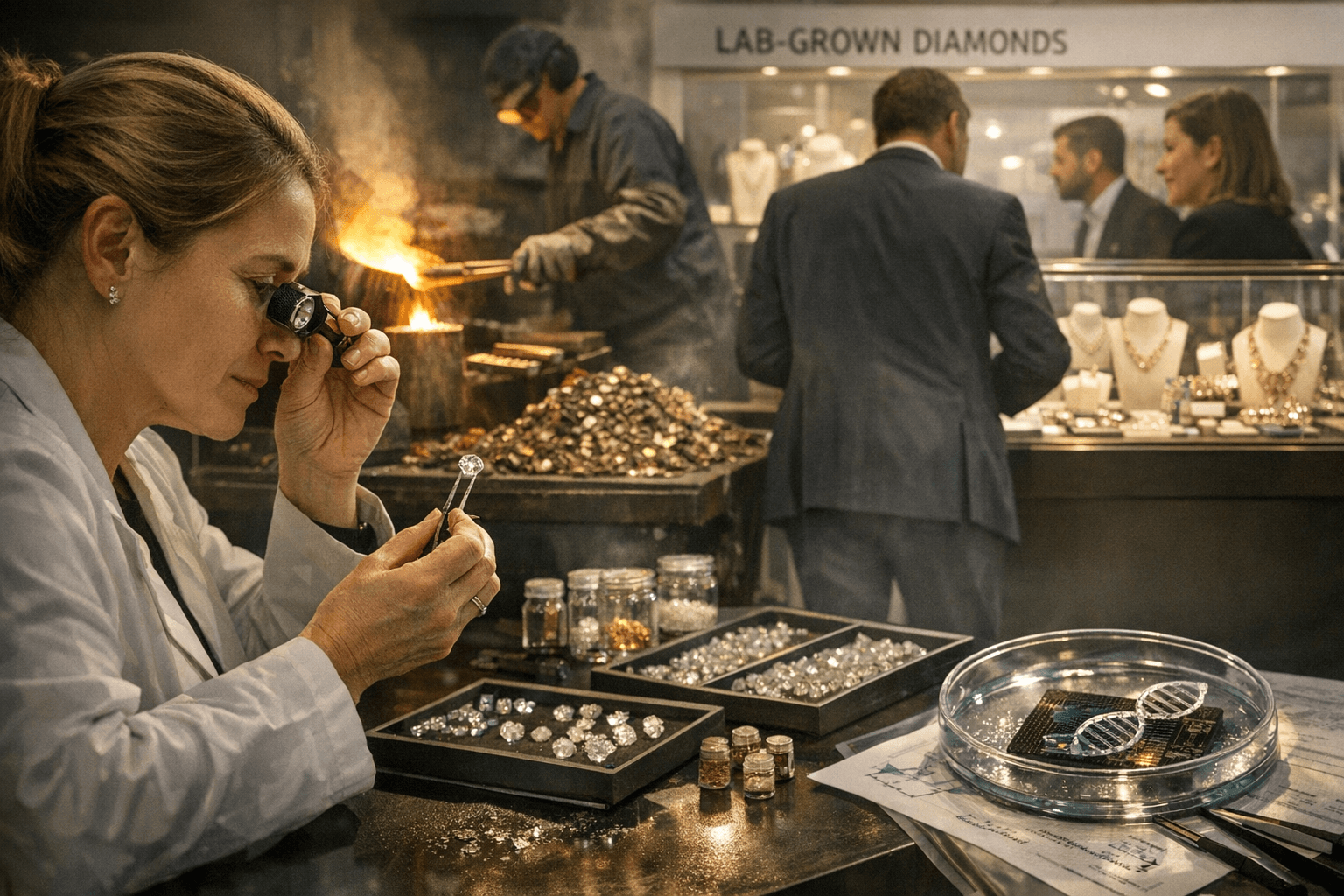
Vicenzaoro's January 2026 edition drew record attendance to Vicenza, Italy, confirming the show's standing as the jewelry industry's most consequential opening act of the year. As the first high jewelry event on 2026's international trade show calendar, Vicenzaoro ran January 16 to 20 alongside T.Gold, an exhibition for jewelry technology and innovation, and VO Vintage, the business-to-consumer marketplace for vintage jewelry and watches. Vicenzaoro was sold out for exhibitors, with 1,300 brands from across the jewelry supply chain at the Vicenza Expo Centre.
The show's programmatic weight fell squarely on sustainability, and not in the abstract. CIBJO delivered a series of technical insights dedicated to sustainability, traceability, regulatory compliance, and innovation, covering the Gold Principles Group's value-chain collaboration agenda, risk management, and the use of DNA-based physical tracers and blockchain technology for tracking gems, diamonds, and jewelry. That last detail carries particular resonance: provenance verification via DNA marking is no longer speculative — it was a working agenda item at the industry's most attended trade show.
A significant trend across the show floor was the focus on sustainability and ethical sourcing, with many exhibitors highlighting collections made with recycled materials, lab-grown diamonds, and ethically sourced gemstones. Demonstrations of recycled gold, silver, and platinum in jewelry manufacturing underscored the argument that recycled metals carry a lower environmental footprint by reducing the need for resource extraction. For collectors skeptical of compromise, the metallurgical case is straightforward: recycled precious metals are chemically indistinguishable from newly mined equivalents.
Lab-grown diamonds occupied considerable floor space and seminar time alike. Martin Rapaport, speaking at a CIBJO talk during the show, addressed falling diamond prices and attributed the shift to societal change: for Generation Z, natural diamonds no longer carry the desirability they once did. That generational shift is precisely why the lab-grown conversation at Vicenzaoro moved beyond novelty into strategy.
On the manufacturing side, T.Gold showcased innovations from additive manufacturing with precious metal powders to advanced automation and laser welding, all positioned as crucial for optimizing resources and reducing waste — with 170 exhibitors from 16 countries. 3D printing, specifically, was highlighted for its ability to reduce waste by allowing designers to create custom jewelry pieces on demand, minimizing the need for mass production. Laser processes complete that picture: precision cutting and welding that removes the excess-material problem from the bench entirely.
The show also introduced the inaugural VO Awards, spanning eight categories across creativity, innovation, sustainability, and craftsmanship, from high-end jewelry to a dedicated category for talents under 30, with a jury of twelve international experts drawn from gemology, manufacturing, sustainability, and retail.
The Jewellery Industry Voices seminar series, a joint CSR and sustainability educational program presented by CIBJO and Italian Exhibition Group, has been recognized by the Economic and Social Council of the United Nations, lending institutional credibility to what could otherwise read as trade-show talking points. The effect at Vicenzaoro January 2026 was a show that treated traceability and low-waste manufacturing not as future-facing aspirations but as present-tense competitive requirements — the kind of framing that, historically, precedes real industry-wide adoption.
This article was produced by Prism’s automated news system from verified source data, official records, and press releases, then run through automated quality and moderation checks before publishing. The system is built and supervised by the people who set the standards it runs under. Read our full AI policy.
Did this article answer your question?