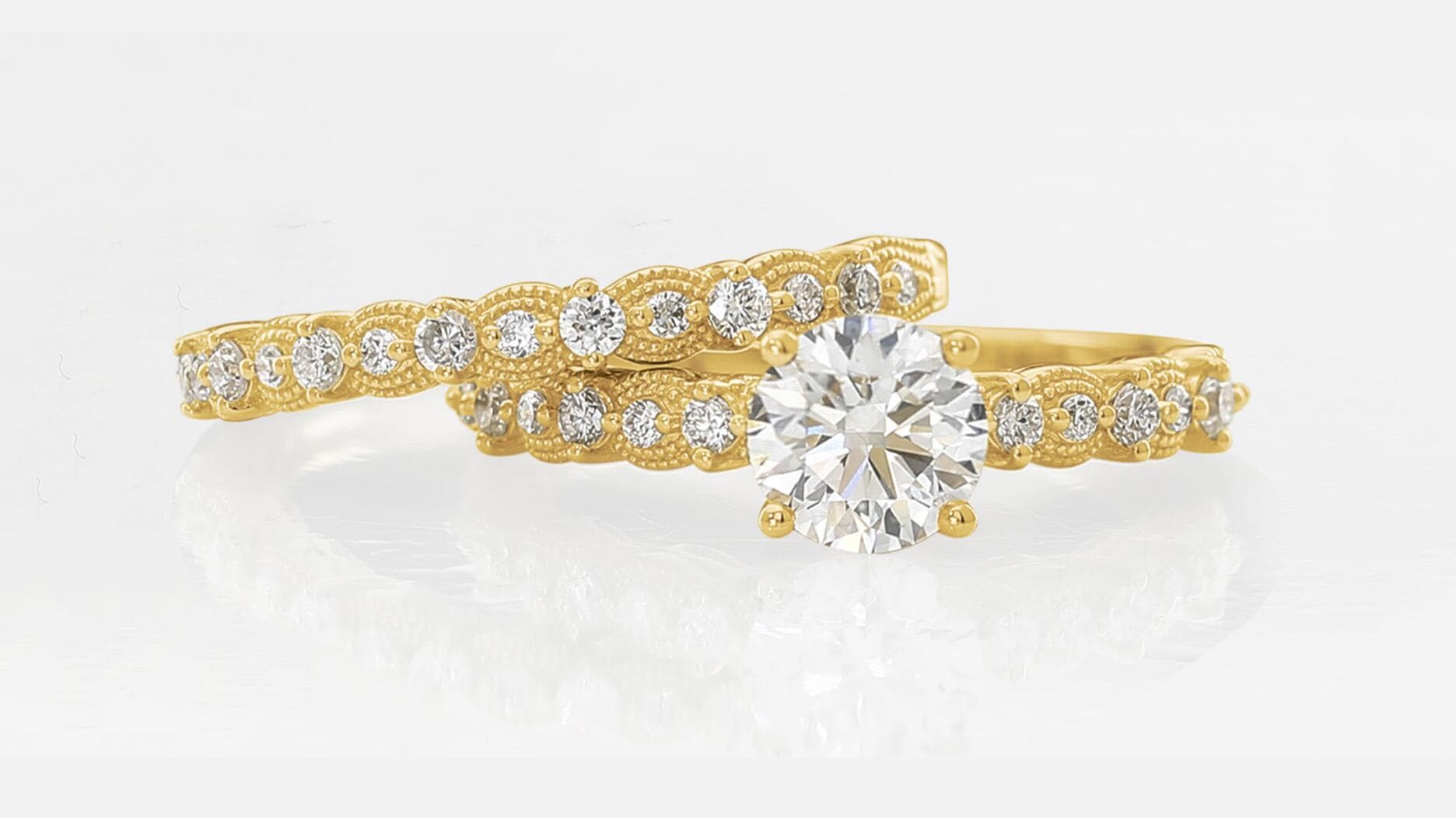
Wealthy Consumers Increasingly View Fine Jewelry as a Smart Investment
Thorne Perkin of Papamarkou Wellner Perkin says macro volatility is driving a flight to rubies, sapphires, and emeralds — and Christie's auction results prove it.

When Thorne Perkin, president of investment management firm Papamarkou Wellner Perkin, says "Whenever you have macroeconomic volatility … the appeal of hard asset investing goes up," he is not speaking abstractly. He is describing a shift already visible on the auction block, in resale markets, and in the changing color of engagement ring center stones across America.
Wealthy consumers are increasingly treating fine jewelry, particularly pieces set with rare colored gemstones, as a hard-asset store of value. The logic is straightforward: gold prices at record highs reinforce the metal's intrinsic worth, while rubies, sapphires, and emeralds offer something no equity portfolio can. Each stone is irreducibly singular. Christie's Magnificent Jewels auction in New York achieved $87.7 million with every lot finding a buyer, marking the highest total ever recorded for a various-owner jewelry auction at Christie's in the Americas. Headlining the sale was the historic "Marie-Thérèse Pink," a 10-carat fancy purple-pink diamond set in a modern ring by JAR that sold for $14 million, nearly three times its highest estimate of $5 million, setting new auction records for a fancy purple-pink diamond and for a JAR jewel.
That result was no anomaly. At Christie's Luxury Week in December, the Magnificent Jewels sale at Rockefeller Center achieved $46.5 million and was 95 percent sold by lot, with a Tiffany & Co. tourmaline and diamond necklace hammering at $4,223,000 and soaring to ten times its low estimate, setting a world record price for a Paraiba tourmaline. Across both houses, some rare colored gemstones have sold for two to three times their pre-sale estimates, with collectors increasingly treating them as they would museum-quality paintings.
Mario Ortelli, managing partner at strategic and M&A advisor Ortelli&Co., agreed with Perkin's read on the market, describing a clear "defensive element" to the trend. The case for colored stones over diamonds, specifically, rests on a supply argument that is difficult to dismiss: unlike diamonds, which can now be produced in laboratories at scale, high-quality rubies, sapphires, and emeralds are far harder to replicate. No two stones are exactly alike, which is precisely the point. Jacqueline DiSante, vice president and head of sales of Christie's New York jewelry division, has been at the center of this market's acceleration.
The investment appetite is not confined to seasoned collectors. One unnamed expert cited in CNBC's reporting estimated that roughly a decade ago, only about 5 percent of engagement rings featured colored gemstones. That figure is now closer to 15 percent. Colored stone engagement rings continue to grow in popularity as buyers seek unique, expressive alternatives to traditional diamonds, with sapphires, emeralds, and rubies leading the trend. Celebrities including Halle Berry, Kate Middleton, Eva Longoria, Rita Ora, and Halsey have helped shift that cultural expectation, but the momentum at the investment end of the market is driven by something harder than celebrity influence: a flight to safety.
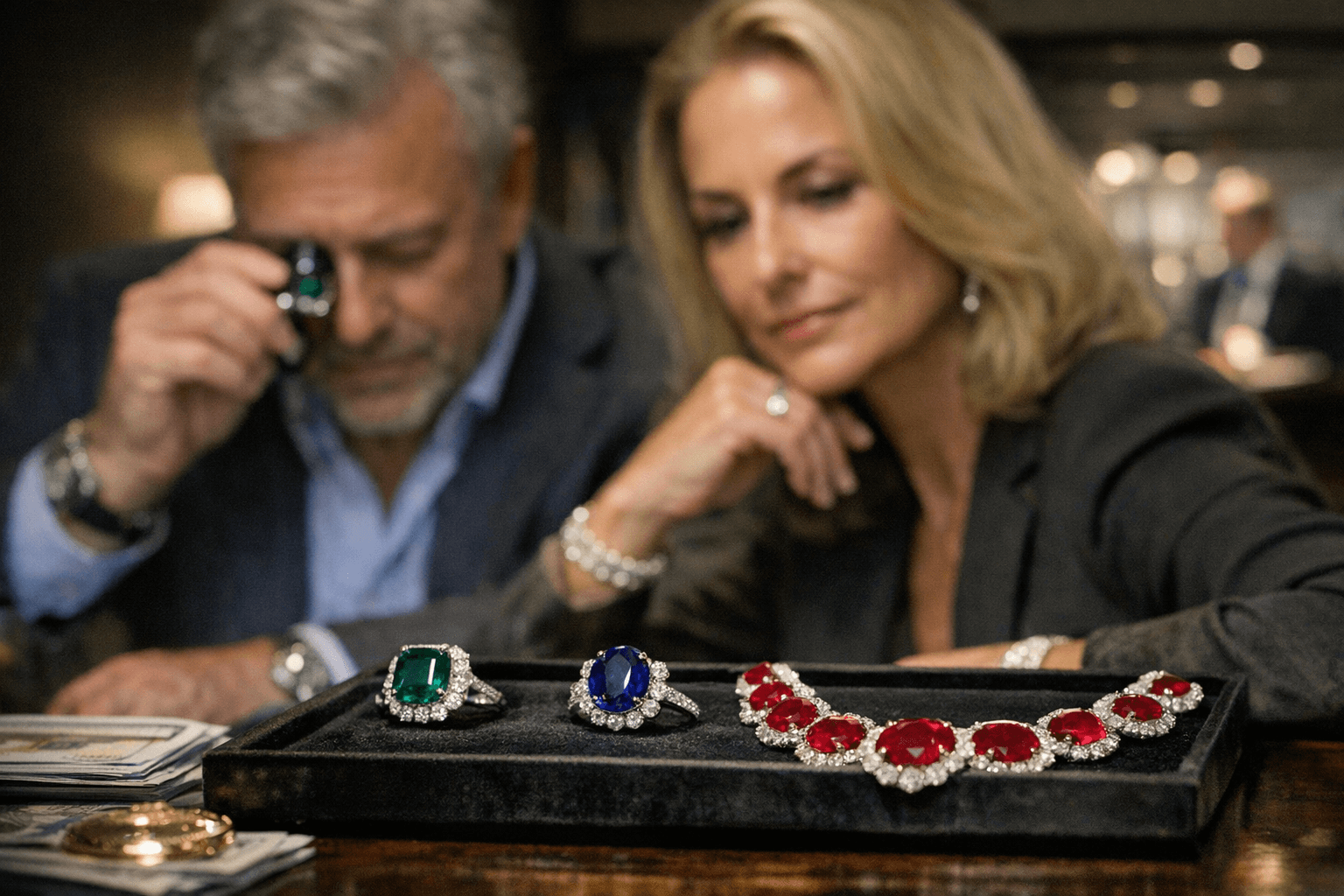
That phrase matters. Estimates suggest roughly one third of the renewed interest in gold-heavy and gemstone jewelry can be tied to what investors call a flight to safety, a reflex familiar to anyone who watched gold surge during previous periods of geopolitical stress. Fine jewelry, in this framing, is not merely decorative. "Pieces made from precious metals and rare gemstones can function almost like miniature stores of wealth," as the CNBC analysis put it.
The comparison to the luxury handbag market is instructive. Resale premiums for iconic bags have declined from their pandemic-era highs, while branded jewelry has demonstrated more durable resale value, a distinction that has not been lost on wealthy buyers recalibrating their passion investments.
The caveats are real. Jewelry is less liquid than stocks, harder to price with precision, and carries storage and insurance costs that erode returns if held carelessly. These are not trivial frictions. But for buyers who want something they can wear, inherit, and, if necessary, convert — a vivid Burmese ruby in a bezel setting is a different kind of portfolio position than it was five years ago.
This article was produced by Prism’s automated news system from verified source data, official records, and press releases, then run through automated quality and moderation checks before publishing. The system is built and supervised by the people who set the standards it runs under. Read our full AI policy.
Did this article answer your question?