Briony Raymond’s Carousel collection turns stones into sculptural statements
Briony Raymond's 15-piece Carousel line mixes malachite, onyx and mother-of-pearl with diamonds, offering a blueprint for bold moissanite looks.
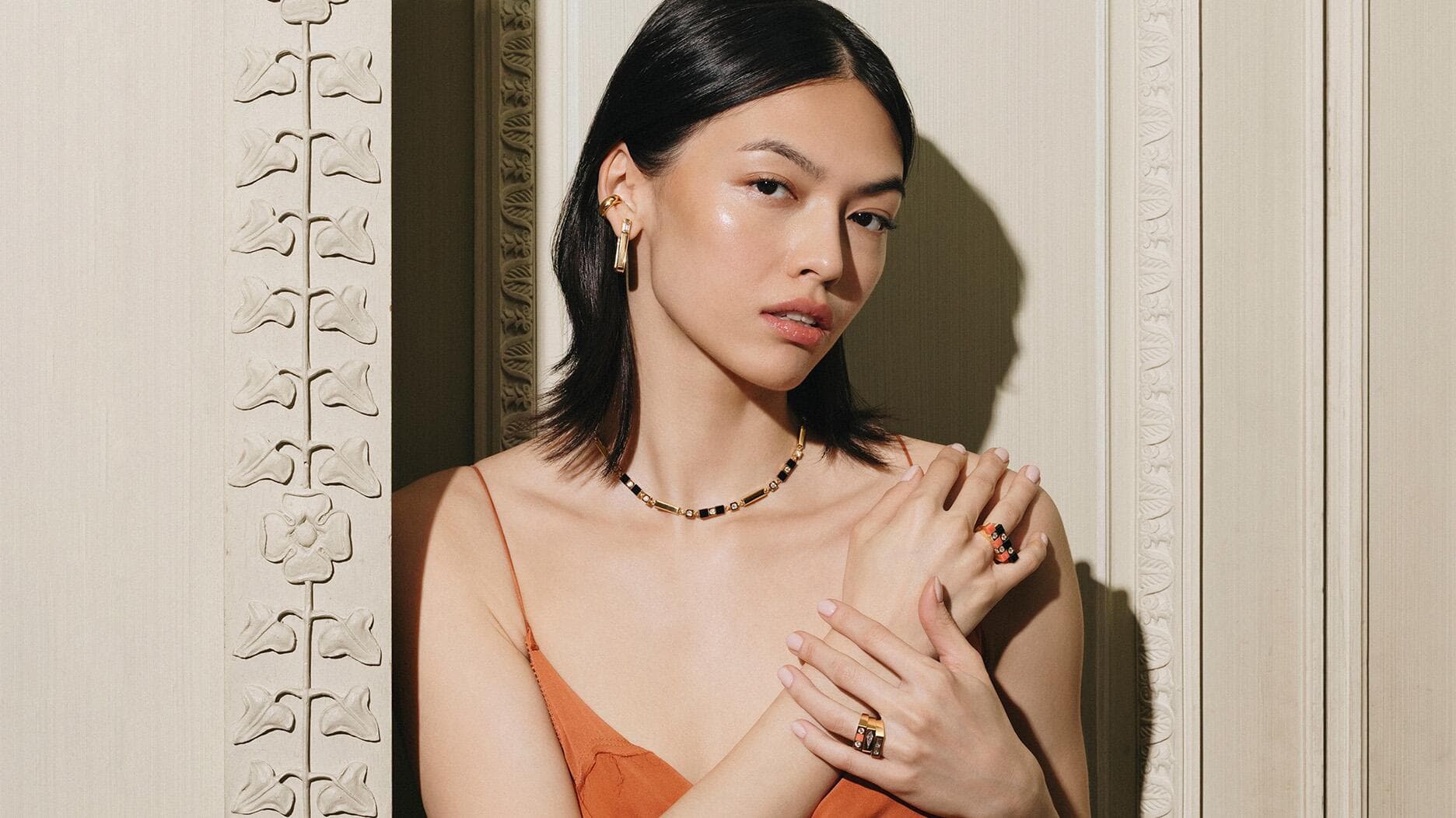
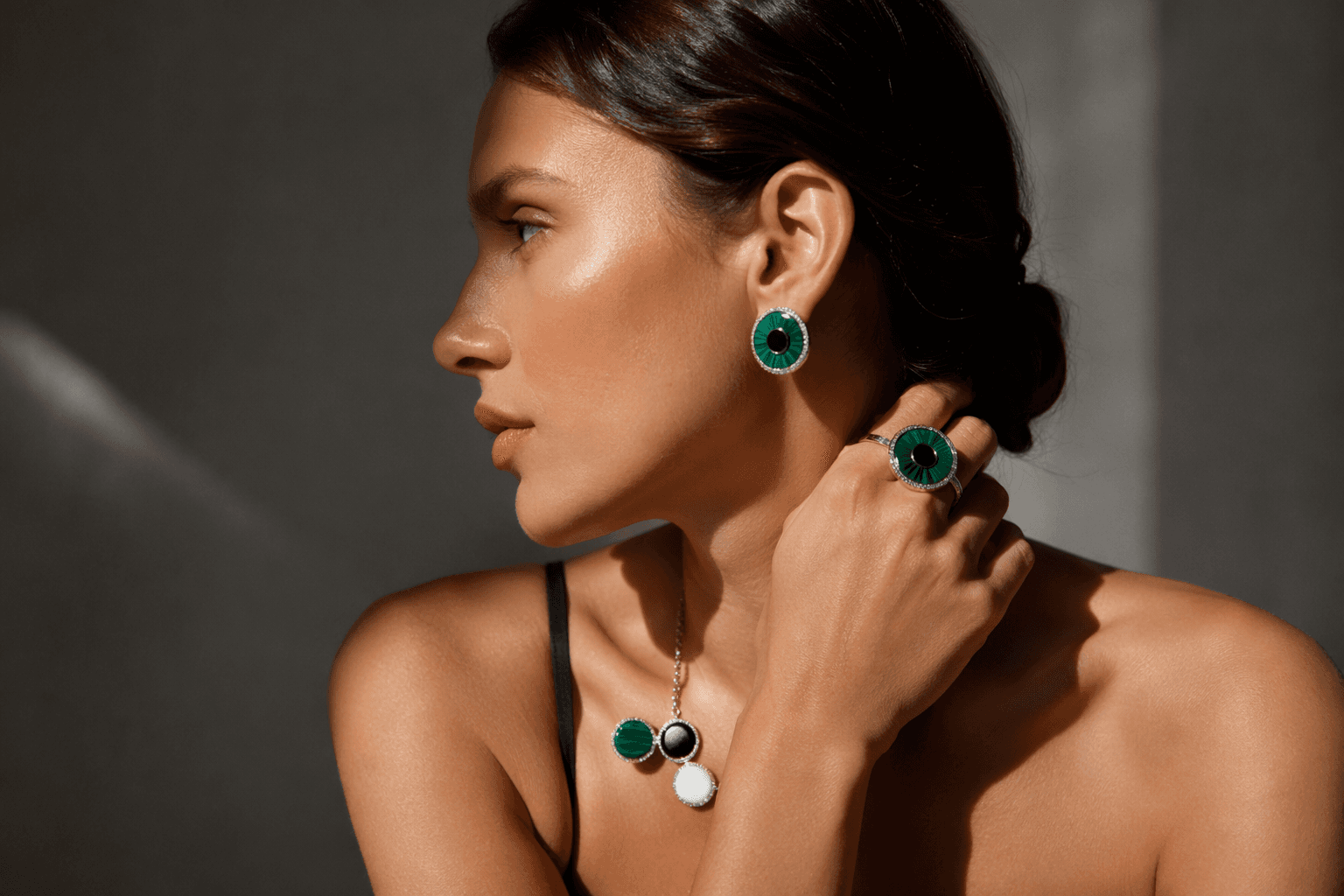
Briony Raymond’s Carousel collection spans 15 styles and turns hard stones into compact, sculptural jewelry built from onyx, malachite, tiger’s eye, mother-of-pearl, lapis, turquoise and coral. The result is a puzzle-like mix of color blocks and sharp geometry, anchored by diamonds and 18-karat gold.
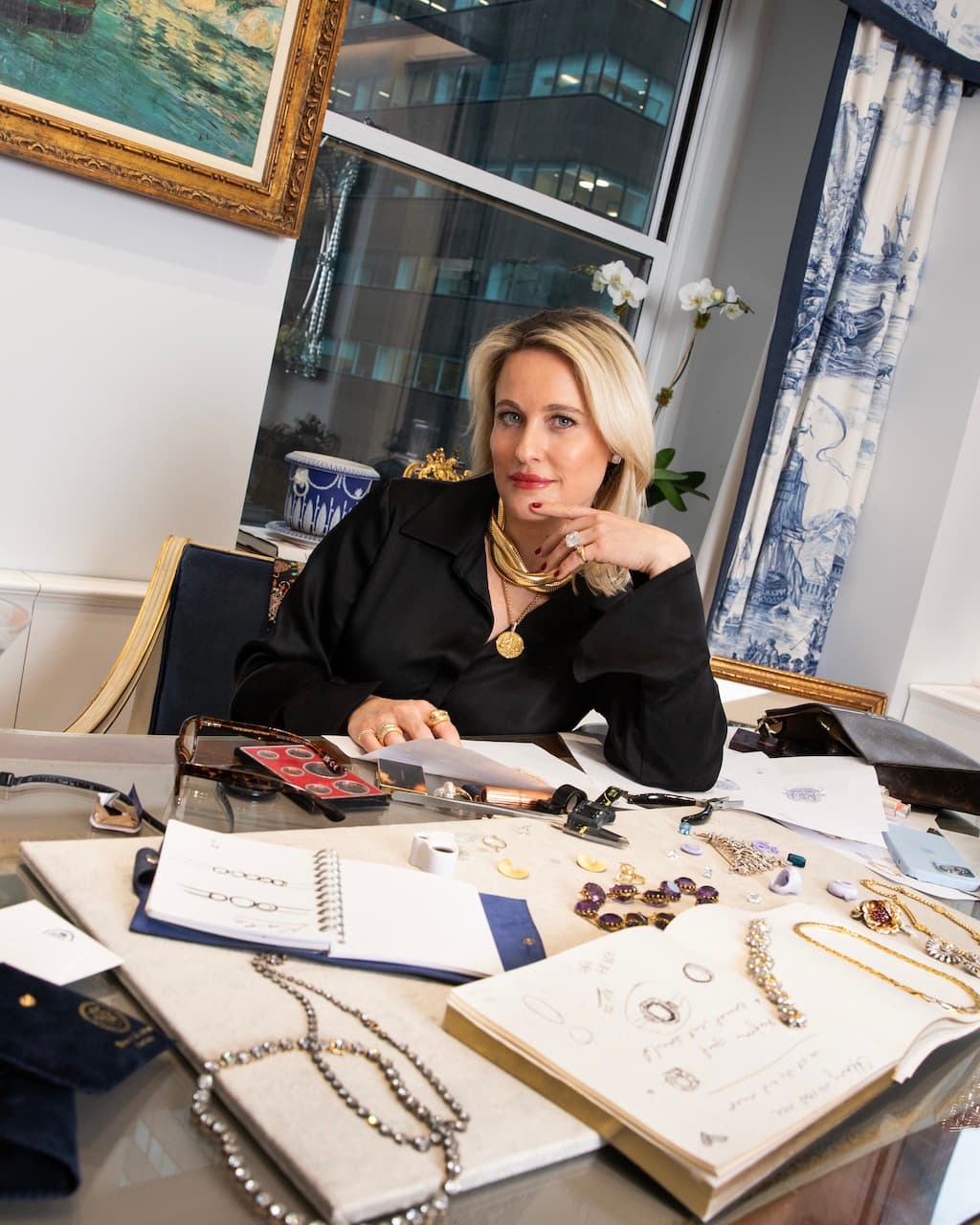
Raymond founded her New York City atelier in 2015 after nearly a decade at Van Cleef & Arpels, and the brand says her background in gemology and fine art informs the work. Carousel leans into that training with modular forms and shifting structures that feel closer to collectible objects than to standard diamond jewelry. Earrings, rings, necklaces, bracelets, collars, demi-fringe necklaces and checkerboard pendants all sit inside the line, which is built to be seen from across a room.
Pricing underscores that split between entry point and statement piece. On the brand’s site, a Carousel diamond roman numeral charm starts at about $1,950, while some collars climb above $100,000. That spread makes the collection feel like a case study in how designers can keep a recognizable visual language while moving from accessible accents to full-scale showpieces.
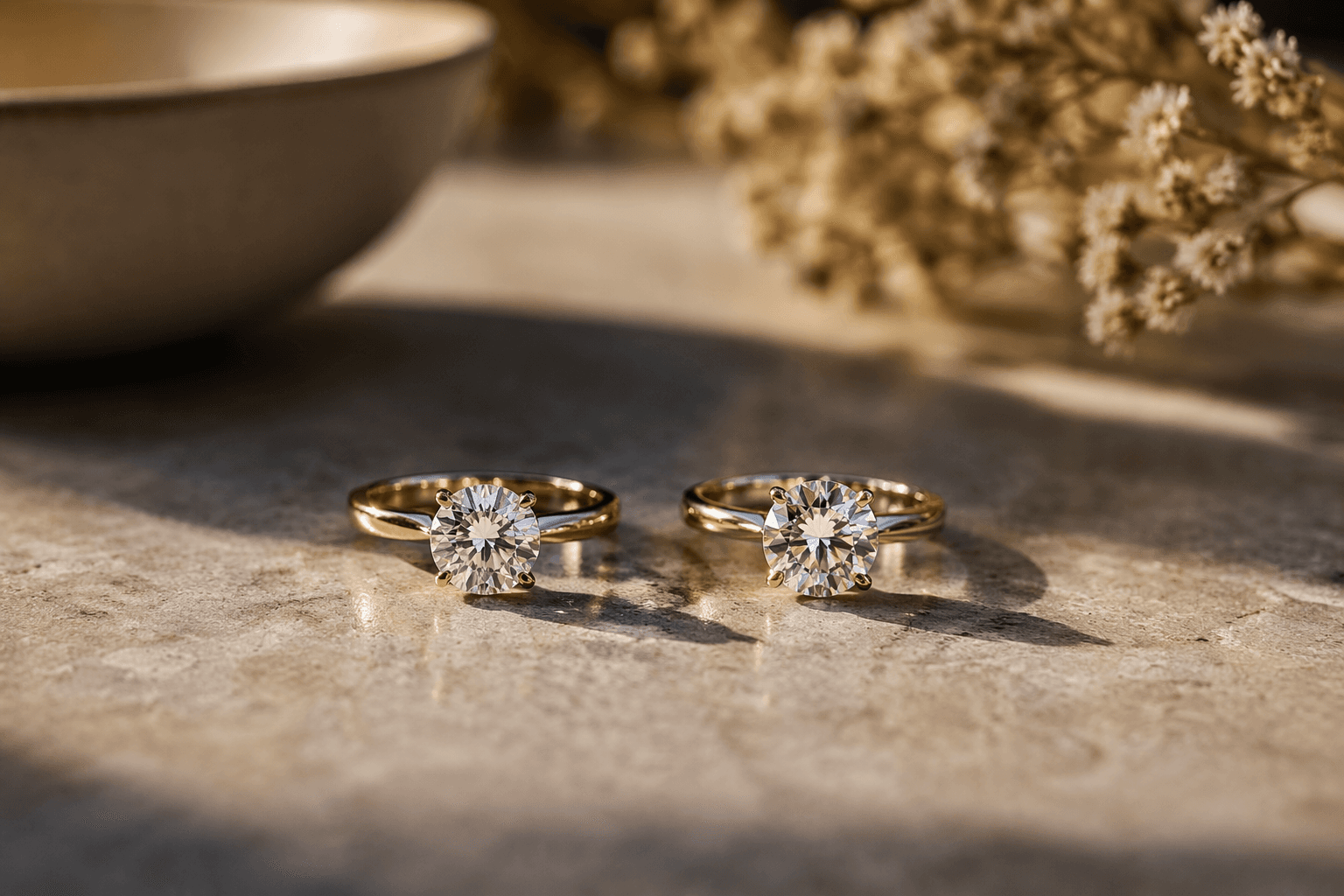
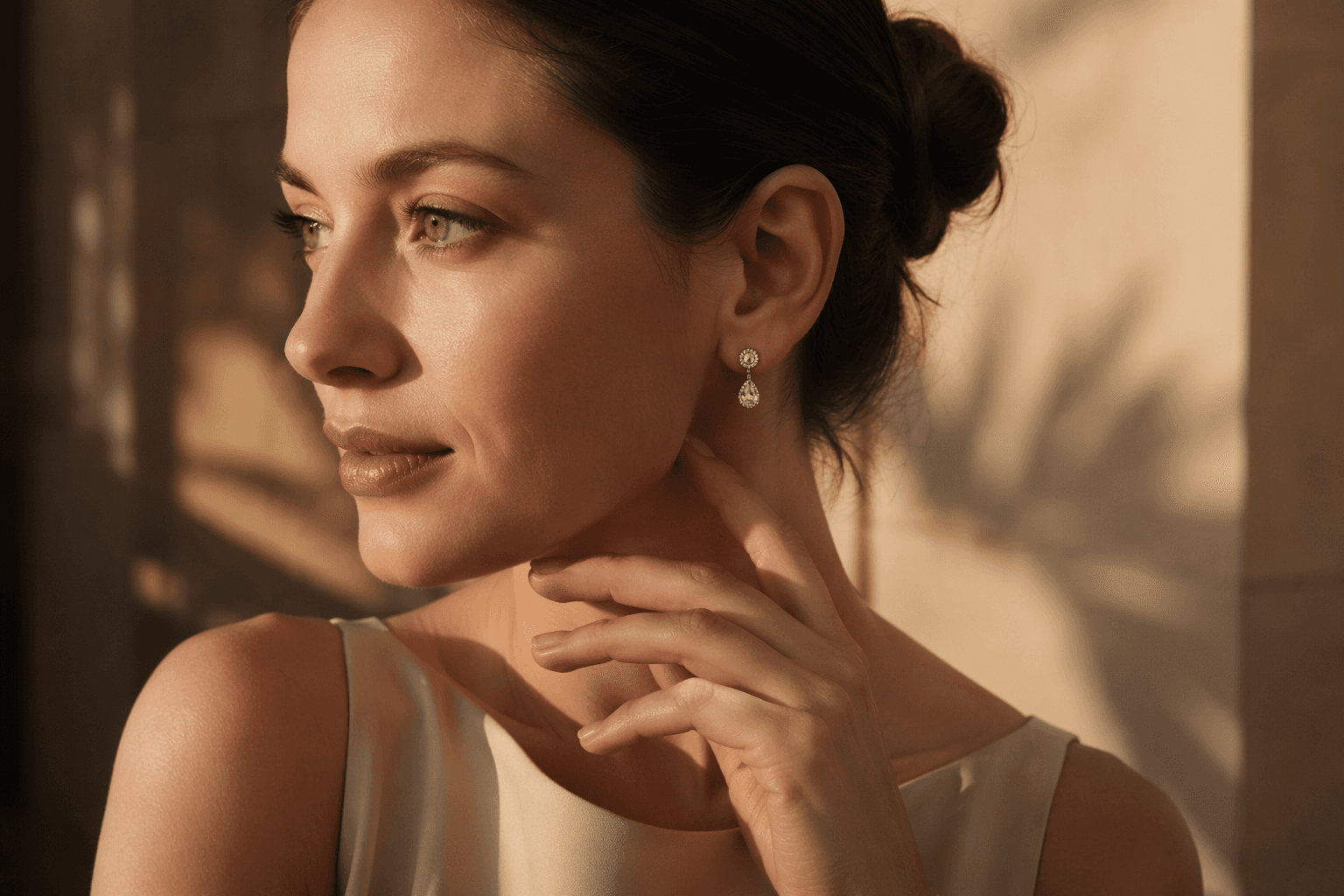
For moissanite shoppers, the appeal is immediate. The collection’s strongest idea is not the diamond itself but the composition around it, which makes it easy to imagine a lab-grown center stone set against malachite, onyx or lapis, with mother-of-pearl or coral adding brightness at the edge. Moissanite is prized by the American Gem Society for brilliance, durability and minimal environmental impact, which puts it in step with the market’s appetite for vivid, confident jewelry that does not rely on mined-diamond signaling.
The stone also has a long and unusual history. Henri Moissan discovered moissanite in 1893, and Charles & Colvard says it introduced the first lab-created moissanite gemstones to the market nearly 30 years ago. That lineage matters now because contemporary jewelry is moving toward pieces that read as design objects first and status symbols second. Carousel captures that shift with color, scale and structure, and it gives moissanite a clear visual script: a bright center, hard-stone contrast and a silhouette that looks built rather than merely set.
This article was produced by Prism’s automated news system from verified source data, official records, and press releases, then run through automated quality and moderation checks before publishing. The system is built and supervised by the people who set the standards it runs under. Read our full AI policy.
Did this article answer your question?