GIA warns of fraudulent inscriptions on synthetic moissanite stones
A 1.71-carat synthetic moissanite carried a fraudulent GIA inscription, and GIA says that kind of misuse turns up often enough to demand direct verification.
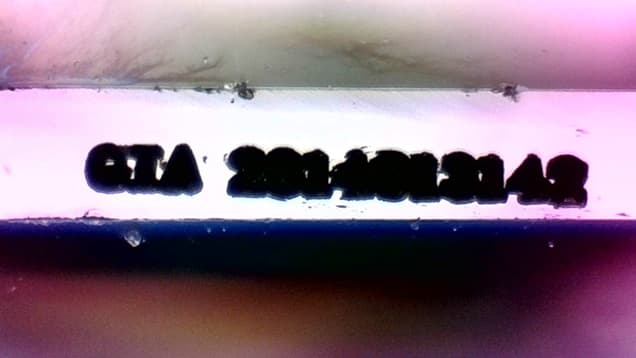
GIA’s lab notes show a 1.71-carat synthetic moissanite carrying a fraudulent GIA inscription, and the stone’s laser mark did not make it legitimate. Before buying, match the report number directly with the issuing lab, inspect the inscription under magnification, and ask for an independent appraisal if the seller’s paperwork leans on one detail alone.
The distinction matters because moissanite is not a diamond simulant in the casual, decorative sense of the word. GIA defines a simulant, or imitation gem material, as a material used to look like another gem but with a different chemical composition, crystal structure, and optical and physical properties. In practice, that means a moissanite ring can be fully authentic as moissanite and still be misdescribed in a listing, mislabeled in paperwork, or pushed as something it is not.
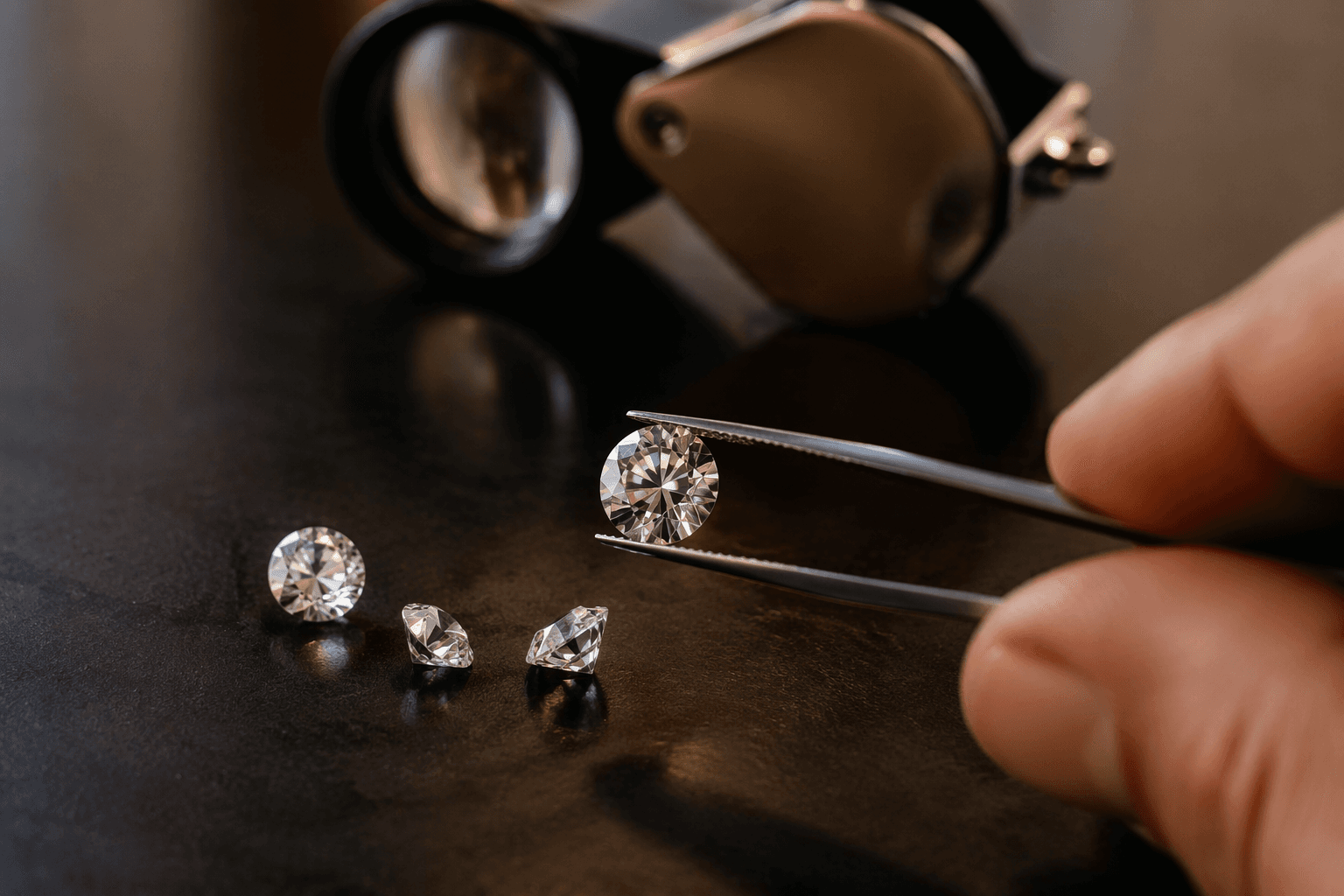
GIA’s Fall 2022 Lab Notes item, “Fraudulently Inscribed Synthetic Moissanite,” is a blunt example. The stone was described as a 1.71-carat synthetic moissanite with a fraudulent GIA inscription, and GIA said stones with fraudulent GIA inscriptions are frequently reported. That is the point buyers need to keep in view: an inscription can support identification, but it cannot stand alone as proof of identity.
A similar case appeared in GIA’s 2020 Lab Notes item, “Synthetic Moissanite with Fraudulent GIA Inscription.” GIA Johannesburg received a 1.02-carat round brilliant that had been submitted for a Diamond Grading report. Standard testing showed it was not a diamond, and further examination identified it as synthetic moissanite with a bogus inscription. The sequence is a reminder that the first look can be misleading, especially when the stone is marketed as a premium alternative in engagement rings and wedding jewelry.
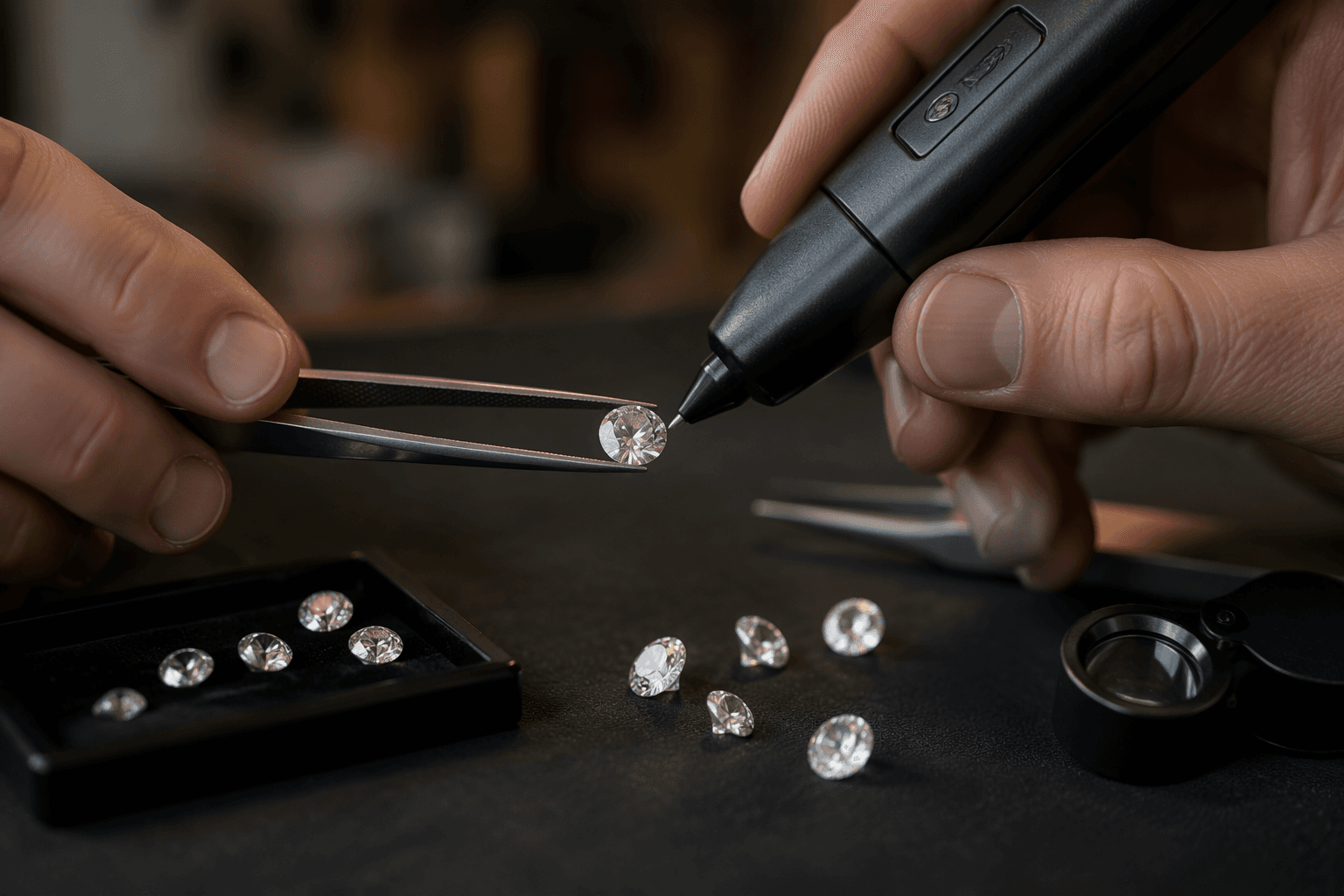
Verification should be concrete, not cosmetic. GIA maintains an online Report Check page so report details can be cross-checked against the issuing laboratory’s records. GIA also said it had recently announced a diamond matching service using GIA Match iD to verify diamond identity, and a 2024 trade writeup noted a same-day verification service for diamonds bearing a GIA inscription. Those tools matter because a laser inscription is only one data point. If the report number does not resolve cleanly, if the inscription looks inconsistent with the stone, or if the seller will not provide documentation beyond a photo of the girdle, the safest move is to stop and verify before money changes hands.
The problem has repeated across years and markets. National Jeweler covered three moissanites with fraudulent inscriptions submitted to GIA’s lab in January 2021, and IDEX Online and Rapaport also reported GIA uncovering synthetic moissanites with forged inscriptions. For moissanite buyers, the cleanest purchase is still the same: a stone that is clearly identified, plainly documented, and confirmed by the lab that issued the paperwork.
This article was produced by Prism’s automated news system from verified source data, official records, and press releases, then run through automated quality and moderation checks before publishing. The system is built and supervised by the people who set the standards it runs under. Read our full AI policy.
Did this article answer your question?