Moissanite market forecast tracks growth through 2033, by shape segments
Oval, pear and marquise moissanite look best placed to gain share, but a tiny market and price pressure mean resale value will stay fragile.
Market estimates from Persistence Market Research and Proficient Market Insights vary widely, from USD 48.90 million in 2024 to a separate path that places the moissanite market at $106.3 million in 2025 and $165.6 million by 2033. That spread makes the cut mix matter even more.
What the forecast is really measuring
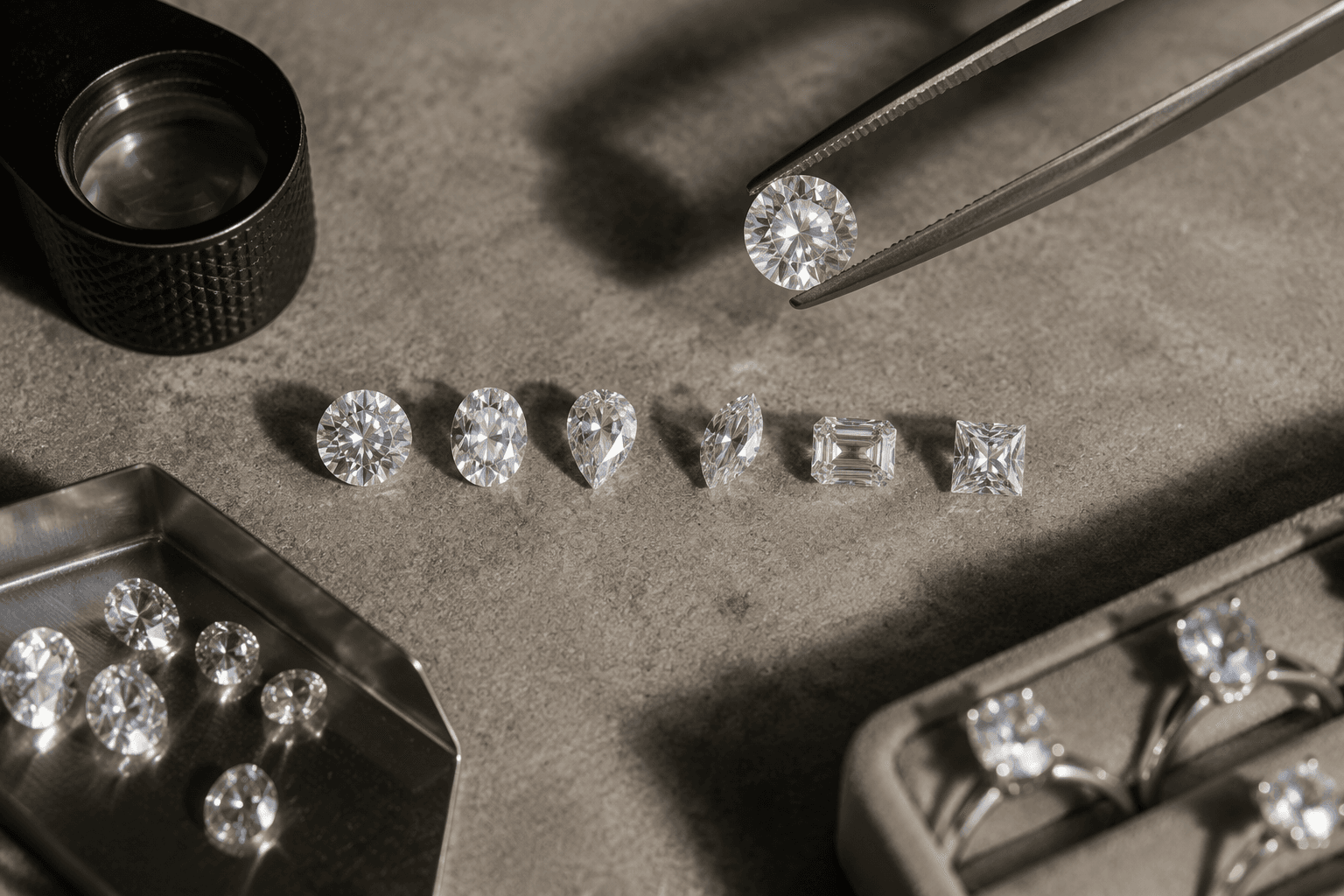
Persistence Market Research breaks the moissanite market into round, cushion, oval and pear, emerald and asscher, marquise, and other cuts, which is a useful clue about how the category is being sold. Proficient Market Insights widens the lens further, separating loose moissanite stones from moissanite jewelry, including rings, earrings and necklaces, and then splitting demand across jewelry retailers, online marketplaces and consumers.
Moissanite is not being bought as a generic commodity. It is silicon carbide, a lab-created gemstone, and Charles & Colvard, which calls itself the original pioneer of lab-created moissanite, has spent years trying to move the stone from a niche loose-gem story into a branded jewelry story. The company’s own ring assortment mirrors the market segmentation closely, with round brilliant, cushion, pear and marquise all featured on its site.
Which cuts are most likely to gain share
Round will remain the anchor shape. It is the default language of bridal jewelry, the easiest cut for shoppers to compare across retailers, and the shape most closely tied to the way moissanite was first introduced in finished jewelry. If the market grows steadily through 2033, round will still account for a large share of unit volume simply because it is the most familiar and easiest to stock.
The clearest share gains, though, are likely to come from oval, pear and marquise. GIA’s 2024 analysis of oval-, pear- and marquise-shaped diamonds found that these cuts create more complex appearance patterns than standard round brilliants, and that complexity translates well into moissanite, where shoppers often want a stone that reads larger or more distinctive on the hand. These are the shapes that feel modern without becoming hard to wear, and they already sit at the center of bridal taste across the wider jewelry market.
The shapes to watch
- Oval, pear and marquise: these are the likeliest share-takers because they combine strong finger coverage with a more individualized look.
- Cushion: still a practical bridge between classic and fancy, especially for shoppers who want softer edges without abandoning a traditional engagement-ring feel.
- Emerald and asscher: these will stay more niche, but they matter to buyers who want an architectural, step-cut look rather than maximum sparkle.
Round is still the safe inventory shape, but the forecast’s shape map suggests the next layer of growth will be driven by stones that look less standard in person and more intentional in photos.
Where the product growth should land
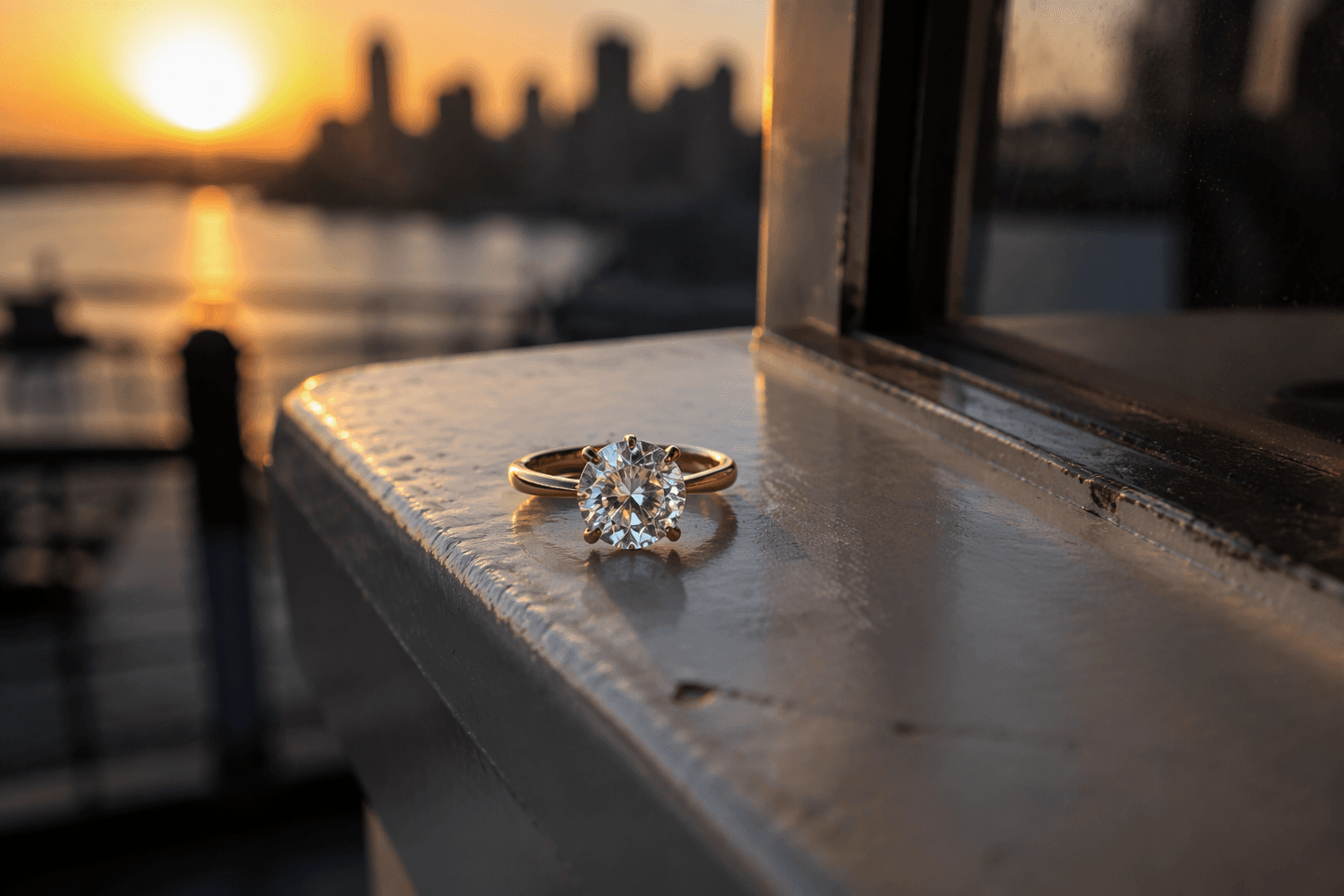
The bigger opportunity through 2033 is in finished jewelry, especially rings, rather than loose stones alone. That is where shoppers get the easiest comparison point, where setting metal and center-stone shape are bundled into one decision, and where moissanite can behave like an alternative engagement category instead of a bare gem.
Charles & Colvard’s retail moves show that logic in real time. The company launched lab-created moissanite jewelry in Macy’s stores on September 10, 2020, then expanded its digital footprint with a moissanite launch on March 16, 2021. Those moves pointed in the same direction the product forecasts do: the strongest demand is not just for loose stones in a box, but for ready-to-wear pieces that can be bought online or across a counter.
Jewelry retailers and online marketplaces are likely to keep fighting for the most visible share. Retail stores help with trust and hand-feel, while online channels make it easier to compare shapes, sizes and price points quickly. Demand still centers on engagement rings, while earrings and necklaces should continue to sell, especially as gifts.
What pricing pressure means for buyers
Certification and documentation matter more in a small, price-sensitive market. On May 23, 2024, Charles & Colvard announced an exclusive strategic alliance with IGI to supply moissanite grading reports, a sign that the category is trying to standardize the paperwork around quality and shape.
Charles & Colvard reported $7.9 million in revenue and a net loss of $2.9 million for the second quarter of fiscal 2024, and later filed for bankruptcy citing price pressures.
Waiting for moissanite to get dramatically cheaper is not the likeliest payoff, because a market this small can tighten on specific shapes faster than it delivers broad discounts. What does look likely is more availability in the shapes that already match current bridal taste, especially oval, pear and marquise, with cushion close behind.
This article was produced by Prism’s automated news system from verified source data, official records, and press releases, then run through automated quality and moderation checks before publishing. The system is built and supervised by the people who set the standards it runs under. Read our full AI policy.
Did this article answer your question?