Why moissanite can fool diamond testers, and how jewelers spot it
A basic thermal pen can misread moissanite as diamond, so the safer question is: what tester are you using, and does it verify more than heat?
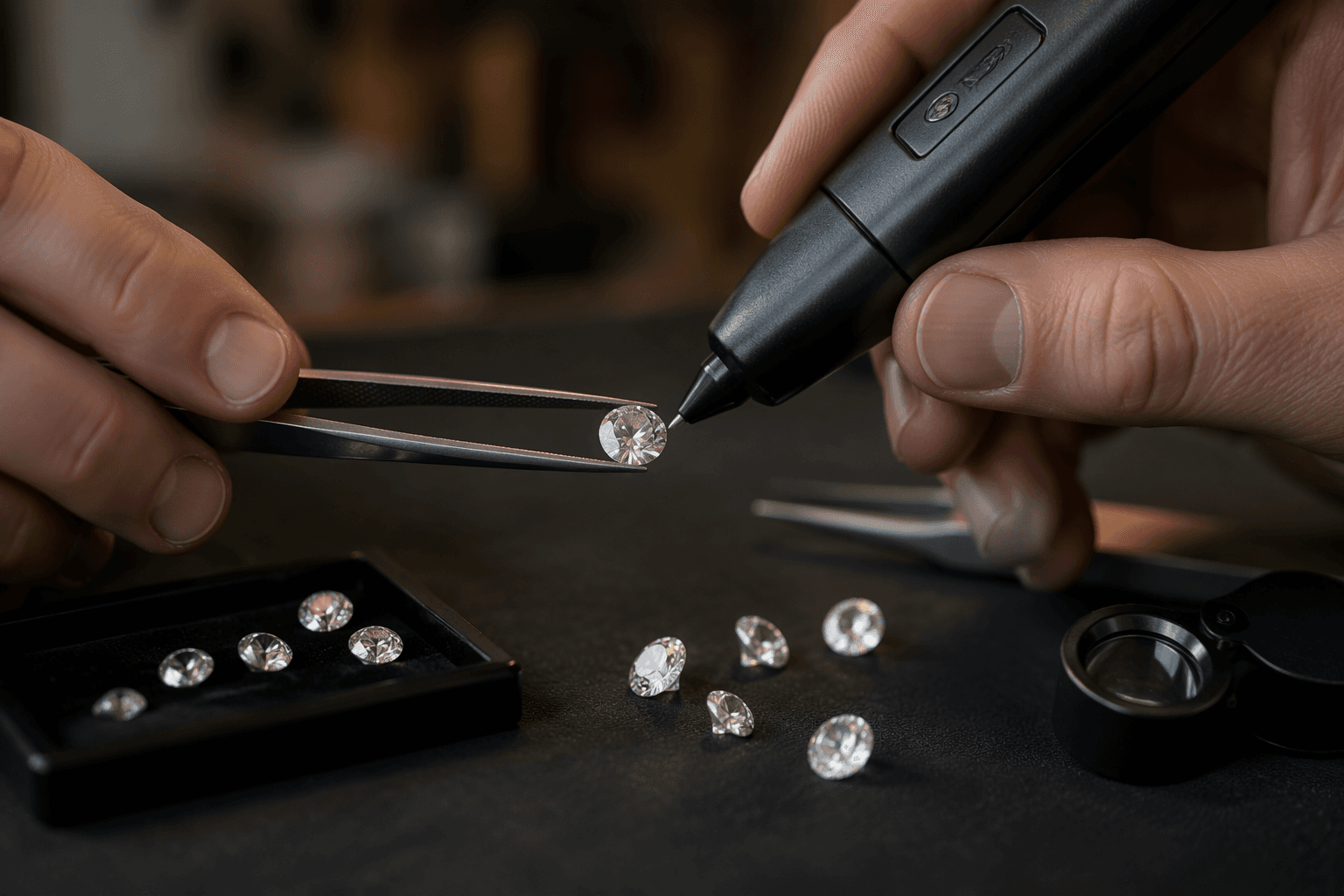
A basic handheld diamond tester can read moissanite as diamond, and that is exactly why buyers should ask a jeweler a better question than “Will it test as diamond?” The safer version is: what tester or verification method are you using, and why is it reliable for moissanite? A simple thermal reading is only a first pass, not final proof, especially when the stone in the setting is synthetic silicon carbide, the material modern jewelry moissanite is made from.
Why moissanite confuses basic testers
The problem starts with heat. Moissanite conducts heat in a way that can mimic diamond on a basic handheld thermal tester. That is the failure mode shoppers run into at counters, in buyback discussions, and during repair intake, where a quick test can influence whether a stone is accepted, insured, upgraded, or even repaired under the right assumptions.
In a 2022 note in The Journal of Gemmology, the Swiss Gemmological Institute SSEF described a 1.81 ct colorless synthetic moissanite that produced thermal conductivity results in the range of both diamond and synthetic moissanite when tested with a Presidium Duo Tester. The DuoTester’s reflectivity measurement helped distinguish the stone.
Why the material itself matters
Moissanite’s history explains part of the testing puzzle. Henri Moissan is associated with the discovery of natural silicon carbide in a meteorite in 1893, and Edward G. Acheson patented a method for making silicon carbide powder the same year. What goes into modern rings, though, is not the rare natural material from a meteorite. It is manufactured synthetic silicon carbide, or SiC, and that material identity is directly tied to the way it behaves under different screening tools.
If a jeweler treats a moissanite as a diamond after only a thermal pen test, the buyer may end up with the wrong appraisal language, the wrong insurance description, or a mismatched resale expectation. In repairs, the difference can determine whether a bench jeweler sets the stone aside for a different handling protocol or takes the result at face value.
The limit of the old handheld pen
The classic handheld diamond tester is still common because it is fast and inexpensive, but it mainly measures thermal conductivity. That is exactly why moissanite can trip it. A diamond tester that only checks heat conductivity will not distinguish moissanite from diamond.
Ask whether the jeweler is using only a thermal pen, or a dual-function instrument that also checks electrical conductivity or reflectivity. A single reading is too easy to misread when the stone under the probe is engineered to sit close to diamond on one property and not on others.
What professionals use instead
Jewelers who want fewer false positives typically rely on multiple checks, not one gadget. Dual-function or multi-test instruments that measure both thermal and electrical conductivity are commonly recommended because they can separate moissanite from diamond more reliably than a heat-only pen. Among the named tools used in identification workflows are the Presidium DuoTester, GemOro Testerossa, UltraTester 3+, and Pro-M 3.
The Presidium DuoTester does more than one job. In the SSEF case, reflectivity measurement helped resolve a stone that thermal testing alone could not settle.
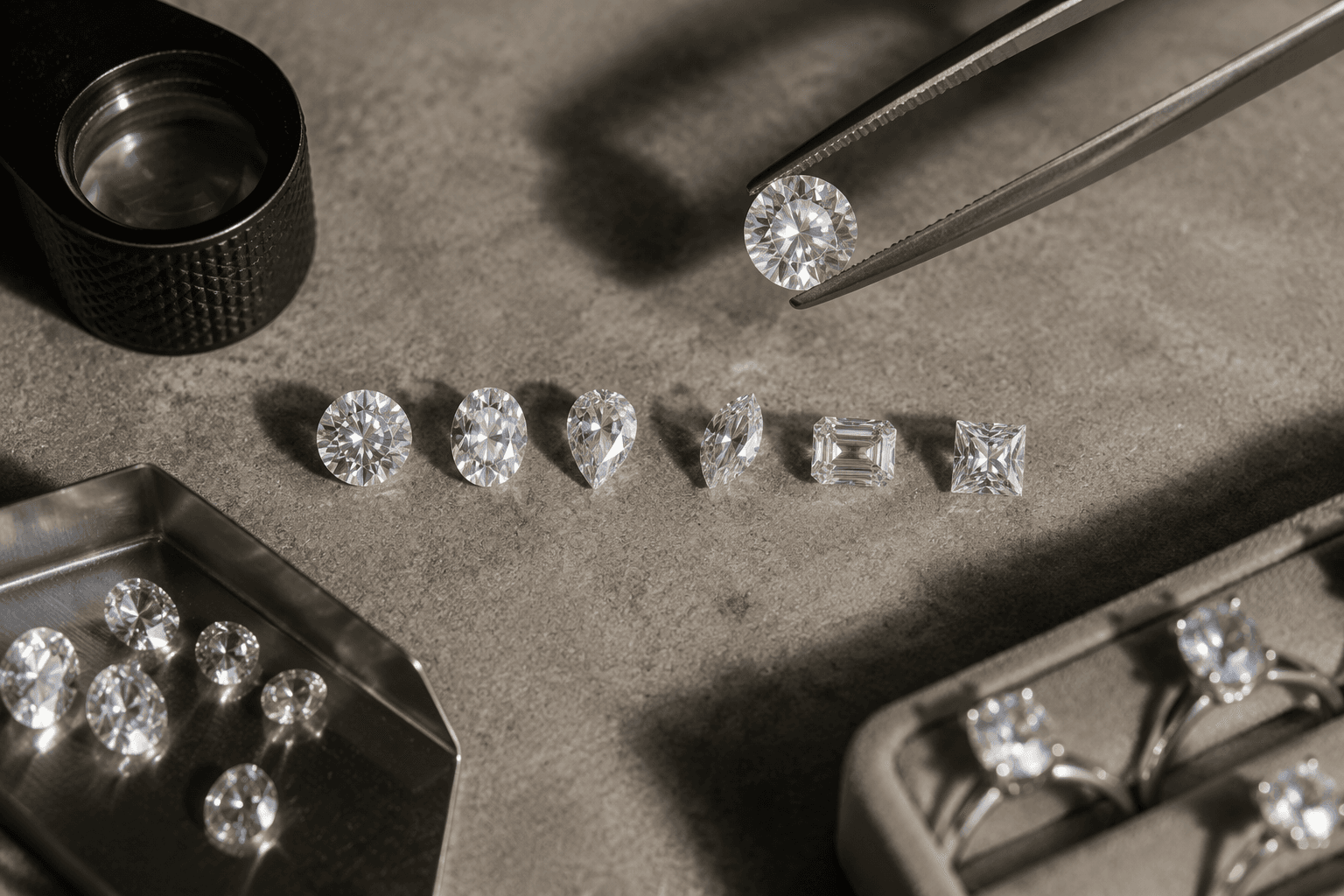
A careful jeweler may also add a loupe and visual inspection to the bench test. Surface appearance, facet reflection, and the way a stone responds under magnification all help frame whether the material is diamond, moissanite, or something else entirely.
How to protect yourself at the counter
The easiest mistake is to accept a “diamond” result from an old-style tester as the final word. A better approach is to ask the jeweler to name the tool and the method, then explain how the result was confirmed. If the answer is only “the pen said diamond,” that is a red flag for a false positive.
- Which tester did you use, and does it measure only thermal conductivity or also electrical conductivity?
- If it is a dual-function instrument, what was the second reading?
- Did you confirm the result with magnification or a second bench check?
- Is the stone being described as synthetic silicon carbide, moissanite, or diamond in the paperwork?
A stronger conversation sounds more like this:
At purchase, during an upgrade, or at resale, a store that can separate moissanite from diamond cleanly is also more likely to handle trade-ins fairly and to avoid overpaying or undercrediting a stone because of a misleading screen result.
The broader market makes the issue more important
Gem-quality synthetic or laboratory-grown diamonds are now more available in the jewelry marketplace, increasing concern about whether jewelry professionals can identify them reliably. That broader shift has pushed the trade toward better screening habits, because moissanite is no longer the only material that can complicate a quick answer at the counter.
This article was produced by Prism’s automated news system from verified source data, official records, and press releases, then run through automated quality and moderation checks before publishing. The system is built and supervised by the people who set the standards it runs under. Read our full AI policy.
Did this article answer your question?