How to choose the best metal for moissanite rings
The best metal for moissanite depends on what you want to preserve: whiteness, durability, or upkeep. White gold, platinum, yellow gold, and rose gold each change the stone’s look and long-term cost.
Moissanite was first discovered in 1893 by French chemist Henri Moissan. In modern jewelry, it is lab-created, which makes the setting especially important to the ring’s final character. If you are buying a moissanite ring, the metal is not a background choice. It changes how white the stone reads, how much contrast you see in the flashes, how often the ring needs maintenance, and how well the setting holds up to daily wear.
Which metal keeps moissanite looking whitest?
White metals do the most to preserve moissanite’s icy look. Platinum and white gold both keep the eye focused on the stone’s bright, colorless sparkle, while yellow gold and rose gold warm the whole ring and shift the mood away from that frosty effect. If your goal is to make a moissanite center stone read as crisp and bright as possible, the safest bets are platinum or white gold.
That visual difference matters most in engagement rings and wedding bands, where the ring is worn every day and seen from close range. A white-metal setting can make the flashes feel sharper and cleaner, while a warmer alloy can soften the contrast and make the same stone feel more romantic or antique in tone.
White gold: bright, flexible, and lower in price upfront
White gold is often the most practical entry point if you want the look of a white-metal moissanite ring without paying platinum prices. It is commonly rhodium plated to create that bright, reflective finish buyers associate with modern bridal jewelry. The tradeoff is upkeep: the plating wears off over time, and as it fades, the ring can take on a yellowish cast beneath the surface layer.
That maintenance cycle is the main reason white gold requires a realistic budget, not just a first-purchase price. Rhodium plating can wear off in about one to three years, depending on lifestyle and wear, which means a white gold ring is not a set-it-and-forget-it choice.
Platinum: the premium choice for everyday wear
Platinum is the most durable-feeling option in the usual moissanite lineup because it is naturally white and does not need rhodium plating to keep its color. Instead of losing finish, platinum develops a patina over time, which slightly softens its surface appearance while leaving the metal itself intact. That makes it especially appealing if you want a ring that can be worn hard without a recurring plating cycle.
This is the metal to consider when long-term wear matters as much as initial beauty. Platinum works well for people who want a secure, substantial feel in the hand and are comfortable with a surface that changes gradually rather than staying mirror-bright forever.
Yellow gold and rose gold: warmth without plating upkeep
Yellow gold is the clearest answer if you want to avoid rhodium maintenance altogether. It does not require replating, which gives it an easy long-term advantage over white gold for anyone who prefers a simple care routine. Visually, it adds warmth and contrast, turning a moissanite ring into something less icy and more classic, with a slightly richer frame around the stone.
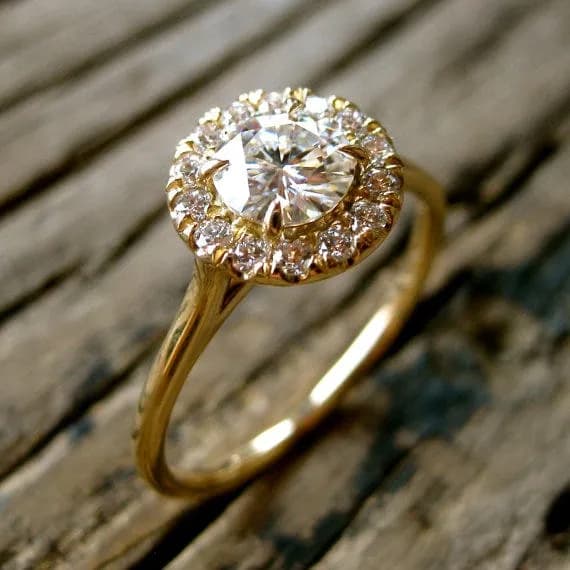
Rose gold does the same kind of work, but with a softer, more romantic cast. It pairs especially well with antique-style settings and halo designs, where the blush tone can echo vintage jewelry language without competing with the center stone.
How the setting changes sparkle, contrast, and style
A moissanite solitaire in white gold is the cleanest way to emphasize brilliance. The bright metal helps the stone read as white and flashes against a pale backdrop, which is why this pairing works so well for shoppers who want the classic bridal look at a lower entry price than platinum. A three-stone ring in yellow gold does the opposite, softening the sparkle contrast and making the whole ring feel warmer and more traditional.
Rose gold is particularly effective in vintage-inspired moissanite rings and halo settings, where the setting itself becomes part of the design story. Platinum, meanwhile, suits bezel-set moissanite and other secure, everyday styles because it gives the ring a dense, substantial presence.
How to choose based on upkeep and long-term value
The smartest way to choose is to match the metal to how you actually wear jewelry.
- Choose platinum if you want a naturally white metal, no rhodium replating, and the most durable daily-wear feel.
- Choose white gold if you want a bright white look and a lower upfront price, and you are fine with periodic replating.
- Choose yellow gold if you want warmth and a no-replating maintenance routine.
- Choose rose gold if you want a softer tone that works especially well with antique and halo designs.
This article was produced by Prism’s automated news system from verified source data, official records, and press releases, then run through automated quality and moderation checks before publishing. The system is built and supervised by the people who set the standards it runs under. Read our full AI policy.
Did this article answer your question?