How to spot misleading GRA moissanite certificates before buying
A polished GRA moissanite certificate can look reassuring, but it is not proof by itself. Verify the report number, inscription, and seller disclosure before you pay.
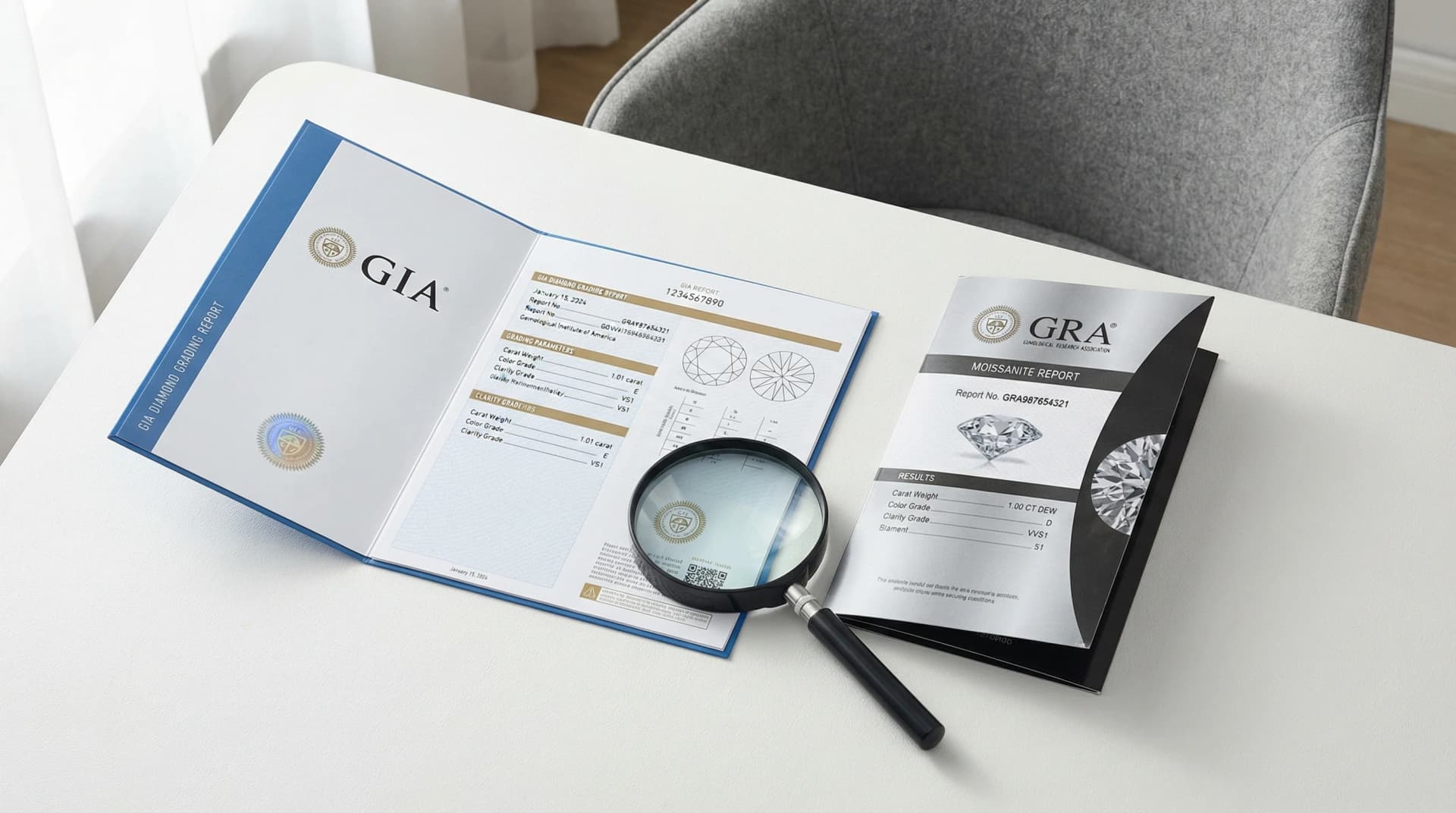
A glossy moissanite certificate can be the most misleading part of an online listing because it can feel like third-party proof when it is really only paperwork. The safest way to buy is to treat any GRA document as one clue, not proof the stone has been independently graded.
What moissanite is, and why the distinction matters
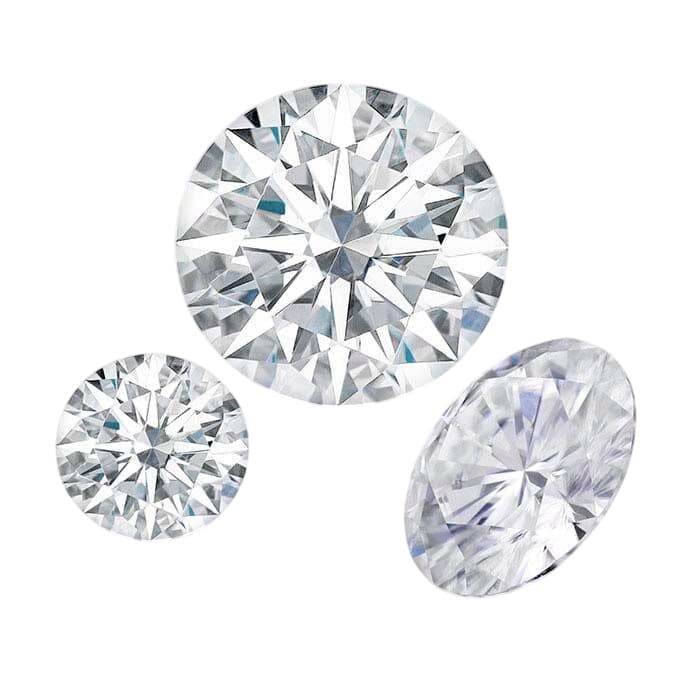
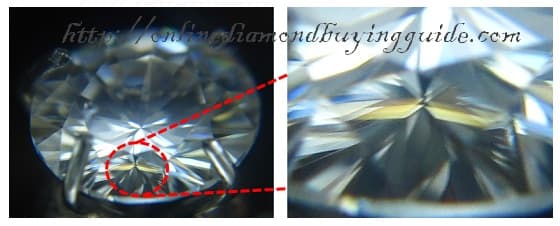
Moissanite is not diamond. Moissanite, lab-grown diamonds, and other simulants are completely unrelated to diamond at the atomic level, even when they share visual traits that can fool the eye in photos. A stone can look convincingly bright and still be something entirely different from what a listing implies.
Henri Moissan discovered natural moissanite in 1893 in material from the Canyon Diablo meteorite in Arizona, and synthetic moissanite entered the jewelry market commercially in 1998 after Charles & Colvard received patents to create and market lab-grown silicon carbide gemstones. In 1997, GIA called synthetic moissanite a new diamond substitute, prized for diamond-like fire in a different material.
Moissanite can be a smart choice for an engagement ring or daily-wear piece because it offers its own look and performance profile, but the purchase only works when the stone is represented honestly. A buyer who thinks a moissanite document is equivalent to a diamond grading report can overpay, or worse, buy with false confidence.
Why a GRA certificate can look stronger than it is
A certificate can be useful, but it does not automatically equal meaningful assurance. The problem with some GRA moissanite documents is not that they exist, but that the format can appear more authoritative than the underlying evidence. A polished layout, a report number, and a seal do not prove that the issuing body has the same market recognition or verification infrastructure as GIA or IGI.
GIA and IGI both provide online report-verification tools for their own reports. A report number should match a live database record. IGI report verification confirms whether the details on a report match the records in its database.
GIA has documented cases in which synthetic moissanite carried fraudulent GIA inscriptions. An inscription on the stone, or a number printed on a document, is not enough on its own. If the report and the stone cannot be independently matched, the document becomes a sales accessory, not evidence.
What a certificate can prove, and what it cannot
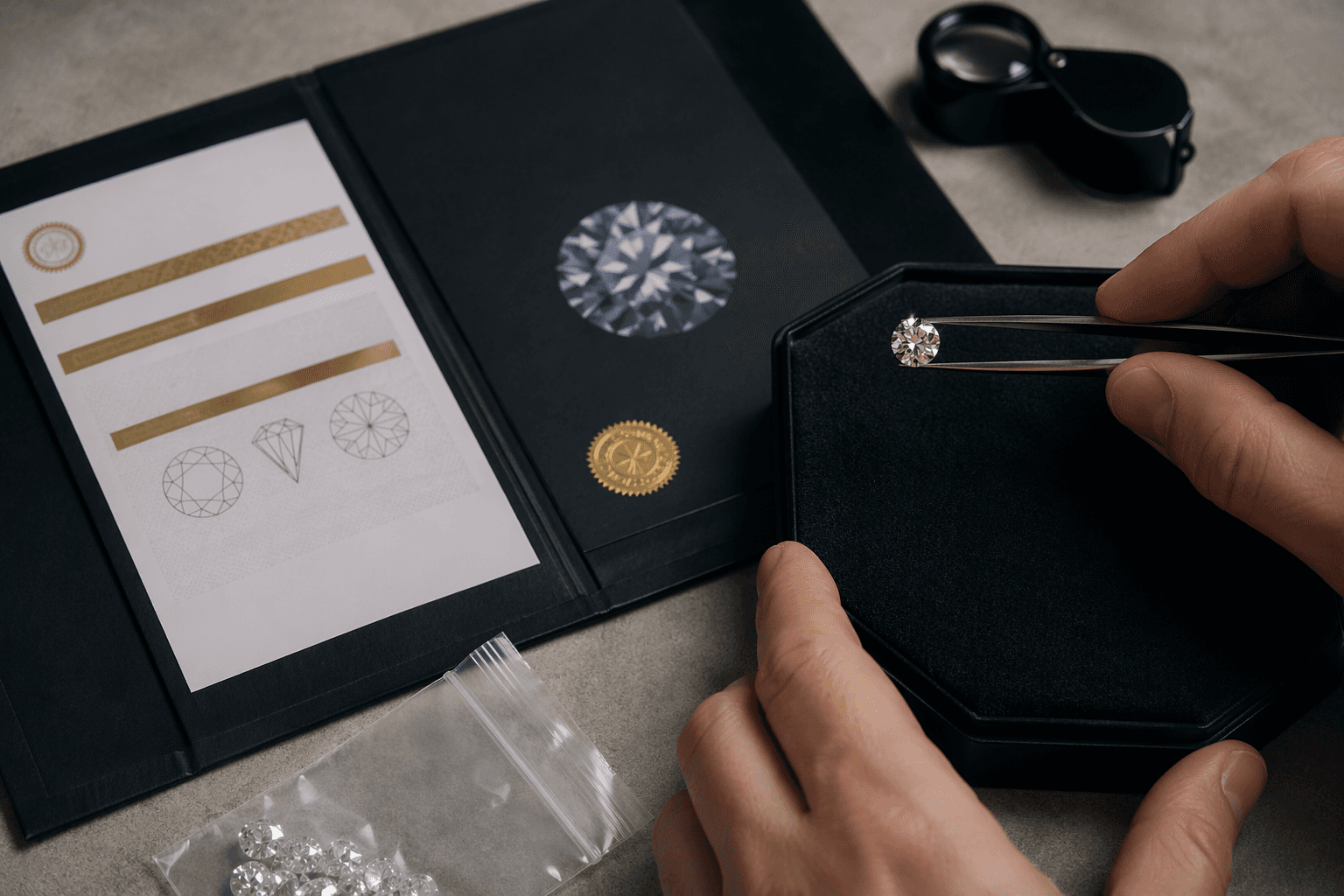
A real laboratory report can help identify the stone and describe what was examined. It can support a seller’s description and give you something to verify before purchase. What it does not do, by itself, is guarantee value, establish a seller’s honesty, or prove that the certificate came from a lab the trade treats as authoritative.
It also does not erase the FTC’s rules on disclosure. The Federal Trade Commission’s Jewelry Guides, issued under Section 5 of the FTC Act and laid out in 16 CFR Part 23, are designed to help consumers get accurate information about gemstones and their laboratory-created or imitation substitutes. Sellers must describe products truthfully and disclose material information clearly and non-deceptively.
If a listing leans on a certificate but avoids plain language about what the stone actually is, the document is doing marketing work, not disclosure work. The more polished the paper looks, the more important it becomes to test the claim behind it.
A practical verification checklist before you buy
Before paying for a moissanite ring, pendant, or loose stone, run the document through a simple check:
- Confirm the issuing lab. Look for the actual laboratory name and ask whether it has an online report-check system.
- Match the report number. Enter it into the lab’s database and make sure the record appears.
- Compare the inscription. If the stone is laser inscribed, the inscription should align with the report number and the stone shown in the listing.
- Read the seller’s wording closely. The listing should say moissanite plainly, not hide behind vague terms that blur the difference between a simulant and a diamond.
- Ask what the document actually covers. A report can identify a stone, but it is not the same thing as a guarantee of price, rarity, or investment value.
- Save screenshots before purchase. If the listing changes after checkout, you want a record of what was promised.
The questions worth asking a seller
Ask who issued the report, whether the report number can be verified in a live database, and whether the stone itself is inscribed with the same number. Ask whether the description is meant to be a marketing summary or a laboratory document, because those are not the same thing.
You should also ask how the stone is being described in relation to diamond. Moissanite is a distinct material, not a diamond, and simulants are identified through optical and physical properties.
This article was produced by Prism’s automated news system from verified source data, official records, and press releases, then run through automated quality and moderation checks before publishing. The system is built and supervised by the people who set the standards it runs under. Read our full AI policy.
Did this article answer your question?