Rio Grande warns moissanite needs careful setting, especially at the girdle
Moissanite is scratch-hard, but the girdle still needs protection. The best rings are cut, set, and repaired with moissanite-specific care.
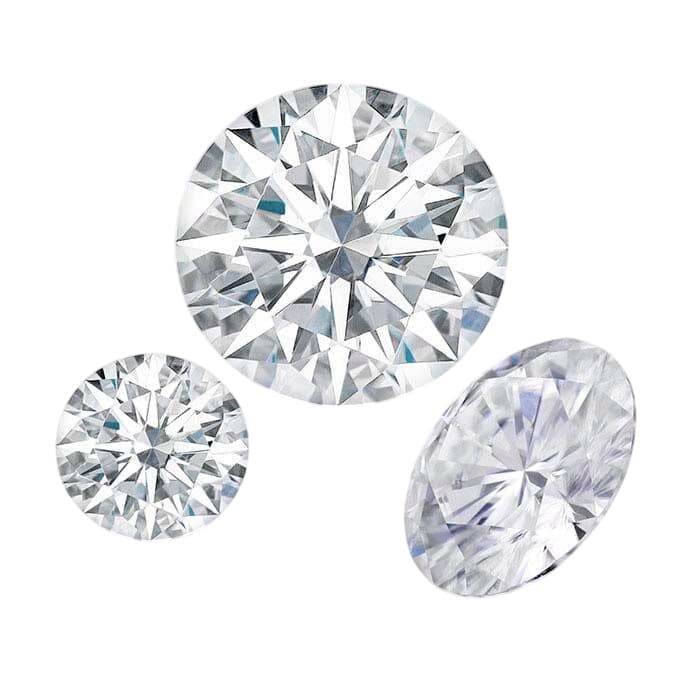
Moissanite can handle daily wear, but the bench is where many of its problems begin. Rio Grande’s setting guidance makes that clear: Charles & Colvard Created Moissanite rates 9.25 on the Mohs scale, second only to diamond, yet it can still chip when pressure lands on the girdle, the edges, or any sharp point. The strongest ring is not the one that assumes hardness is enough. It is the one built with a setter who knows where moissanite is most exposed and how to support it there.
Why moissanite needs more than a hard surface
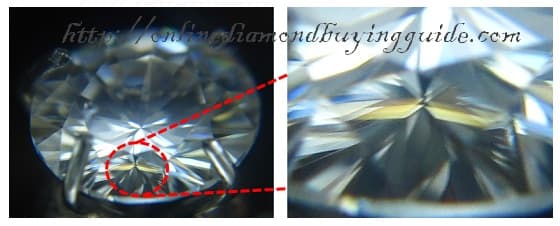
Hardness tells you how well a stone resists scratching, not how forgiving it is when a tool, prong, or wheel puts force in the wrong place. Rio Grande notes that moissanite does not have a cleavage direction like diamond, but that does not make it indestructible. If the stone is stressed at a weak point, it can still chip or break, which is why the girdle, the outer edge of the stone, matters so much in setting.
That distinction helps explain why moissanite has its own bench language. A ring can look secure from the top and still be vulnerable if the seat is cut poorly or if the prongs pinch the stone instead of supporting it. For buyers, that means the question is not simply whether the ring is “durable.” It is whether the setting protects the parts of the stone most likely to fail under pressure.
The cuts that demand the most care
Rio Grande specifically flags radiant, princess, and marquise cuts as the most sensitive shapes because their angles and points are more exposed. Those shapes are popular for a reason: they give moissanite a bright, modern profile and, in the case of marquise and princess cuts, strong visual presence. But the same geometry that makes them dramatic also leaves their corners and ends less protected during setting and later resizing.
That is where workmanship becomes visible. A setter working with a pointed shape needs better support under the stone, more disciplined handling at the prongs, and a clear plan for how the girdle will sit once the ring is finished. If you are commissioning one of these cuts, ask how the stone will be protected at its points before the ring is made, not after damage has already happened.
What a careful seat looks like
One of Rio Grande’s most useful instructions is also one of the most revealing: use a 90° seat cutter in appropriate cases, because a more parallel seat gives better support under the stone. The guide also says a pre-cut seat should sit parallel with the pavilion. If it is not parallel, the point of contact can act like a fulcrum and put undue pressure on the girdle.
That is the kind of detail that separates a pretty mount from a truly secure one. A flush, parallel seat tells you the setter has shaped the metal to cradle the stone rather than wedge against it. Rio Grande also advises that the girdle should sit slightly below the metal surface and that beads should be raised above the girdle rather than pressed against it. In practice, that means the stone is held by the setting, not crushed by it. For a buyer, those are signs of a ring built for longevity, not just showroom sparkle.
Finishing work can damage a stone too
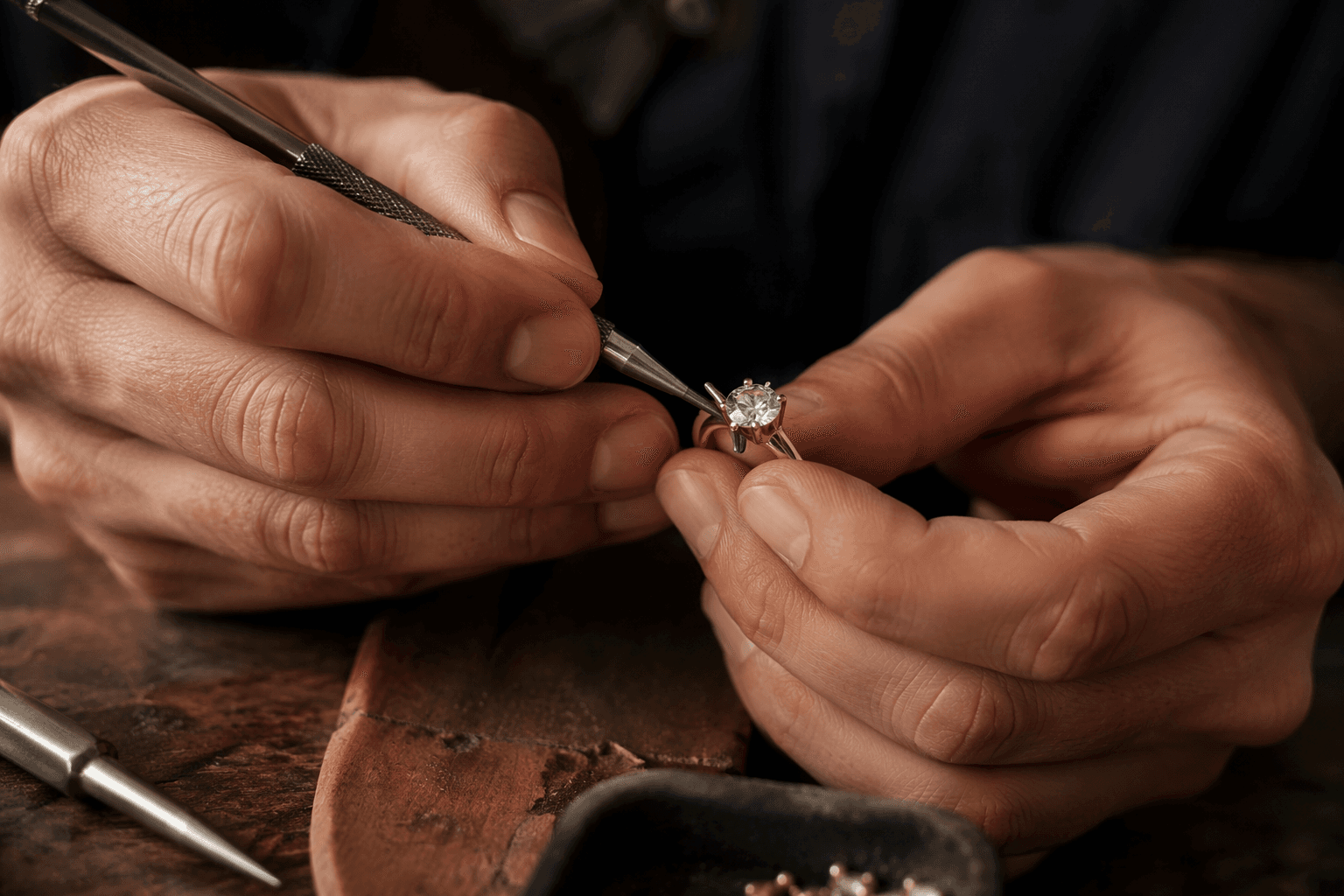
The danger does not end when the stone is in place. Rio Grande warns against using stone abrasive wheels, silicon carbide, or diamond abrasives when trimming prongs, because those materials can scratch moissanite facets. That matters because final finishing is often treated as cosmetic work, when in fact it can change the stone’s surface if the wrong tool touches it.
Charles & Colvard adds another important repair wrinkle. During re-tipping, moissanite can initially turn yellow and then red when heated, and color-treated stones can lose their treatment if the temperature gets high enough. That is a practical warning for anyone bringing a ring in for repair, resizing, or prong rebuilding. Heat work is not routine on moissanite in the same way it can be on other stones, and the jeweler’s experience matters as much as the design of the mounting.
What to ask before you buy or resize
A moissanite ring should come with craftsmanship questions, not just style questions. Before commissioning or resizing one, ask the jeweler:
- How is the seat cut, and is it parallel with the pavilion?
- Are you using a 90° seat cutter where the shape calls for it?
- How will the girdle sit in the finished setting, and is it slightly below the metal surface?
- Are the prongs designed to hold above the girdle rather than press against it?
- Have you worked with radiant, princess, or marquise moissanite before?
- What is your plan for heat during re-tipping or resizing?
- What finishing tools do you avoid so the facets do not get scratched?
Those questions are not technical trivia. They reveal whether the jeweler understands that moissanite behaves like a hard gemstone that still needs delicate handling at the bench.
Why lab-created history still matters to the buyer
Charles & Colvard says it introduced moissanite to the world nearly 30 years ago and spent more than two decades refining the product. That history helps explain why moissanite has moved from novelty to a serious engagement-ring option. The company also says its Forever One moissanite is the only created moissanite considered colorless by GIA color-grading standards, which is part of why the stone now sits in a premium part of the market rather than just a budget category.
There is also a reason the trade took moissanite seriously from the start. GIA’s 1997 work on synthetic moissanite noted that its thermal properties are so close to diamond that it can fool thermal probes. That early confusion pushed gemologists and jewelers to understand the stone on its own terms, not as a simple substitute. Today, the same principle applies at the bench. Moissanite may be chosen for brilliance, value, and its diamond-like look, but its setting and servicing still reward specialists who know exactly where its vulnerabilities sit.
Charles & Colvard recommends professional inspection at least once a year, and that advice fits the stone’s real-life use. Moissanite is tough enough for daily wear, but the safest ring is the one that is designed, finished, inspected, and repaired with its girdle, facets, and points in mind.
This article was produced by Prism’s automated news system from verified source data, official records, and press releases, then run through automated quality and moderation checks before publishing. The system is built and supervised by the people who set the standards it runs under. Read our full AI policy.
Did this article answer your question?