Moissanite buying guide weighs value, beauty, and diamond alternatives
Moissanite can be a smart buy if you want intense sparkle and lower upfront cost. It is less compelling if you expect diamond-like resale or the exact visual behavior of a diamond.
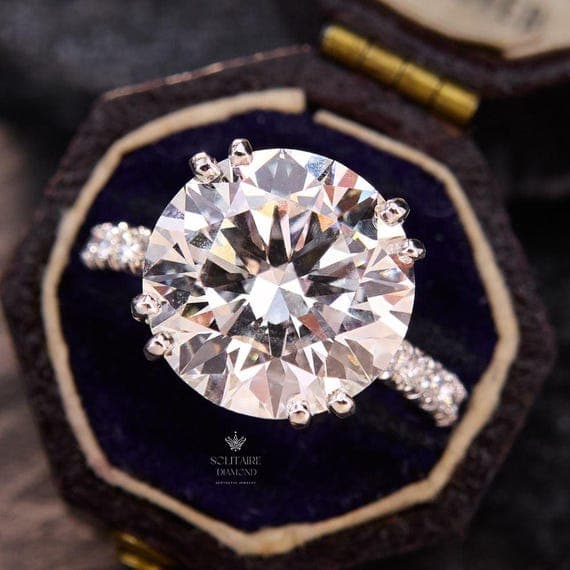
French chemist Henri Moissan first discovered moissanite in 1893 in a meteorite crater in Arizona. Today, the stone sits in a useful middle ground for modern jewelry buyers: it is not a diamond, but it is not pretending to be a throwaway imitation either. The stone offers strong sparkle, serious hardness, and a much lower entry price than mined or lab-grown diamonds, which is why it keeps showing up in engagement rings, bridal sets, and other daily-wear pieces. The question is whether its look, price, and long-term expectations match the way you actually plan to wear it.
What moissanite is, and why it exists in jewelry
Natural moissanite is extremely rare. That scarcity is why almost every moissanite stone in jewelry today is lab-grown. Charles & Colvard, founded in 1995 in North Carolina’s Research Triangle Park, was the first to introduce lab-grown moissanite to the world, helping turn a rare mineral into a commercial gemstone category.
Chemically, moissanite is silicon carbide. That matters because it places the stone in a different lane from diamond: it is not a substitute in a scientific sense, even if it is often sold as a diamond alternative in practice. GIA classifies moissanite alongside cubic zirconia in the imitation-diamond category, which has been popular for decades.
The beauty case: more fire than diamond, but a different kind of sparkle
Moissanite earns its audience through light performance. It has more than twice the fire of diamond and slightly more brilliance, according to GIA, producing lively, sometimes rainbow-heavy flashes that catch the eye in bright light. For shoppers who love a stone that throws off visible color and reads as highly animated, that effect is often the appeal.
That same fire is also the reason moissanite is not for everyone. A diamond’s sparkle tends to look cleaner and more restrained, while moissanite can show a more vivid, dispersive flash.
Durability for daily wear
Moissanite is hard enough for regular wear, with a Mohs hardness of 9.25. That puts it in an excellent position for rings and other pieces that live on the hand every day. It is not as hard as diamond, but it is firmly in the range that makes practical sense for an engagement ring or a wedding band.
That durability is one reason the stone has stayed relevant in bridal jewelry. It has a long history in the market and the toughness buyers want for pieces that are worn constantly.
Value versus lab-grown diamonds
The closest comparison for many buyers in 2026 is not a mined diamond, but a lab-grown diamond. Lab-grown diamonds are chemically identical to mined diamonds and can sell for a fraction of the price, which makes them the main value benchmark for shoppers weighing alternatives. That changes the moissanite conversation: it is no longer just about choosing between “real” and “fake,” but about choosing which kind of beauty and budget tradeoff fits the purchase.
Rapaport’s 2026 diamond price report lists tariffs, synthetics, downturns in consumer sentiment, and other factors as pressures on diamond pricing and sentiment. Against that backdrop, moissanite’s lower upfront cost remains persuasive for buyers who care more about the look on the hand than about traditional diamond status. It is especially compelling when the budget is fixed and the priority is a larger center stone or a more elaborate setting.
What the price actually tells you
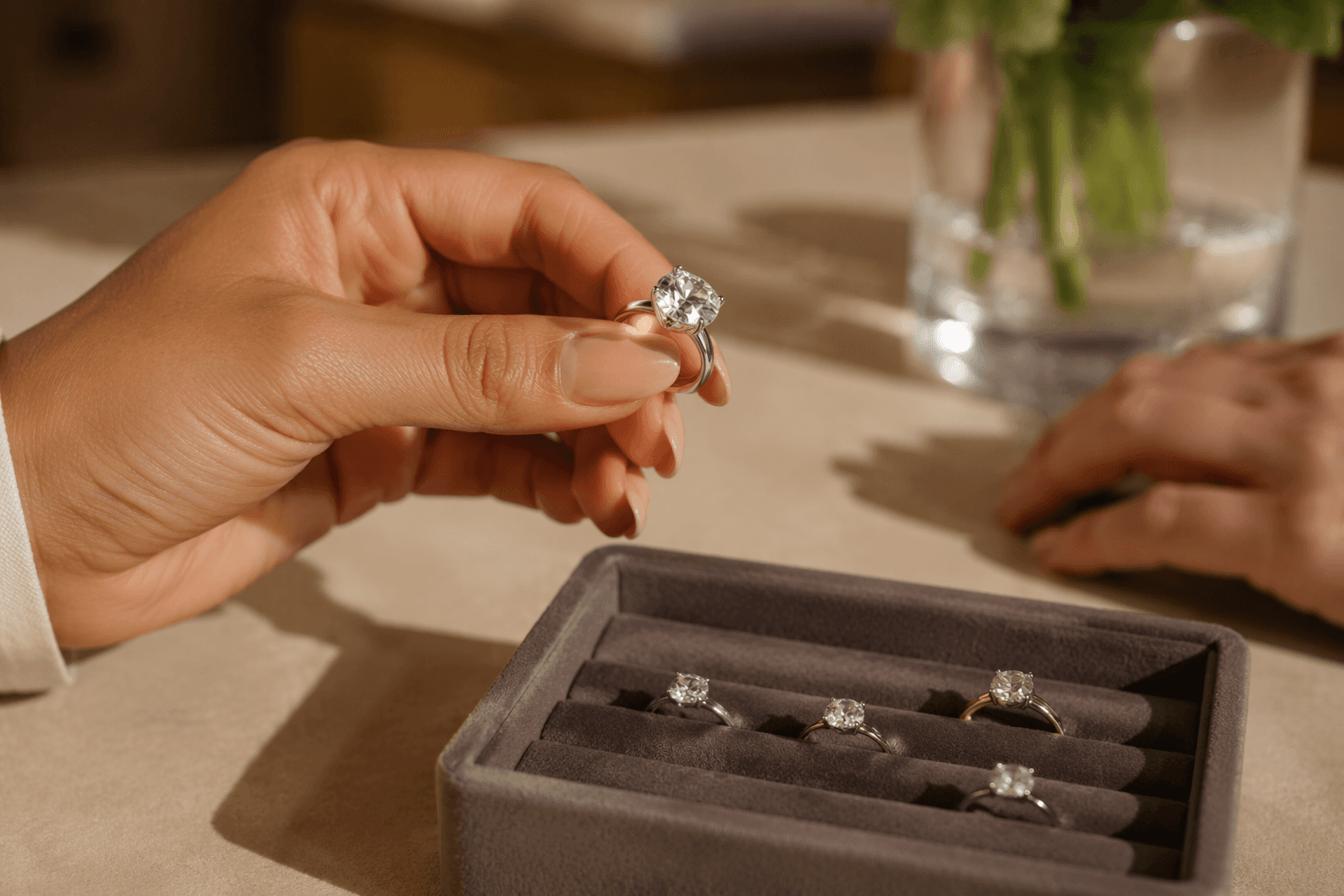
Charles & Colvard lists bridal sets starting around $1,881.75 and reaching $7,579 before discounts, depending on style and setting. Moissanite is not automatically cheap, and the finished ring still reflects craftsmanship, metal weight, design complexity, and the number of stones.
A simple solitaire will usually sit at a very different price point than a halo setting with a pavé band or a more intricate bridal set. The stone saves money, but the setting still shapes the final bill.
Who moissanite is right for, and who should keep looking
Moissanite makes the most sense if you want:
- a bright, durable center stone for everyday wear
- a lower upfront price than a diamond, especially a natural diamond
- a stone with a long track record in bridal jewelry
- a look that leans toward fire and sparkle rather than strict diamond imitation
It is less convincing if you want:
- diamond-like resale expectations
- a stone that behaves visually like a diamond in every light
- the cultural and market status that still attaches to diamonds, whether mined or lab-grown
Moissanite is its own category. For shoppers who care about resale or traditional stone hierarchy, lab-grown diamonds may be the better comparison point.
The cleaner way to buy
The smartest moissanite purchase starts with the setting, not just the center stone. Examine the metal, the prong work, the band profile, and how the stone is cut into the design, because those details determine how the ring feels in daily wear. A well-made moissanite piece can look refined and intentional; a weak setting can make even a good stone feel ordinary.
This article was produced by Prism’s automated news system from verified source data, official records, and press releases, then run through automated quality and moderation checks before publishing. The system is built and supervised by the people who set the standards it runs under. Read our full AI policy.
Did this article answer your question?