Moissanite cuts that maximize fire, brilliance, and sparkle
Choose brilliant for maximum rainbow flash, step for a cleaner diamond-like look, and mixed cuts for balance. In moissanite, the cut decides how loudly the stone speaks.

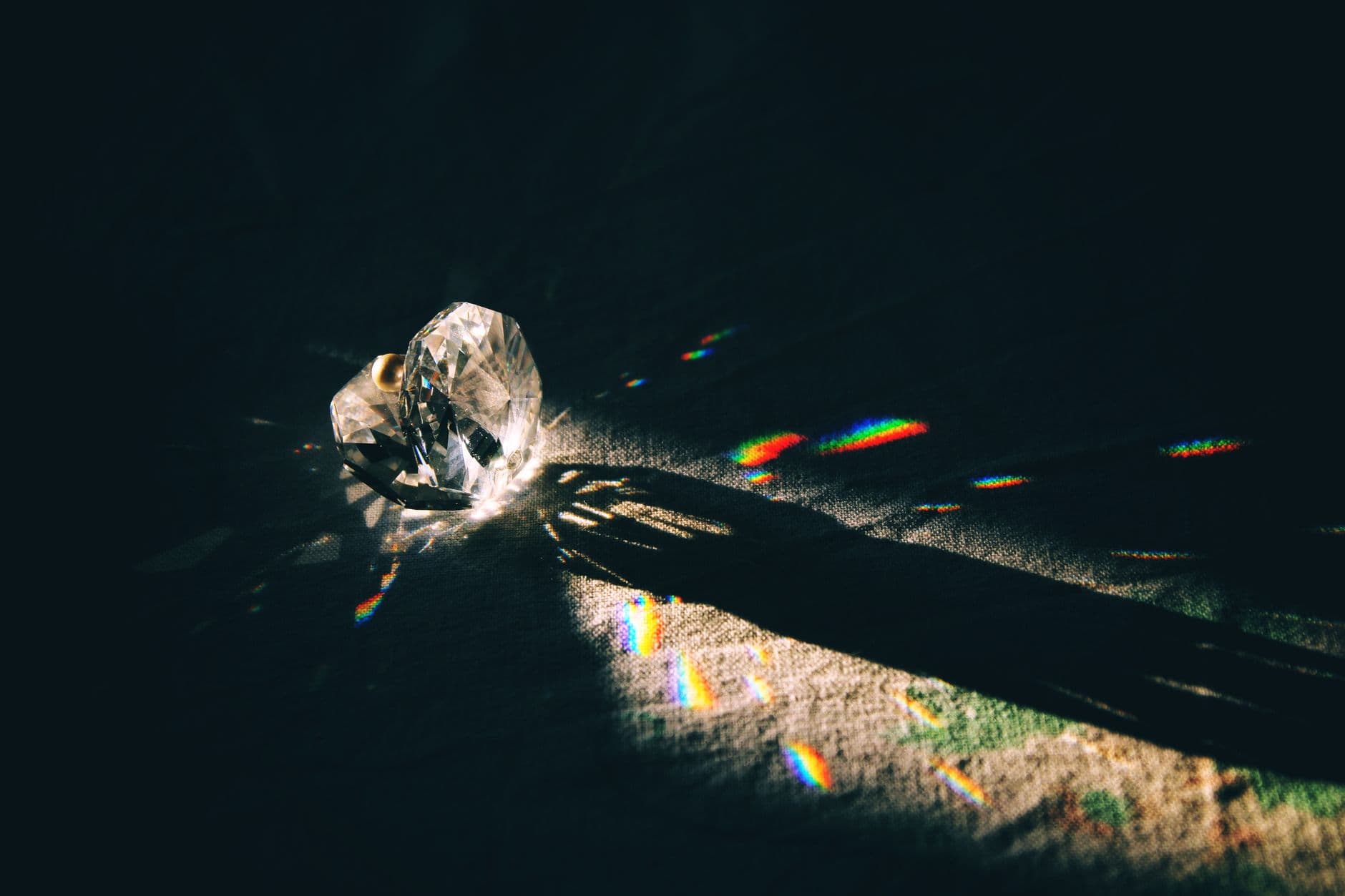
In GIA’s measurements, synthetic moissanite has more than twice the fire of diamond and slightly more brilliance. Choose brilliant if you want the loudest rainbow flash, step if you want a calmer, more diamond-like look, and mixed if you want a little of both. With moissanite, cut is not a finishing detail. It decides how the stone handles light, how much fire jumps off the surface, and whether the gem reads as crisp, architectural, or almost theatrical.
Why moissanite cut matters so much
Moissanite is unusually lively because of the way it bends and splits light. GIA gives synthetic moissanite a refractive index of 2.648 to 2.691 and a dispersion of 0.104.
The stone is doubly refractive, which means back facets can appear doubled and the interior can look slightly blurry at some angles. Some stones can show a slight yellow or gray cast depending on viewing angle. In practical terms, that means a moissanite’s face is never just about size or color grade. It is about how the facets shape brightness, fire, scintillation, polish, symmetry, and even how much weight the stone carries visually.
Brilliant cuts: the brightest, flashiest choice
If you want maximum rainbow flash, brilliant cuts are the obvious place to start. Brilliant cutting uses triangular and kite-shaped facets arranged to produce the most scintillation. In moissanite, that facet map tends to amplify the gem’s already high dispersion, which is why brilliant-cut stones can look almost electric in motion.
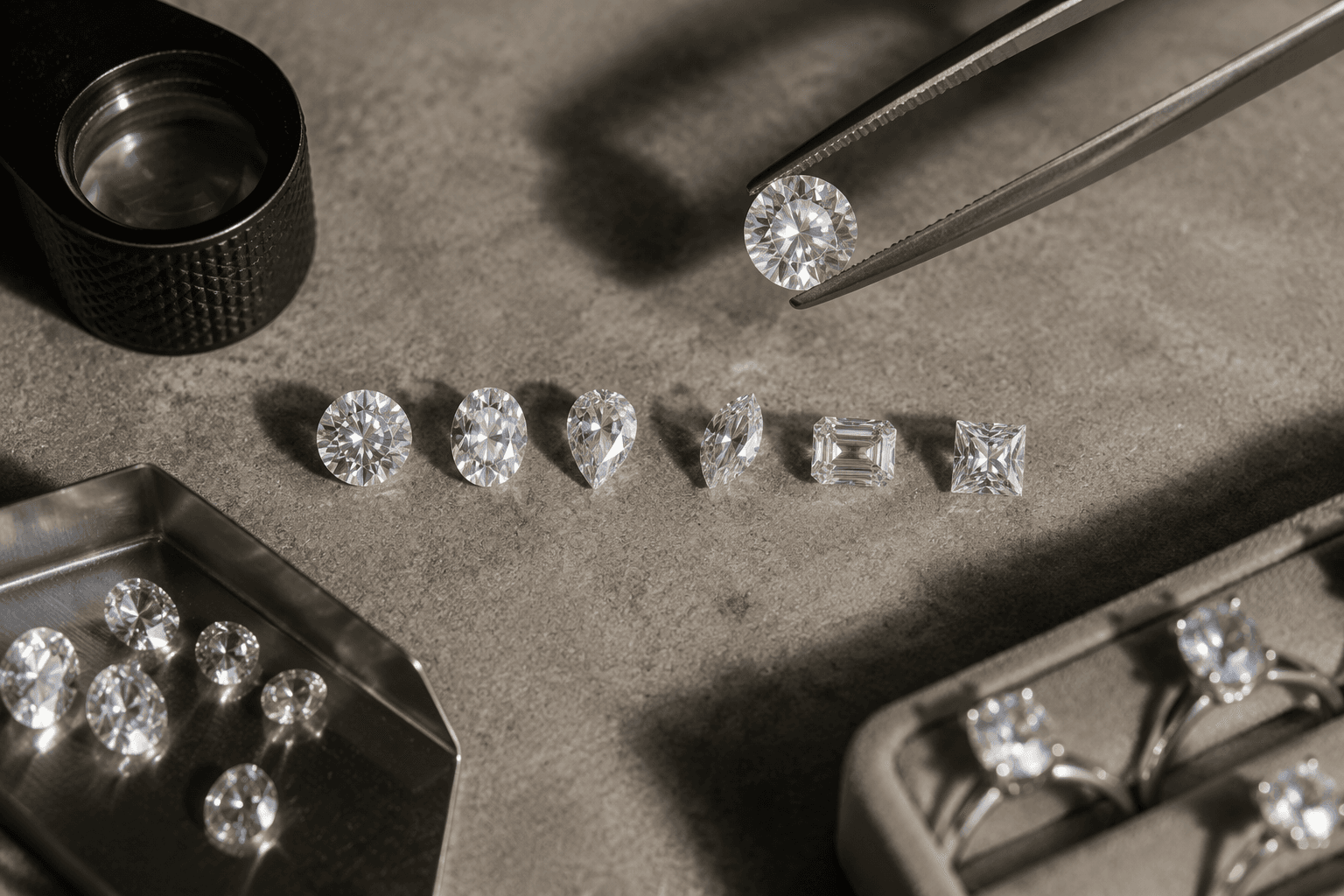
Round brilliant and oval brilliant cuts are the most obvious expressions of that look. They push light back at you in quick, lively bursts. In very large sizes, the extreme fire can become so dramatic it is sometimes called the “disco ball” effect.
Step cuts: quieter, cleaner, more architectural
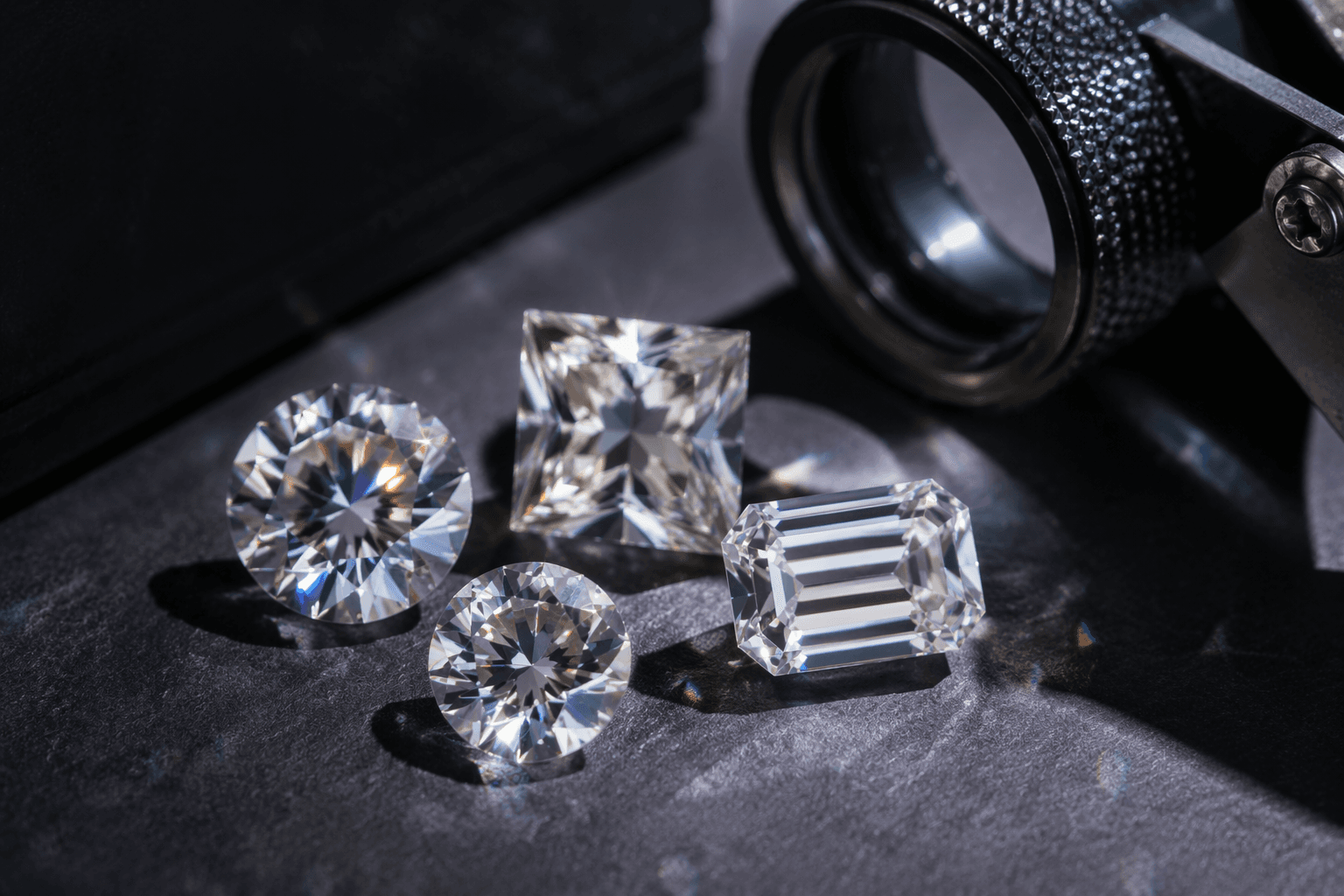
If brilliant cuts are the sparkling extrovert, step cuts are the tailored one. Step cuts use rectangular facets that rise and fall in steps, creating a subtler gleam rather than a storm of tiny flashes. Emerald cuts and baguettes are the classic examples, and Asscher-style stones sit comfortably in the same family of clean lines and measured light.
Moissanite in a step cut does not stop being brilliant, but the personality changes. The sparkle becomes more linear and controlled, with emphasis on outline, clarity, and the stone’s geometry rather than maximum fireworks. Step cuts often feel more diamond-like to the eye, especially if you want a look that reads polished and composed rather than overtly flashy.
Mixed cuts: the middle path with dimension
Mixed cuts sit between those two worlds. They combine brilliant and step-cut ideas, using some facets to drive sparkle and others to keep the stone visually ordered. Mixed styles can be built into many shapes, and hybrids such as Barion-style faceting are designed to deliver noticeable light return without the most aggressive rainbow burst.
That balance makes mixed cuts especially useful if you want moissanite to feel lively in daylight, but not overwhelmingly fiery indoors or under spotlights. They can soften the divide between the crisp structure of a step cut and the high-voltage flash of a full brilliant.
How to choose the cut that suits your taste
The simplest way to choose is to decide what kind of light you want the stone to return.
- Choose brilliant if you love motion, sparkle, and obvious fire, especially in round or oval shapes.
- Choose step if you want a more restrained, refined look that emphasizes form and clarity.
- Choose mixed if you want sparkle with a little more control and less rainbow intensity.
Moissanite’s durability and refraction allow it to be cut into a wide variety of shapes and facet styles, which is why the same gemstone can look dramatically different from one cut to another. AGS puts moissanite at its best when seen in person, because brilliance and variety can shift with lighting and viewing angle.
What cut quality means in moissanite
Cut is not just shape. In gemological terms, it is the precision of the facet arrangement and the finish on those facets. GIA evaluates cut quality through brightness, fire, scintillation, polish, symmetry, weight, and durability concerns, and that framework matters just as much for moissanite as it does for diamond. A moissanite with a technically strong cut will look cleaner, brighter, and more deliberate, while a weak one can exaggerate the stone’s natural quirks.
A well-cut brilliant should look vivid without turning muddy. A step cut should look sleek without going lifeless. A mixed cut should feel balanced, not indecisive.
A gemstone with a modern history and a long memory
Moissanite has a scientific origin story that gives it unusual cultural weight. Henri Moissan discovered the mineral in 1893 in material from Meteor Crater near Canyon Diablo, Arizona, and it was later named in his honor. Commercial jewelry moissanite came much later. C3 Inc. produced near-colorless synthetic moissanite for jewelry purposes in 1997, and Charles & Colvard dates its introduction of moissanite to the world to nearly 30 years ago.
AGS puts the making of a single moissanite gem at two to three months.
Why the look can confuse the eye, and why that matters
Moissanite’s brightness can be so convincing that it has long been mistaken for diamond. Its thermal properties are close enough to diamond that it can pass on thermal probes, while a late-1997 experiment found 40 jewelers and pawn shop owners incorrectly identified synthetic moissanite as genuine diamond using those probes. The stone’s double refraction adds to the visual complexity, especially when back facets appear doubled.
This article was produced by Prism’s automated news system from verified source data, official records, and press releases, then run through automated quality and moderation checks before publishing. The system is built and supervised by the people who set the standards it runs under. Read our full AI policy.
Did this article answer your question?