Moissanite melee in fine jewelry raises screening challenges
Tiny moissanite melee can hide inside pavé and bracelets, where mounted stones are hard to screen. Ask for melee disclosure, testing, and lab paperwork before you buy.
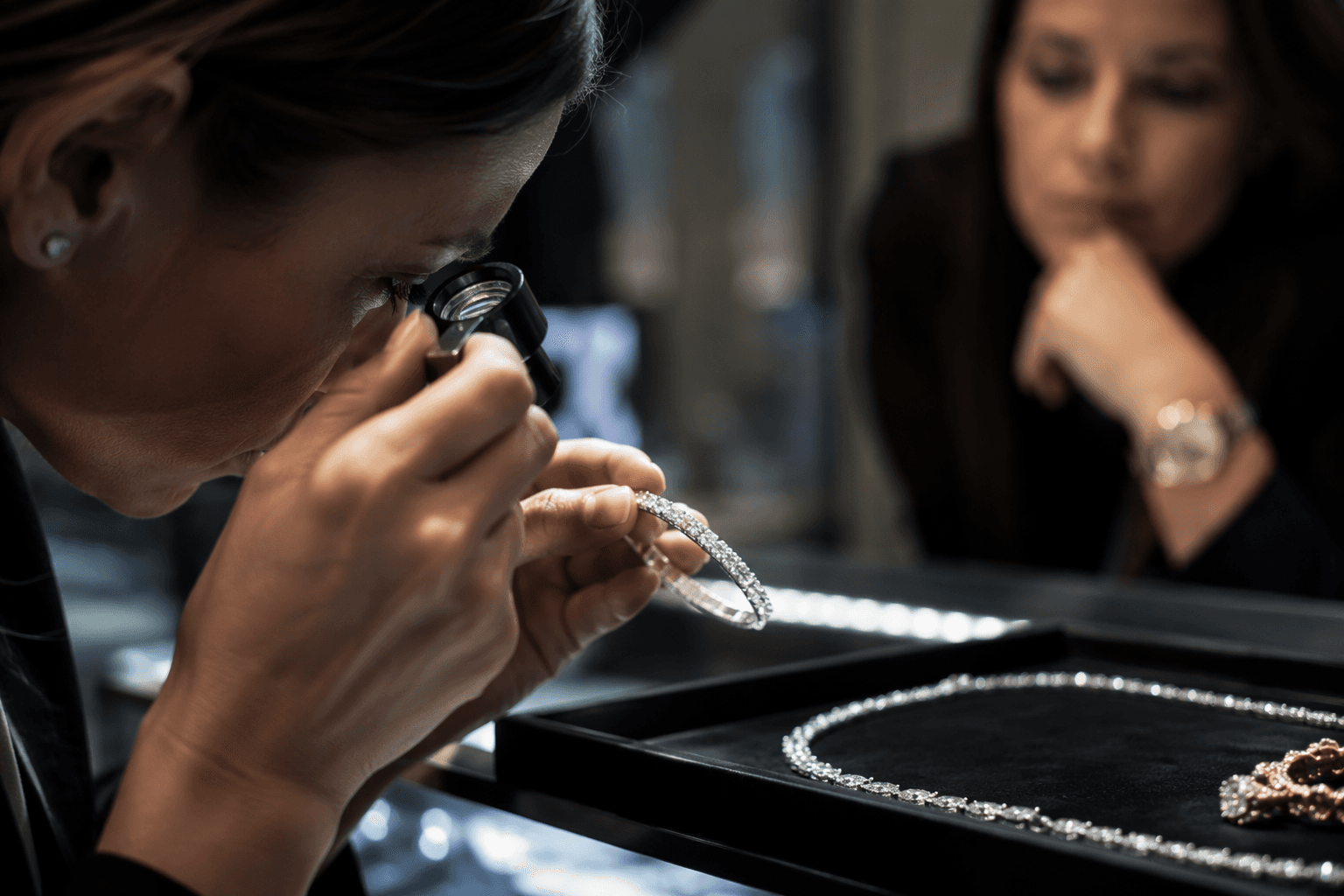
A colored diamond bracelet examined at GIA’s New York laboratory contained 162 round brilliants from 0.05 to 0.20 ct, spanning near-colorless to fancy yellow and brownish yellow. Tiny accent stones are where jewelry can become hard to read and harder to verify. In pavé bands, halo rings, tennis bracelets, eternity settings, and decorative bracelet lines, the smallest stones often carry the visual effect while escaping the scrutiny that a center stone gets.
Why melee is the blind spot
Melee, the tiny stones used as accents, are usually below 0.20 ct, and that size range changes the rules of inspection. Stones that small are usually not screened for synthetics and imitations, and once melee is set into fine jewelry, testing becomes even less practical because the mounting limits what examiners can do. Near-colorless synthetic moissanite is marketed for jewelry purposes as a diamond imitation and can appear in mounted pieces without drawing attention.
The center stone may have paperwork, while the rows of tiny surrounding stones do not. In a finished jewel, the visual story is often one of sparkle and symmetry, not of individual stone identity. If the melee is not disclosed, the piece can look like an all-diamond design even when it is not.
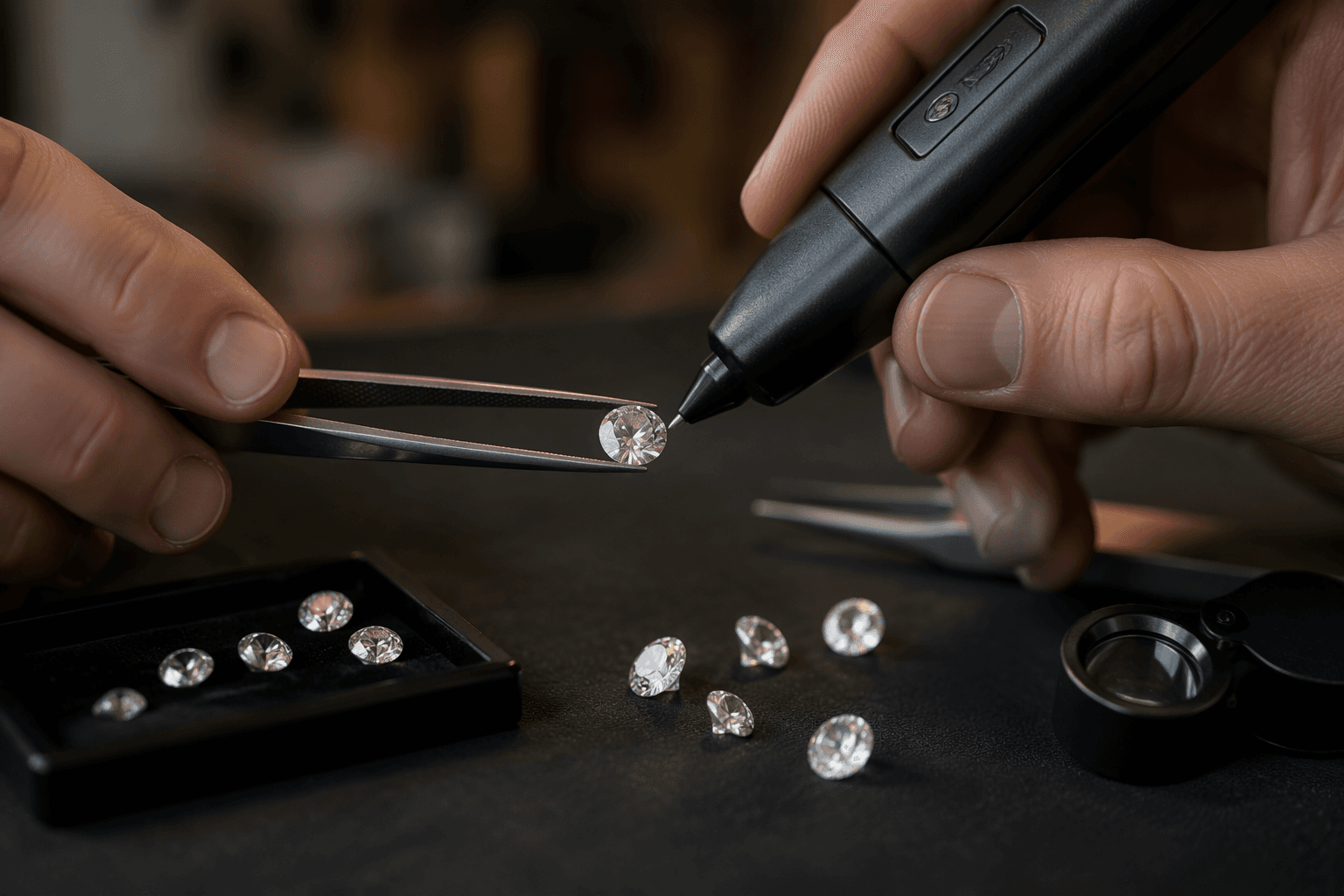
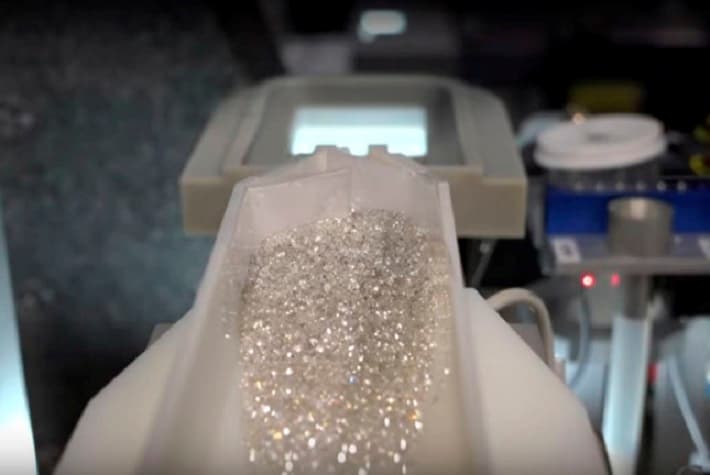
GIA’s Melee Analysis Service was built for that scale of problem. It can screen diamonds down to 0.005 ct, and it separates natural, untreated diamonds from simulants, synthetic, and treated diamonds while sorting screened stones by color range. The service was introduced broadly after a five-month pilot.
Where the issue shows up most often
The places most likely to hide this problem are the ones where a lot of small stones are packed into a small surface area. Halo rings use tiny stones to frame a center gem. Tennis bracelets and eternity bands depend on repeating rows of melee for their look. Fashion pendants and decorative bracelet lines often build their design around a field of small, closely matched stones.
Moissanite can sit as an accent rather than as the headline stone. In near-colorless form, it is sold as a diamond imitation, so it can blend into pavé and halo work where the buyer is not shopping stone by stone. If a seller cannot tell you whether the accent stones are natural diamonds, lab-grown diamonds, moissanite, or a mix, you are looking at an incomplete materials story.
The bracelet’s spread from near-colorless to fancy yellow and brownish yellow shows how many tiny components can coexist in one piece.
What the laboratory record reveals
In GIA’s yellow-diamond melee note, gemological analysis is usually not performed on each specimen because of the size and quantity of melee in a parcel. That creates room for treated and synthetic stones to be mixed into parcels without every stone being individually tested. The same logic applies to mounted jewelry: the more stones, the less likely each one has been scrutinized one by one.
The trade has also seen a rise in “salting” natural diamond melee parcels with HPHT-grown synthetic melee, meaning high pressure, high temperature-grown synthetic stones are inserted into parcels that are supposed to be natural. GIA identified the practice as more frequently seen in the trade today.
GIA began offering report services for synthetic diamonds in 2006.
How to vet a pavé or accent-stone piece
Before you buy, ask for documentation that separates the center stone from the melee. If a bracelet, band, or ring is presented as diamond jewelry, the question is not only what the main stone is, but what the small stones are. The safest sellers can answer that without hesitation.
- Ask whether the melee were screened individually or as a parcel.
- Request a written disclosure naming the accent stones as natural diamonds, lab-grown diamonds, moissanite, or mixed material.
- For heavily mounted pavé or micro-pavé, ask whether the piece was checked with a service that can screen down to 0.005 ct.
- If the seller cannot identify the melee, treat that as missing information, not a harmless omission.
- For higher-value pieces, ask for itemized paperwork before the sale closes, not after.
Bracelets and bands often make tiny stones the main visual event. A center-stone report does not automatically tell you what is happening in the shoulders, the halo, the shank, or the clasp-side links.
This article was produced by Prism’s automated news system from verified source data, official records, and press releases, then run through automated quality and moderation checks before publishing. The system is built and supervised by the people who set the standards it runs under. Read our full AI policy.
Did this article answer your question?