Moissanite price calculator tracks live retailer benchmarks across major brands
A live calculator can expose where moissanite pricing jumps by retailer, shape and carat. The cheapest tag is not always the best buy when cut, branding and setting change the value.

A live calculator that compares Charles & Colvard, James Allen and Amazon shows how sharply moissanite prices can swing by seller, shape and size. It gives buyers a fast benchmark before the first cart click in a market where the same stone can look similar online while a polished listing hides a very different level of craftsmanship, service or markup.
What moissanite actually is
Moissanite is a naturally occurring mineral and a laboratory-grown gemstone made of silicon carbide. French chemist Henri Moissan first identified it in 1893 in material from an Arizona meteor crater, and the mineral later took his name. Natural moissanite is extremely rare, which is why almost all jewelry moissanite on the market today is lab-grown.
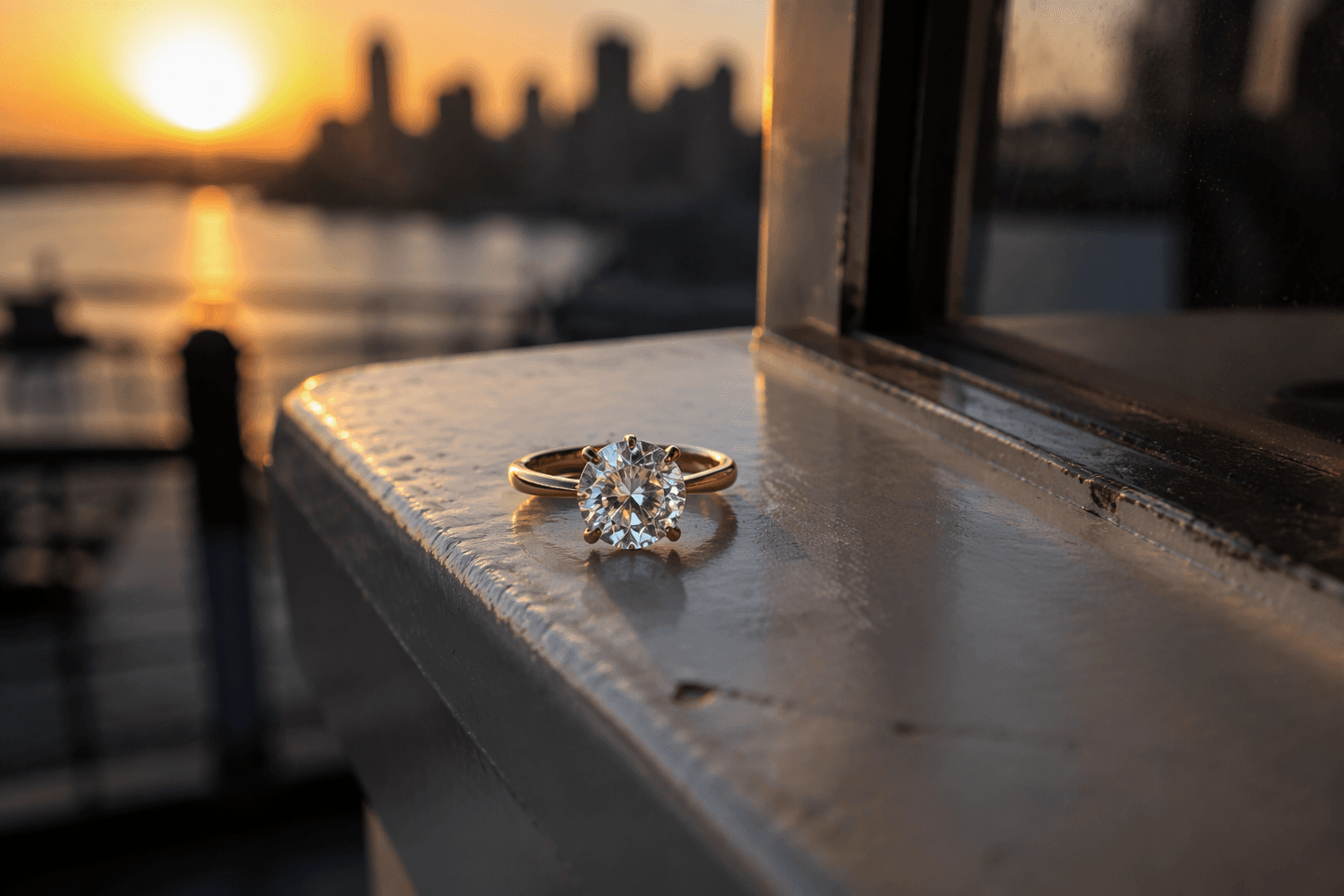
Moissanite has a bright, rainbow-heavy fire that can read differently from diamond in strong light.
Why the brand name changes the price
Charles & Colvard, founded in 1995 in North Carolina’s Research Triangle Park, calls itself the first company to introduce lab-grown moissanite to the world. Its Forever One line uses the company’s original patented process, a detail that helps explain why branded moissanite often sits above the cheapest marketplace listings. American Gem Society materials put production time for a single moissanite gem at two to three months.
A larger stone, a more exacting cut, or a branded line with a traceable process will usually cost more than an anonymous listing that competes on price alone. Price can cover a loose stone, a finished piece, a named process, or the lowest sticker on a crowded marketplace page.
Where the calculator shows the biggest gaps
The calculator is most useful when it compares stones that look interchangeable at a glance but are not built the same way. Charles & Colvard, James Allen and Amazon sit in different corners of the market. James Allen sells exclusive loose moissanite stones online, including round and emerald cuts, with examples such as 1.50-carat and 1.75-carat round stones. Amazon, by contrast, offers a wide marketplace of moissanite jewelry, especially earrings and studs, with listings that can fall into the tens of dollars and lean heavily on coupons, flash deals and buyer-volume signals.
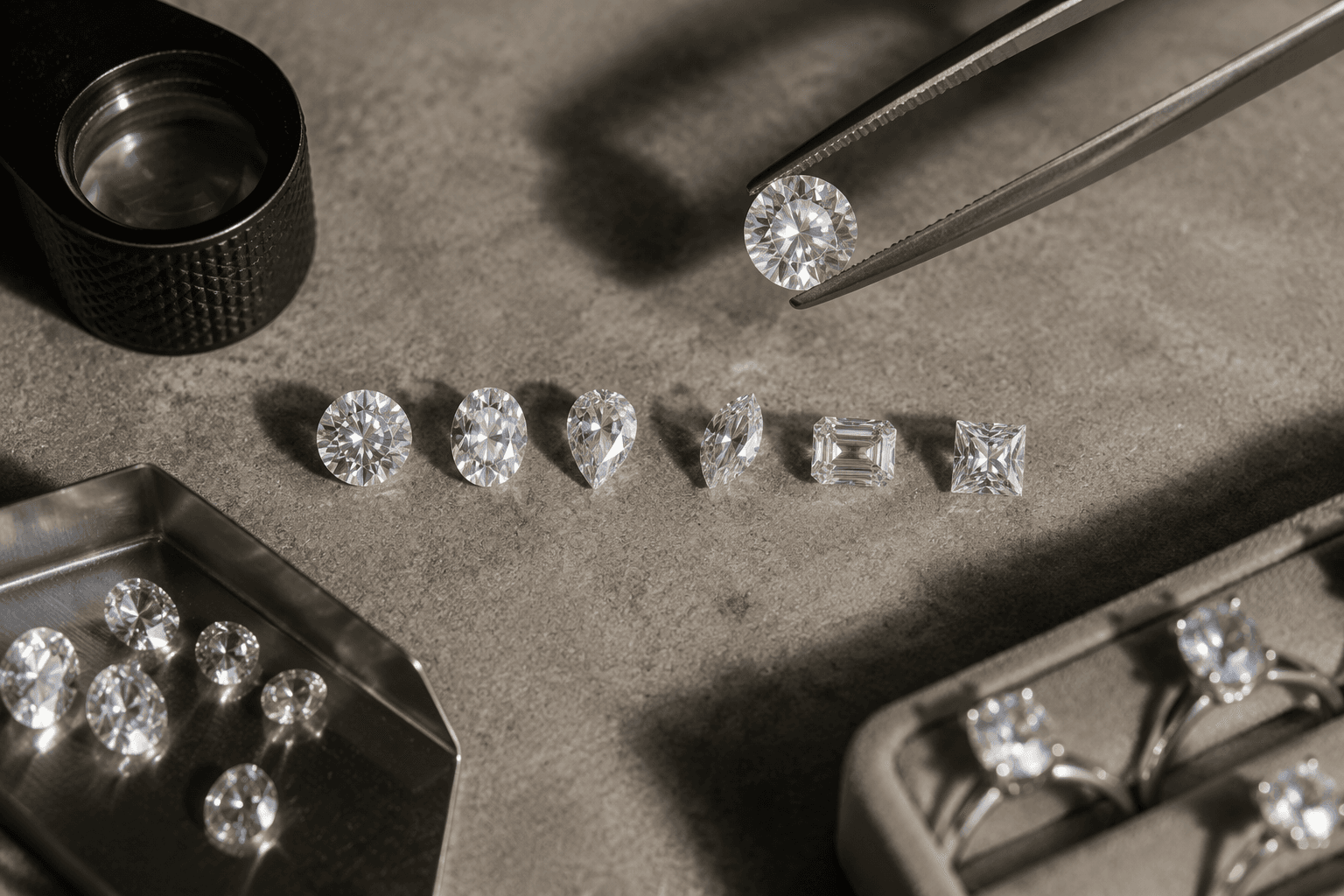
A round loose stone from a specialty jeweler is not the same purchase as a pair of coupon-driven studs from a marketplace seller, even if both use the word moissanite. Shape matters because some cuts demand more finishing and yield less material efficiency, while carat weight changes how much raw material and labor are built into the finished stone.
How to use the calculator without getting fooled by the lowest number
The smartest way to use a price calculator is to treat it as the first pass, not the final answer. Start by matching shape and carat weight across retailers, then ask what the number includes and what it leaves out. A bare stone, a branded stone and a finished setting are not comparable unless the purchase terms are truly aligned.
A practical checklist looks like this:
- Compare like with like: round to round, emerald to emerald, 1.50 carat to 1.50 carat.
- Separate loose stones from finished jewelry, because earrings, studs and necklaces can hide different labor and setting costs.
- Pay attention to branding. A named line such as Forever One can signal process and provenance, but it can also carry a premium.
- Treat flash deals carefully. Amazon’s coupon-heavy listings may look cheapest, but they can also reflect thinner documentation, simpler settings or less service after the sale.
- Look for the paperwork and protections that matter to you, including any grading details, return window and warranty terms.
Without those checks, a bargain can simply be a smaller stone, a simpler setting or a listing built to convert quickly.
Why the market has become more price-sensitive
Charles & Colvard disclosed a bankruptcy filing in 2026 amid falling lab-grown diamond and moissanite prices, higher precious-metal costs and tougher competition. Annual revenue was about $16 million in 2025, down from roughly $22 million in 2024 and about $30 million in 2023. Fiscal 2025 revenue was $16 million, down from a record $43.1 million in 2022.
In a market under pressure, pricing can be pulled down by aggressive online sellers and marketplace competition, but the cheapest number may also strip away cleaner cutting, better finish, or a trusted source.
What to value beyond the sticker price
A good moissanite buy is usually the one where the stone, setting and seller all match the job the jewelry is meant to do. If you want an everyday ring, the material’s lab-grown silicon carbide structure and durable wear profile matter as much as the retail tag. If you want a collector-minded piece, provenance, cut precision and the confidence that comes with a named process become harder to ignore.
The calculator makes the price spread visible after you account for shape, carat, cut quality, packaging, warranty and branding.
This article was produced by Prism’s automated news system from verified source data, official records, and press releases, then run through automated quality and moderation checks before publishing. The system is built and supervised by the people who set the standards it runs under. Read our full AI policy.
Did this article answer your question?