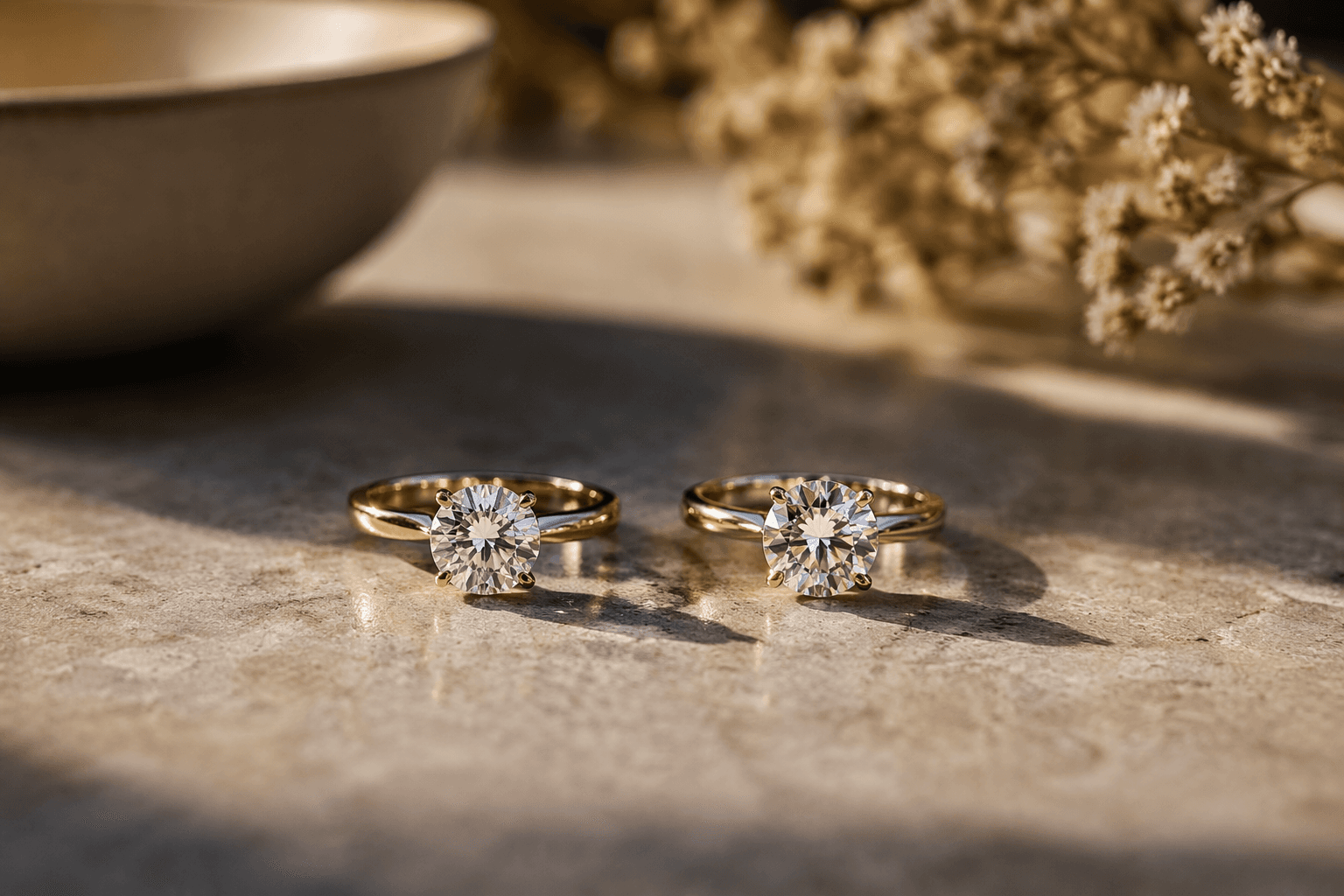
Moissanite shines as a durable, affordable diamond alternative for rings
Moissanite gives ring shoppers the most sparkle for the money, with diamond-like durability and more fire than diamond. Lab-grown diamonds cost more, but keep the classic diamond look.
Moissanite is the sharpest value play in ring shopping when you want a stone that flashes hard, wears hard, and sidesteps mined-diamond pricing. Lab-grown diamonds have become a major alternative too, but moissanite still stands apart for two reasons that matter immediately at the counter: it has more than twice the fire of diamond, and it usually asks far less from your budget.
Moissanite vs. lab-grown diamond: the real tradeoff
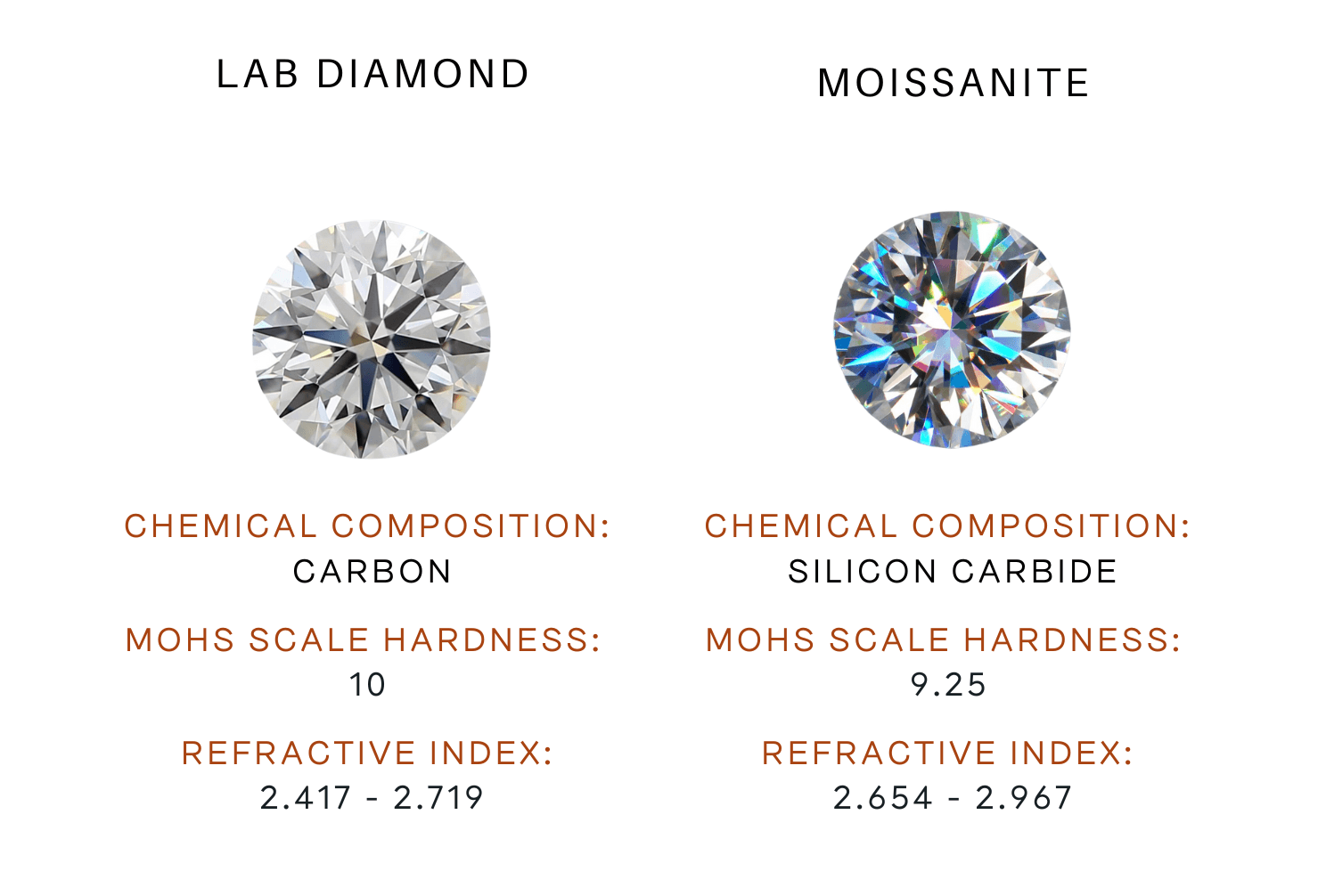
For shoppers choosing an engagement ring or everyday fine jewelry, the decision usually comes down to personality as much as price. Lab-grown diamonds are chemically diamond, which gives them the familiarity many buyers want, while moissanite is silicon carbide, a different gemstone with a more obvious burst of rainbow light. If you want a stone that reads as diamond at a glance and carries the diamond name, lab-grown is the nearer match. If you want maximum sparkle per dollar, moissanite wins that argument quickly.
The market backs up that shift. The Knot’s 2025 consumer data, reported by Rapaport, found that 61% of buyers chose a synthetic center stone for an engagement ring, a 239% increase since 2020 and the first time the figure moved above 50% in 2024. Separate 2025 BriteCo data reported by Rapaport said lab-grown diamonds made up 42% of all diamond jewelry sold and 48% of engagement rings sold, which shows how quickly the non-mined category has moved from alternative to mainstream.
Why moissanite sparkles the way it does
Moissanite’s signature look is not subtle. The Gemological Institute of America says it scores 9.25 on the Mohs scale, putting it among the hardest gemstones available and making it suitable for daily wear in engagement rings and other fine jewelry. GIA also says moissanite has more than twice the fire of diamond and slightly more brilliance, which is why it throws vivid rainbow flashes under sunlight, restaurant lighting, and camera flashes.
That optical character is the main reason people either love it instantly or decide they want something quieter. Moissanite’s fire is more dramatic than diamond’s, so the stone can look especially lively in larger center stones and in cuts that open up the facets, like round brilliants and elongated shapes. For a buyer who wants sparkle that reads from across the room, that extra fire is the selling point, not a compromise.
Where the stone comes from, and why that matters
Moissanite has a name with actual mineral history behind it. The gem traces back to French chemist Henri Moissan, who won the 1906 Nobel Prize in Chemistry. Natural silicon carbide was later identified in the Canyon Diablo meteorite in Arizona, and that rare natural material gave the mineral its name. The jewelry industry now uses synthetic moissanite, not meteorite material, but the origin story helps explain why the stone has long felt more serious than a simple diamond imitation.
That distinction matters for buyers who care about provenance. Moissanite is lab-created, so it avoids the question of diamond mining altogether, though “ethical” still depends on the full picture of a brand’s sourcing, manufacturing, and labor practices. A clear statement that a ring uses synthetic moissanite is concrete. Vague language about “responsibly made” without information about stone origin or production standards is not enough.
How it wears in daily life
On durability, moissanite is one of the strongest arguments in the entire diamond-alternative category. A 9.25 Mohs rating means it resists scratching well enough for everyday wear, which is why it works in engagement rings, stacking rings, and other pieces that live on the hand. It is hard enough for active use, and that practical toughness helps explain why it remains a ring staple rather than a novelty stone.
The key is to pair that durability with sensible craftsmanship. Secure prongs, a well-cut stone, and a setting that protects the girdle matter just as much as the gem itself. Moissanite may handle daily wear well, but the ring still needs solid construction if it is going to survive years of handing, washing, and accidental knocks.
What lab-grown diamonds buy you instead
Lab-grown diamonds now occupy a serious middle ground between moissanite and mined diamonds. BriteCo’s 2025 data, reported by Rapaport, put the average price of a lab-grown 1-carat diamond around $1,000 or less, versus about $4,200 for a natural 1-carat diamond. That gap is large enough to change ring budgets, stone size, and setting choices in one move.
This is where the decision gets practical. If you want the classic diamond look with a lower entry price, lab-grown diamonds make that possible. If your priority is stretching farther into size or into a more elaborate setting, moissanite usually leaves even more room in the budget for a better mounting, more metal, or a larger center stone.
Why non-diamond center stones are no longer niche
The rise of moissanite is part of a broader shift away from mined center stones as the default. JCK’s 2025 consumer study found moissanite and sapphires were the most popular non-diamond center stones, at 20% and 23% respectively. That puts moissanite in the same conversation as other now-familiar center-stone choices, not as an obscure substitute.
For buyers, that means the old hierarchy has loosened. A ring no longer has to be a mined diamond to read as intentional, polished, or engagement-worthy. Moissanite and lab-grown diamonds both answer the same modern brief: strong visual impact, strong durability, and a price that keeps the rest of the ring in play.
How to choose the right stone for your ring
If you want the biggest visual payoff for the lowest cost, moissanite is the clearest answer. Its fire is stronger than diamond’s, its hardness is high enough for daily wear, and its synthetic origin makes the sourcing story straightforward. If you want a stone that is still diamond, just without the mined price, lab-grown diamond is the more literal option.
The choice comes down to whether you prize sparkle and value first, or diamond identity first. Moissanite is the sharper budget buy and the livelier performer under light. Lab-grown diamond is the closer cousin to the traditional engagement ring, and the market has already made clear that both stones now belong on the shopping list.
This article was produced by Prism’s automated news system from verified source data, official records, and press releases, then run through automated quality and moderation checks before publishing. The system is built and supervised by the people who set the standards it runs under. Read our full AI policy.
Did this article answer your question?