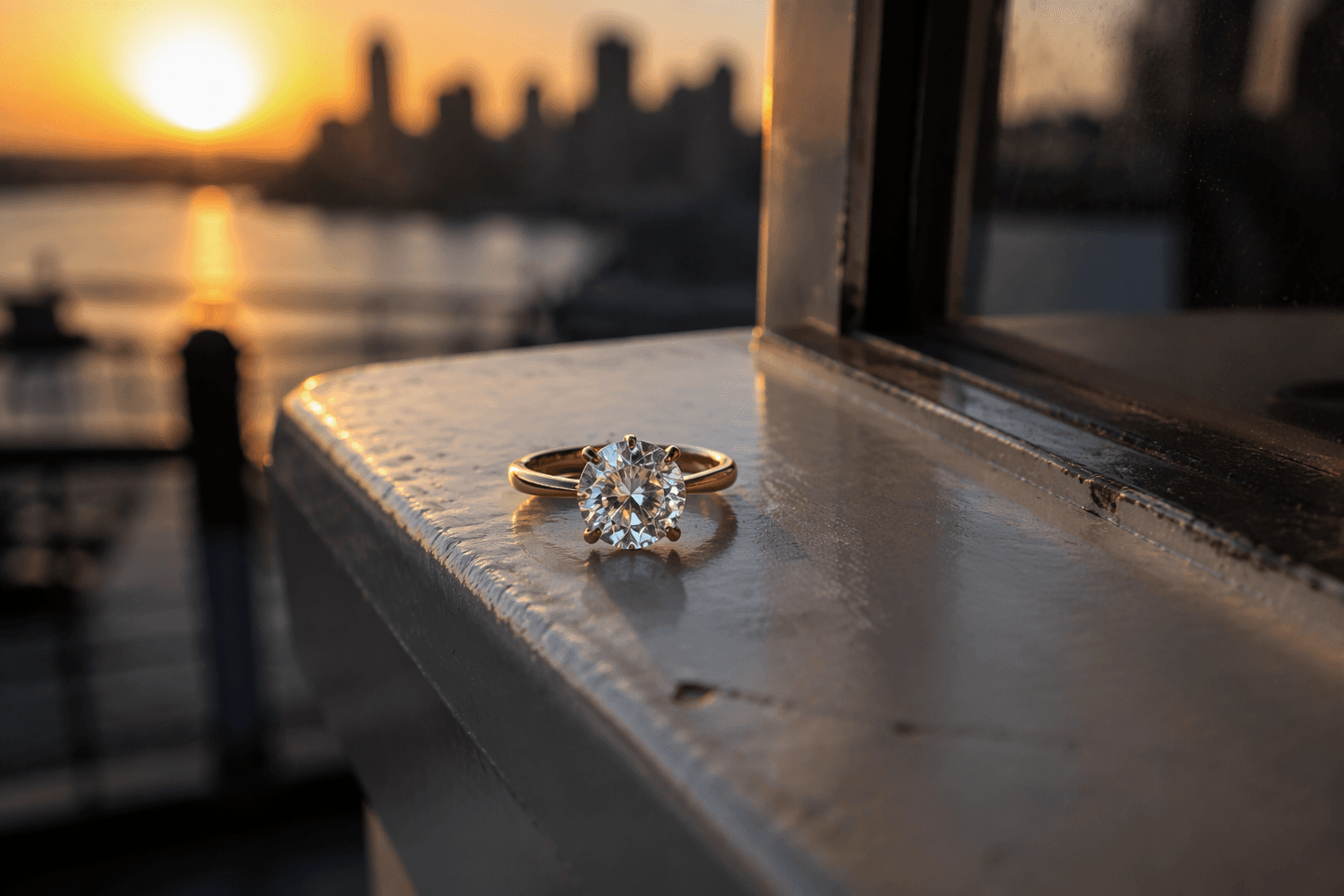
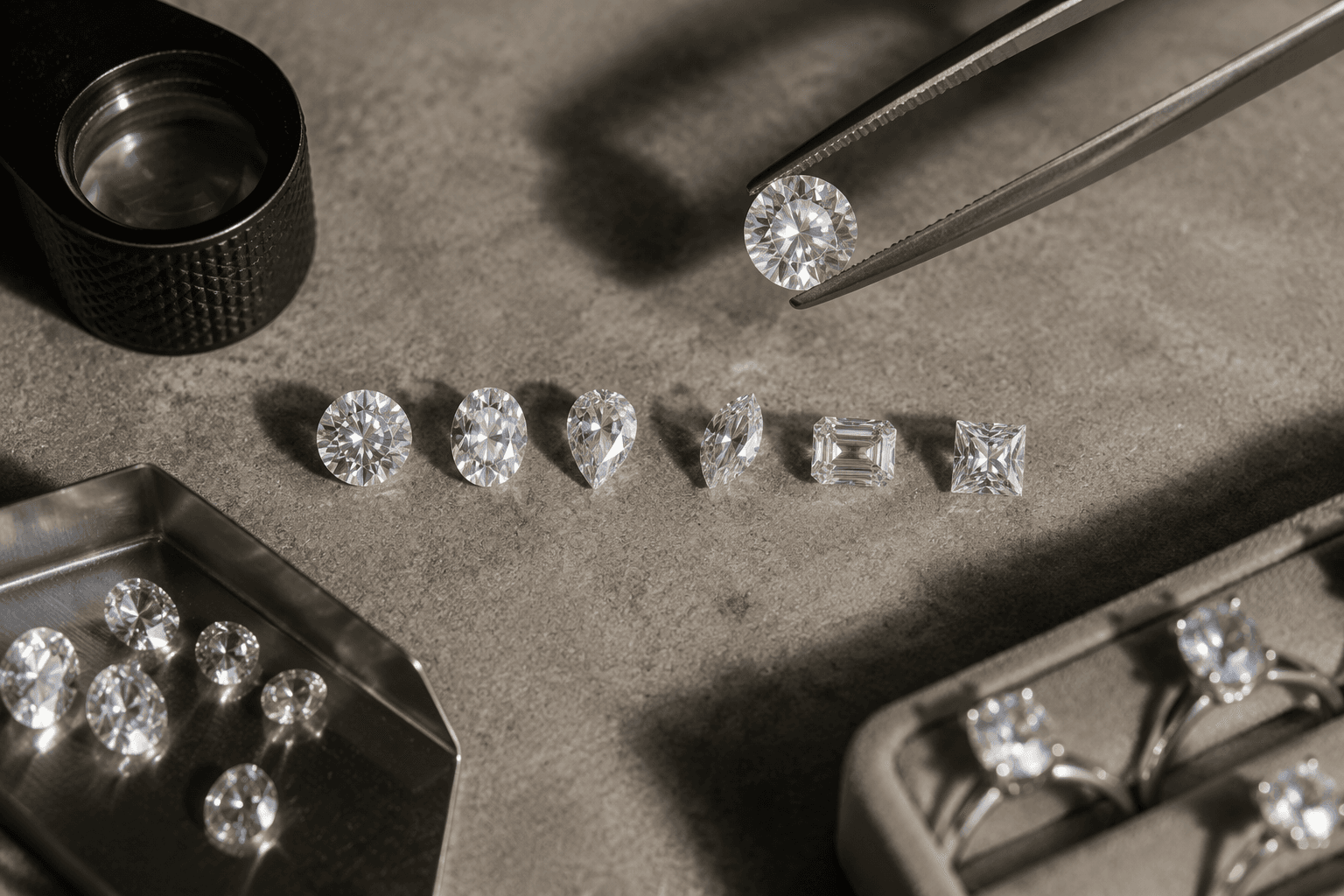
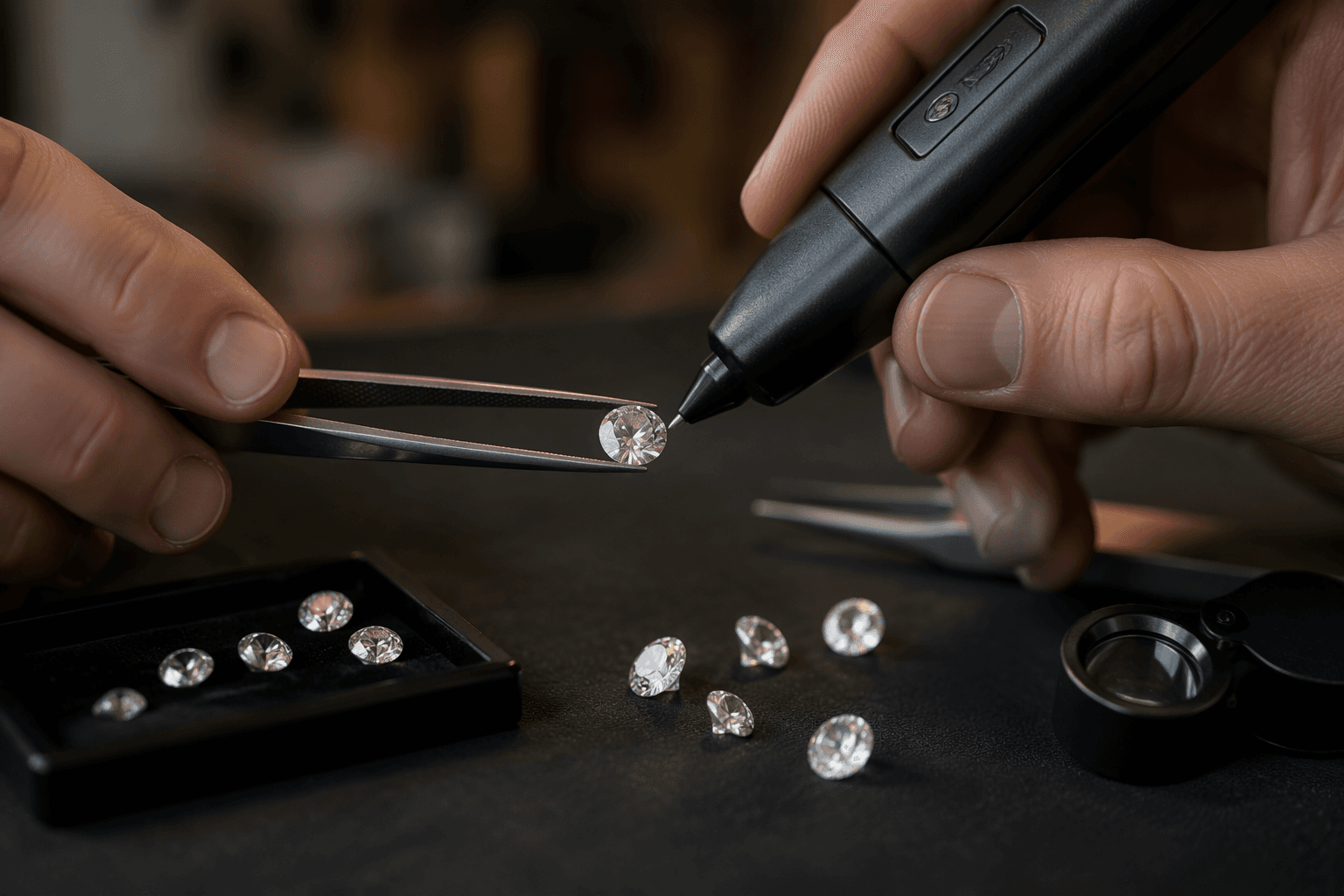
Moissanite vs white sapphire, how the two stones compare in jewelry
Moissanite throws a bigger light show, while white sapphire stays softer and quieter. For daily jewelry, the real choice is sparkle character, not durability.
On the hand, in the ear, or around the neck, moissanite shows bold brilliance and visible fire, while white sapphire stays calmer and more restrained. Both can handle daily wear; the difference is how they look after months of it.
A history that still shapes the market
Moissanite is not a passing fad dressed up as an alternative. French scientist Henri Moissan first discovered it in 1893, and he later won the Nobel Prize in Chemistry, giving the stone an unusually formal scientific pedigree for a modern jewelry favorite. Charles & Colvard helped bring lab-created moissanite to the jewelry market in 1998, and its colorless Forever One line helped make the material legible to shoppers who wanted a white stone with a distinct optical personality.
White sapphire, by contrast, arrives in the conversation as a familiar natural gemstone, part of the corundum family, already known for durability and a quieter presence.
What you see first: sparkle, fire, and the way each stone moves
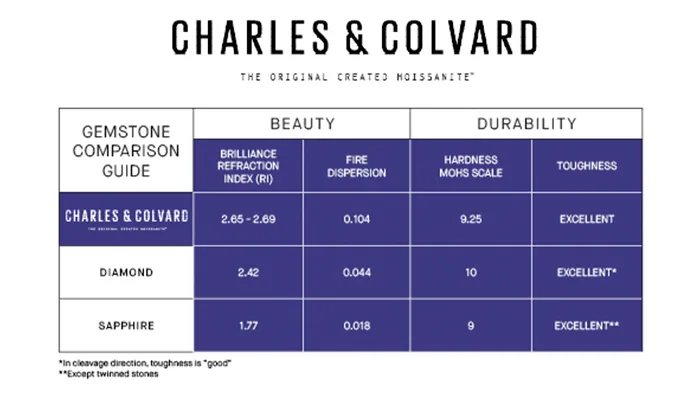
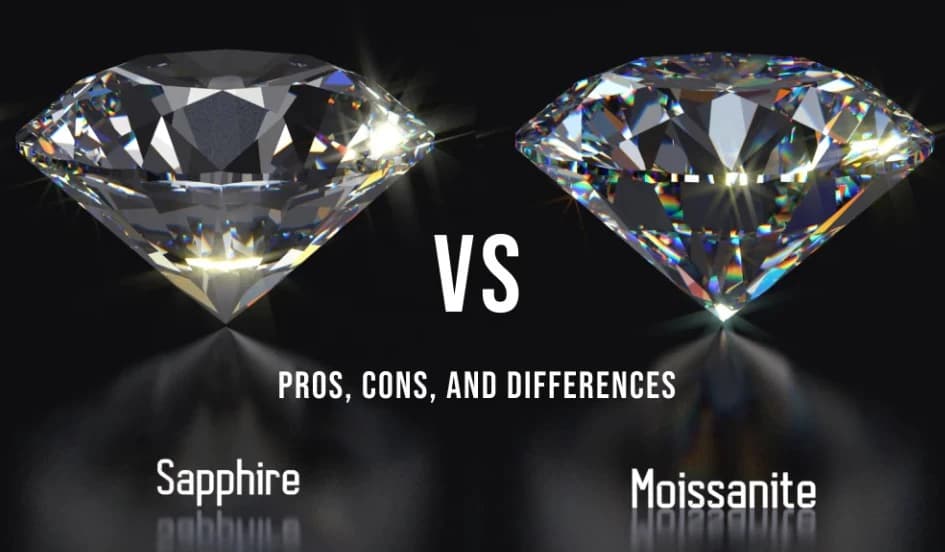
Moissanite is famous for its brilliance and for the rainbow flashes created by its strong dispersion. Its refractive index is 2.65 to 2.69, higher than diamond’s 2.42, and its dispersion is about 0.104 compared with diamond’s 0.044. In plain terms, moissanite throws more colored spark than most white-stone shoppers expect, and its doubly refractive nature can make it look especially lively in motion and in certain cuts.
White sapphire usually reads differently. It is still a white gemstone with a respectable sparkle, but it tends to present as softer and less theatrical, with a brightness that can feel elegant rather than flashy. That restraint is exactly why some buyers prefer it: if you want a stone that sits quietly in the setting and does not announce itself under every beam of light, white sapphire has that temperament.
Cut heightens the difference. Charles & Colvard published a booklet arguing that special cut proportions can make moissanite show more brilliance, fire, and luster than other jewelry stones, which underscores how much moissanite’s look depends on facet design. In a well-cut solitaire, the stone can read as almost electric; in a halo, that light show becomes even more pronounced.
Durability is close, but not identical
White sapphire is corundum and is rated 9 on the Mohs hardness scale. Moissanite is rated 9.25, which puts it slightly higher and makes it a touch more resistant to scratches and abrasions. Both are durable enough for regular wear, but moissanite has the edge if you want the stone that is just a little less vulnerable to everyday knocks.
That difference is small on paper and mostly invisible in ordinary life. What you are more likely to notice over months of wear is appearance, not survival: moissanite tends to keep its visual drama because its higher brilliance and dispersion keep returning light to the eye, while white sapphire can look flatter if you are hoping for diamond-like sparkle.
Maintenance follows the same logic. Both stones benefit from routine cleaning, but moissanite rewards it more obviously because its fire and luster are the features you paid for. White sapphire does not punish a little wear as harshly in the eye, yet its subtler look also means you may accept a slightly quieter appearance from the start.
Price, value, and what the market actually reflects
White sapphire usually sits lower in price, and moissanite usually asks more because it delivers a more assertive optical performance. Retail examples make the gap easy to see: a white sapphire engagement ring can be listed from $257, while a moissanite bridal ring in 14K white gold can be priced at $1,239 for a 1.29 ctw oval design with graduated side stones.
A white sapphire may appeal if you want a lower-key look and are comfortable with a stone that feels less overtly precious in the lighting. Moissanite appeals when the objective is a clearer statement, a brighter face-up presence, and a stone that holds its own in the way many shoppers imagine a diamond should.
How setting changes the personality of each stone
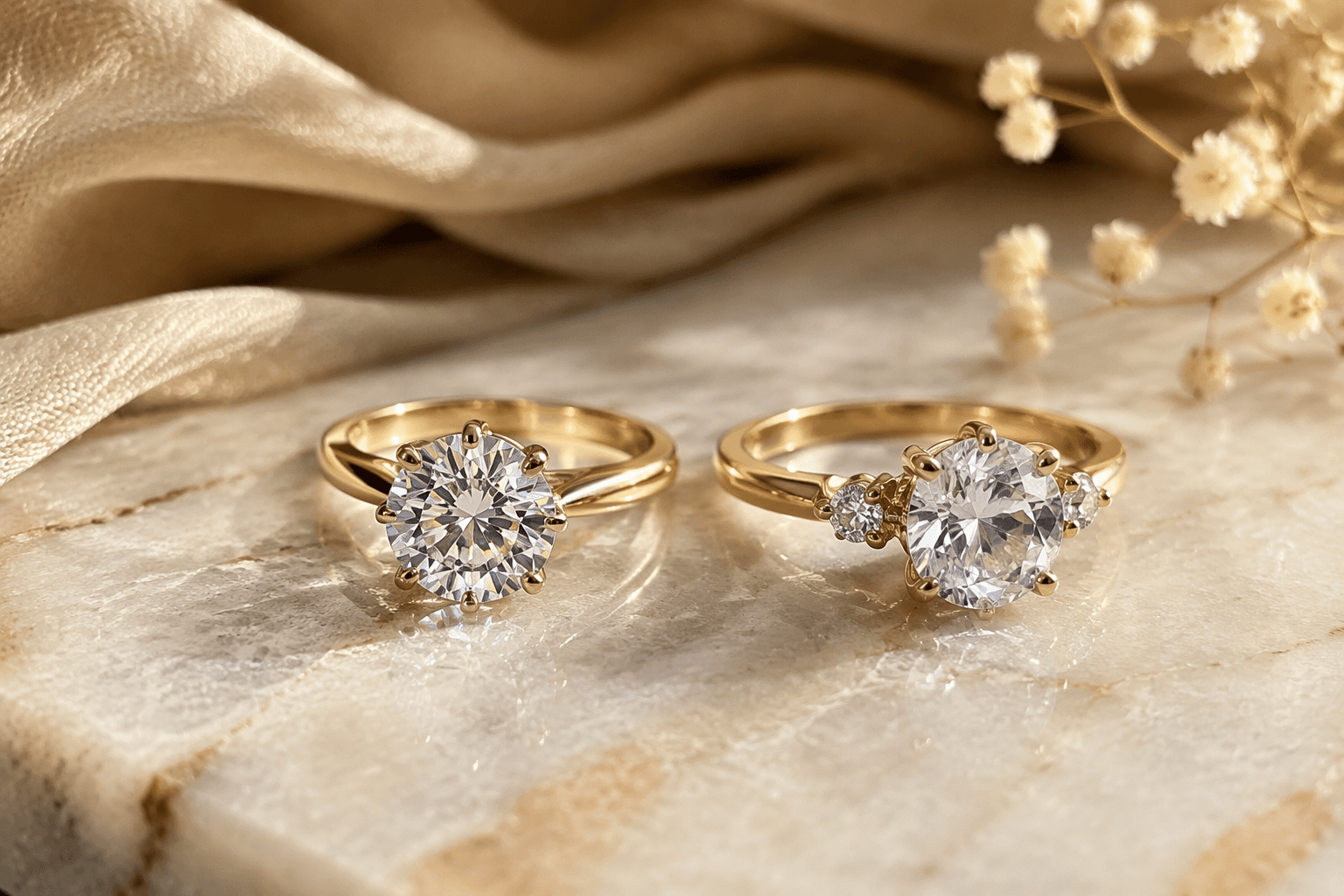
A setting can sharpen or soften both stones. A classic solitaire lets moissanite do what it does best, which is to flash and flash again, while the same setting can make white sapphire read especially clean and understated. Halo settings increase the apparent size and brightness of either stone, but they are particularly useful for white sapphire because the surrounding melee adds the sparkle that the center stone naturally withholds.
Bezel settings create a different mood. They bring a contemporary, polished edge and can slightly tame moissanite’s exuberance, which suits buyers who want sparkle without too much sparkle. On white sapphire, a bezel often works beautifully because it frames the stone as an elegant white field rather than a glittering centerpiece.
Choose this if the jewelry has to work in real life
- Engagement rings: Choose moissanite if you want maximum brightness, rainbow fire, and a center stone that feels animated in daylight and evening light alike. Choose white sapphire if you prefer a quieter ring, especially in a bezel or simple solitaire where understatement matters more than spectacle.
- Office jewelry: Choose white sapphire if you want a restrained, polished look that never competes with tailoring or a watch. Choose moissanite if you like your jewelry to read as crisp and luminous under fluorescent light, especially in studs or a delicate pendant.
- Travel pieces: Choose moissanite if you want the slight hardness advantage, at 9.25 on the Mohs scale, and a stone that still looks lively after long wear. Choose white sapphire if your priority is a discreet, familiar white stone that blends into a low-drama jewelry wardrobe.
This article was produced by Prism’s automated news system from verified source data, official records, and press releases, then run through automated quality and moderation checks before publishing. The system is built and supervised by the people who set the standards it runs under. Read our full AI policy.
Did this article answer your question?