Classic to Cultured: How to Choose the Perfect Pearl Necklace for Any Budget
Not all pearls are created equal — knowing the difference between Akoya and freshwater can save you hundreds and get you the luster you actually want.

Pick up an Akoya pearl necklace and you'll notice something immediately: the surface catches light the way few gemstones do, a deep, almost wet radiance that jewelers call orient. That quality doesn't happen by accident, and it doesn't come cheap. But it also isn't the only path to wearing pearls beautifully. The pearl market in 2026 spans a remarkable range, from sub-$50 freshwater strands to five-figure Akoya sets, and understanding what separates them is the single most useful thing you can do before spending a dollar.
What kind of pearl are you actually buying?
The word "pearl" covers at least three very different products at retail, and the distinctions matter enormously for luster, durability, and long-term value.
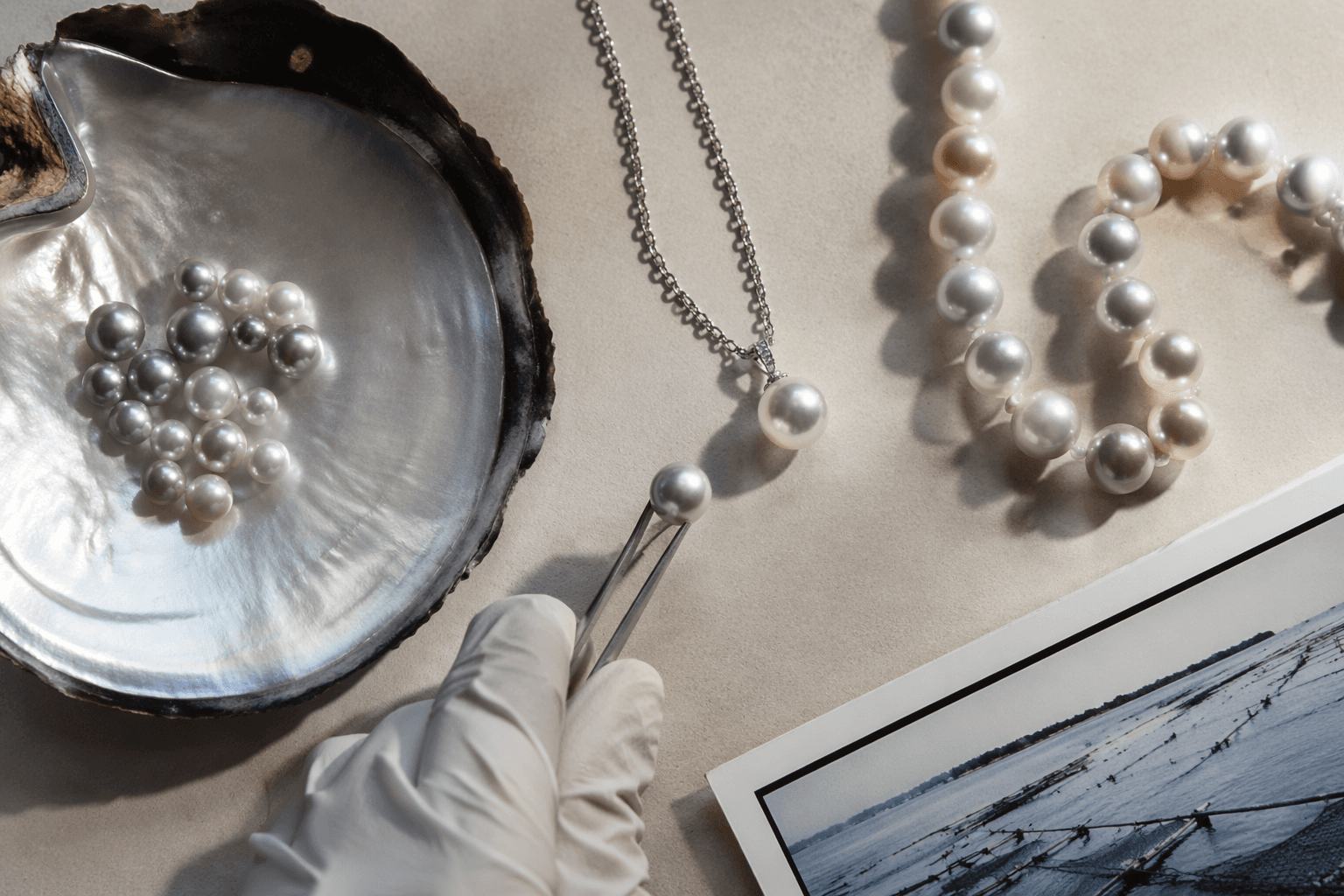
Akoya pearls are the classic saltwater pearls most people picture when they imagine a formal strand. Cultured in the Pinctada fucata oyster, primarily in Japan and China, they are known for their exceptional roundness and their bright, mirror-like luster. A genuine Akoya strand sits at the higher end of the market, and for good reason: nacre thickness, surface quality, and matching across a full strand require years of cultivation and rigorous sorting. If you're buying something you expect to pass down, Akoya is the benchmark.
Freshwater pearls, cultivated primarily in China's lakes and rivers, have undergone a quiet revolution over the past two decades. Early freshwater pearls had a reputation for being baroque, lumpy, and dimly lustrous. Modern freshwater cultivation has closed that gap substantially. Today's premium freshwater pearls can approach Akoya quality at a fraction of the price, making them the most compelling value proposition in the pearl market. The tradeoff is usually in surface perfection and the deepest levels of orient — Akoya still wins there — but for everyday wear and accessible elegance, freshwater strands are genuinely excellent.
Beyond these two, the retail landscape includes imitation pearls (glass or plastic coated with a pearlescent substance), which have no nacre at all and should be priced accordingly. The easiest field test: rub the pearl gently against the edge of your tooth. A real pearl, Akoya or freshwater, will feel slightly gritty. An imitation will feel smooth.
The luster question: what to look for
Luster is not the same as shine. A pearl can be shiny and still have poor luster. True luster is depth: the sense that light is reflecting from beneath the surface of the nacre, not just bouncing off the top. When you hold a high-luster pearl under soft light, you should be able to see a slightly blurred reflection of your own face in it.
Surface quality is the second factor. Even cultured pearls have blemishes, and grading scales from jewelers typically run from "clean" through "lightly spotted" to "heavily blemished." For a necklace worn close to the skin, aim for the cleanest surface your budget allows, particularly on the pearls at the front of the strand where they'll catch the most light.
Matching matters on a strand necklace in a way it doesn't for a single pendant. A well-matched strand will have consistent size, color, luster, and shape across every pearl. This is painstaking work, and it's a significant part of why a properly matched Akoya strand of 7mm-7.5mm pearls costs considerably more than a freshwater strand of similar diameter.
Budget tiers: what your money buys
The pearl necklace market breaks down into three practical tiers.
Under $150, you're almost certainly in freshwater territory. This isn't a criticism. A well-chosen freshwater strand in this range, from a reputable retailer who discloses provenance, can be genuinely lovely and suitable for both casual wear and formal occasions. What to watch for: sellers who describe pearls only as "cultured" without specifying freshwater or saltwater are often obscuring the lower-cost origin. Ask directly.
In the $150 to $500 range, quality freshwater strands become excellent, and entry-level Akoya pieces begin to appear. At this price point, nacre thickness and matching quality will vary, so it's worth asking for grading information. Reputable sellers can tell you the pearl diameter, nacre thickness in millimeters, and the surface grade. If that information isn't available, treat it as a red flag.
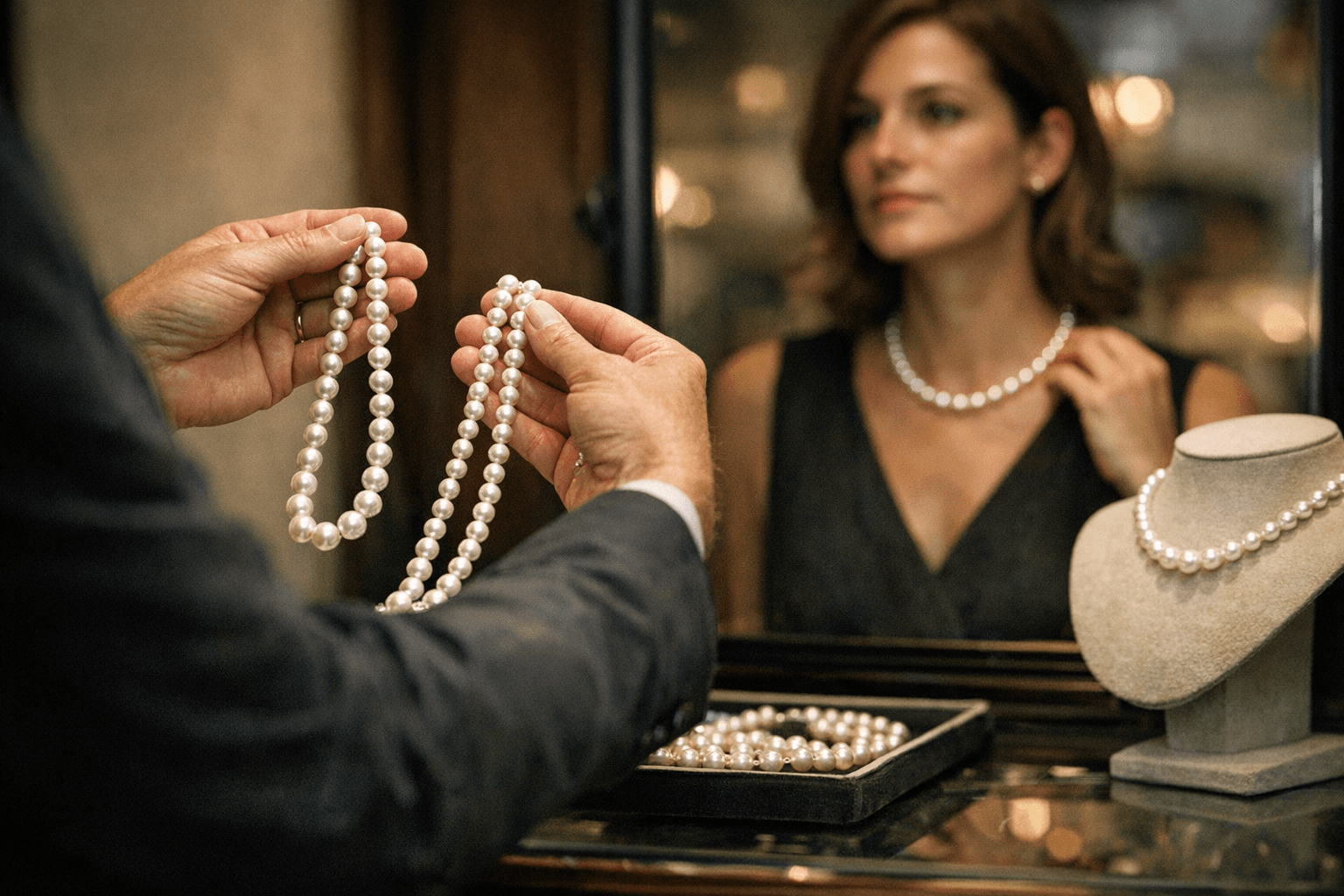
Above $500, and particularly above $1,000, you're entering the range where a genuine Akoya strand with thick nacre, strong luster, and careful matching becomes achievable. Pieces from established jewelry houses at this tier should come with documentation of pearl origin and quality. For significant purchases, independent certification from an organization such as the Gemological Institute of America adds an important layer of verification.
Lengths and the logic behind them
Pearl necklace lengths have specific names, and the differences are more than aesthetic.
- A choker (14-16 inches) sits at the collarbone and reads as modern and directional.
- A princess length (17-19 inches) is the most versatile, flattering on most necklines.
- A matinee (20-24 inches) layers beautifully over higher necklines and is the traditional business-wear length.
- An opera length (28-36 inches) can be worn long or doubled for a different silhouette.
- A rope (over 36 inches) is the most dramatic and can be knotted, looped, or twisted.
The knotting between each pearl isn't decorative affectation. It serves two practical purposes: it prevents all your pearls from scattering if the strand breaks, and it protects individual pearls from rubbing against each other and damaging the nacre surface.
The sustainability question
Pearl cultivation is, at its core, a form of aquaculture, which means the environmental story is more nuanced than with mined gemstones. Oysters filter seawater as they grow, which can have positive effects on water quality in well-managed farms. However, intensive freshwater mussel farming, particularly in some Chinese lake operations, has raised concerns about water pollution and ecosystem management.
The honest answer is that provenance disclosure is inconsistent across the pearl market. Very few retailers at the mass-market level can tell you which farm a strand came from. Brands that can specify farm origin and operate under third-party aquaculture certifications are meaningfully more transparent than those who simply describe pearls as "sustainably sourced" without elaboration. If environmental impact matters to you, that specificity is the minimum you should accept.
What the clasp tells you
The clasp on a pearl necklace is a small but telling detail. Gold clasps, whether 14k or 18k, are the appropriate choice for a fine strand and represent a meaningful portion of the piece's value. Silver clasps are common on mid-range freshwater strands and are entirely serviceable. A barrel clasp in base metal on a "pearl" necklace priced above $200 deserves scrutiny.
On fine pieces, the clasp is often set with diamonds or colored stones, which is beautiful but also creates a practical consideration: you need to decide whether you want the clasp at the back or styled as a focal point at the front. Some longer strands are designed to be worn either way.
A pearl necklace bought with genuine knowledge of its materials, its provenance, and its construction is a different object entirely from one picked up on vague marketing language. The pearl market rewards the buyer who asks specific questions, and it has a strong track record of delivering lasting value to those who do.
This article was produced by Prism’s automated news system from verified source data, official records, and press releases, then run through automated quality and moderation checks before publishing. The system is built and supervised by the people who set the standards it runs under. Read our full AI policy.
Did this article answer your question?