Essential Pearl Care Tips to Keep Your Gems Lustrous for Years
Pearls rank just 2.5–4.5 on the Mohs scale and cannot be repolished once scratched — making how you clean and store them the only protection they have.
Of all the gems you might wear, pearls demand the most considered relationship. A diamond can be left on a bathroom counter overnight without consequence. A pearl cannot. Unlike mineral gemstones formed through geological pressure, pearls are organic structures: layers of nacre, a compound of calcium carbonate and conchiolin, secreted by a mollusk around an irritant. That biological origin is precisely what gives them their luminous, almost living quality — and precisely what makes them vulnerable. Pearls sit at just 2.5 to 4.5 on the Mohs hardness scale, softer than most gemstones you'll encounter. More critically, scratches on nacre are permanent. Pearls cannot be polished back to brilliance the way a sapphire or ruby can. What you have on day one is, in many ways, what you must protect forever.
Why Pearls React So Strongly to Their Environment
The nacre layers that build a pearl are held together by conchiolin, a natural protein adhesive. This organic binder is sensitive to heat and chemical exposure in ways that mineral gemstones simply are not. Excessive heat causes nacre to dry out and crack; household chemicals and acids can break down the very substance holding a pearl's layers together. A thicker nacre coating produces a more durable and more valuable pearl, but even the finest South Sea specimen is no match for a spritz of perfume at close range. The chemistry is straightforward: fragrance, hairspray, and cleaning products are formulated without any consideration for the pH or moisture tolerance of nacre. Contact with these substances, even briefly and repeatedly, will dull luster over time.
This is why the sequencing of your getting-ready routine matters. Pearls should always be the last thing you put on before leaving the house and the first thing you remove when you return. Perfume on bare skin, then pearls over it — that order is the difference between nacre that stays vivid for decades and nacre that begins to cloud within a few years.
Daily Care: The One Habit That Changes Everything
The single most important thing you can do for pearls requires neither special tools nor expertise: wipe them with a soft, lint-free cloth after every wear. This removes perspiration, body oils, makeup, and environmental residue that accumulate against the nacre's surface and, over time, dull its reflection. A microfiber or flannel cloth is ideal — both are non-abrasive and effective. Keeping one tucked inside your jewelry box serves a practical dual purpose: it protects the pearls during storage and acts as a physical prompt to wipe them before putting them away.
This is not overcautious advice. The natural oils from your skin, in moderate amounts through regular wear, actually benefit pearls — they help maintain moisture in the nacre and contribute to luster. But the concentrated residue left by a full day of wear, layered over cosmetics or sunscreen, works in the opposite direction if left to sit. The wipe-down takes fifteen seconds and preserves years.
How to Clean Pearls Properly
For regular maintenance, a soft cloth after each wear is sufficient. When pearls begin to look visibly dull or dingy, a more thorough clean is warranted. The process is gentle and deliberate:
1. Mix a small amount of mild, fragrance-free soap — baby shampoo or mild dishwashing liquid both work well — with lukewarm water. Avoid anything labeled antibacterial, and steer clear of soaps with added moisturizers, exfoliants, or citrus oils, all of which can leave residue or react with nacre.
2. Dampen a soft, lint-free cloth or a clean makeup brush with the solution. Never submerge pearls, and especially never soak a strung pearl necklace. The goal is controlled moisture, not saturation.
3. Wipe each pearl individually with light, even strokes. Do not scrub or rub. The nacre surface is fine and unforgiving — abrasion creates micro-scratches that cannot be reversed.
4. Rinse using a fresh damp cloth to remove any soapy residue, again without soaking.
5. Pat the pearls gently with a dry cloth, then lay them flat on a clean towel in a cool, shaded area and allow them to air dry completely. Depending on humidity, this can take several hours.
The Particular Vulnerability of Strung Pearl Necklaces
Pearl necklaces introduce a second material that requires equal care: the silk thread on which the pearls are strung. Silk is traditional in fine pearl jewelry because it is soft enough not to abrade the drill holes, and because the gentle knots between each pearl prevent them from rubbing against one another. But silk thread deteriorates with moisture and heat. It should never be submerged in water, and a strung necklace should never be hung to dry — gravity, acting through wet silk, will stretch the thread and compromise the integrity of the piece.
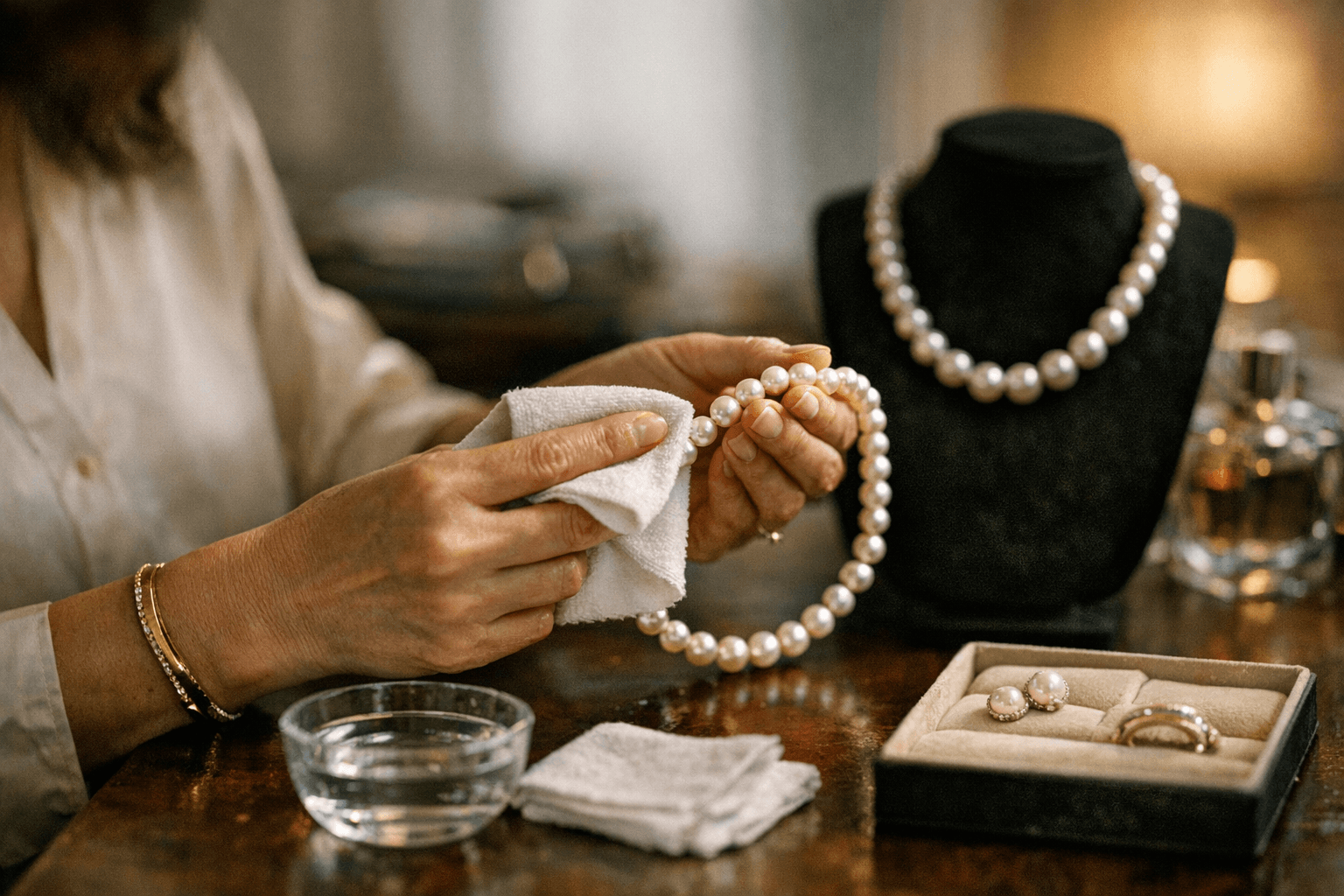
When cleaning a pearl necklace, wipe each pearl individually and allow the entire piece to dry flat on a clean towel before returning it to storage. This is non-negotiable: storing a necklace before the thread is completely dry encourages mildew and weakens the silk. For necklaces that are worn frequently, having the thread inspected and, if necessary, re-strung by a professional every year or two is practical maintenance, not an indulgence.
What to Keep Away from Pearls
The avoidance list is worth committing to memory, because some of these encounters happen casually and without obvious immediate damage:
- Perfume and hairspray: apply before putting on pearls, never after
- Household chemicals and cleaning products: remove pearls before cleaning
- Bleach, harsh detergents, and abrasive cleaners: never use on pearls
- Antibacterial soaps and soaps containing moisturizers, exfoliants, or citrus oils
- Blow dryers, heaters, and direct sunlight during drying
- Prolonged exposure to direct sunlight during storage, which can cause discoloration
Drying and Storage
After any cleaning or even a humid day out, the drying protocol matters. Lay pearls flat on a clean, dry towel in a cool, shaded spot and allow them to air dry fully before putting them away. The time required varies with ambient humidity — in a dry environment, a few hours may be sufficient; in summer humidity, longer is safer. Patience here protects the thread and prevents any trapped moisture from affecting the nacre surface or the setting.
For storage, keep pearls away from direct sunlight and heat sources. A soft pouch or a fabric-lined jewelry box is appropriate. Avoid storing pearls in airtight plastic containers or alongside harder gemstones that could scratch their surface.
Professional Maintenance and the Case for Wearing Them
A professional check-up and deep cleaning from a qualified jeweler once a year is a sensible baseline for any pearl jewelry you wear regularly. A jeweler can inspect the thread condition on a strung necklace, check clasps and settings for wear, and address any buildup that home cleaning cannot reach.
There is also, counterintuitively, a compelling argument for wearing pearls more, not less. The natural oils from your skin help keep nacre hydrated and contribute to surface luster. A pearl locked in a box for years, away from light and air and the contact of skin, can dry out and lose the very quality that makes it worth owning. Pearls belong to the category of objects that improve through use. That does not mean wearing your finest strand to the gym — but it does mean reaching for them more often than special occasions might suggest.
The care regime for pearls is not complicated. It requires consistency rather than expertise: a cloth after every wear, mild soap when necessary, flat drying, thoughtful storage, and annual professional attention. For gems that can genuinely last a lifetime, and under the right conditions considerably longer, that investment of attention is modest against the return.
This article was produced by Prism’s automated news system from verified source data, official records, and press releases, then run through automated quality and moderation checks before publishing. The system is built and supervised by the people who set the standards it runs under. Read our full AI policy.
Did this article answer your question?