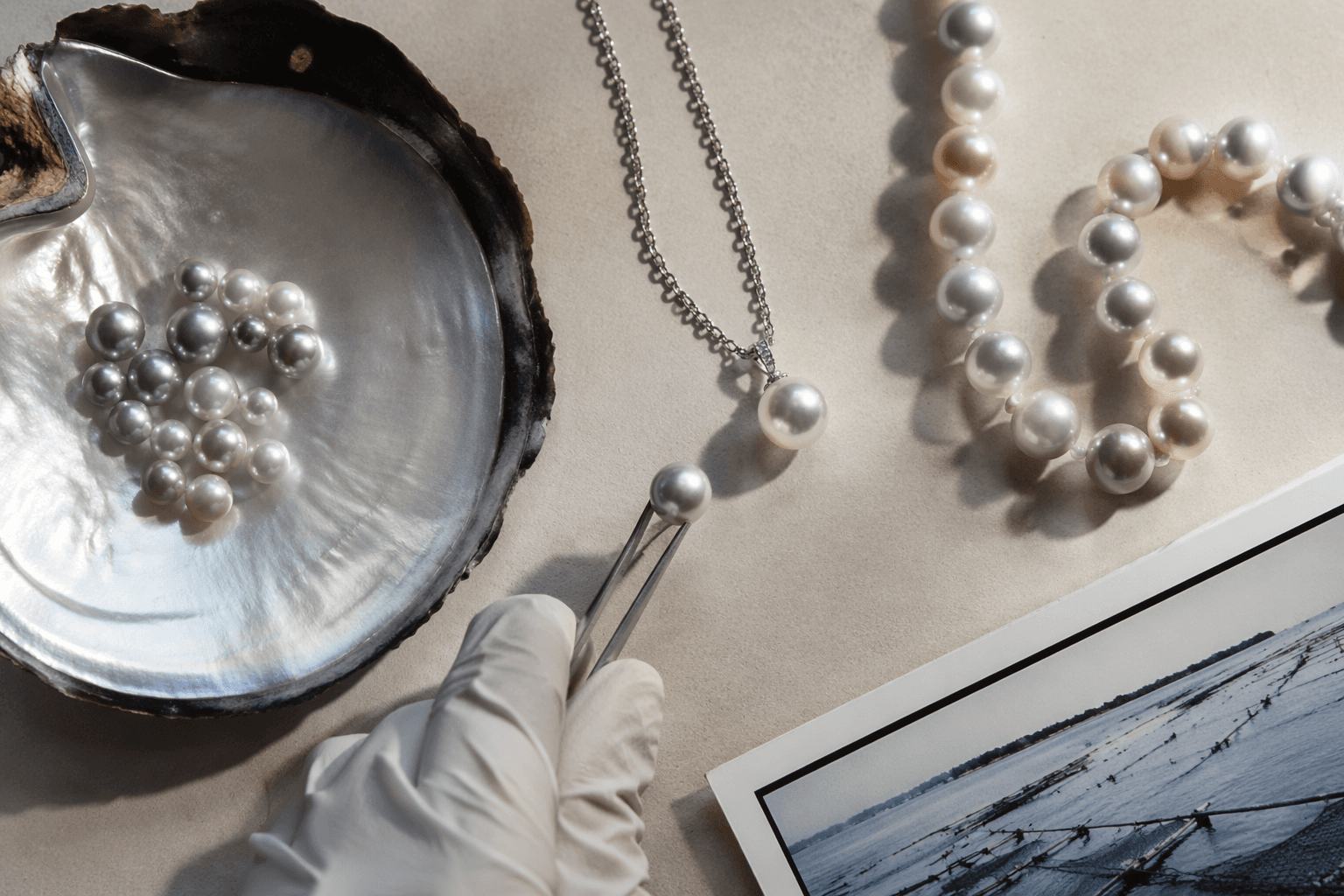
Everything Beginner Pearl Buyers Need to Know Before Purchasing
Most pearl buyers don't know that nacre thickness matters as much as luster — here's what to look for before you spend a cent.
Few gems carry the weight of centuries quite like a pearl. Unlike diamonds or sapphires, which are extracted from the earth already formed, pearls are organic: they grow inside the shells of certain mollusks, such as oysters, built layer by layer in response to an irritant. That biological origin is precisely what makes them both remarkable and variable. Two pearls from the same harvest can look nothing alike, and that variability is exactly why knowing what to look for before you buy is so important.
What Pearls Actually Are
Pearls are organic gems, not mined minerals, which puts them in rare company alongside coral and amber. They have been treasured across cultures for their natural allure and symbolic significance, worn by royalty, depicted in Renaissance portraiture, and threaded into bridal traditions on every continent. That cultural weight still shapes how they're sold and valued today. When you hold a strand of pearls, you are holding something with a direct biological history, which is a very different experience from holding a faceted stone.
The vast majority of pearls on the market today are cultured, meaning a human technician implants a nucleus inside a mollusk and the animal coats it with nacre over time. This process does not make a pearl less real or less valuable. Cultured pearls are genuine pearls; the distinction matters only when comparing them to the exceedingly rare natural pearl, which forms without human intervention. For practical purposes, nearly everything you will encounter in a jewelry store is cultured.
The Main Types of Pearls
Understanding pearl types is the single most useful thing a beginner can do before walking into a store or browsing online. The five categories you'll encounter most often are freshwater, cultured, Akoya, Tahitian, and South Sea pearls, and each occupies a distinct place on the spectrum of size, color, luster, and price.
Freshwater pearls are cultivated primarily in Chinese rivers and lakes and represent the most accessible entry point into pearl jewelry. They come in a wide range of shapes and pastel colors, from white and cream to soft pink and lavender. Because freshwater mussels can produce multiple pearls per harvest cycle, they are generally the most affordable option, which makes them excellent for statement pieces and layered looks where quantity matters.
Akoya pearls are the classic round white pearls most people picture when they think of a strand. Produced primarily by the Pinctada fucata oyster in Japanese and Chinese waters, Akoyas are prized for their near-perfect roundness and exceptionally high luster. They are the benchmark against which other pearl types are often measured, particularly for bridal and formal jewelry.
Tahitian pearls, despite the name, are harvested primarily in the lagoons of French Polynesia. They are the only pearls that occur naturally in dark tones: deep black, charcoal, peacock green, and aubergine. Their overtones can be extraordinarily complex, shifting color depending on the light, and their larger size, typically ranging from 8 to 14 millimeters, makes them commanding statement pieces.
South Sea pearls are the largest and most expensive of the major cultured varieties, produced by the Pinctada maxima oyster in the waters of Australia, Indonesia, and the Philippines. They range in color from white and silver to golden, and their size, which can exceed 15 millimeters, combined with their satin luster, places them firmly in the luxury tier. A fine South Sea strand represents one of the most significant jewelry investments a buyer can make.
The Quality Factors That Actually Matter
Once you know the type you're considering, the next step is evaluating quality, and two factors rise above all others: luster and nacre thickness.
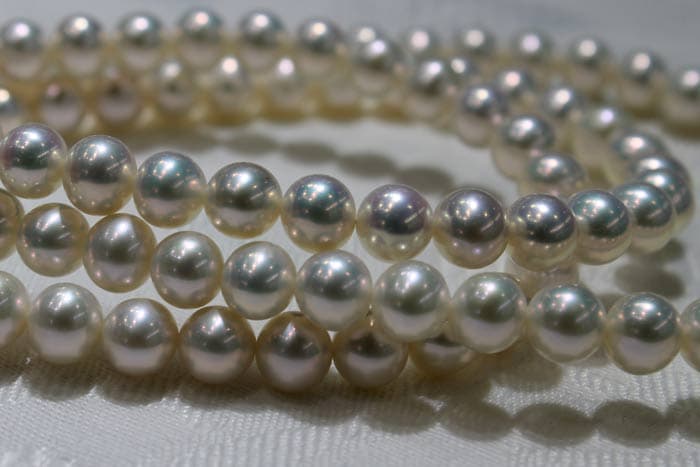
Luster is the quality most people respond to instinctively, even before they know what to call it. It's the depth and intensity of light reflection from a pearl's surface: the difference between a pearl that seems to glow from within and one that looks chalky or dull. High-luster pearls show a sharp reflection, almost like a mirror, while lower-quality pearls appear flat. When evaluating luster in person, hold the pearl under natural light and look for the reflection of a window or a light source. If that reflection is crisp and well-defined, the luster is strong.
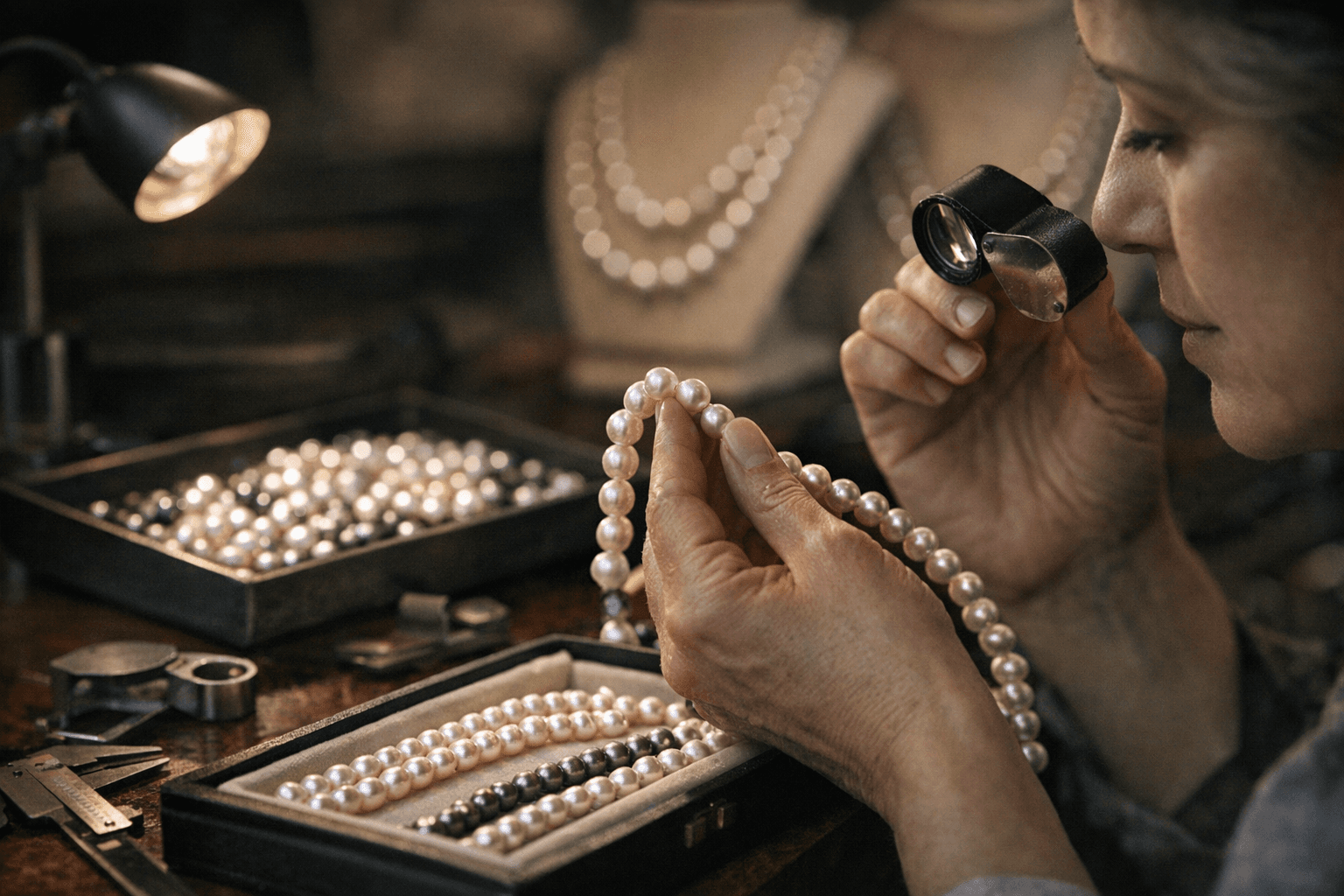
Nacre thickness is the structural measure beneath luster. Nacre is the aragonite-crystal material the mollusk deposits around the nucleus, and thicker nacre means a more durable pearl with deeper, more complex luster. Thin nacre can chip, peel, or wear through over time, exposing the nucleus underneath. On Akoya pearls especially, nacre thickness is a significant quality variable because production pressures can incentivize shorter cultivation periods. You cannot measure nacre thickness at home, but you can ask a retailer to provide it, and reputable sellers should be able to answer.
Beyond luster and nacre, surface quality, shape, size, and color also factor into a pearl's grade and price. A round pearl with a clean surface commands a premium over an irregular baroque pearl with visible blemishes, though baroque shapes have developed a strong following in contemporary fine jewelry for their sculptural individuality.
Caring for What You Buy
Pearls are among the most care-sensitive gems in fine jewelry, and understanding their needs before purchase can prevent irreversible damage. Because they are organic, pearls are vulnerable to acids, including the mild acids in perfume, hairspray, and perspiration. The classic rule is pearls last, pearls first: put them on after applying any products, and take them off before any physical activity or cleaning.
Store pearls separately from harder gemstones and metals, which can scratch their soft surface. A soft pouch or lined jewelry box is ideal. Restring pearl strands periodically, particularly if you wear them often, because the silk thread can stretch and weaken over time, and a broken strand mid-wear is both frustrating and potentially costly if pearls roll away.
What to Ask Before You Buy
Walking into a purchase with the right questions transforms the experience from overwhelming to empowering. Before committing:
- Ask specifically whether the pearls are cultured or natural, and request documentation if the price suggests the latter.
- Ask about nacre thickness, particularly for Akoya pearls, where this varies most significantly between producers.
- Ask whether the pearls have been treated for color enhancement or surface coating, both of which are common and not inherently problematic, but worth knowing.
- Examine luster under natural light if possible, not just under the intensified spotlighting most retail environments use.
- For strands, look at how the pearls are matched: uniformity of size, color, and luster across a strand is a mark of quality and adds significantly to the labor involved in its construction.
The pearl market spans an extraordinary range of quality and price, which is both its appeal and its challenge for newcomers. A freshwater pearl stud might cost less than a dinner out; a fine South Sea strand can rival the price of a luxury watch. The difference lies entirely in the factors above, which is why understanding them before you shop is not just helpful. It's the whole game.
This article was produced by Prism’s automated news system from verified source data, official records, and press releases, then run through automated quality and moderation checks before publishing. The system is built and supervised by the people who set the standards it runs under. Read our full AI policy.
Did this article answer your question?