French Polynesia Pearl Oyster Farms Face Climate Vulnerability, Study Finds
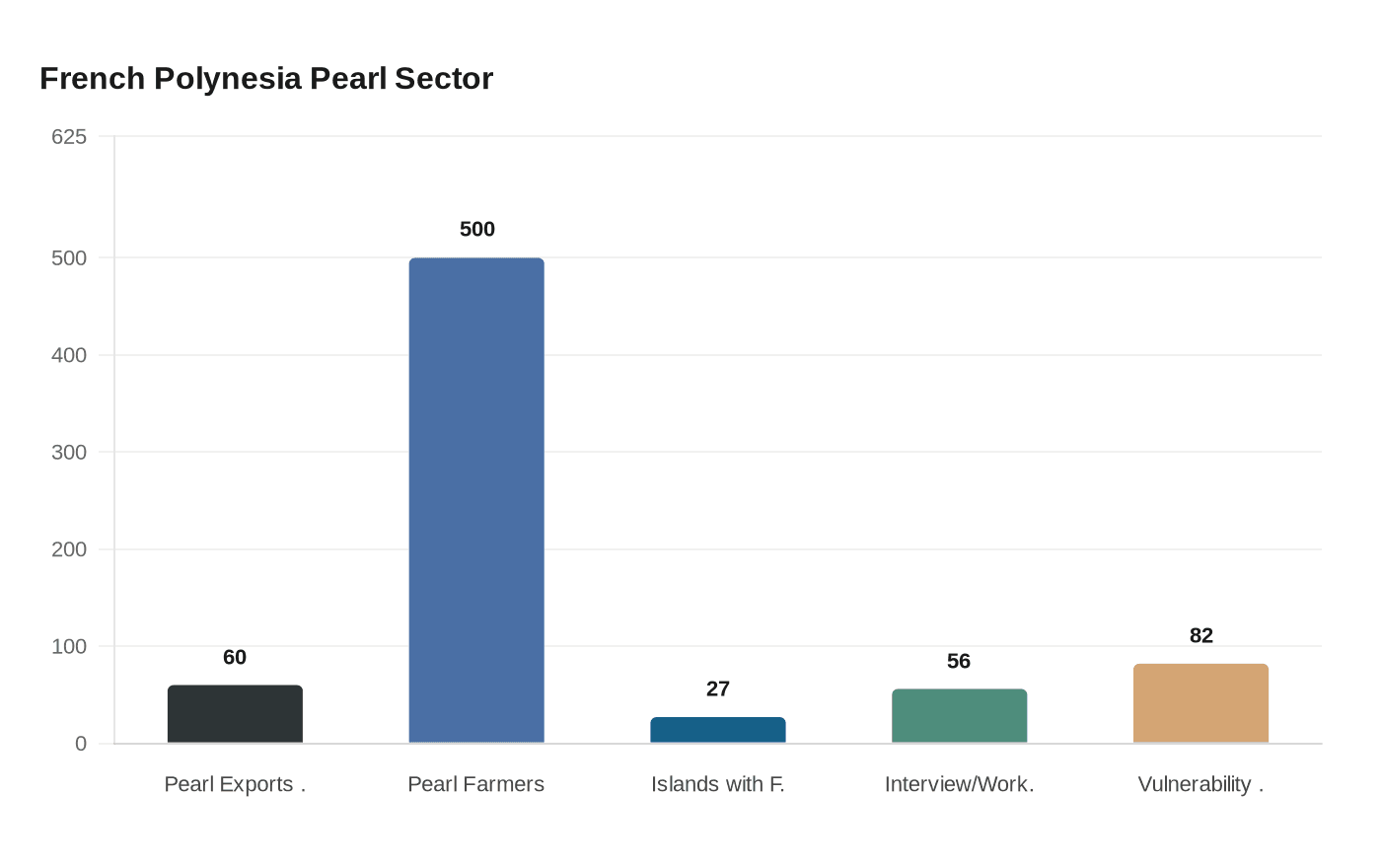
A new study used 56 interviews and an 82-criteria framework to produce the first climate vulnerability assessment of French Polynesia's black pearl farms, revealing stark differences between atolls.
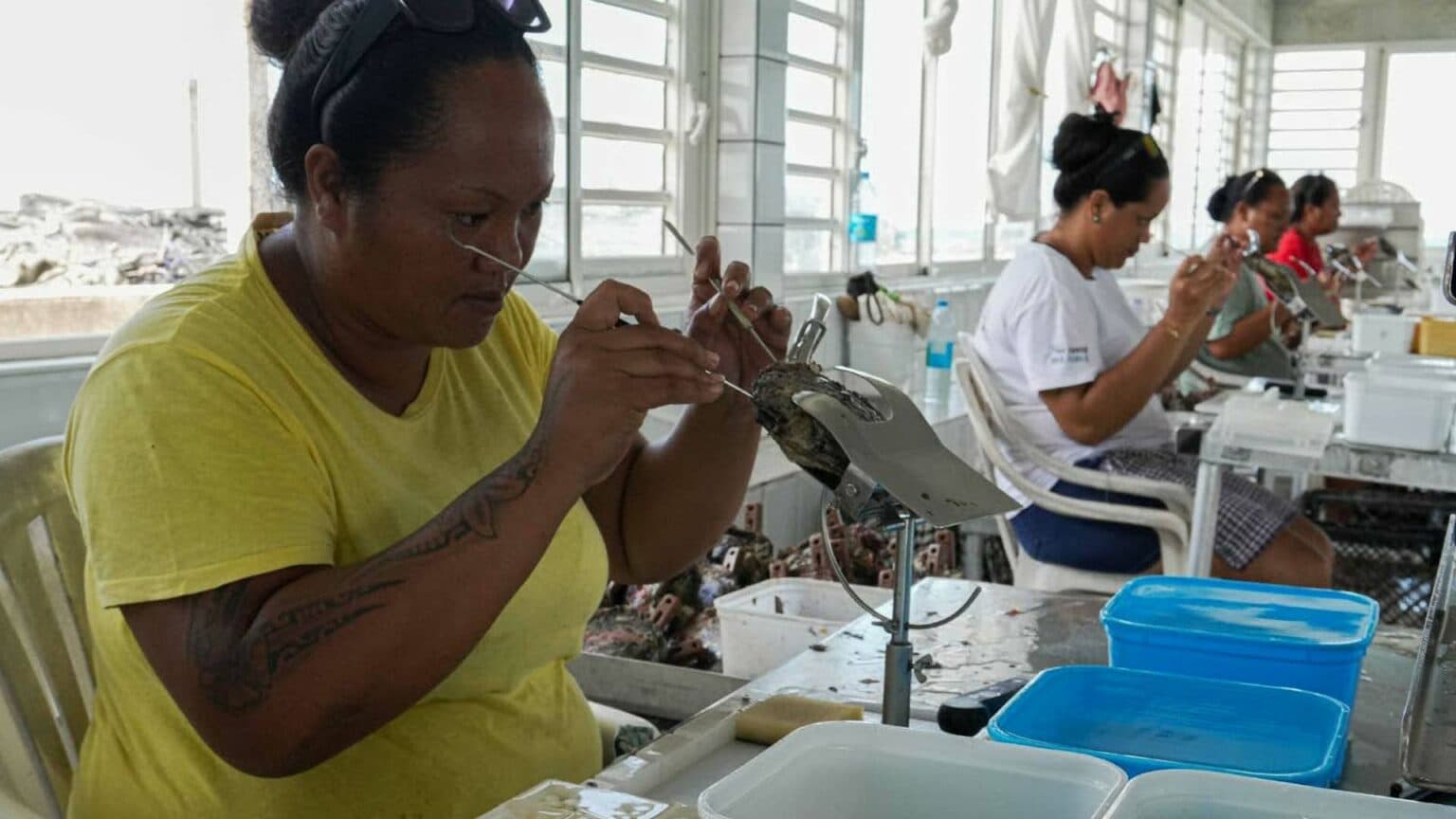
The production and export of black pearls through the culture of Pinctada margaritifera has been the second largest source of economic income after tourism in French Polynesia for about four decades, with pearl exports reaching roughly 60 million euros in 2024 and some 500 farmers working across 27 islands. Now, a new study published in Environmental and Sustainability Indicators offers the first systematic accounting of how climate change threatens the entire social fabric built around those farms.
Researchers Marianna Cavallo, Pascal Raux, and Elodie Martinez developed a preliminary list of eighty-two criteria of exposure, sensitivity, and adaptive capacity through a targeted scoping review, using that framework to design an interview guide that informed fifty-six face-to-face interviews and workshops conducted in 2020 and 2025. The result, published as a pre-proof in March 2026, is described by the authors as the first holistic assessment of pearl farming vulnerability to climate change in French Polynesia, one that deliberately bridges institutional science and the observational knowledge of the people who harvest these gems for a living.
The findings highlight marked differences in how scientific and institutional actors perceive climate exposure compared to local communities, a divergence that also shapes differing priorities for adaptation measures. Interviewees consistently identified climate change as a factor that amplifies existing weaknesses in the pearl farming sector, and COVID-19 further exposed the sector's dependence on global markets.
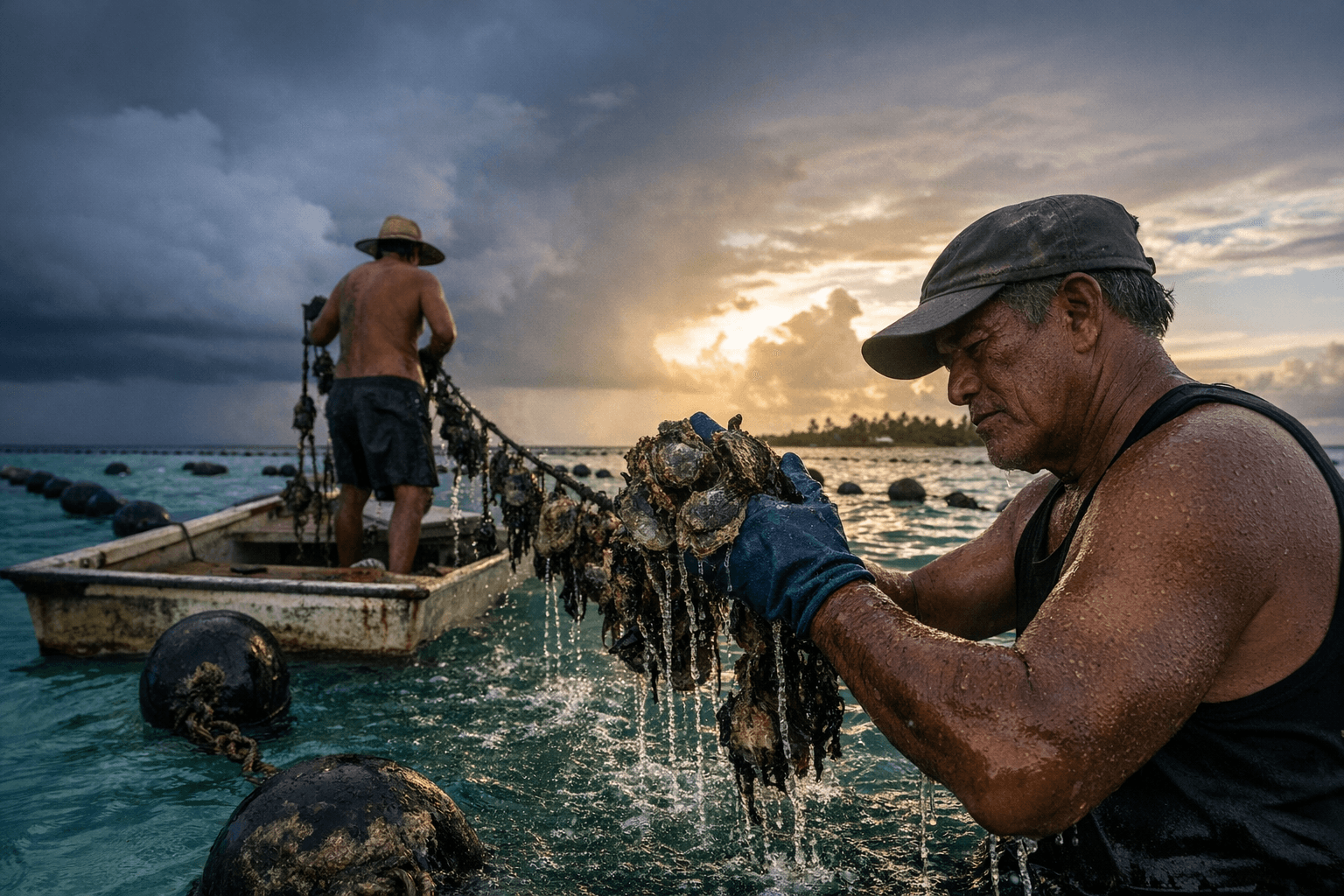
Not all corners of this vast territory face identical risk. While the black-lip pearl oyster Pinctada margaritifera's relatively wide habitat range makes it less sensitive than many marine species, French Polynesia as a whole is exposed or very exposed to multiple climate drivers. The two principal pearl-farming archipelagos diverge sharply: the Tuamotu, dominated by low-lying coral atolls, faces considerable exposure, while the Gambier, made of high islands protected by a coral ring, appears less vulnerable due to its fresher waters and position outside typical cyclone trajectories, conditions that benefit both oyster wellbeing and pearl quality.
That geographic buffer does not insulate either archipelago from everything. Changes in seasonality appear to affect both areas, with consequences for oyster reproduction and spat availability, while projected shifts in seawater temperature, salinity, pH, and currents are expected to have direct consequences on Pinctada margaritifera. Rising sea temperatures play a key role in growth rate, disease resistance, and mortality, and mass mortality events are also connected to reduced salinity and increased sedimentation from heavy rainfall.
The study's recommendations run on two parallel tracks: ecological and social. The authors argue that the inherent capacity of French Polynesian communities to respond to environmental variation should be supported by preserving their knowledge and traditions. Equally, raising awareness and preparedness among local producers is considered crucial to adapting that accumulated knowledge to ongoing environmental shifts. The study emphasizes that community sense of risk plays a fundamental role in shaping both sensitivity and adaptive capacity, a dimension that purely scientific vulnerability models routinely miss.
The resulting list of criteria is designed to be scientifically robust and locally relevant, with the potential to be transferred to other Pacific pearl-producing countries. The authors are careful to note that any such transfer requires adaptation to local governance structures, ecological conditions, and community-specific vulnerabilities. As an exploratory assessment, the study is also an explicit invitation: it lays the groundwork for more quantitative evaluations, and the authors identify critical data gaps that future monitoring programs will need to fill.
At the global scale there is wide consensus on climate projections, but uncertainty about changes at finer scales and even less clarity on the effects of those fluctuations for local economies and societies remains the central challenge. For French Polynesia's pearl farmers, suspended between the pressures of warming lagoons and shifting international markets, the conversation between science and lived experience that this study documents may prove as valuable as the criteria list itself.
This article was produced by Prism’s automated news system from verified source data, official records, and press releases, then run through automated quality and moderation checks before publishing. The system is built and supervised by the people who set the standards it runs under. Read our full AI policy.
Did this article answer your question?