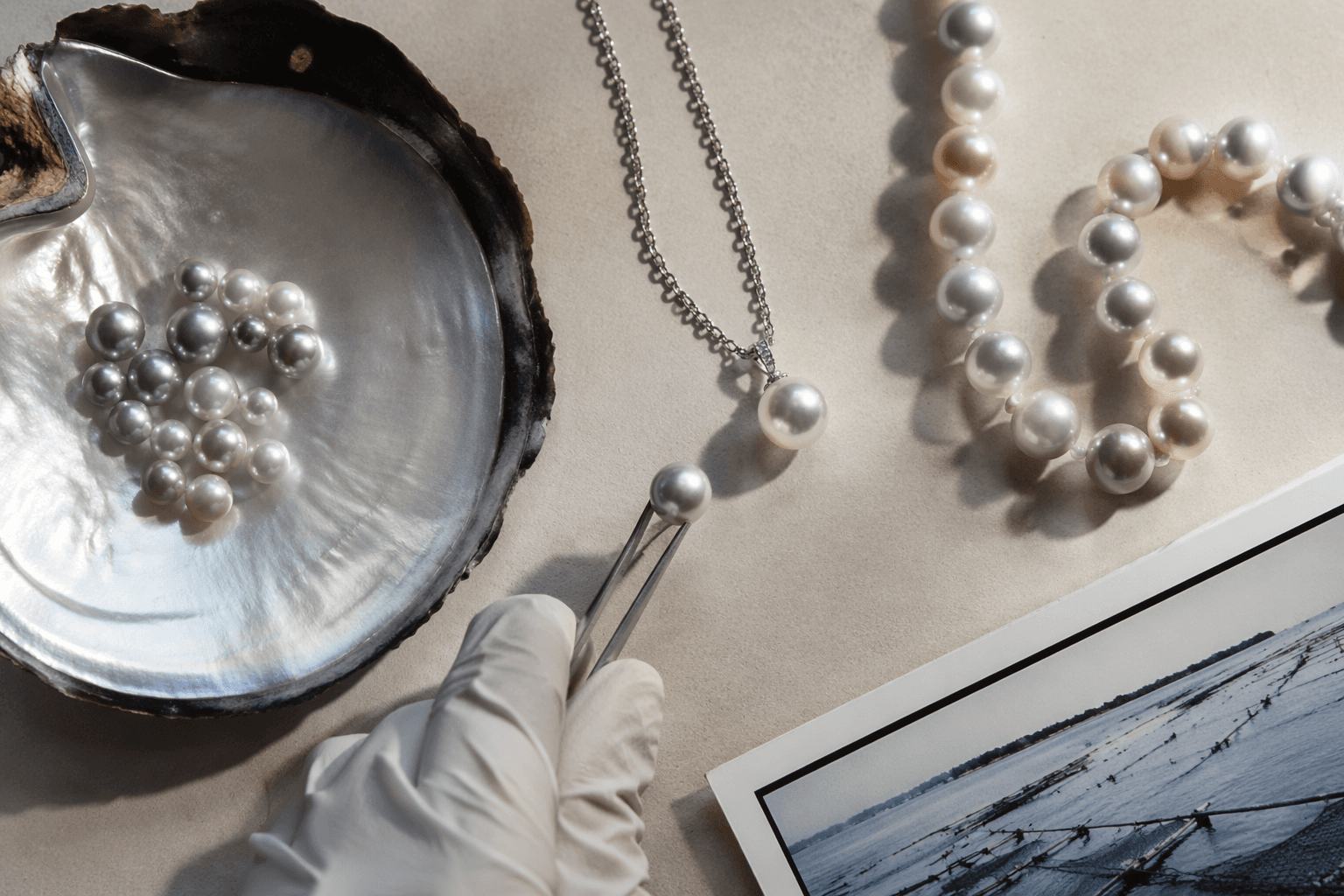
Gen Z Pushes Pearl Brands Toward Ethical Sourcing and Personalization
Gen Z is forcing pearl brands to prove their ethics and earn their place in everyday style, or lose a generation of buyers to brands that will.
The pearl sitting in your grandmother's jewelry box is not the same object it was fifty years ago. It carries the same luster, the same quiet weight. But what a buyer in 2026 asks of it before pulling out a card is fundamentally different: Where was this farmed? Can you prove it? Can I wear it shorter, layer it differently, add a charm to it next season? These are not niche questions from a handful of conscious consumers. They are the baseline expectations of the generation now driving global jewelry spending, and pearl brands that treat them as afterthoughts are already losing ground.
How Gen Z Finds Pearls (And Why That Changes Everything)
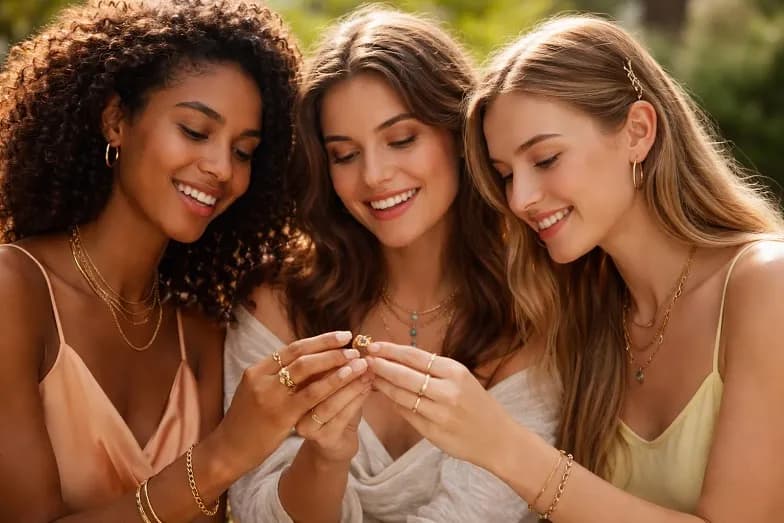
Discovery no longer begins in a boutique or a catalog. It begins on a For You page. 57% of Gen Z buyers are directly influenced by creator reviews before making a jewelry purchase, and TikTok is now the primary engine for trend acceleration in the accessories category. When a stylist stacks a 14-inch freshwater pearl strand with a gold chain and a baroque pendant in a 30-second reel, thousands of viewers search that combination within hours. The trend cycle that once moved seasonally now moves in days.
This speed changes what pearl brands need to have ready. A single viral styling moment can spike demand for choker-length pearl necklaces or mismatched baroque drops overnight. Brands without those silhouettes in stock, or without shoppable content tied to creator partnerships, simply miss the window. More critically, the comment section underneath those styling videos has become a vetting floor. Viewers ask about sourcing, materials, and pricing publicly, and brands that cannot answer clearly are called out just as publicly.
What Ethical Sourcing Actually Means to This Buyer
A 2023 Deloitte survey found that 62% of Gen Z luxury buyers consider ethical sourcing and sustainability essential when making purchasing decisions. For pearl brands, this is both a challenge and a structural advantage. Pearls offer emotional value, cultural symbolism, and material uniqueness that align with shifting consumer values, particularly around authenticity, longevity, and ethical sourcing. As gemstone markets face growing scrutiny over mining impacts, pearls are emerging as a low-footprint alternative that supports marine biodiversity when responsibly farmed. The problem is that most brands do not say so clearly enough.
The standard of proof is rising. Brands like Pearls of Australia now issue a Statement of Provenance with each piece: a document naming the farm location, confirming the pearl has not been chemically treated, and providing a Certificate of Authenticity. Mejuri discloses that its freshwater pearls are 100% traceable to their country of farming. These are the benchmarks Gen Z is beginning to recognize and expect. Vague language about "responsibly sourced" materials, with no documentation attached, registers as exactly what it is: a claim without evidence.
Blockchain-based traceability platforms, sustainability certifications, and eco-labeling initiatives are strengthening transparency in the pearl supply chain. The brands building these systems now are building the credibility that will define the category's premium tier in three years.
The New Rules for Buying Pearls: What to Demand
If you are buying pearls in 2026, the following are no longer optional asks. They are reasonable, increasingly standard, and worth walking away from a brand that cannot provide them.
- Provenance documentation. A farm name, a country of origin, and confirmation of treatment status. Smart packaging with QR-based origin verification is already being adopted by forward-thinking brands and delivers exactly what an ethically-minded buyer needs in seconds.
- Length and layering options. The traditional 18-inch pearl strand is a single-use proposition for most Gen Z buyers. The market has shifted decisively toward 14-inch and 16-inch lengths that sit at the collarbone, layering sets that include two or three strands pre-matched in length and luster, and mix-and-match strand programs that let buyers combine pearl types, metals, and textures. Search volume for "custom name necklace" and "personalized ring" has increased over 37% year-over-year, reflecting how deeply the layering instinct has embedded itself.
- Charm compatibility and modular design. The idea of a piece that evolves with the wearer is core to Gen Z's relationship with jewelry. A clasp system that accommodates charm add-ons (a baroque drop here, a gold bead there) transforms a pearl strand from a finished object into an ongoing creative project. This is not a novelty feature; it is a retention mechanism. Buyers who can refresh a piece without replacing it are buyers who stay loyal.
- Honest care and durability guidance. Pearls are organic gems; they require specific care. Brands that communicate this clearly, in-store, online, and in packaging, build trust rather than eroding it when a strand loses its luster after two years of daily wear. Care transparency is also a Gen Z value signal: it implies the brand wants you to keep the piece, not buy a replacement.
- Repair and refresh programs. The circular economy is not an abstract concept for this generation. A brand that restrings, repolishes, or updates the clasp hardware on an older piece is a brand that demonstrates commitment beyond the initial transaction. This also directly addresses the price-point sensitivity of younger buyers: a $400 pearl strand becomes a much easier decision if the brand offers a $40 re-stringing service five years down the line.
Five Product and UX Moves Pearl Brands Should Make Now
The gap between what pearl brands currently offer and what Gen Z buyers are ready to spend on is not aesthetic; it is structural. Here are the five moves that close it.
1. QR provenance tags, tied to Gen Z's ethics value. Every piece should ship with a scannable code linking to farm-level sourcing data. This is not marketing copy; it is documentation. 71% of Gen Z luxury buyers say brand values are a major factor in their purchasing decisions, and a QR-verified provenance trail is the most direct way to demonstrate those values are shared.
2. Modular clasps with charm rails, tied to identity expression. A clasp that functions as a mounting point for interchangeable pendants, charms, or secondary strands gives the wearer authorship over the piece. 48% of Gen Z luxury buyers prioritize self-expression over brand recognition, and a piece they can redesign season to season speaks that language fluently.
3. Mix-and-match strand programs, tied to price clarity. Pre-packaged layering sets at a stated bundle price, alongside individual strands with clear per-strand pricing, removes the ambiguity that frustrates digitally-native shoppers trained to compare instantly. A buyer should be able to understand exactly what she is getting and why it costs what it costs.
4. Modern sizing: choker through opera, clearly labeled. The language of pearl lengths (choker at 14–16 inches, princess at 17–19, matinee at 20–24, opera at 28–36) needs to live on product pages with body-reference photography, not in a footnote. A buyer who discovers a piece through a TikTok video of a creator wearing a specific length needs to be able to find and order that exact length within a single session.
5. Repair and refresh programs, tied to sustainability proof. A formal re-stringing, re-clasping, or luster-refresh service, offered by the brand and priced transparently, closes the loop on sustainability claims. It also creates a service relationship that generates repeat engagement, which matters enormously for a category where the vast majority of readers currently consume pearl content passively without sharing: the single largest growth gap in the pearl content ecosystem.
The Repositioning That Changes Everything
The most durable insight from the current Gen Z-driven shift is this: pearls do not need to shed their heritage to win this generation. What they need to shed is the implication that heritage is the only reason to own them. A pearl farmed in the Coral Sea, traced to a named operation, worn at the collarbone layered with a gold chain discovered on a Friday afternoon For You page: that is not an heirloom. That is an identity statement. The brands that learn to tell that story, with documentation to back it up and product architecture to support it, are the ones that will own this category for the next decade.
The pearl's journey from grandmother's jewelry box to Gen Z's daily rotation is already underway. The only question is which brands will be carried along with it.
This article was produced by Prism’s automated news system from verified source data, official records, and press releases, then run through automated quality and moderation checks before publishing. The system is built and supervised by the people who set the standards it runs under. Read our full AI policy.
Did this article answer your question?