Our 10 Best Necklaces for Women — Pearl (April 2026)
The pearl has moved from formal jewelry case to daily rotation — here's a precise guide to finding the right strand for every budget, neckline, and luster standard.

Choose Your Pearl Necklace in 60 Seconds
Start with budget: under $500 points you to freshwater; $500–$3,000 opens the door to AAA Akoya; $3,000–$5,000 is Hanadama territory; above $5,000 means South Sea or Mikimoto institutional quality. Next, match pearl type to purpose: Akoya for classic symmetry and mirror-like luster, freshwater for everyday softness, Tahitian for drama, South Sea for pure scale and rarity. Then pick length: a 15–16-inch choker sits at the collarbone and suits V-necks; the 18-inch princess length is the most universally flattering; a 20–24-inch matinee clears most button collars; and a 28–34-inch opera strand can double-wrap for a layered effect at no extra cost. Finally, consider occasion: a princess Akoya is boardroom and wedding-ready simultaneously, while a baroque freshwater is genuinely happy at brunch.
One care rule applies to every pick below: pearls are organic, and they interact with chemistry. Perfume, sunscreen, and hairspray all erode nacre over time. Put your necklace on last, wipe it with a soft cloth when you take it off, and store it in a fabric pouch, never loose in a jewelry dish. With that in mind, here are the ten strands worth buying right now.
1. White Freshwater Pearl Strand, 7–8mm, Princess Length: The Everyday Workhorse
If you wear a necklace five days a week, freshwater is your answer. These cultured pearls carry a softer, more diffused luster than Akoya but hold up to daily rotation far better than their price suggests, with quality strands available from $150 to roughly $500. The catch with freshwater is surface variation: a strand worth buying shows consistent overtones (look for clean rose or ivory, not gray patchiness) and minimal ridging across all pearls, not just the ones facing front on the display card. Clasp matters here, too. Freshwater strands are often sold with gold-plated hardware; push for a 14K gold box clasp if you plan to wear this necklace daily, because plating wears off at the catch point within a year or two of regular use.
2. Japanese Akoya AAA Pearl Necklace, 7–7.5mm, 18-Inch Princess: The Classic Investment
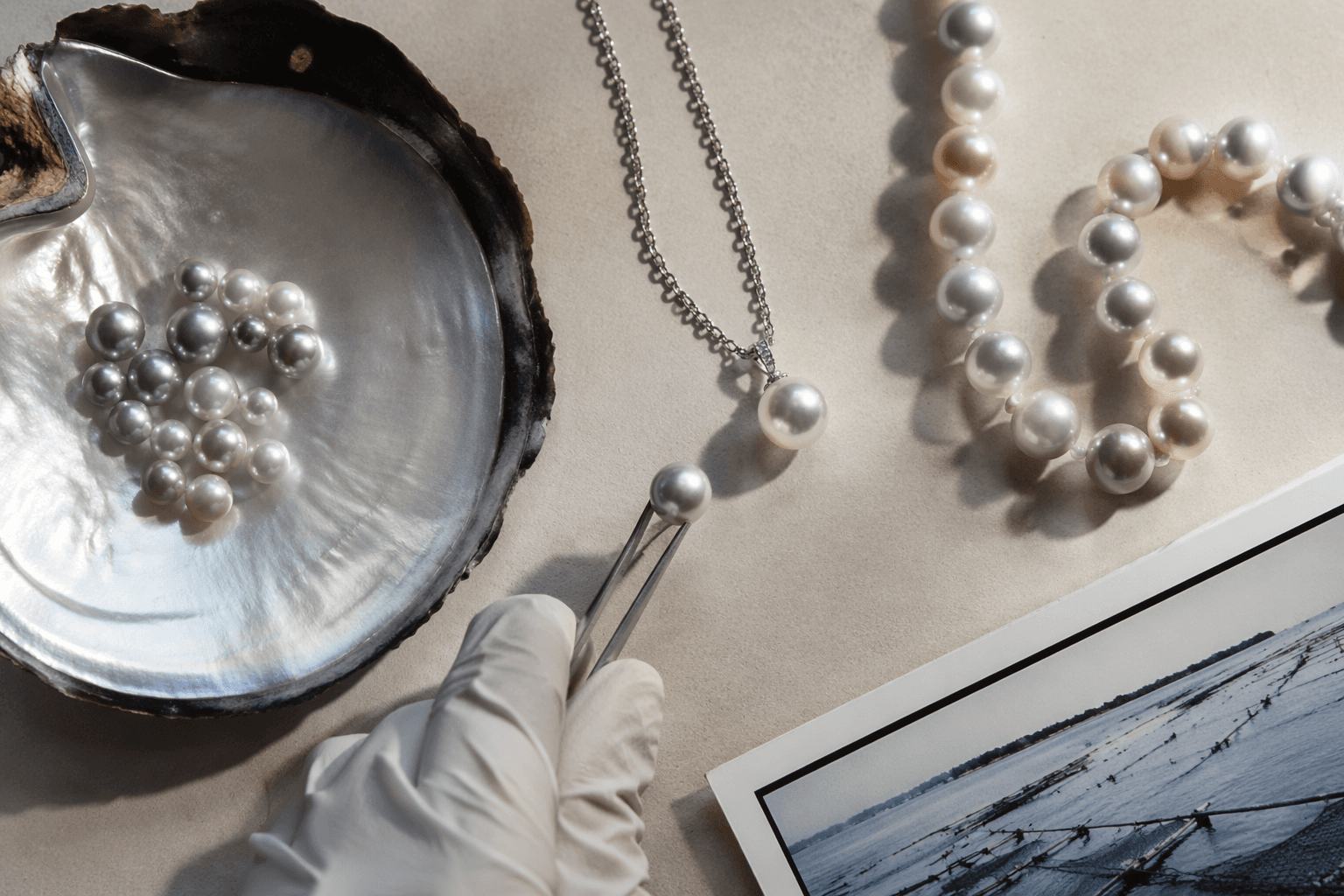
The GIA recognizes Akoya as the benchmark for round, symmetrical cultured saltwater pearls, and the 7–7.5mm size in an 18-inch princess length is the single most recommended starting point across every specialist retailer. At the AAA grade, you get crisp, reflective luster with rose or silver overtones and virtually no visible surface blemishes, at prices that typically run $800–$2,500 depending on nacre thickness and whether the strand is silk-knotted between each pearl (it should be, always, to limit abrasion and prevent a scatter situation if the string breaks). Ashley McNamara of Pure Pearls describes the tier plainly: "Akoya for classic shine." This is the strand that works for a job interview on a Tuesday and a rehearsal dinner on a Friday.
3. Hanadama Akoya Pearl Necklace, PSL-Certified, 7.5–8mm: The Bridal Pick
Hanadama is not a marketing term; it is a certification issued by the Pearl Science Laboratory of Japan, an independent gemological body that evaluates nacre thickness, luster, and surface quality before issuing a numbered certificate. A Hanadama-certified 18-inch strand in the 7.5–8mm range typically runs $2,900–$3,700 at specialist retailers, making it the strongest bridal choice at a price that doesn't require a second mortgage. The visible difference from a standard AAA strand is immediate under any direct light: the reflections are sharper, and there is a depth to the body color, sometimes called orient, that photographs exceptionally well. Insist that your Hanadama necklace arrives with its individual PSL certificate. A strand without documentation is just a nice-looking Akoya.
4. Freshwater Baroque Multi-Strand Necklace: The Layering Piece
The layering trend that has reshaped pearl styling over the past two seasons lives and dies by baroque freshwater. These pearls grow without the perfectly spherical nucleus that governs Akoya shape, so they emerge as flattened ovals, freeform drops, or irregular coin shapes, each one slightly different from the last. That organic variance is exactly what makes them stack well against thin gold chains or a simple choker. Tennessee's freshwater pearl beds have historically produced coin-shaped specimens that flash gold, pink, and blue iridescence simultaneously, a visual range you simply cannot replicate with round Akoya. For layering, a 16-inch or 18-inch baroque strand in the $200–$600 range is the most workable anchor piece; pair it with a longer delicate chain rather than another full pearl strand to avoid bulk at the collarbone.
5. Tahitian Pearl Strand, 9–11mm: The Statement Necklace
Tahitian pearls are the only pearl type that produces a naturally dark body color, ranging from deep charcoal and forest green to the coveted "peacock" overtone that shifts between violet, green, and gold depending on the light. A 9–11mm strand in an 18-inch princess length represents the entry point for a serious Tahitian purchase, and quality pieces from specialist retailers start around $1,500, climbing sharply as size, matching, and orient quality increase. Mikimoto's Tahitian and South Sea strands begin at $8,000 with the associated brand premium. When evaluating surface quality, Tahitian pearls tolerate a slightly higher rate of surface characteristics than Akoya because their nacre is thicker, typically measured in millimeters rather than fractions thereof. A statement strand genuinely earns its price when every pearl in the row shows consistent overtone direction, and you can verify this quickly by rolling the strand under fluorescent light.
6. Freshwater Pearl Strand with Solid 14K Gold Clasp: The Sensitive-Skin Pick
Nickel is the most common jewelry allergen, and it hides in gold-plated and gold-filled clasps where base metal is exposed at contact points. For wearers with sensitive skin or metal allergies, the clasp is the deciding factor, not the pearl. A freshwater pearl strand with a solid 14K gold box clasp solves the problem entirely, and the upgrade in clasp quality often shifts a piece from the fashion tier to the fine jewelry tier. Aurate, among other direct-to-consumer brands, offers freshwater strands in 14K gold with AAA-rated freshwater pearls at accessible price points. The strand itself should be silk-knotted rather than wire-strung: silk sits softer against the décolletage and eliminates the slight metallic edge that wire-strung necklaces leave on sensitive skin after a long wear.
7. Freshwater Pearl Choker, 15–16 Inches: The Travel Strand
A choker is the most travel-practical pearl necklace by a significant margin. Its short length means it fits flat in a travel jewelry roll or the zip pocket of a toiletry bag without coiling into a tangle, and the snug fit against the collarbone makes it far less likely to catch on clothing or overhead bin handles than a longer strand. At 15–16 inches, it reads modern and current rather than vintage or formal, especially in a slightly irregular freshwater pearl that breaks away from the Akoya uniformity. Price entry for a good freshwater choker begins around $150; the one caveat is magnetic clasps, which are common in travel-friendly costume versions but will lose their hold over time and should be avoided in favor of a proper box or lobster clasp. Pack your pearls last in the bag, and always transport them away from harder gemstones that can scratch nacre.
8. White or Golden South Sea Pearl Strand, 11–13mm: The Heirloom Investment
South Sea pearls are the largest commercially farmed pearls in the world, typically running 10–15mm, with white South Sea sourced primarily from Australian farms and golden South Sea from the Philippines and Indonesia. A single-strand 18-inch necklace starts around $20,000 and can reach considerably higher depending on size, roundness, and orient quality. The nacre in South Sea pearls is dramatically thicker than Akoya, which means the luster has a warmer, more luminous quality rather than the high-contrast mirror-bright finish of Japanese saltwater pearls. These are not impulse purchases; they are the strands that arrive with appraisal documentation, insured shipping, and a velvet-lined case for a reason. If budget allows only one heirloom piece, a 12–13mm white South Sea strand from a specialist with independent grading documentation is the strand most likely to outlive you and still hold its value.
9. Mikimoto Akoya Pearl Strand: The Institutional Classic
Mikimoto invented the cultured pearl industry in the late nineteenth century and has maintained a proprietary grading system ever since, sourcing from the top 5% of each annual Japanese Akoya harvest before further sorting by grade. A fine-quality Mikimoto Akoya strand in the 6–8.5mm range runs $5,000–$15,000, a premium over comparably graded specialist-retailer Akoya that reflects brand heritage, packaging, and the unimpeachable resale narrative that comes with the Mikimoto signature on a box clasp. Whether the markup is worth it depends almost entirely on context: for a gift with ceremonial weight, a Mikimoto box carries meaning that a white kraft shipper from an online specialist cannot replicate. As a pure gemological purchase, the same nacre quality is available for considerably less from dedicated pearl specialists.
10. Keshi Pearl Necklace: The Fashion-Forward Modern Pick
Keshi pearls are an accident of cultivation, forming when a mollusk expels the implanted nucleus but continues secreting nacre around the remaining tissue. The result is a pearl made entirely of nacre, with no nucleus at its center, which means the luster-to-mass ratio is higher than in any other pearl type. The shapes are freeform: flat petals, elongated drops, winged ovals. A keshi strand reads simultaneously ancient and directional, which is why it has become the pearl of choice for stylists building looks that need something unexpected in the jewelry. Prices vary widely because keshi form as byproducts of Akoya, Tahitian, and South Sea farming, so a small Akoya keshi strand runs $300–$800 while a Tahitian keshi piece commands $1,500 and up. The surface care rule applies with extra urgency here: without a nucleus to anchor the nacre layers, keshi pearls are slightly more susceptible to moisture damage, and a perfume or sunscreen habit will show on them faster than on any nucleated pearl.
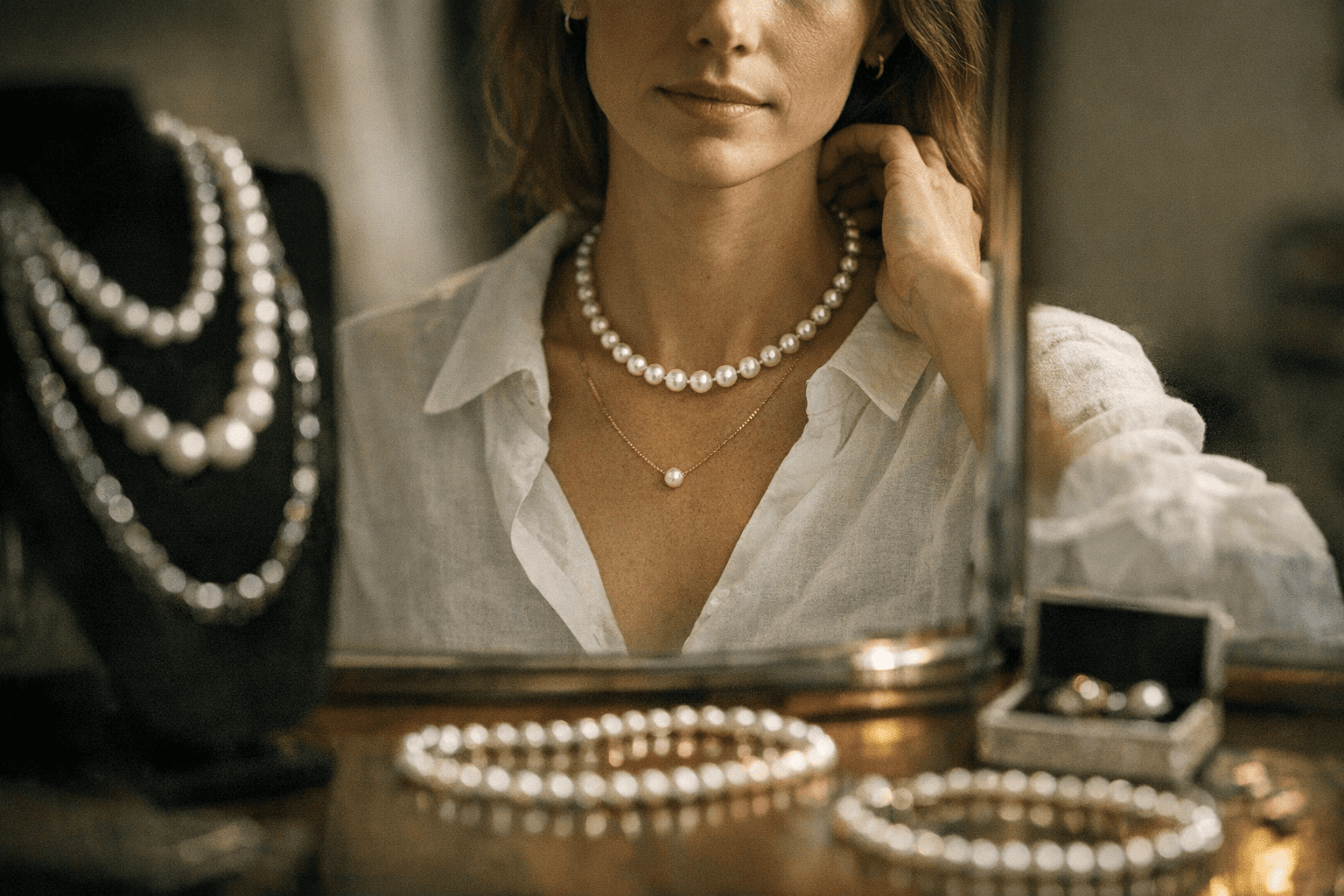
The broader shift in how pearls are being worn, away from the formal single-strand reserved for funerals and interviews, toward a daily rotation piece that layers over a linen shirt or anchors a travel outfit, is not a trend cycle. It reflects a genuine recalibration of what jewelry is allowed to be. A pearl necklace that costs $300 and gets worn 200 days a year delivers more value per wear than a $3,000 piece that lives in a box. The wisest purchase is the one that matches your actual life, bought from a seller who can document exactly what they are selling.
*Care reminder: nacre is calcium carbonate, the same mineral that dissolves in acid. Perfume, hairspray, chlorine, and even perspiration are mildly acidic over time. The single most protective habit you can develop is putting your pearls on last and taking them off first.*
This article was produced by Prism’s automated news system from verified source data, official records, and press releases, then run through automated quality and moderation checks before publishing. The system is built and supervised by the people who set the standards it runs under. Read our full AI policy.
Did this article answer your question?