Hirotaka Inoue reimagines pearls with asymmetry and modern edge
Hirotaka Inoue strips pearls of their heirloom stiffness, using asymmetry, sharp metalwork, and stackable forms to make them feel newly relaxed and fashion-led.
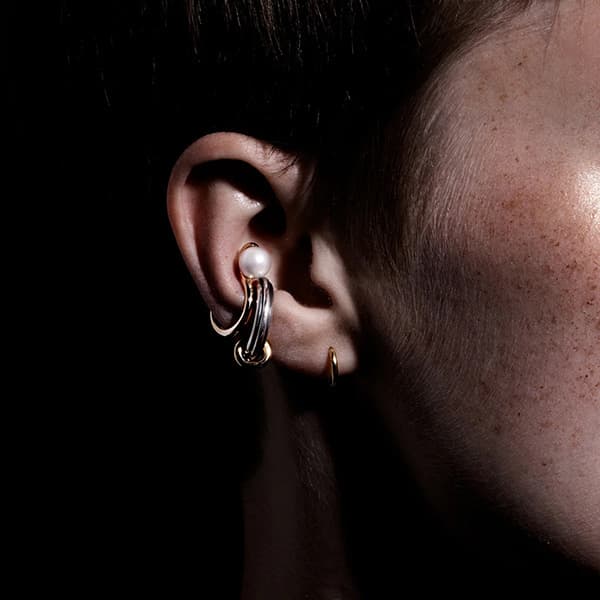
Hirotaka Inoue has turned pearls into something far less reverent than the classic strand. In his hands, they become irregular, architectural, and deliberately undone, a shift that gives the category a sharper silhouette and makes it feel tuned to a younger, style-conscious wearer.
A pearl language built on asymmetry
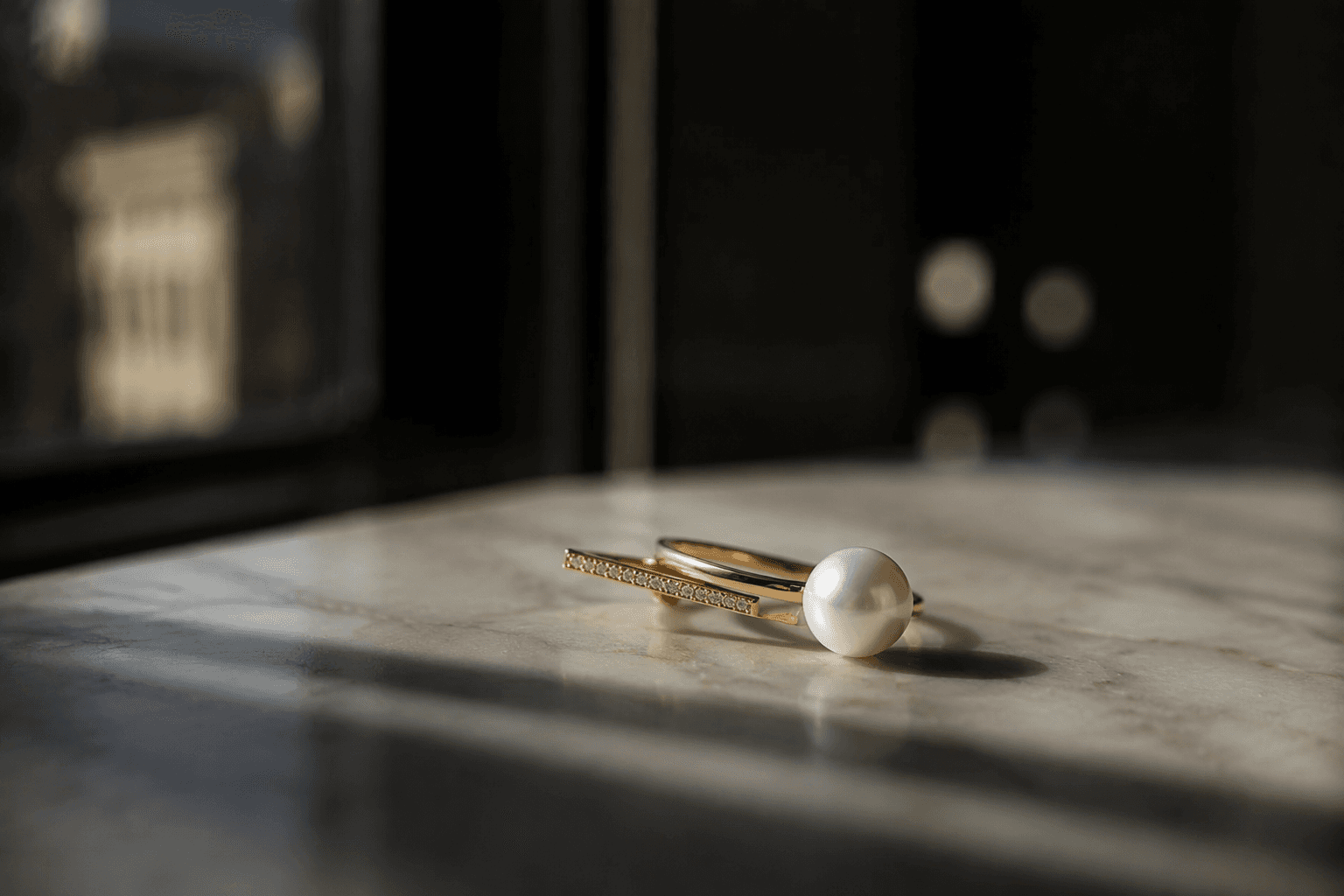
What distinguishes Hirotaka is not simply that it uses pearls, but that it refuses the old idea that pearls must arrive in a neat row. The brand is known for abstract minimalism and delicate shapes that often feel unexpected, with pieces designed to be stacked and combined so the wearer finishes the composition. That is the crucial break from tradition: the jewelry does not dictate a polished, pre-set narrative, it leaves space for personal arrangement.
That design logic matters because it changes the emotional tone of pearls. Instead of ceremony, you get edge. Instead of symmetry, you get movement. Inoue’s rebellious twist is visible in the way pearls are paired with more assertive metalwork and offset forms, which makes the material feel contemporary rather than merely classic.
Tokyo craftsmanship, New York visibility
Hirotaka’s identity has always been transpacific. The fine jewelry line launched in New York in 2010, while the collections are developed in Tokyo, a split that gives the brand a global polish without losing its Japanese point of view. The official store describes the jewelry as “playfully elegant jewelry handmade in Tokyo, Japan,” and notes that Hirotaka launched in SoHo, New York.
That New York debut is not a small detail. SoHo remains a shorthand for design credibility, and the brand’s early placement there signaled that these were not museum-piece pearls, but fashion objects with enough restraint to sit comfortably in a downtown wardrobe. Later coverage placed Hirotaka Inoue, the brand’s founder and designer, at 55 and working from his office in Tokyo’s Aoyama district, a location that fits the line’s polished but not overly formal sensibility.
Why the stacking idea changes the category
The brand’s pieces are meant to be built up rather than worn as isolated statements. That stacking-and-combining approach is central to how Hirotaka modernizes pearls: a single earring, ring, or pendant becomes part of a larger visual sentence, and the final edit belongs to the wearer. This is a different kind of luxury from the inherited strand, where form and meaning are already fixed.
For pearl jewelry, that freedom is commercially important. Fashion-led demand has increasingly favored pieces that can be mixed with chain, metal, and other jewelry categories, and Hirotaka’s modular thinking makes pearls easier to wear outside formal occasions. The result is a pearl aesthetic that feels less like a special-occasion uniform and more like part of a daily style system.
The brand’s growth shows the appetite for modern pearls
Hirotaka’s momentum also says something about how this aesthetic has been received. Around its 10-year anniversary in 2021, the Tokyo-based brand marked the milestone with global e-commerce, a third boutique, one of its largest spring collections, and the debut of a silver line. Those moves suggest expansion, but they also show category confidence: the brand was broadening access while keeping its design language intact.
The silver line is especially telling. Silver changes the mood of pearl jewelry, making it feel cooler, less ceremonial, and more adaptable to layered dressing. In the context of Hirotaka’s pearl work, it reinforces the idea that the brand sees pearls not as precious relics but as part of a wider wardrobe of modern metals and sculptural forms.
Why Japanese cultured pearls remain the reference point
Hirotaka’s reinvention of pearls sits on top of a Japanese legacy that shaped the entire industry. Kokichi Mikimoto succeeded in culturing blister pearls in 1893 under the guidance of Kakichi Mitsukuri, and then produced round cultured pearls in 1905. Those milestones helped establish the modern cultured pearl industry and made Japan central to the pearl story as we know it.
That history matters because it explains why Japanese pearl design often carries a double identity: technical authority and aesthetic experimentation. Mikimoto represents the standard-bearing tradition of cultured pearls, while Hirotaka pushes against their most formal associations. The contrast is instructive, because it shows how a material with deep heritage can still be rephrased for a new fashion moment.
What Hirotaka’s pearls tell you about where the category is going
The strongest modern pearl jewelry does not try to prove that pearls are timeless. It proves that they can be edited. Hirotaka’s asymmetry, its unexpected shapes, and its willingness to let metal lead as much as the pearl itself all point toward a market that wants contrast, not conformity.
That is why the brand’s pearl language feels so current: it understands that the category now lives in styling, not only in symbolism. Pearls are moving out of the heirloom box and into a wardrobe defined by layering, personal composition, and a quieter kind of rebellion, and Hirotaka has built its identity around that shift.
This article was produced by Prism’s automated news system from verified source data, official records, and press releases, then run through automated quality and moderation checks before publishing. The system is built and supervised by the people who set the standards it runs under. Read our full AI policy.
Did this article answer your question?