How to Choose a Pearl Necklace in 2026: Types, Quality, Prices
Choose pearls by type and luster first, then inspect stringing, clasp and provenance; 2026 prices range from under $100 for some freshwater strands to $20,000+ for rarer saltwater pieces.

1. Types of pearls
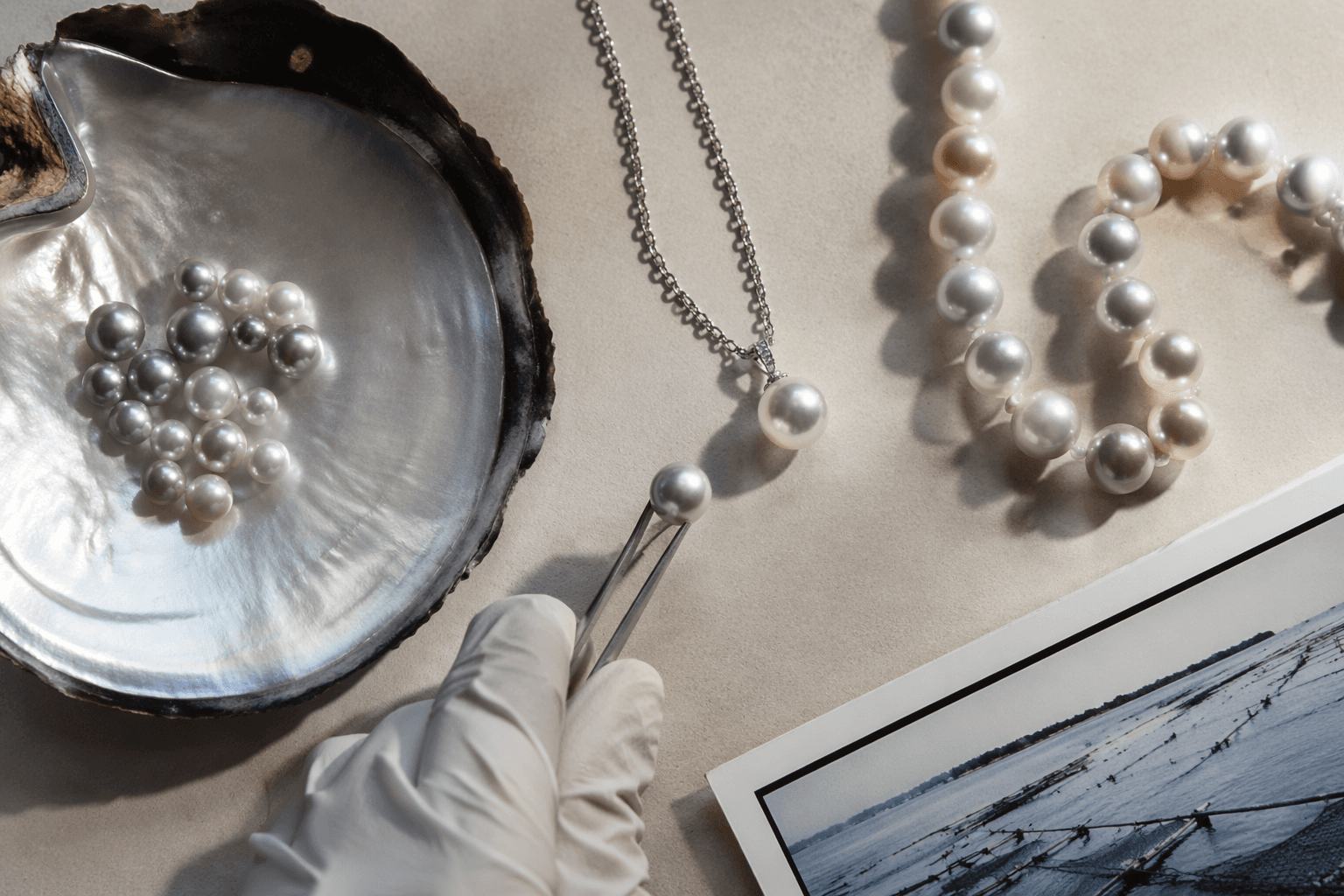
PearlsOnly’s 2026 buyer’s guide lists four core families shoppers must know: freshwater, Akoya, Tahitian and South Sea. Each carries a different provenance, bodycolor and typical size range, freshwater for everyday, Akoya for the classical white strand, Tahitian for dramatic dark tones, and South Sea for the largest, silkier white and gold pearls. Understand the family first; it frames all other choices from price expectation to setting and wearability.
2. What determines value
Alyapearl summarizes the essentials plainly: “The value of a real pearl necklace largely depends on its type, size, luster, shape, and surface quality (freshwater vs. saltwater).” Those five variables are the heart of valuation: type sets the market band, size (millimetres) moves price quickly, luster controls visual depth, shape affects symmetry premiums, and surface blemishes can shave value substantially. PearlsOnly’s guide also highlights luster and surface among the top quality drivers, reinforcing that a bright, mirror-like sheen and clean surface are non-negotiable in higher-grade pieces.
3. Construction and craftsmanship
Ask about how the strand is made: PearlsOnly instructs buyers to “Find out about the stringing material and whether there are knots between each pearl. Silk thread with knots between is standard for quality necklaces.” Knots protect against wear and loss, control drape and make restrings possible without losing the strand. Also check whether a strand is graduated (larger center pearls tapering to smaller ends) or uniform, graduation is a hallmark of traditional craftsmanship, and inspect the clasp metal and construction, which affect longevity and resale.
4. Size and length considerations
Alyapearl uses a conventional example throughout its pricing discussion: a 40cm (15.5-inch) freshwater pearl necklace, and previously referenced “10–11mm” pearls as a historical high-quality size. That 40cm/15.5-inch length is the familiar “princess” range on which shoppers commonly compare value; larger sizes (10–11mm and above) are rare in freshwater historically and command premium pricing in saltwater families. Small pearls (3–5mm) are inexpensive and durable, while any jump in millimetres produces disproportionate price movement, know the exact mm when you buy.
5. Pricing in 2026: what to expect
Alyapearl offers stark market context: “Ten years back, you could spend about $1000 on a high-quality 4A-grade, 10-11mm freshwater pearl necklace. Now, in 2026, a similar 40cm necklace with stunningly large pearls can be purchased for about $179.” Across the market, saltwater pearl necklaces “vary between $200 and over $20,000,” while exquisite freshwater options can be found “for less than $100.” Retail snapshots in 2026 mirror that spread, Timelesspearl lists a product price at $148.95, and Jescojes frames a moissanite-plus-pearl pendant at “$50–$400.” Expect wide variance: the family, size and luster you choose will locate you somewhere between everyday price bands and collector territory.
6. Edison pearls and industry shifts
Alyapearl singles out Edison pearls as a major freshwater innovation: “Edison pearl is now the low-cost leader in the pearl farming sector through the provision of quality, large freshwater pearls.” The same source attributes recent price compression to farming and technological advances: “This dramatic price drop has happened because of technological advancements. It is a result that demonstrates that supply growth has matched demand.” For buyers, that means high-luster, larger freshwater pearls, once rare, now appear at accessible price points, but provenance and grading remain essential for comparing value.
7. Where to buy and whom to trust
PearlsOnly recommends specialists: “Buying from reputable pearl specialists usually beats department stores for quality and value. Companies focusing only on pearls understand what matters and offer better selection.” Online retailers often compete on price, PearlsOnly adds that they can be a bargain if they “show detailed quality info, clear photos, and have solid return policies.” Estate sales and auctions are viable if you know what you’re buying; conversely, PearlsOnly warns to “Skip buying from random sellers on marketplaces without any authentication.” In short: prioritize sellers who document pearl type, size and construction and who stand behind their wares.

- “Always ask about return policies before you buy pearl necklace jewelry, especially online. You need the option to return them if they’re not what you expected when you see them in person.”
- “Ask specifically about the pearl type, freshwater, Akoya, South Sea, Tahitian. Don’t let sellers stay vague about where they came from.”
- “Find out about the stringing material and whether there are knots between each pearl. Silk thread with knots between is standard for quality necklaces.”
- “Ask if the strand is graduated (larger pearls in center, smaller toward ends) or uniform size throughout.”
- “Get info about clasp type and what metal it’s made from.”
8. Questions to ask when shopping
These are PearlsOnly’s explicit shopping prompts; use them as a script when you call or inspect an item in person.
9. Styling and 2026 trends
Minimalism is the year’s editorial note: Jescojes describes the “Modern Pearl Strand Necklace, The New Classic,” advising a move “away from oversized, heavy necklaces” toward “smaller, high-luster pearls that create a seamless 'unbroken circle of luster' around the neck.” Jescojes also champions the moissanite-and-pearl pairing: “For those who want to add a touch of brilliant sparkle to the soft glow of pearls, the fusion of moissanite and pearls is the ultimate 2026 trend.” Timelesspearl’s rules, “Match Pearl Length to Your Neckline” and “Choose One Statement and Keep the Rest Clean”, are practical styling axioms: V-necks favor pendants or longer strands, crewnecks want collars or chokers, and turtlenecks benefit from long vertical lines.
10. Care and longevity
Pearls reward simple, consistent care and, as Katie Muirhead of The Pearl Source observes, “With thoughtful care and wear, it will accompany you through life’s milestones, ready to be admired today and cherished for years to come.” PearlsOnly includes a dedicated “Taking Care of Your Pearls” section in its guide, ask sellers for their care notes and restringing recommendations. A well-cared-for strand retains luster and value; verify whether the seller offers restringing or maintenance services as part of a quality guarantee.
11. A practical shopping checklist
Before you buy, confirm these essentials: exact pearl family and millimetre size; luster and surface condition; whether the strand is knotted on silk; clasp metal and functionality; strand length (40cm/15.5" is a common comparison) and whether the pearls are graduated or uniform; and clear return terms. Keep the market context in mind, expect freshwater bargains alongside saltwater outliers priced into five figures, and use specialist retailers for high-value buys.
Conclusion Choosing a pearl necklace in 2026 is an exercise in marrying aesthetic intent with measurable facts: identify the pearl family and millimetres you want, insist on silk-knotted stringing and a solid clasp, and calibrate price expectations, freshwater innovations have widened access, while saltwater rarities still command collector premiums. Buy with questions, documentation and attention to luster; the right strand will be both a daily companion and a durable investment.
This article was produced by Prism’s automated news system from verified source data, official records, and press releases, then run through automated quality and moderation checks before publishing. The system is built and supervised by the people who set the standards it runs under. Read our full AI policy.
Did this article answer your question?