How to Choose a Pearl Necklace: Varieties, Quality, and Style Guide
Luster is the single quality factor that separates a dull bead from a true jewel — here's everything you need to know to choose a pearl necklace you'll wear for generations.
Pearls occupy a singular place in fine jewelry: they require no cutting, no setting manipulation, no heat treatment to reveal their beauty. The gem arrives from the sea already finished, and yet the difference between a strand worth $200 and one worth $20,000 comes down to factors invisible to the untrained eye. Understanding those factors — variety, luster, nacre, surface quality, shape, and construction — is the difference between buying a necklace and investing in one.
The Four Varieties: A Field Guide
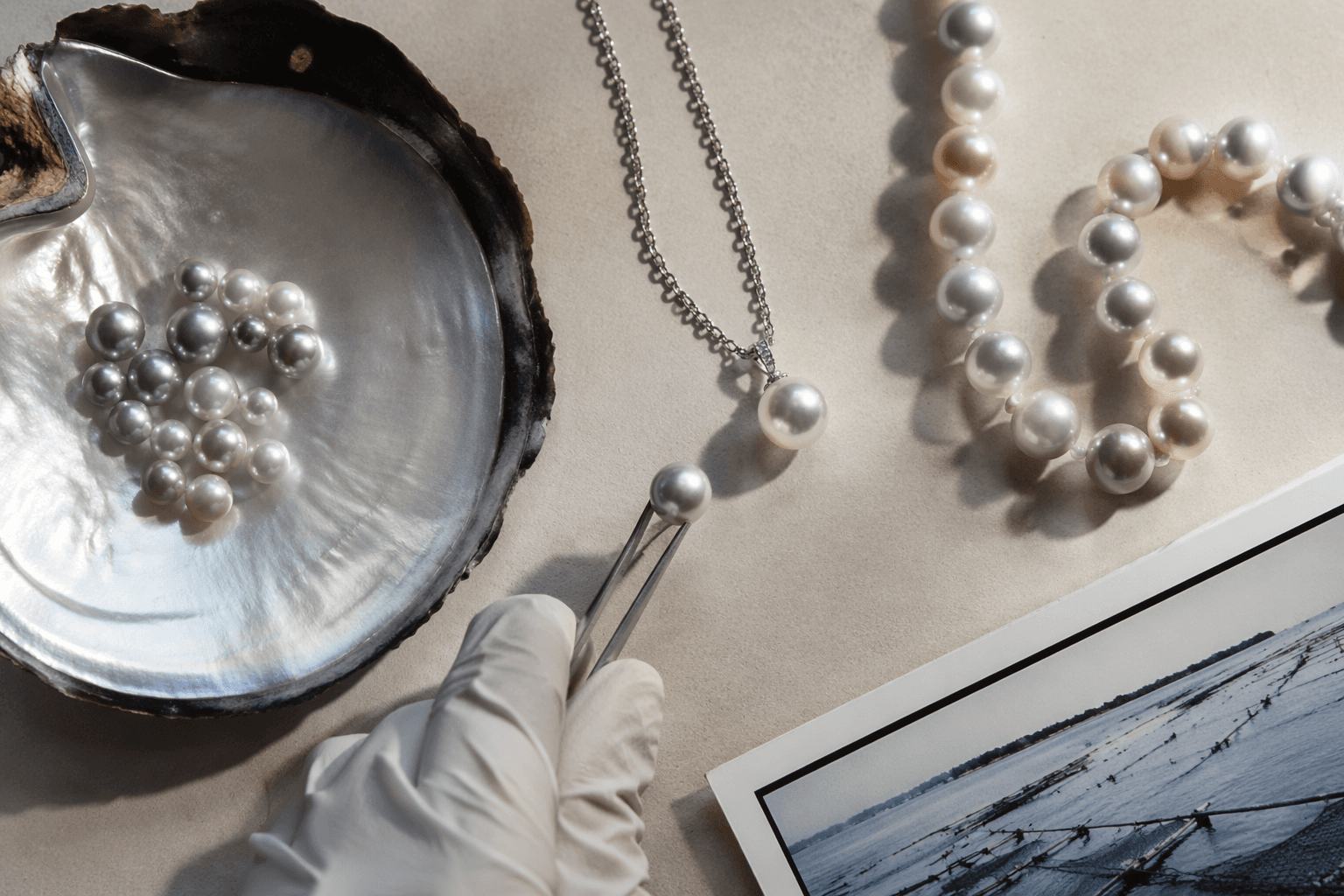
Akoya cultured pearls are the most familiar type of saltwater cultured pearl in western markets. Many buyers think of white or cream-colored Akoyas as the classic pearl, especially for single-strand necklaces. Today, Akoyas are cultivated across Japan, China, Vietnam, and Myanmar. They range from 3.0 mm to 9.5 mm and are sold by size rather than weight. Their luster is very sharp and bright, even in some of the lower qualities. Within the Akoya category, Hanadama represents the apex: known for their dazzling bright luster, rainbow orient, and Aurora effect, these are the only Akoya pearls certified by the Pearl Science Laboratory of Tokyo, verified to have the very highest levels of luster, orient, and nacre thickness.
Freshwater pearls are produced in mussels rather than oysters, and a single mussel can yield far more pearls per harvest than saltwater varieties. They generally feature a softer, more satiny luster that tends to be visibly more diffuse around the edges of reflected light sources. Freshwater pearls can reach much larger sizes than Akoyas, especially the newer bead-nucleated varieties like Edison pearls, which regularly reach 15.0–16.0 mm. Ideal for new collectors, freshwater necklaces and earrings typically range from $100 to $800, offering soft pastel tones and varied shapes.
Tahitian cultured pearls are cultivated primarily around the islands of French Polynesia and are sometimes referred to as black pearls, though they have a wide color range. They are often called black, but the truth is richer: peacock, green, aubergine, and smoke. They are pearls of striking contrast. The government of Tahiti is protective of its pearl farming community and has enacted strict laws regarding quality control; all Tahitian pearls must have a minimum nacre depth of 0.8 mm to qualify for export. Tahitian pearl jewelry ranges from roughly $800 to $20,000 depending on size, color, and luster.
South Sea cultured pearls come from Australia, Indonesia, and the Philippines. They can be white to silver or golden depending on the oyster species, and their large size, thick nacre due to a long growth period, and limited critical growing conditions all contribute to their extraordinary value. Due to the warm climate and longer harvest time, South Sea pearls have an exceptionally thick nacre ranging from 2.0 mm to 6.0 mm; that thickness creates a satiny luster quite different from the mirror-like sharpness of an Akoya. White South Sea pearls are the most luxurious and luminous, with necklaces ranging from $2,000 to more than $50,000.
What Actually Determines Quality
The Gemological Institute of America states that pearls are evaluated and valued according to seven value factors: type, size, shape, color, luster, surface quality, and nacre. Of all of them, luster demands the most attention. Luster is best described as the glow that comes from within the pearl, produced by light entering and reflecting back through the layers of nacre. The quality of the luster is directly related to how even and smooth those nacre layers are. A pearl with low luster will look dull or chalky — no amount of size or perfect shape compensates for that.
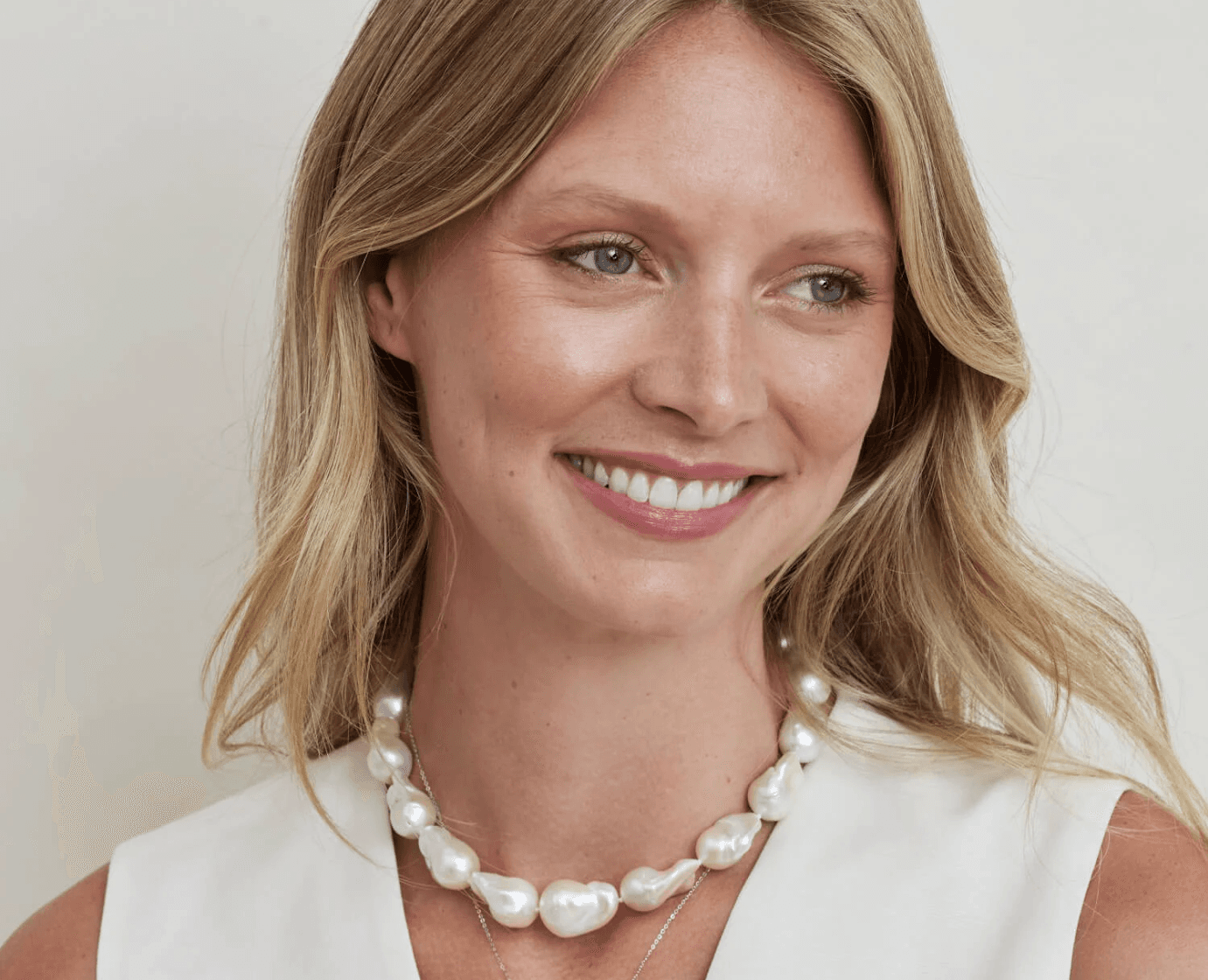
Surface quality is the second major consideration. Pearls commonly have blemishes or irregularities confined to the surface, judged by size, number, location, visibility, and type. If surface characteristics are numerous or severe, they can affect the pearl's durability and severely lower its value. Perfectly round pearls are the rarest shape and therefore often the most valuable — which is why a round Akoya pearl is so prized. That said, baroque, or irregularly shaped, pearls are trending in 2026 for their unique, modern artistic appeal.
Color encompasses both body color and overtone. The main color is often modified by additional colors called overtones, which are typically pink, green, purple, or blue. A rare color, like a deep golden South Sea pearl or a peacock-green Tahitian pearl, can be highly valuable. In Akoya pearls, rose and silver are the most sought-after overtones; in South Sea, the "Paper White" and "Imperial Gold" body colors command premium prices.
Cultured vs. Natural Pearls: The Distinction That Matters Most
Natural pearls grow in the wild without human intervention. They are very rare, and most natural pearls in the market today are antique. Cultured pearls are grown on pearl farms and are the direct result of human intervention; the vast majority of pearls in today's jewelry market are cultured. They may be bead-nucleated, tissue-nucleated, or otherwise non-bead cultured, and are produced in both saltwater and freshwater mollusks. Crucially, both are genuine pearls — composed of the same nacre, the same aragonite crystals, the same biological process. The distinction is one of origin, not authenticity.
Tissue-nucleated cultured pearls can look similar to natural ones even on X-ray, meaning even experts sometimes need lab testing to confirm which type they are examining. GIA uses digital X-radiography, traditional visual observation, and advanced testing equipment to determine if a pearl is natural or cultured, with microradiography being the most reliable non-destructive method.
Treatments and When to Ask for a Lab Report
Common pearl treatments include bleaching, dyeing, luster enhancement through polishing, and coating. Most Akoya pearls undergo mild bleaching to even their color, a standard and widely accepted practice. Dyeing is more significant and must be disclosed; it primarily affects freshwater pearls sold in non-white colors. Always ask a seller explicitly whether enhancements have been applied.
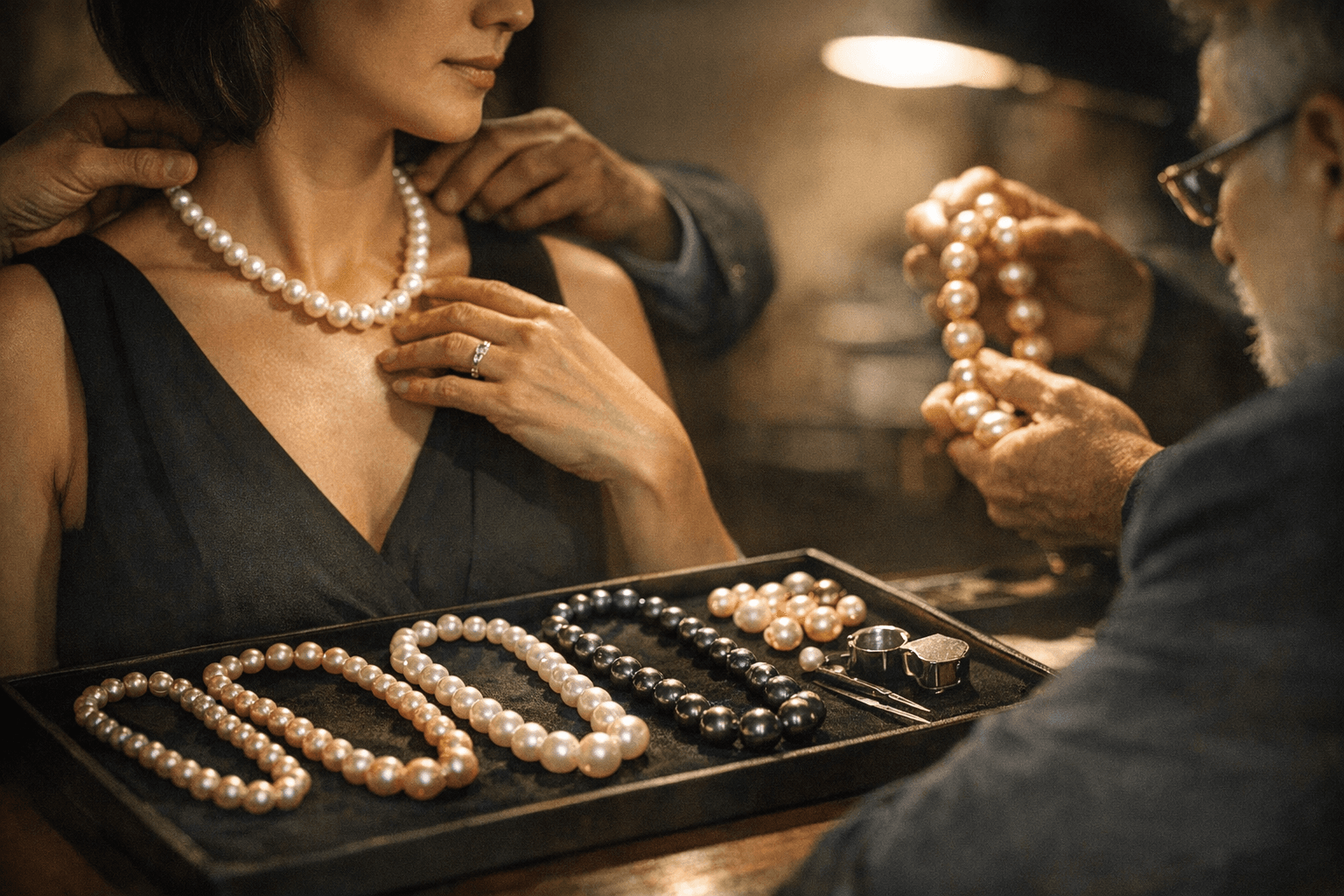
GIA Pearl Reports provide information on the identity of pearls (natural or cultured), the mollusk they originated from, the environment they formed in (saltwater or freshwater), and whether the pearls have undergone treatment, as well as classification based on GIA's 7 Pearl Value Factors. The Identification Report specifically confirms that the pearl is natural or cultured, not a simulant or imitation, and describes any detectable treatments. For any high-value saltwater pearl strand — a South Sea necklace above $5,000, a natural pearl of any variety, or a certified Hanadama Akoya — a GIA or Pearl Science Laboratory report is not optional: it is essential for both purchase confidence and future resale.
Necklace Length, Knotting, and Clasps
The architecture of a pearl necklace matters as much as the pearls themselves. Common pearl necklace lengths include 16-inch chokers, 18-inch princess lengths, 20-inch chains, and 24-inch matinee styles — each offering a different silhouette, from delicate and close to the neck to long and dramatic.
In today's fashion landscape, the princess length (18") is considered the best modern choice for most pearl lovers. It sits just below the collarbone, works with virtually every neckline, and reads as neither too formal nor too casual. Choker and princess lengths are especially popular for their clean, elegant fit, as they highlight the collarbone without adding visual weight. Opera lengths (28–36 inches) and ropes (37 inches and above) offer versatility through styling: an opera-length pearl necklace can be worn as a single strand over high-necked gowns for timeless elegance, layered with shorter strands for cocktail dresses, or double-wrapped and knotted at the center for a vintage-inspired look.
Knotting is a structural and protective detail, not merely decorative. Stringing pearls without knotting between each bead is possible, but knotting is strongly recommended: if the thread breaks, the knots hold the pearls in place and you lose only one pearl instead of the entire strand. Silk thread is the traditional material; pearl necklace strands should be restrung every one to two years as silk can wear out over time.
Clasps define both security and aesthetic. A simple gold or sterling box clasp suits a single-strand Akoya necklace beautifully; a multi-strand statement piece may warrant a more decorative slide clasp or a diamond-set mabé pearl clasp. The level of formality also depends on pearl size and clasp, with smaller pearls and simpler clasps giving a more effortless, modern vibe.
Style Recommendations by Wear Occasion
For everyday wear, the choice is straightforward: a freshwater or Akoya strand in the 6.5–7.5 mm range, princess length, with a secure box clasp and silk knotting. Freshwater pearls are a sound choice for daily wear without much worry about wear and tear, and their lower prices make experimentation easy — they are perfect for layering, longer rope necklaces, and custom styling.
For a statement piece, consider a three-strand Akoya necklace or a graduated South Sea strand. The three-strand configuration creates architectural presence at the neckline without requiring the pearl size to do all the visual work. Tahitians, worn as a single opera-length strand, achieve a similarly dramatic effect with far less visual weight.
The choker has enjoyed a strong cultural revival, and pearls wear it particularly well. A 16-inch pearl choker adds a romantic, vintage-inspired touch that translates from a tailored blazer to an evening gown. For petite frames especially, the choker length keeps proportions balanced and avoids overwhelming the neckline.
Care, Resale, and Long-Term Value
Wipe pearls gently with a soft cloth after wearing to remove dust and oils, and keep them away from lotions, perfumes, and cleaning products, as these substances can damage the surface. Avoid submerging any pearl jewelry in water. Store strands flat rather than hanging to prevent the silk thread from stretching, and keep pearls in a soft pouch or fabric-lined box, away from harder gemstones that can scratch the nacre.
On resale: South Sea pearls are better considered heirloom investments rather than financial instruments, with the strongest long-term value found in pearls with exceptional luster, thick nacre, large size, and careful matching — qualities that hold their appeal across generations. Freshwater and Akoya pearls, while beautiful, are produced in much larger quantities and carry lower resale premiums. If resale potential is a priority, the combination of certified quality (GIA or PSL documentation), a premium variety (South Sea or Tahitian), and excellent luster in a classic round shape is the clearest path to holding value over time.
The pearl necklace is one of the few pieces of jewelry that becomes more personally significant with age. Nacre responds to the oils in human skin; pearls worn regularly develop a depth of luster that those kept in a vault simply cannot. Choose well, wear often, and the necklace will reward both instincts equally.
This article was produced by Prism’s automated news system from verified source data, official records, and press releases, then run through automated quality and moderation checks before publishing. The system is built and supervised by the people who set the standards it runs under. Read our full AI policy.
Did this article answer your question?