How to Start a Pearl Farm: Species, Sites, and Husbandry Explained
Starting a pearl farm begins with one critical choice: the species. Get that wrong, and no amount of perfect water quality or technique will save your harvest.
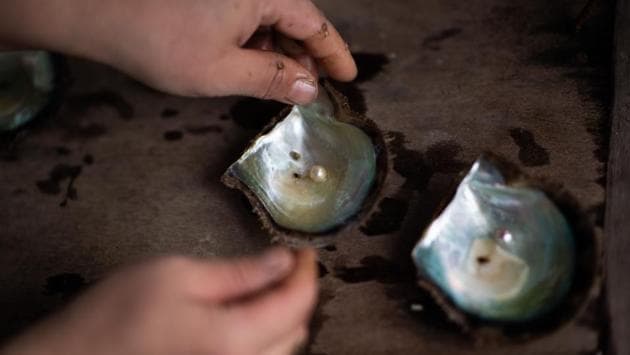
Few luxury materials require as much patience, biological intuition, and logistical precision as a cultured pearl. Behind every nacre-coated gem resting in a Mikimoto display case or a bespoke fine jewelry commission lies years of careful husbandry, site management, and species-specific knowledge. For those drawn to pearl farming not just as commerce but as craft, the entry point is both thrilling and demanding. The decisions made before a single oyster enters the water will determine the quality, size, and market value of every pearl the farm produces.
Species First: The Decision That Shapes Everything
The species of pearl oyster you choose is not a logistical detail; it is the foundational creative and commercial decision of the entire enterprise. Different Pinctada species produce dramatically different pearls, and each has its own environmental requirements, timeline, and market position.
Pinctada maxima, the silver- or gold-lipped oyster, is the species responsible for South Sea pearls: the large, luminous gems that command some of the highest prices in the cultured pearl market. These oysters require warm, clean, deep-water environments, typically found in the coastal waters of Australia, Indonesia, and the Philippines. They are slow growers, and the nucleation-to-harvest window reflects that, often running two to four years per pearl. The investment in time and infrastructure is substantial, but so is the return when quality is high.
Pinctada fucata, the smaller Akoya oyster, is the species that built Japan's pearl industry and remains the backbone of fine saltwater pearl production in cooler temperate waters. Akoya pearls are prized for their high luster and round shape, typically ranging from 6mm to 9mm. Their production cycle is shorter than South Sea farming, generally running one to two years post-nucleation, and they thrive in the coastal bays of Japan and China where water temperatures drop seasonally, a condition that actually slows nacre deposition and contributes to the mirror-like finish collectors prize.
Freshwater pearl mussels, primarily Hyriopsis cumingii cultivated extensively in China, offer a different proposition entirely. A single mussel can host dozens of pearl sacs simultaneously, making freshwater farming far more productive per animal. The resulting pearls have improved dramatically in quality over the past two decades, with top-tier freshwater gems now approaching Akoya standards in luster and shape. For a new farmer working with limited capital, freshwater mussels offer a lower barrier to entry and faster early returns.
Selecting and Evaluating Your Site
Once species is determined, site selection becomes the next critical variable, and no amount of skilled husbandry can compensate for a poorly chosen location. Water quality, temperature range, salinity, current flow, and depth all interact with the specific biological needs of your chosen species.
For Pinctada maxima operations, you are looking for protected bays or lagoons with strong tidal exchange, water depths between 5 and 20 meters, and consistently warm temperatures above 20 degrees Celsius. Turbidity matters: the oysters feed on phytoplankton, so water must be clear enough to support healthy algal populations without carrying excessive sediment that clogs gills. Australia's Kimberley coast and Indonesia's Aru Islands are considered benchmark environments for a reason.
Akoya farming demands a different calculus. The ideal sites experience seasonal temperature variation, warm summers that promote rapid growth and cool winters that concentrate nacre deposition into dense, high-luster layers. Bays with moderate current, protected from storm surge but with sufficient water exchange to deliver consistent nutrition, have historically produced the best material.
Freshwater sites require access to clean rivers, lakes, or managed ponds with controlled input streams. Chinese operations often use purpose-built pond systems where water quality, stocking density, and feeding can be precisely managed. Proximity to clean freshwater sources and the ability to control runoff from surrounding agriculture are practical priorities.
Navigating Permits and Regulatory Frameworks
Pearl farming sits at the intersection of aquaculture regulation, marine environmental law, and in some jurisdictions, indigenous land and sea rights. The permitting process varies enormously by country and region, but universally it requires time, documentation, and often environmental impact assessment before a single line enters the water.
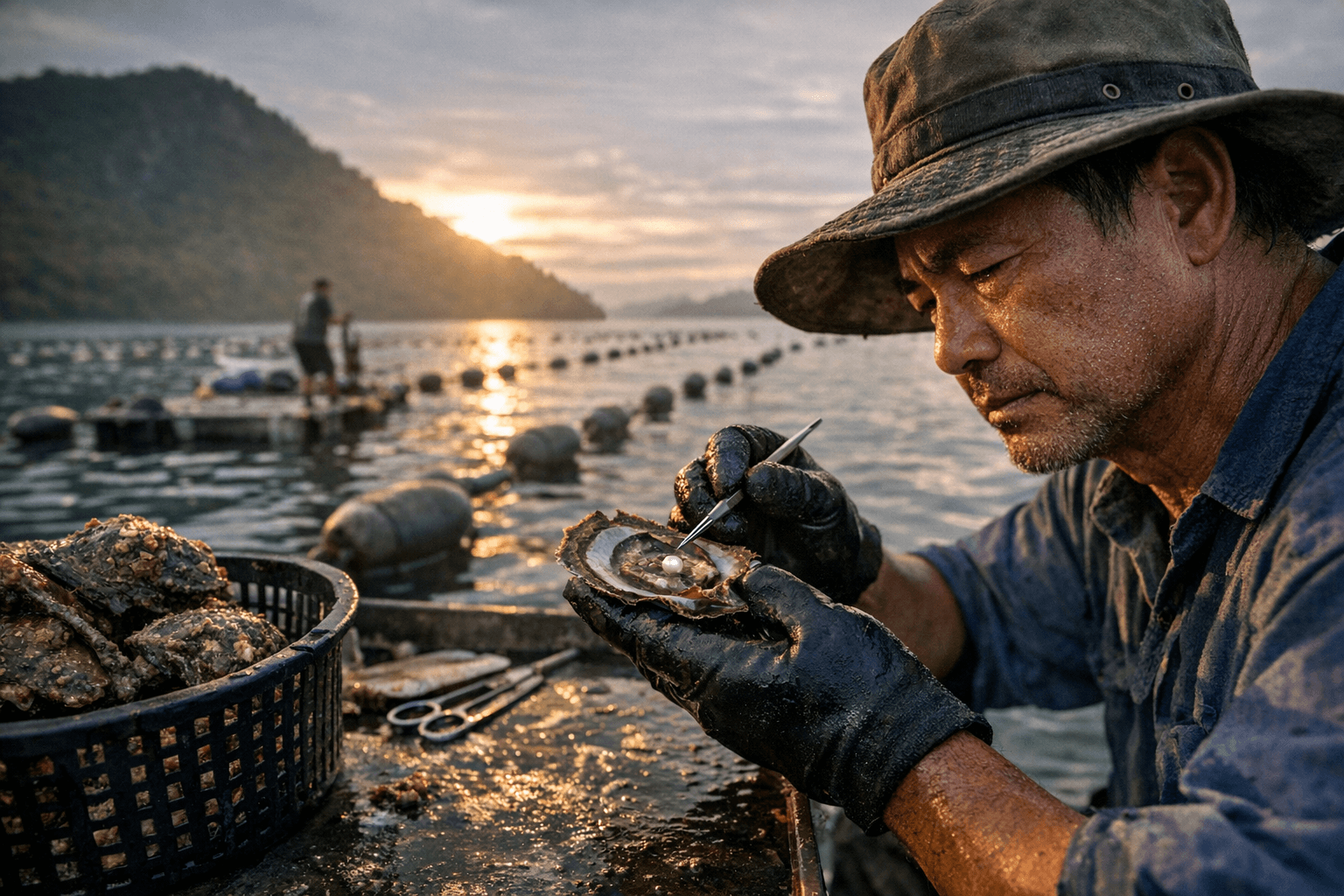
In Australia, applications for aquaculture licenses for South Sea pearl operations must go through state-level fisheries authorities, and operators farming in waters overlapping with Indigenous sea country must engage in good-faith consultation processes. In Indonesia and the Philippines, marine concession permits govern the use of coastal waters, and foreign investment rules add an additional layer of complexity for international operators. Japan's Akoya industry operates under prefectural fishing cooperative frameworks, which historically have made market entry difficult for outsiders.
Build permitting timelines into your business plan from the outset. In many jurisdictions, environmental assessment and consultation processes alone can take 12 to 24 months before construction of any infrastructure begins.
Husbandry: The Day-to-Day Work of Pearl Farming
The actual cultivation process, once permits are secured and infrastructure is in place, demands disciplined routine and a willingness to respond quickly to biological signals. Pearl farming is not a set-and-forget enterprise.
Spat collection or hatchery production provides the juvenile oysters that begin the farm's cycle. Wild spat collection, in which larvae are attracted to collector panels deployed in the water, is still used in South Sea operations; hatchery production, which gives operators greater control over genetics and supply, is increasingly common across all species.
Grow-out, the period during which juvenile oysters develop to nucleation size, typically takes one to three years depending on species and conditions. During this phase, oysters are housed in mesh panels, lantern nets, or long-line systems and require regular cleaning to remove biofouling organisms that compete for food and restrict water flow. Mortality management, monitoring for disease, and periodic thinning of stocking density are all part of routine operations.
Nucleation, the surgical implantation of a shell bead nucleus and a small piece of donor mantle tissue, is the most technically demanding step in the process and the one that most directly determines pearl quality. Skilled nucleators are specialists; in Japan, the craft is considered a trained profession. The nucleus size, the quality of the mantle graft, and the health of the host animal at the time of surgery all influence whether the resulting pearl will be round, baroque, or somewhere between.
Post-nucleation care is critical. Oysters are kept in recovery nets in warm, clean water, and any showing signs of rejecting the nucleus are removed quickly to prevent contamination of surrounding animals. Over the following months and years, the mantle tissue deposits nacre around the nucleus, and the pearl takes shape.
Timelines and Realistic Expectations
Patience is not a virtue in pearl farming; it is a structural requirement. From the decision to start a farm to the first saleable harvest, most operations are looking at a minimum of three to five years, and South Sea operations often run longer. The compounding effect of biology, weather events, disease outbreaks, and market fluctuations means that financial projections need wide margins and multi-year horizons.
The farms producing the finest material globally, whether in Australia's northwest, Japan's Ago Bay, or China's freshwater lake districts, have typically been operating for decades. The knowledge embedded in those operations, the understanding of micro-site conditions, local spat behavior, and seasonal patterns, represents an advantage that capital alone cannot replicate quickly. Starting well means starting with humility, ideally with access to experienced mentors or consultants who have spent time in the water.
Pearl farming rewards precision and punishes shortcuts. The oysters are biological systems with their own logic, and the farmer's job is to understand that logic well enough to work with it rather than against it.
This article was produced by Prism’s automated news system from verified source data, official records, and press releases, then run through automated quality and moderation checks before publishing. The system is built and supervised by the people who set the standards it runs under. Read our full AI policy.
Did this article answer your question?