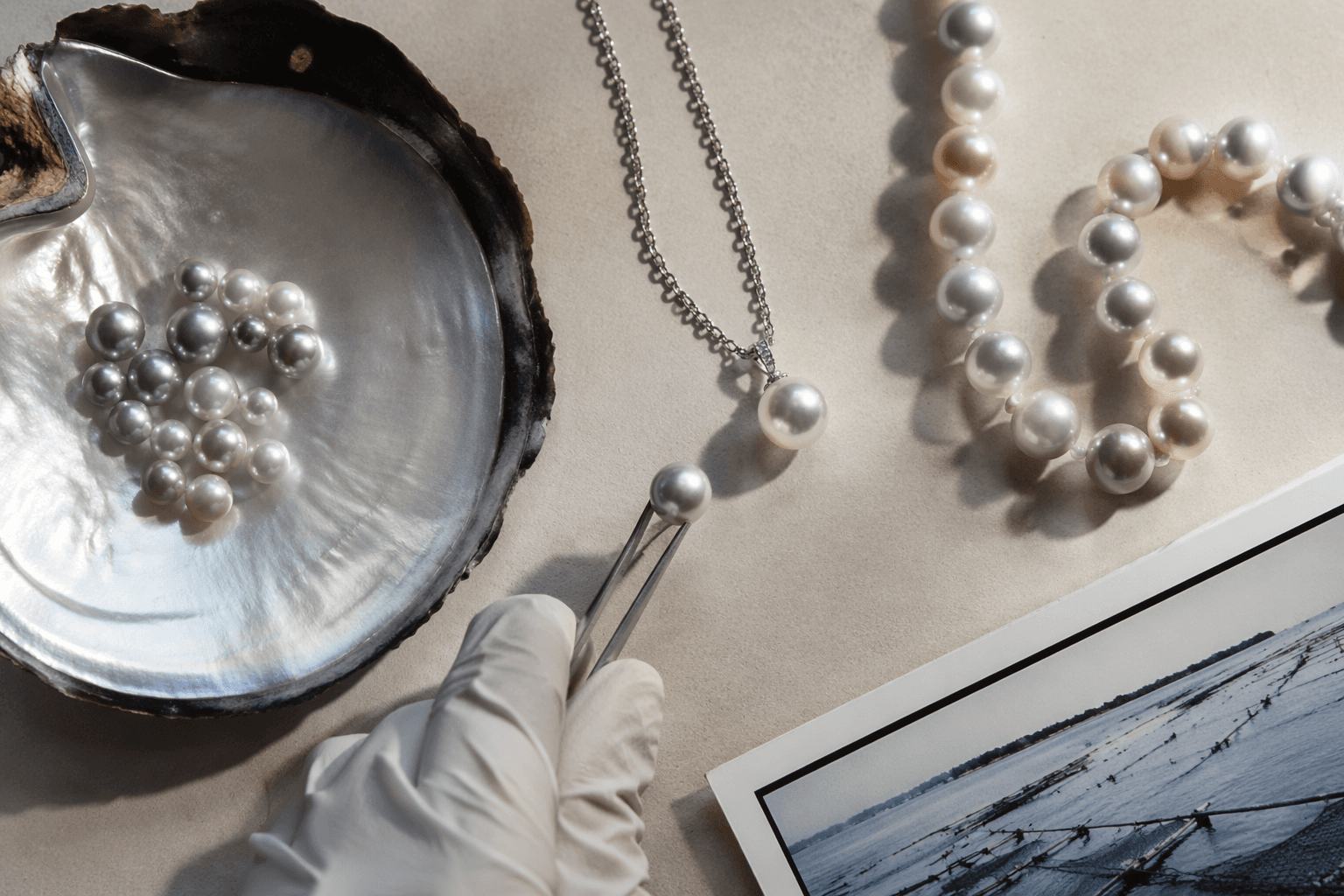
Japan Pearl Traders Find Growth in U.S., European Markets Beyond China
George Kakuda says European and U.S. buyers once made up just 10% of his client base. That share is now growing fast.
For years, the Japanese pearl trade ran almost entirely on Chinese demand. That concentration is now unwinding, and the traders watching it happen say the shift is genuine.
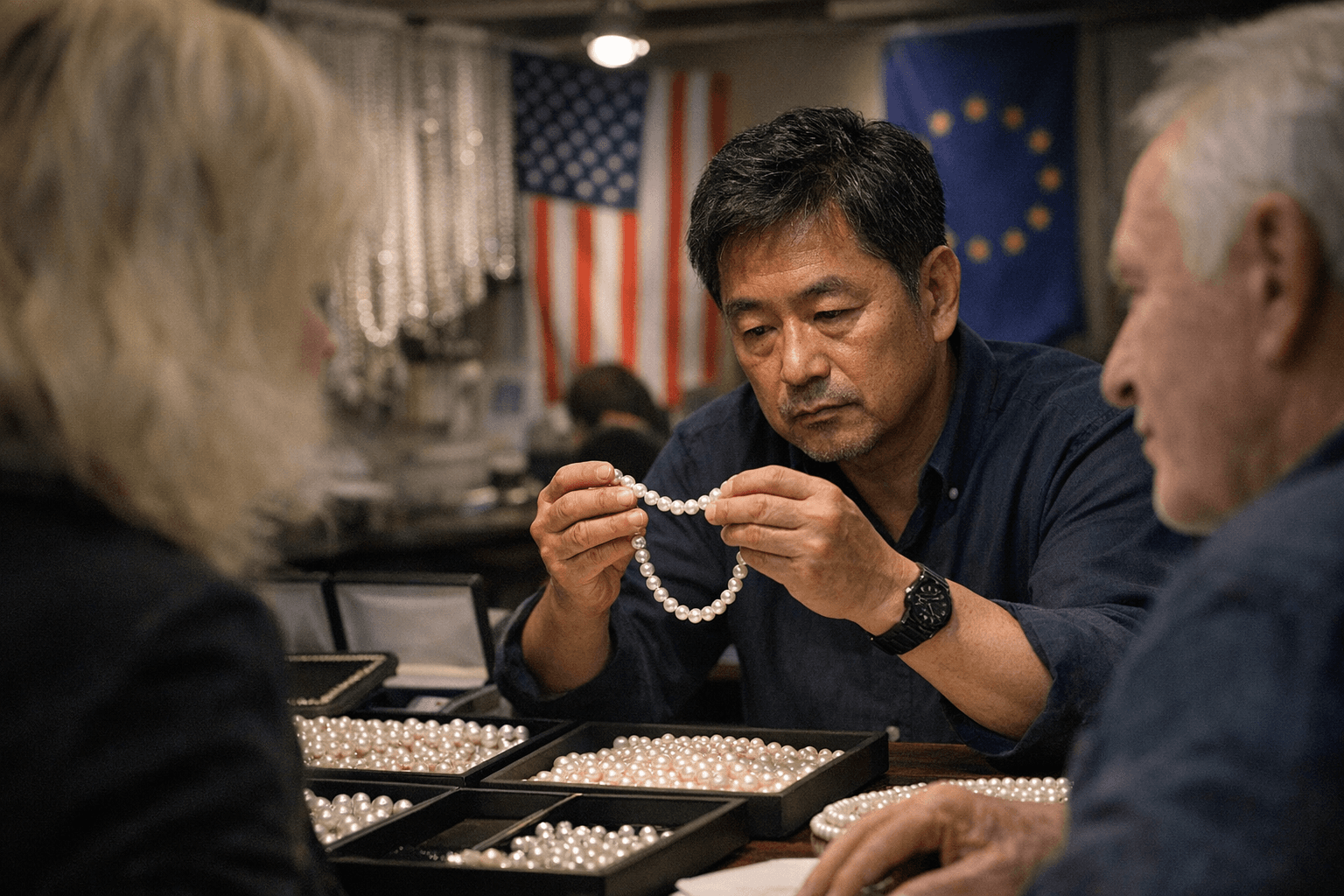
George Kakuda, president of the Japan Pearl Exporters' Association and CEO of Kakuda Pearl Co Ltd, reported active buying from European and American customers at an international trade exhibition held in Hong Kong in early March. The signal was clear: a client base that once leaned almost entirely on a single market is broadening.
"In the past, mainland Chinese buyers accounted for around 90 per cent of our client base while other markets comprised the remaining 10 per cent," Kakuda said. "Now, that 10 per cent is expanding and we are seeing more European and American customers. The market is becoming more diverse."
Price stabilisation has been a key factor in drawing buyers back. With Akoya and South Sea pearl prices finding steadier ground, European and U.S. customers have grown more willing to commit. White pearls are selling particularly well, and demand is running from mid-range goods through to commercial-grade product, suggesting the recovery is broad rather than concentrated in any single tier.
Ryuichiro Machizawa, general manager for the Pearl Operations Division of Mikimoto and deputy general manager of the Japan Pearl Promotion Society, acknowledged that geopolitical uncertainty carries some risk for the trade, though he was careful to distinguish between disruption and direct damage. "The war will mostly affect logistics and customer mobility," he said. "The impact on the pearl sector will be indirect." His eyes are on first-quarter results as a barometer. "We are hoping for good business in the first quarter as this will indicate what the future shows are going to be like. Let us wait and see as the situation changes every day. So far though, we do not see a direct implication for pearls."
The industry has navigated structural change before. When Zvi Chitayat founded Amit Trading in Tokyo in 1969, the company was dedicated exclusively to Japanese Akoya pearl sales, entering just as cultured pearl demand was accelerating. Through the 1970s and 1980s, Japanese companies expanded pearl farming operations across the Pacific, broadening their offer to include South Sea and Tahitian pearls alongside the classic round Akoya. By the 1990s, sourcing spanned farms in Japan, Australia, and French Polynesia. The late-1990s Asian financial crisis hit the industry hard, but traders who survived it emerged with more diversified and resilient operations.
That historical pattern gives context to what is happening now. A market that absorbed the shock of the Asian financial crisis and rebuilt around multiple origins and pearl types is now absorbing a different kind of pressure: the contraction of a single dominant buyer market. Whether European and American demand can genuinely fill the gap left by a reduced Chinese share remains the open question, but the buyers showing up in Hong Kong this March suggest the transition, at least at the trade level, has already begun.
This article was produced by Prism’s automated news system from verified source data, official records, and press releases, then run through automated quality and moderation checks before publishing. The system is built and supervised by the people who set the standards it runs under. Read our full AI policy.
Did this article answer your question?