Japanese exhibitors at JGA 2026 spotlight pearl artistry and precision craftsmanship
Japanese pearl jewelry earns its premium in the details: tighter setting, better metalwork, cleaner finishing, and designs that make mother-of-pearl feel architectural.
Why Japanese workmanship matters now
At a fair built to move inventory and set direction for the next buying cycle, the most persuasive pearl jewelry is rarely the loudest. JGA 2026, scheduled for 18 to 21 June at the Hong Kong Convention and Exhibition Centre, is positioned as Asia’s No. 1 mid-year B2B jewellery sourcing event, with more than 1,100 exhibitors and buyers from 30-plus countries and regions. In that setting, Japanese exhibitors are not just selling beauty. They are selling a standard of execution that buyers can actually inspect.
That is the useful lens for reading the pearl story this year. Japanese workmanship adds value when it makes a pearl feel intentional rather than merely decorative, and that value shows up in the way a piece is set, in the metals chosen, in the finishing on the back and edges, and in whether the design feels engineered as carefully as it looks.
What Jewel Hayakawa’s poshel line reveals
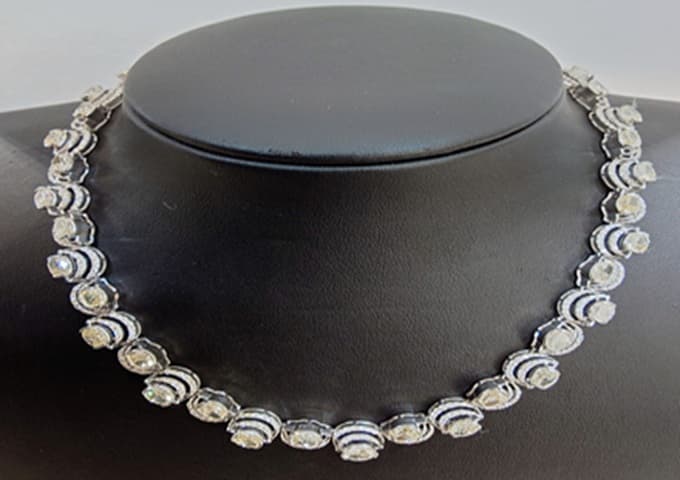
Jewel Hayakawa is a sharp example of that approach. The company says it renamed its inlay products “poshel” in February 2024 to distinguish its own style from other inlay techniques, and its positioning is rooted in original jewelry and accessories rather than simple category-filling pearl merchandise. One featured example in the line pairs mother-of-pearl with 18-karat gold and platinum, which immediately tells you the brand is thinking about structure as much as surface.
That matters because mother-of-pearl is easy to romanticize and hard to execute well. Set into precious metal with care, it can read as sleek, modern, and architectural. Set poorly, it can look flat, fragile, or overly ornamental. The distinction is not academic. It is the difference between a piece that feels designed and one that feels assembled.
The company’s own background helps explain that confidence. Jewel Hayakawa was founded in 1999 and incorporated on 26 January 2001. It is based in Kofu City, Yamanashi Prefecture, lists 12 employees, and says it belongs to the Japan Jewelry Association and other regional business groups. Yamanashi has long been one of Japan’s important jewelry manufacturing regions, so that address is more than a point on a map. It signals a place where technical skill, supply-chain familiarity, and small-scale precision are part of the production culture.
How to spot real craftsmanship in pearl jewelry
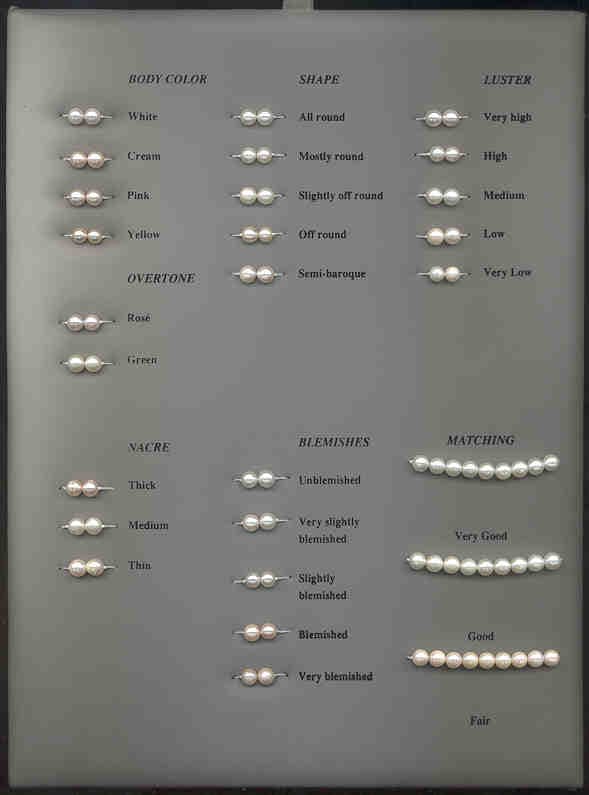
The most reliable premium is the one you can verify with your eyes and fingertips. Japanese workmanship tends to show itself in restraint, symmetry, and the discipline to let the material do the speaking. A pearl or mother-of-pearl element should look held, not trapped.
Look for these signals:
- Precision setting: The pearl, Mabe pearl, or mother-of-pearl should sit cleanly in its mount, with even spacing and no awkward gaps. Flush lines and crisp transitions between metal and stone usually indicate better hand finishing.
- Metal choice with purpose: 18-karat gold and platinum are not just luxury cues. They suggest durability, seriousness of construction, and a deliberate design choice around color, weight, and longevity.
- Finishing on every side: A refined piece should feel finished from the front, the back, and the edges. Clasps, seams, and hidden surfaces matter as much as the visible face.
- Design execution: Strong Japanese pearl work often balances innovation with control. The form should support the pearl’s luster, not overwhelm it. If the design uses inlay, it should read as integrated, not pasted on.
- Technique that is named clearly: When a maker distinguishes a specific method, as Jewel Hayakawa does with poshel, it often means the process is not generic. Distinct naming can be a clue to distinct workmanship, especially when the visual result supports the claim.
Where pearl-adjacent design becomes valuable
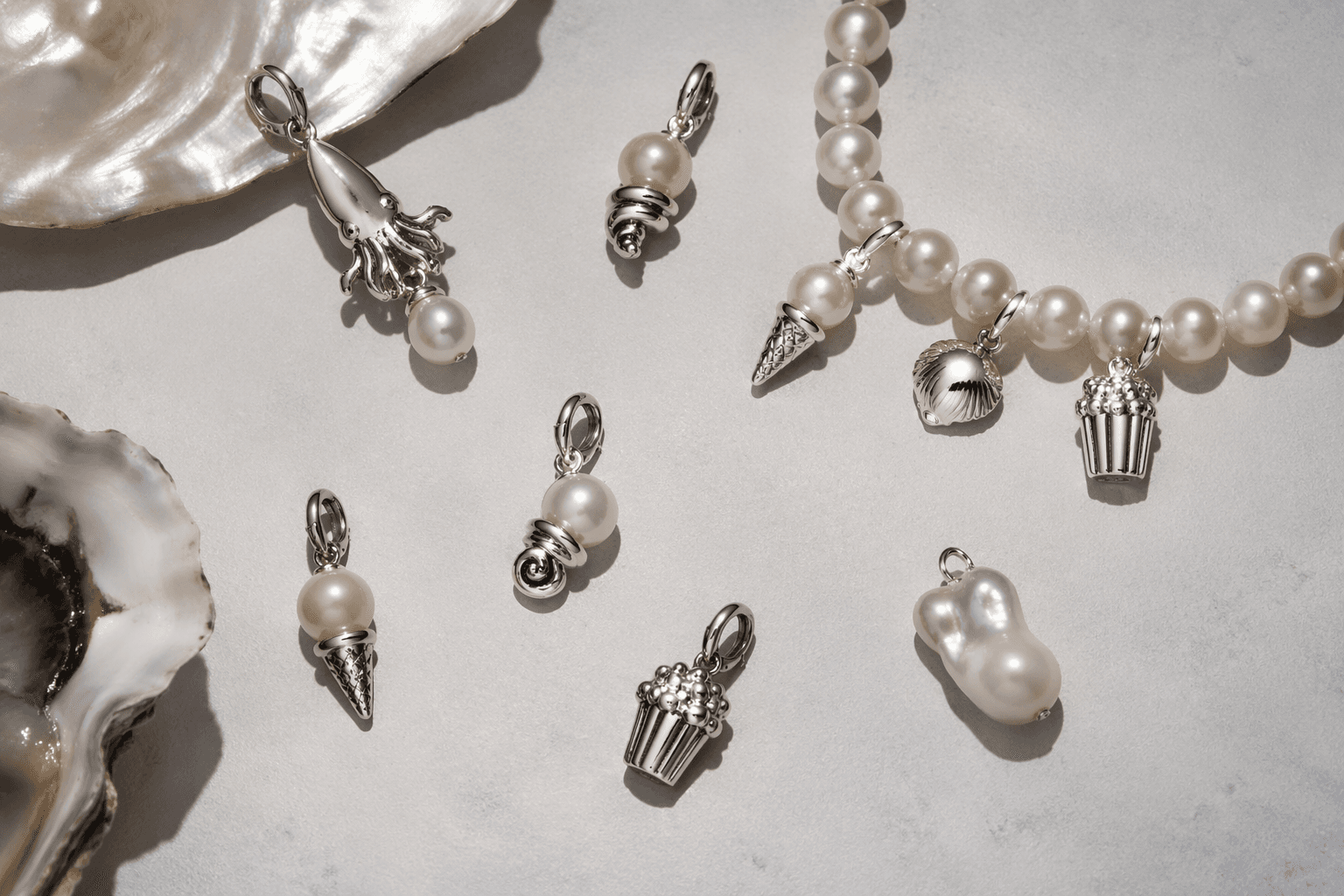
Jewel Hayakawa’s mix of pearl-related pieces and inlay jewelry is instructive because it widens the conversation beyond traditional strands and studs. Mabe pearl jewelry, with its domed surface and strong natural glow, rewards setting that frames rather than crowds the gem. Inlay work, meanwhile, asks for exact alignment and polish, because any inconsistency is immediately visible.
That is where Japanese craftsmanship often earns its premium. It creates a controlled surface, a cleaner silhouette, and a sense of design discipline that makes the jewelry feel finished rather than merely ornate. For a buyer, that means the extra value is not only in the materials, but in the labor you can see in the joins, the curves, and the way the pearl has been given room to breathe.
Why JGA is the right place to judge the difference
JGA’s structure makes it a useful comparison point. The fair is designed for trade buyers sourcing trending and innovative collections, and Hong Kong’s status as a free port with no VAT or general sales tax gives the market a particularly direct price-to-craft comparison. When more than 1,100 exhibitors are in one place, premiums have to justify themselves on the merits.
That is especially true for pearl jewelry, where storytelling can easily outrun substance. Japanese exhibitors at JGA 2026 offer a cleaner test: if the piece is strong, the proof is in the precision, the metal, and the finish. In a market crowded with pretty language, the most durable luxury is the kind you can actually decode.
This article was produced by Prism’s automated news system from verified source data, official records, and press releases, then run through automated quality and moderation checks before publishing. The system is built and supervised by the people who set the standards it runs under. Read our full AI policy.
Did this article answer your question?