Mother’s Day jewelry gifts turn to pearls, initials and personal style
Mother’s Day buyers are choosing pearls, initials and nameplates because the best gifts now read as personal signatures, not one-day-only jewelry.

Why personalization keeps winning
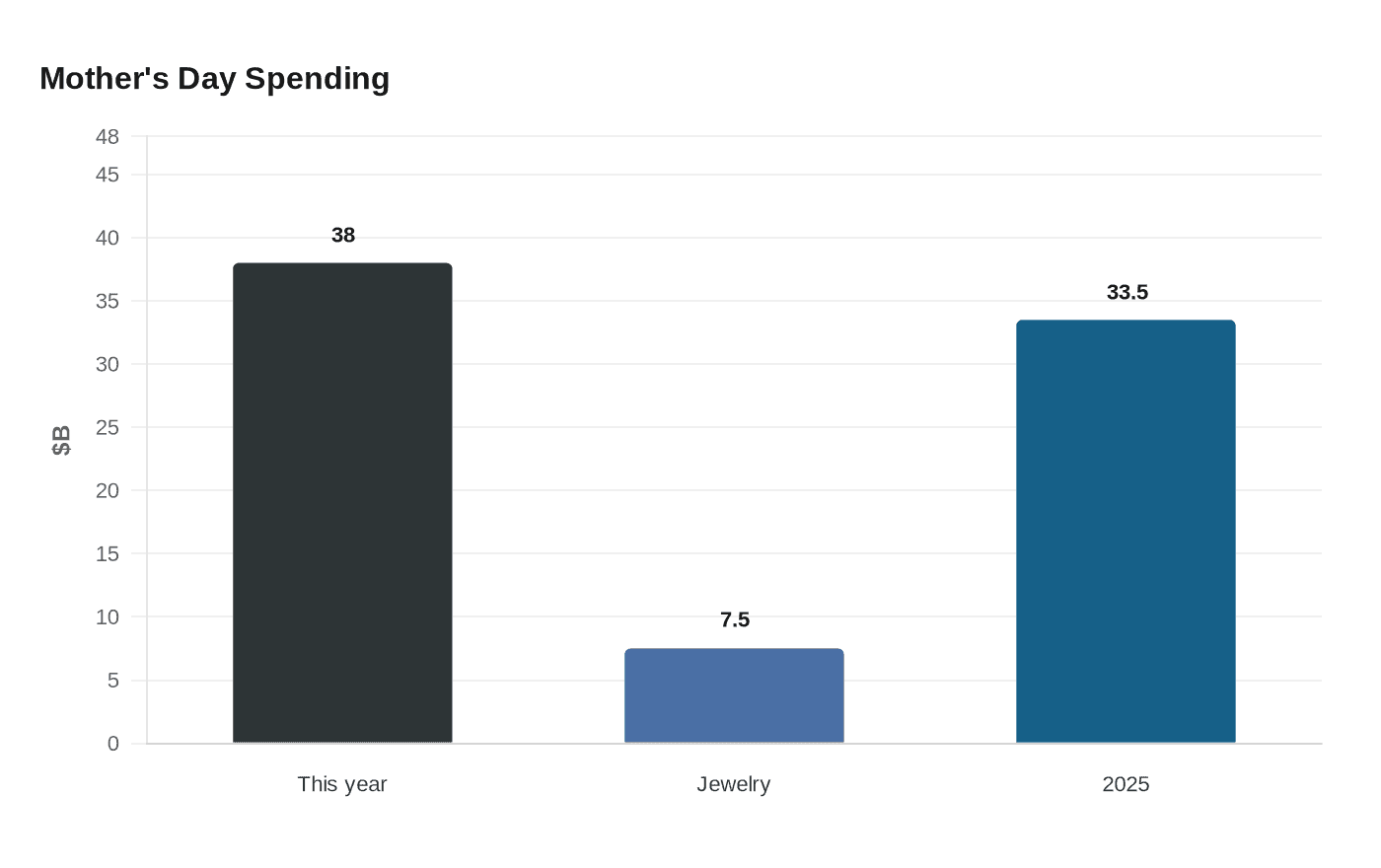
Mother’s Day has become one of the most important jewelry moments of the year because it answers a very specific desire: to give something that feels intimate, legible and meant to be worn. The National Retail Federation has tracked the holiday with its annual survey since 2003, and this year U.S. consumers are expected to spend a record $38 billion overall, with jewelry leading the gift categories and about $7.5 billion flowing into jewelry gifts alone. That scale matters, because it shows the category is not driven by impulse alone, but by the kind of emotional spending that rewards pieces with meaning.
The strongest gifts in this lane are the ones that identify the wearer before they decorate her. That is why nameplates, “mama” pendants and initials continue to outperform more generic occasion pieces: they turn jewelry into a statement of role, family and identity. In a market where 84% of U.S. adults celebrate Mother’s Day and spending reached $33.5 billion in 2025, according to Wunderkind data cited by Forbes, the emotional brief is clear. Buyers want a piece that feels personal on day one and still looks right with a sweater, a T-shirt or a work blazer in June.
Why pearls have re-entered the conversation
Pearls are thriving in this personalized space because they carry both symbolism and ease. Their appeal is not just that they read as classic; it is that they can now be styled as part of everyday jewelry rather than as a special-occasion uniform. Forbes has described pearls as a modern interpretation of a classic, and that is exactly where the category feels strongest now: less opera-necklace, more quiet signature.
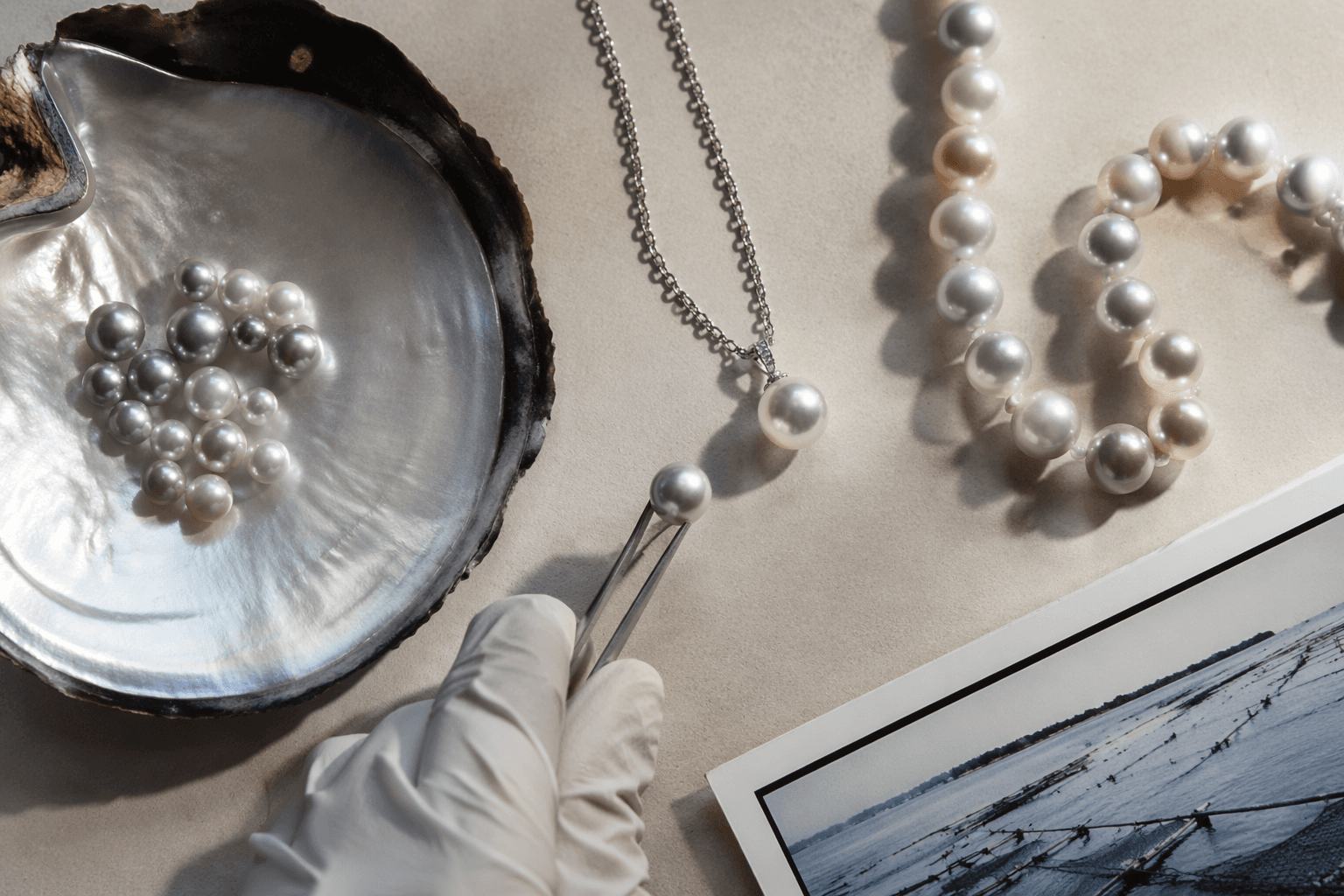
The material story helps explain why pearls remain persuasive. Mollusks create them as a defense against irritants, coating the intrusion in nacre layer by layer until a pearl forms. Cultured pearls follow the same basic principle with human assistance, and Mikimoto Kōkichi commercialized cultured pearls in 1892, turning what had been a rare natural phenomenon into an accessible luxury category. Pearl farmers in China were cultivating them centuries earlier, around 500 A.D., which gives the stone a history long enough to support both romance and industry.
That history matters because Mother’s Day jewelry works best when it can carry more than decoration. A pearl says care, patience and continuity, but it does so with a surface that reflects light softly rather than shouting for attention. Set beside an initial, a birthstone or a simple nameplate, it becomes less ceremonial and more lived-in.
What makes a “mama” piece feel modern
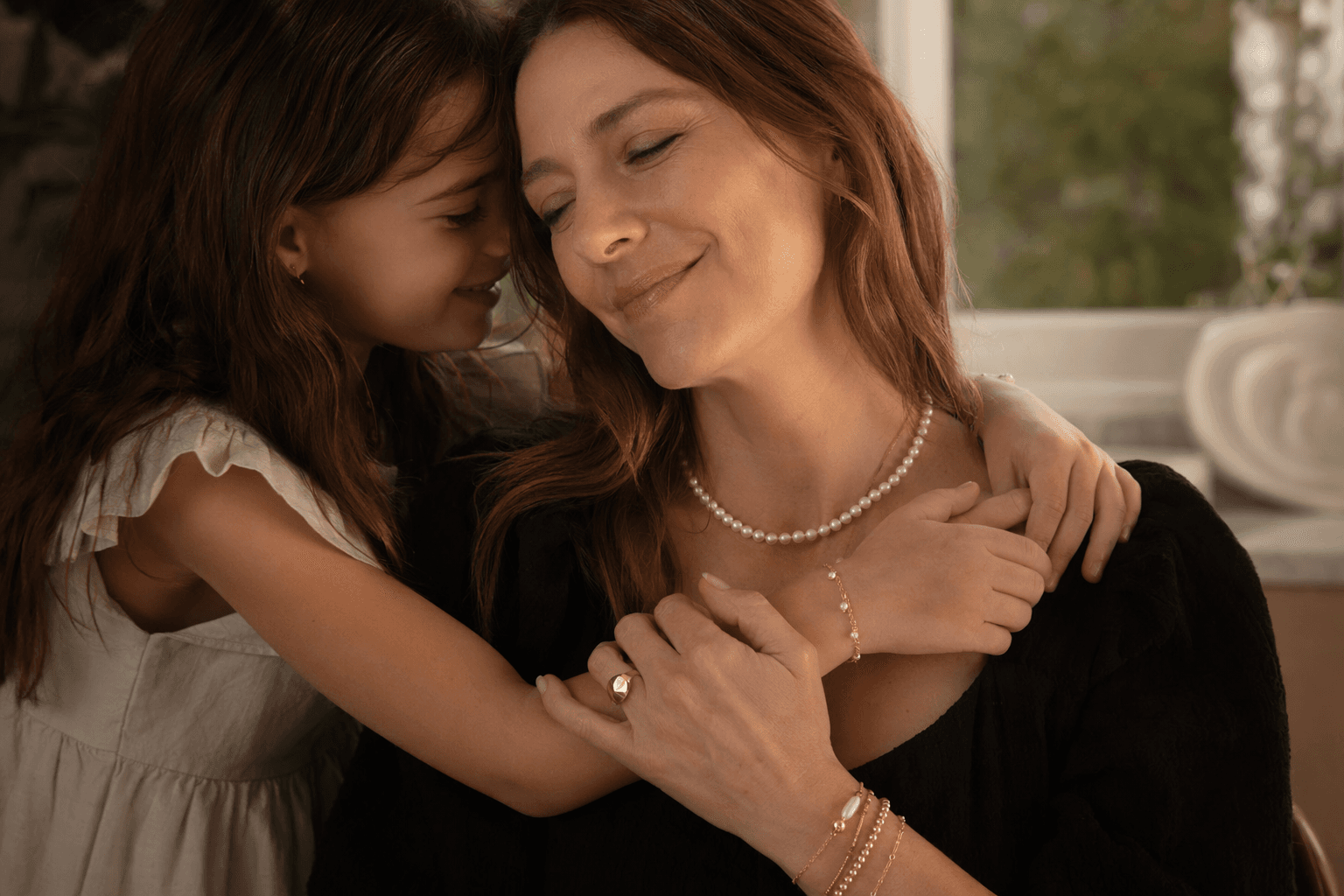
The difference between a piece that is worn after brunch and one that disappears back into a box usually comes down to scale, setting and restraint. The most successful “mama” jewelry is compact, polished and easy to layer. A slim chain, a small pendant, a single pearl or pearl accent, and lettering that is crisp rather than ornate all help the piece feel like part of a daily uniform rather than a holiday keepsake.
Settings matter here more than many shoppers realize. A bezel setting, which wraps metal around the edge of a stone, creates a cleaner and more protected profile than exposed prongs, especially when a piece is meant to sit close to the body. Prongs can be effective when the goal is lift and sparkle, but for Mother’s Day jewelry, the visual language of a bezel often feels more modern because it keeps the silhouette smooth. On pearl pieces, that polished minimalism pairs well with pendants, studs and small drop earrings that do not snag and do not overcomplicate the look.
The best versions also avoid sentimentality that feels too literal. A “mama” pendant can be elegant when the typeface is pared back, the chain is fine and the proportions are deliberate. Add a small pearl drop, a pearl station, or a single pearl set into a necklace or bracelet, and the piece gains softness without slipping into costume jewelry territory.
The design cues that earn repeat wear
Certain details consistently separate a thoughtful gift from a one-and-done souvenir.
- Keep the scale refined. Oversized lettering and heavy charms can feel dated fast; a slimmer profile reads more contemporary and layers better.
- Let one material lead. Yellow gold, white gold or sterling silver should anchor the piece, while pearls or initials provide the focal point.
- Favor low-profile construction. Pendants that lie flat, secure backs on studs and smooth clasps all make a piece easier to wear every day.
- Use pearls as punctuation, not decoration overload. A single pearl on a chain or at the end of a bar pendant often feels sharper than a cluster that tries too hard to be dressy.
- Choose meaning over literalism. Initials, names and motherly nicknames work because they feel specific, but the design should still look like jewelry first.
This is also where pearls prove more flexible than many shoppers assume. They can read polished with a white T-shirt, elegant under tailoring and sentimental without becoming precious. A birthstone may feel tied to a single month; a flower motif may skew decorative; a pearl carries a softer kind of symbolism that works across wardrobes and generations.
A gift category with real staying power
The reason pearls keep resurfacing in Mother’s Day coverage is that they satisfy both the market and the mood. They belong to a serious spending season, but they also answer the private question behind every good gift: will she actually wear it again? In pieces that combine initials, “mama” lettering or a nameplate with a pearl accent, the answer is increasingly yes.
That is the real shift in the category. Personal jewelry is no longer competing on sentiment alone. It is winning because it offers identity, craftsmanship and everyday utility in one object, and pearls have found their place inside that equation without losing the grace that made them enduring in the first place.
This article was produced by Prism’s automated news system from verified source data, official records, and press releases, then run through automated quality and moderation checks before publishing. The system is built and supervised by the people who set the standards it runs under. Read our full AI policy.
Did this article answer your question?