New Genetic Marker Could Boost Pearl Oyster Growth and Cold Resistance
A genetic marker tied to nacre growth speed and cold tolerance in Akoya pearl oysters could let farms breed climate-resilient stock before a single oyster enters the water.
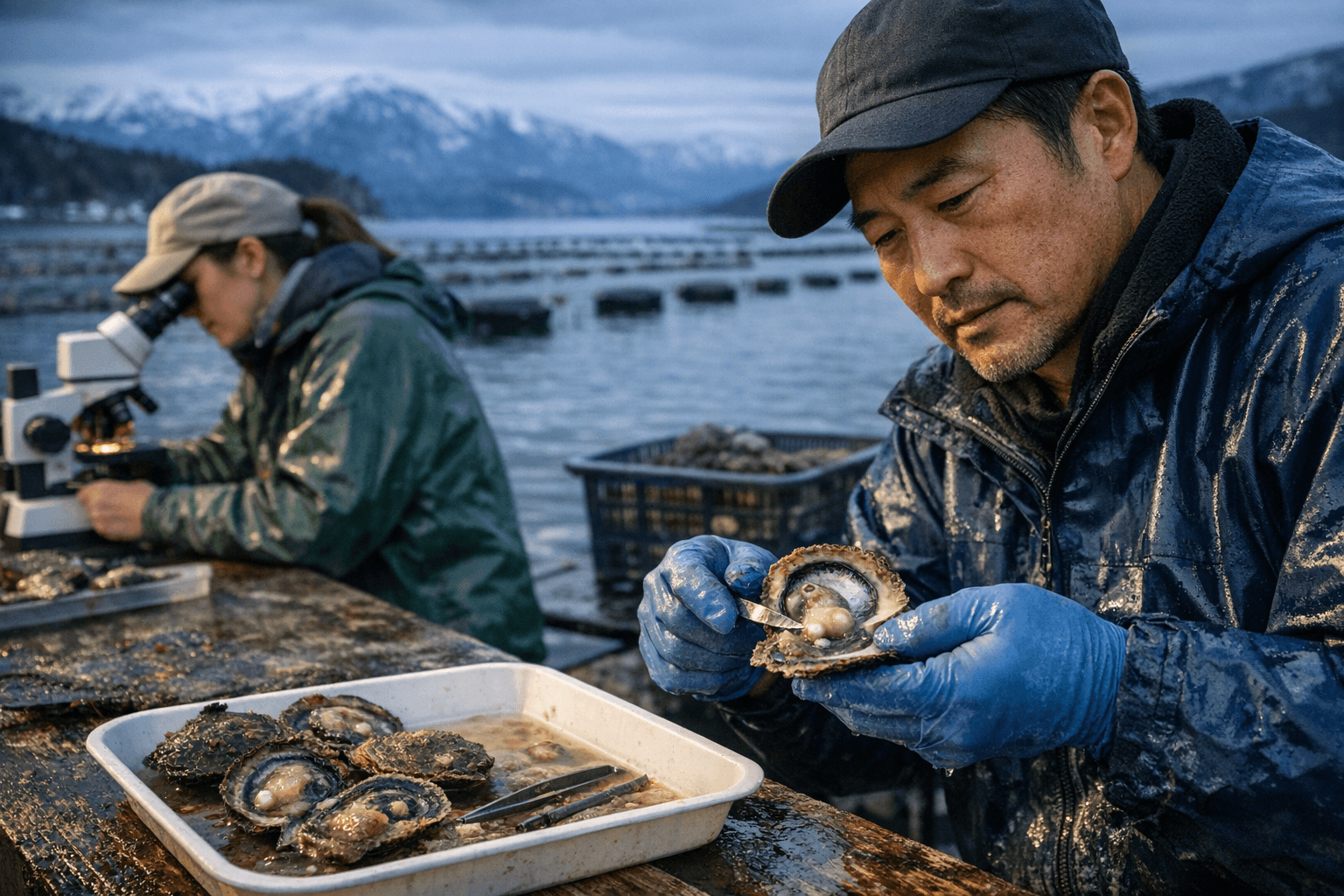
Scientists have identified a molecular marker inside one of the world's most commercially significant pearl oysters that could reshape how farms select and breed their stock, with direct implications for nacre quality, harvest timelines, and climate adaptability.
The marker, a long non-coding RNA designated LncRunt, sits co-located with a runt transcription factor in the genome of Pinctada fucata martensii, the species responsible for the fine Akoya pearls prized for their sharp luster and tightly compressed nacre layers. Published in Aquaculture Reports (Vol. 46) on March 15, 2026, the peer-reviewed study combined genetic polymorphism surveys with transcriptomic RNA-seq analyses across oysters of varying growth phenotypes, mapping how LncRunt expression corresponded to real-world performance differences.
The findings were precise. Oysters carrying higher LncRunt expression showed faster nacre deposition rates and improved tolerance to low temperatures, two variables that have long complicated pearl farming in regions where seasonal water cooling slows growth or stresses stock. Multiple distinct LncRunt genotypes were validated across the population, suggesting the marker could serve as a reliable sorting tool during seedstock selection rather than a broad-spectrum indicator.
The transcriptional networks associated with LncRunt point to pathways governing shell formation, protein translation, and stress response: essentially the biological infrastructure that determines whether an oyster deposits nacre efficiently and survives environmental pressure. That convergence of functions in a single marker is what makes LncRunt particularly compelling as a candidate for marker-assisted selection programs.
For the pearl industry, the practical stakes are considerable. Akoya farming is already a precision enterprise, with grow-out periods typically spanning two to four years and winter temperature fluctuations capable of compromising both survival rates and nacre quality. A genomic-breeding program anchored to LncRunt genotyping could allow farms to select for faster-growing, cold-tolerant stock before a single oyster enters the water, compressing timelines and reducing the climate-related losses that have intensified as ocean temperatures grow less predictable.
The researchers propose LncRunt as a candidate biomarker for exactly this purpose, positioning it within the broader genomic-breeding frameworks that aquaculture has been developing across multiple farmed species. The distinction here is specificity: this is a marker tied to the biological pathways that matter most to pearl quality, not just general viability.
Whether the leap from laboratory finding to commercial adoption follows quickly will depend on how readily pearl farms can integrate genotyping into existing seedstock programs. But the foundational work is now on record. For an industry that has spent decades refining the art of coaxing nacre from living animals, a molecular tool that makes selection legible at the genetic level represents something more than incremental progress; it represents a new vocabulary for growing better pearls.
Know something we missed? Have a correction or additional information?
Submit a Tip