Oysters Create Pearls Through a Remarkable Biological Self-Defense Process
Drill worms, not sand grains, are the true architects of most natural pearls — triggering an oyster's mantle to build layers of aragonite and conchiolin around the intruder.

Every gemstone on earth begins as a geological accident — pressure, heat, time. Pearls alone begin as an act of biological defiance. Where diamonds form in darkness a hundred miles underground, pearls form inside a living creature, built layer by layer from the mollusk's own body chemistry, in direct response to something that threatened it.
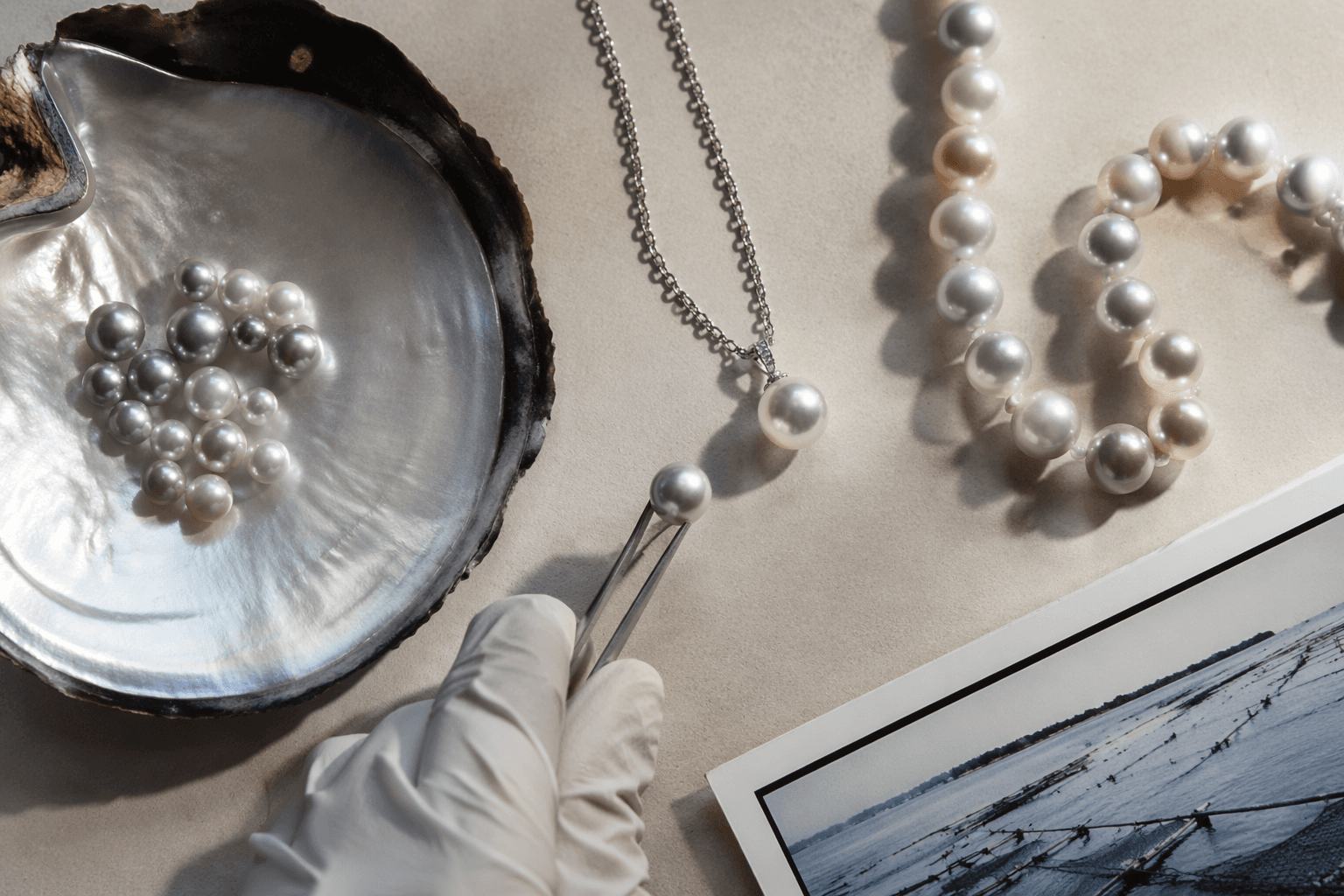
The mechanism is precise: an oyster's mantle tissue secretes nacre, a composite of two substances, aragonite (a crystalline form of calcium carbonate) and conchiolin (a structural protein), depositing them in concentric layers around a foreign body until what was once an irritant becomes a gem. That transformation is the pearl.
Popular lore assigns a grain of sand as the culprit that sets this process in motion, but the science points elsewhere. Pearl-producing oyster species live on sandy ocean and freshwater floors and are well-equipped to expel sand particles and small shell fragments before they cause any lasting disruption. The majority of natural pearls trace their origin not to sand but to parasitic intruders. Organisms like drill worms burrow directly through the oyster's hard shell, penetrating the soft tissue within and triggering the mantle to build a nacre barrier around the biological interloper. The resulting pearl is, in essence, a walled-off parasite sheathed in luminescence.
Oysters are the primary producers of pearls, doing so in both freshwater and saltwater environments, but they are not alone. Clams and mussels can also produce pearls, though this occurs far less frequently.

The distinction between natural and cultured pearls lies not in chemistry but in cause. Cultured pearls rely on the same nacre-deposition process; what differs is the trigger. Pearl harvesters intervene directly, opening the oyster shell and cutting a small slit in the mantle tissue before inserting a small irritant beneath it. Nacre secretion begins from that point forward, building the pearl in the same way nature would. In a variation known as pearl oyster grafting, harvesters insert a pearl nucleus into the oyster as a seed, around which nacre accumulates over time. In some cases, the act of cutting the mantle tissue alone is sufficient to initiate nacre secretion, with no inserted material required at all.
For collectors and buyers, this biological nuance carries real weight. A natural pearl represents an unmediated response to invasion, statistically rare and increasingly so. A cultured pearl is no less genuinely a pearl — the nacre is real, the aragonite and conchiolin are real, the oyster built it — but the chain of events that created it began with a human hand rather than a drill worm. That distinction shapes provenance, rarity, and ultimately price, which is why understanding what happens inside the shell matters as much as what ends up around the neck.
This article was produced by Prism’s automated news system from verified source data, official records, and press releases, then run through automated quality and moderation checks before publishing. The system is built and supervised by the people who set the standards it runs under. Read our full AI policy.
Did this article answer your question?