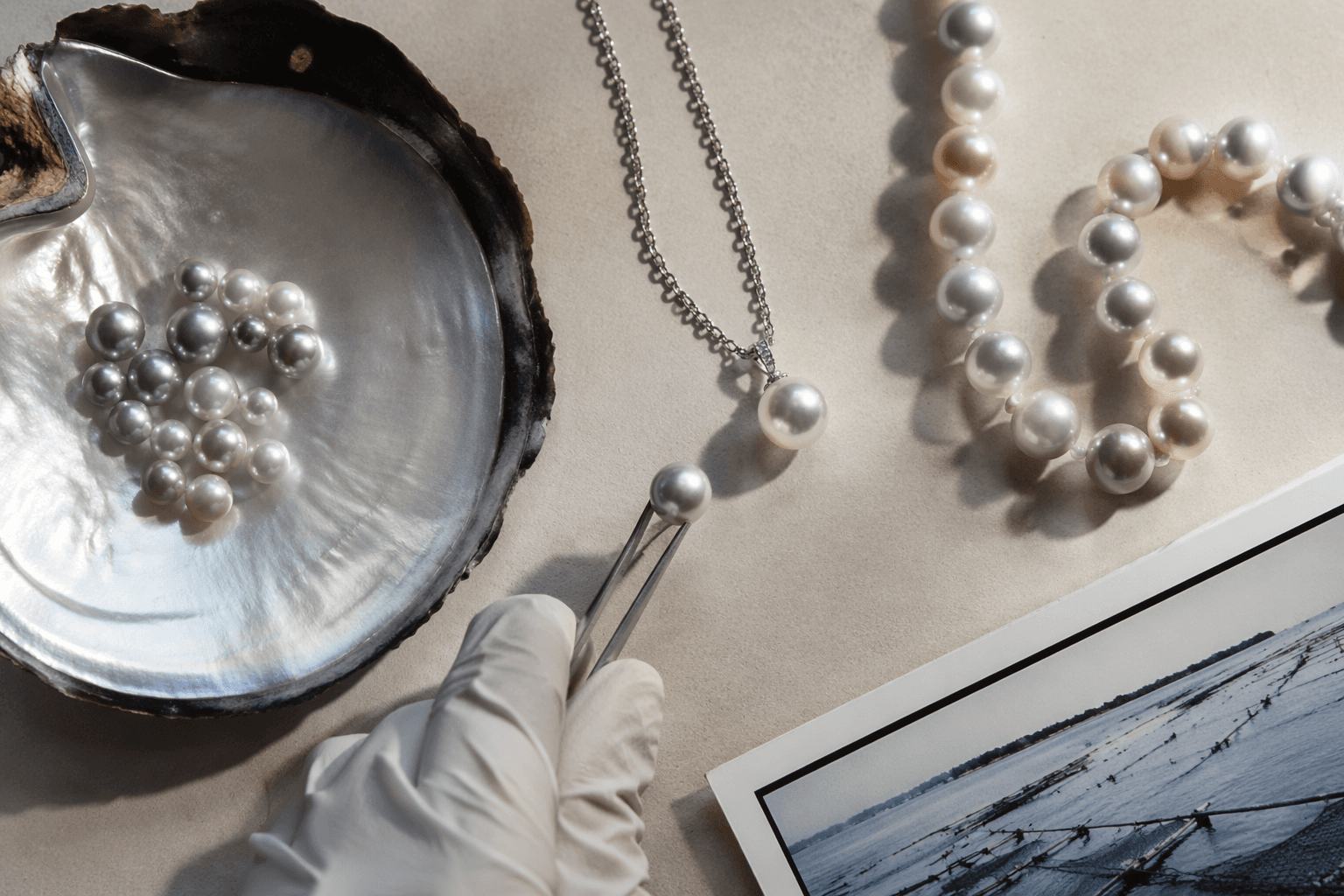
Pearl Buying Basics: Types, Grades, and What Collectors Should Know
Not all pearls are created equal — understanding luster, nacre, and provenance separates a smart buy from an expensive mistake.
Pearls occupy a singular place in the gem world: they are the only fine jewelry material created entirely by a living creature, requiring no cutting, no faceting, no intervention beyond the slow, patient work of a mollusk. That biological origin is also what makes them complex to evaluate. Unlike a diamond graded on a globally standardized scale, pearls are assessed across a constellation of factors, and knowing how to read those factors is the difference between a piece that glows for decades and one that disappoints the moment it leaves the box.
What pearls actually are
Pearls are organic gems that form inside the shells of certain mollusks, such as oysters. When an irritant enters the mollusk's soft tissue, the creature responds by secreting layers of nacre, the same iridescent substance that lines its shell, around the intruder. It is the depth, evenness, and quality of that nacre that ultimately determines how beautiful a pearl becomes. This process is why pearls have been treasured throughout history for their natural allure and symbolic and spiritual significance; they arrive in the world already finished, already luminous.
The main types you'll encounter
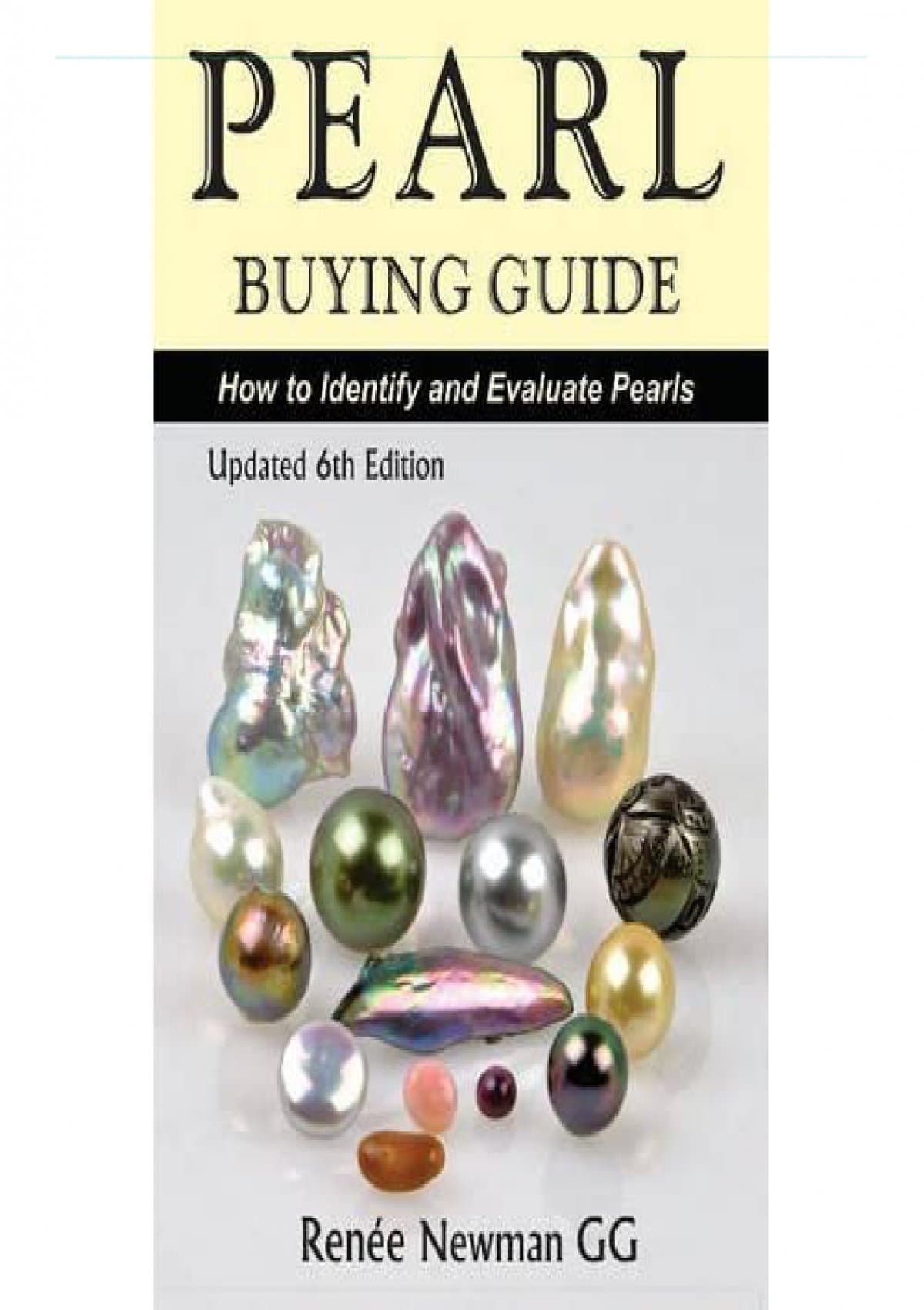
Five categories of pearl dominate the market. Understanding what distinguishes them is the first practical step toward making an informed purchase.
Freshwater pearls are cultivated primarily in China's lakes and rivers. They are typically the most accessible entry point in terms of price, produced in enormous volumes and available in a wide range of shapes and colors. Because freshwater mussels can produce multiple pearls per cultivation cycle, supply is relatively abundant.
Akoya pearls are the classic round, white or cream-colored pearls most associated with the traditional strand. Cultivated in Japan and China using the Pinctada fucata oyster, they are prized for their mirror-bright luster and tight round symmetry. A well-matched Akoya strand is still considered a benchmark of elegance.
South Sea pearls, grown in the large Pinctada maxima oyster in waters off Australia, Indonesia, and the Philippines, are among the most substantial pearls produced commercially, running anywhere from 9mm to 20mm. Their thick nacre produces a satiny, luminous glow rather than the sharp reflective brightness of an Akoya.
Tahitian pearls, cultivated in the black-lipped oyster Pinctada margaritifera across French Polynesia, are the primary source of naturally dark pearls. Their color range spans graphite, peacock green, aubergine, and everything between, and fine specimens carry a metallic overtone that no other pearl type replicates.
Natural pearls, formed entirely without human intervention, represent a fifth and increasingly rare category. They are found rather than farmed, and their supply on the open market is, by any measure, extremely limited.
How grading works
Pearls are graded based on their overall quality, considering factors such as luster, size, surface blemishes, color, and shape. No single universal grading scale governs the entire industry the way the GIA's 4Cs govern diamonds, but the American Gem Society identifies the same core criteria: type, size, luster, surface quality, shape (from round to baroque), color, and, for strands, matching and strand considerations.
Luster is the single most important quality indicator. It describes how light reflects from the pearl's surface and emanates from within. A high-luster pearl appears almost wet; you can see your own reflection in it. Low-luster pearls look chalky or dull, and no amount of setting or styling compensates for that flatness.
Surface quality refers to the presence and distribution of blemishes: pits, spots, wrinkles, and other irregularities on the pearl's outer nacre. Perfectly clean surfaces are rare and command premium prices. Minor blemishes are common and acceptable in everyday jewelry; heavy blemishing significantly reduces both beauty and value.
Shape matters aesthetically and commercially. Perfectly round pearls are the rarest and most expensive. Off-round, oval, button, and drop shapes occupy the middle of the market. Baroque pearls, those with irregular, freeform shapes, are increasingly popular in contemporary fine jewelry precisely because of their organic asymmetry, and strong baroque specimens with excellent luster can be very desirable.
Size is measured in millimeters. A 7mm Akoya and a 12mm South Sea pearl may both be described as "high quality," but their prices will differ substantially simply because larger pearls take longer to grow and are less commonly produced.

Color is largely a matter of preference, though certain body colors and overtones carry market premiums. Rose overtones in Akoya pearls and peacock overtones in Tahitians, for instance, are widely sought after.
For strands, matching is its own discipline. The degree to which individual pearls in a necklace align in size, shape, color, and luster across the entire length is a significant factor in both craftsmanship and value.
Pearls at auction: what collectors need to know
The auction market for pearls operates by its own logic, and understanding it matters enormously if you are buying at that level. According to Caroline Ervin Robinson, writing for The Culture of Pearls, "quality and rarity are the most important factors that influence the value of pearls and pearl jewelry at auction."
Natural saltwater pearls are the most coveted type at auction. "Natural pearls fetch the highest prices of all types of pearls at auction due to the rarity and the fact that there is very limited supply that comes to the market," Robinson notes. The most stratospherically priced lots are those with documented histories: "Historically important natural pearls, such as those that have a traceable provenance belonging to nobility are particularly sought after by collectors."
Auction house estimates, Robinson cautions, are not price ceilings. They are based on historical selling data for comparable pieces, and "estimates are often conservative." For a truly exceptional pearl, "the final price will often soar above the high estimate." Her practical advice for bidders is direct: know your budget before you walk in, set a firm limit, and resist the momentum of the room. "On auction day, they should try not to get carried away during the pressure of the auction but also remember to have fun when bidding."
Cultured pearls are not absent from serious auction rooms. Robinson is specific about what makes them competitive: "Cultured pearls of a large millimeter size with symmetrical proportions and spectacular luster with even, blemish-free surfaces and quality nacre are also highly coveted at auction." The bar is simply higher than it is for retail.
Certification and verification
When an auction house represents pearls as natural saltwater pearls, documentation is non-negotiable. Robinson is unambiguous: "One should always look for an accompanying certificate from a reputable gemological laboratory when an auction house is claiming that the pearls they are selling are natural saltwater pearls." Auction houses may also include certificates for South Sea or Tahitian pearls, which is worth noting when reviewing any lot. Without independent laboratory verification, a buyer has only the seller's word for one of the most critical value distinctions in the entire pearl market.
Caring for pearls properly
Pearls are delicate and sensitive to chemicals, so exposure to perfume, hairspray, cleaning agents, and even perspiration over time can degrade their luster and surface. The care routine is simple but consistent: wipe pearls gently with a soft cloth after each wear to remove oils and residue, and store them separately, ideally in a soft cloth pouch or fabric-lined compartment, away from harder gemstones and metal clasps that can scratch the nacre. For any significant cleaning or maintenance beyond routine wiping, a professional jeweler with specific experience handling pearls is the right resource.
Where to start
For a first purchase, luster is the non-negotiable quality to prioritize above everything else. A modestly sized pearl with exceptional luster will always outperform a larger, duller stone. Shape and color are genuinely personal choices, and the baroque revival in contemporary jewelry has made it easier than ever to find something that feels current rather than inherited.
For anyone considering the collector or auction market, the calculus shifts toward rarity and provenance. A natural pearl with a documented history is not just a beautiful object; it is a piece of living history that the market has consistently rewarded. Approach that level of purchase with the same rigor you would bring to any significant investment: verify, document, and buy only what you can afford to hold.
This article was produced by Prism’s automated news system from verified source data, official records, and press releases, then run through automated quality and moderation checks before publishing. The system is built and supervised by the people who set the standards it runs under. Read our full AI policy.
Did this article answer your question?