Pearls Offer Value as Gold Prices Climb — Market Observations from Zhuji Sourcing Trip
Gold's climb past $4,400 an ounce is reshaping jewelry budgets; a sourcing visit to Zhuji, origin of 95% of global freshwater pearls, reveals who's winning.
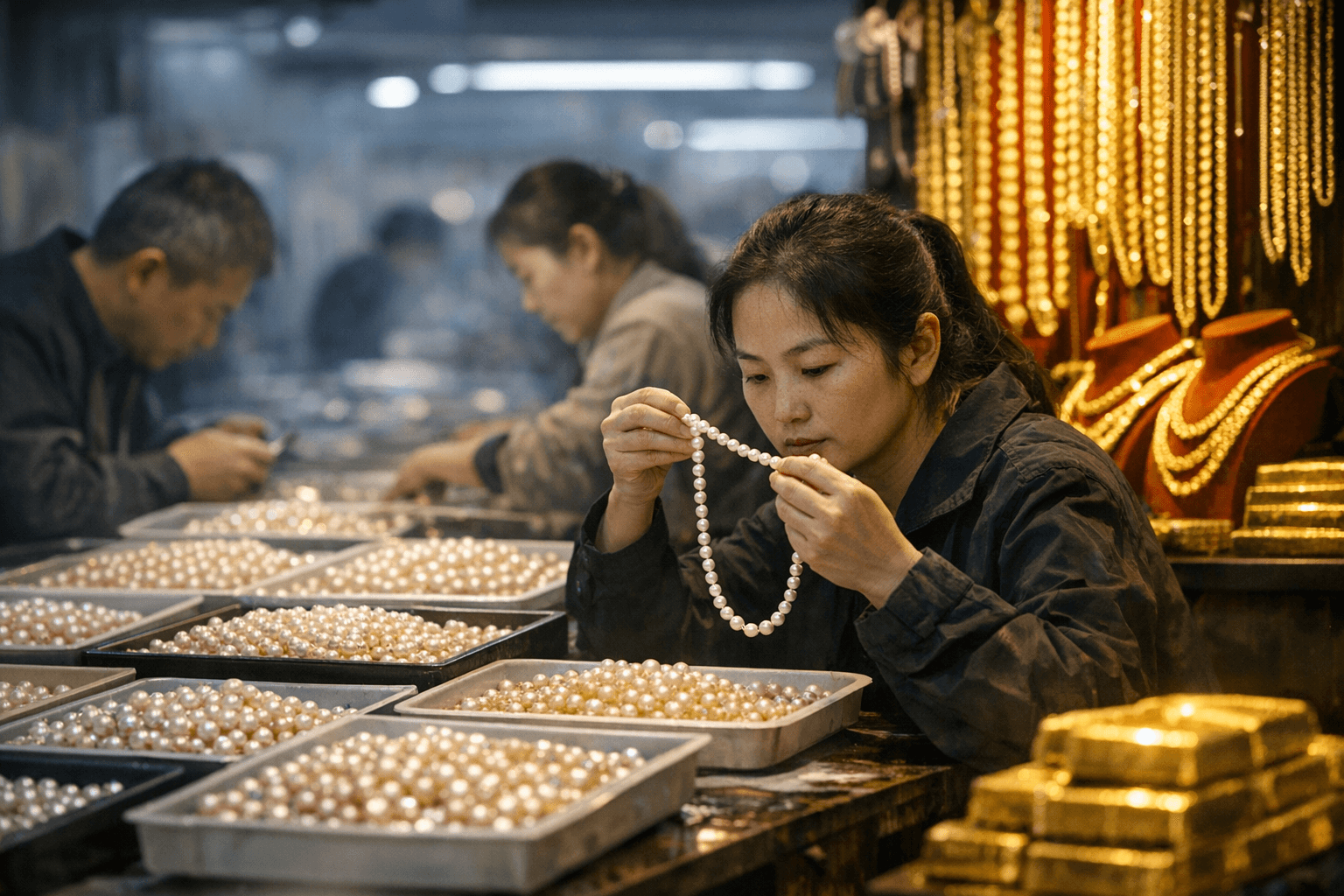
Gold touched $5,591 an ounce on January 29 of this year, a record that has since settled but not retreated, trading near $4,427 as of late March and sitting roughly $1,400 higher than it did twelve months ago. At that price level, the weight of metal in a simple chain matters in ways it simply did not before. A sourcing trip through Zhuji Pearl City in Zhejiang province, the origin point for approximately 95 percent of global freshwater pearl production, found an industry already adjusting to this reality.
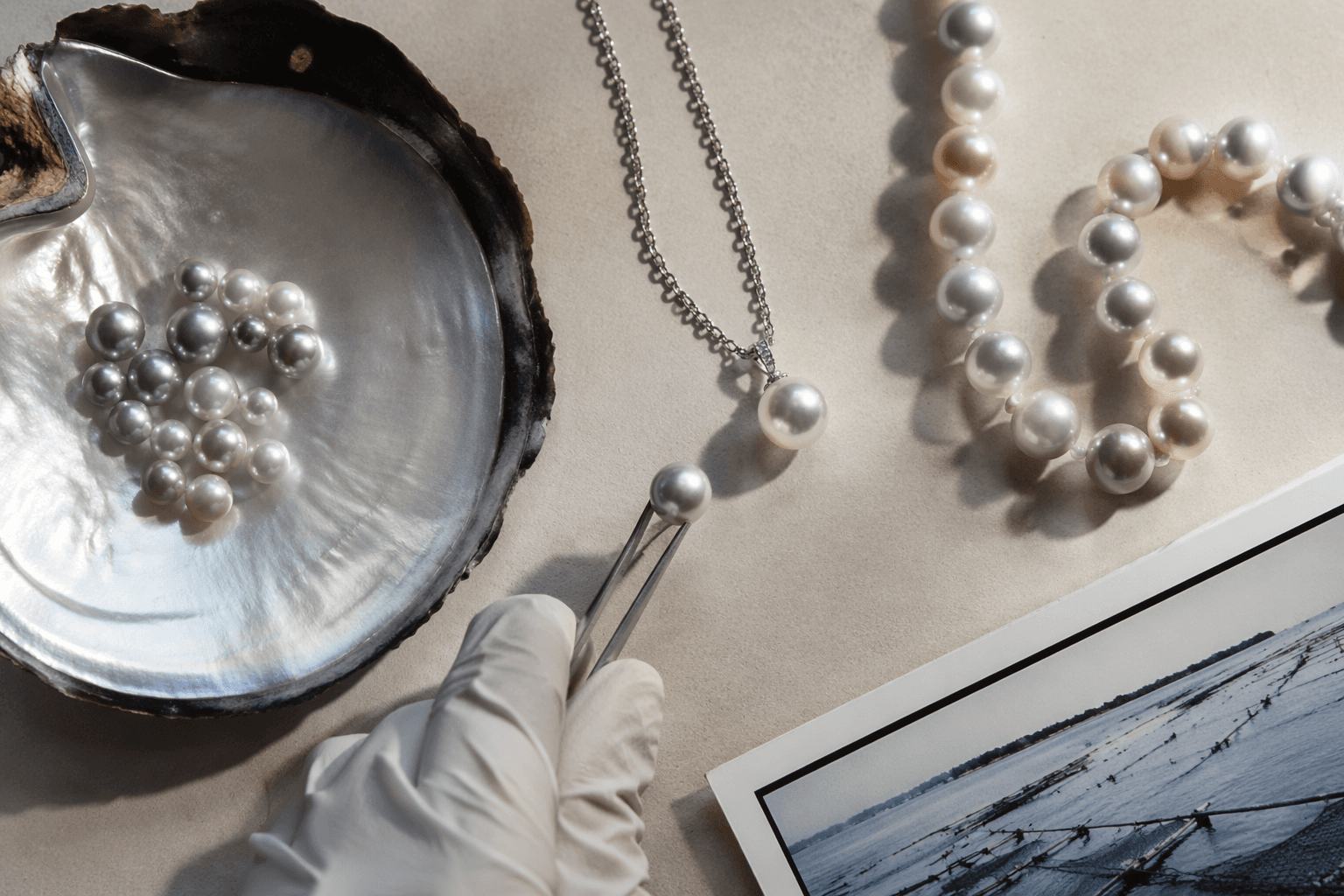
Three pearl categories were showing the clearest traction in finished jewelry this season. High-luster matched-round freshwater strands in the 7-to-9-millimeter range remain the workhorse of the Zhuji market, the category most familiar to Western buyers and the easiest entry point for retailers reconfiguring their metal-heavy inventory. Baroque freshwater pearls, prized for their organic movement and depth of nacre, are commanding more floor space; their irregular forms make them well-suited to the mixed-metal, sculptural settings that Zhuji sellers are actively pushing as a design direction. Keshi pearls, the all-nacre byproducts of the culturing process, represent the most design-forward option visible on the trip, turning up in finished pieces alongside vermeil and oxidized silver findings rather than the solid gold construction that defined earlier iterations of pearl jewelry.
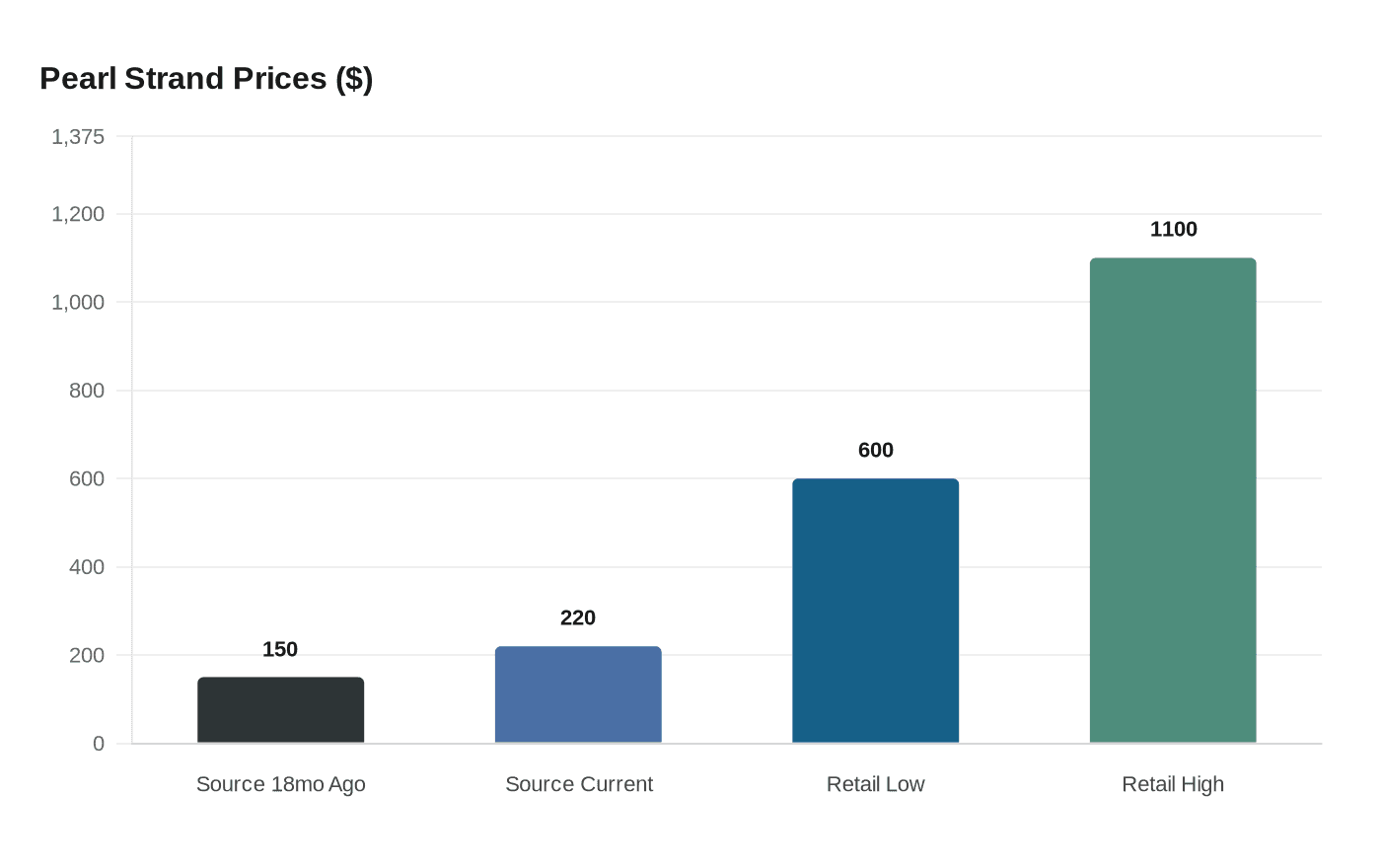
Across all three categories, factory-level prices have risen. Top-grade matched-round freshwater strands climbed from roughly $150 to $220 per strand at the source over the past 18 months, a move driven in part by tightened environmental regulations on Zhuji-area farms that compressed output. At retail, equivalent finished strands now run between $600 and $1,100. That increase is real, but the comparison that matters is with gold: at roughly $145 per gram for the metal alone, building a necklace with equivalent visual weight from 18-karat gold costs multiples more before a single design or labor charge is added. The sellers working Zhuji's trade floors this season understood that math and were framing their inventory accordingly.
The styling logic that emerged from the trip is simple enough to replicate. A single statement strand, whether a 36-inch baroque rope with the characteristic peacock iridescence that the best Zhuji goods carry, or a graduated keshi strand that catches light differently at every angle, anchored by one small 14-karat gold clasp, achieves the visual authority of serious jewelry without the metal premium. The Hong Kong sourcing channels visited alongside Zhuji reinforced the message: buyers there were gravitating toward freshwater pearls with verifiable farm provenance and pairing them with vermeil or mixed-metal findings, minimizing gold weight without sacrificing finish quality.
The push toward traceability at Zhuji marks something worth watching beyond the current price cycle. Both NAJ and Raw Pearls, which have covered this market closely, noted sellers investing in finished-jewelry innovation, including modern clasps and mixed-metal settings, as a deliberate strategy to reach buyers who came of age skeptical of both the pearl's formality and the opacity of conventional gold supply chains. Addressing both objections at the source strengthens the category's long-term positioning considerably.
For now, the arithmetic is simply persuasive. A gram of gold at current prices buys what it always has: a gram of gold. A strand of Zhuji baroque pearls, at a fraction of that cost, buys considerably more in the way of presence.
This article was produced by Prism’s automated news system from verified source data, official records, and press releases, then run through automated quality and moderation checks before publishing. The system is built and supervised by the people who set the standards it runs under. Read our full AI policy.
Did this article answer your question?