Princess Charlene Wears Pearl Studs and Diamonds to Welcome Pope Leo XIV
Pearl studs and a Repossi diamond ring: how Princess Charlene's two-piece jewelry edit for the papal visit delivered Monaco's most deliberate style message.
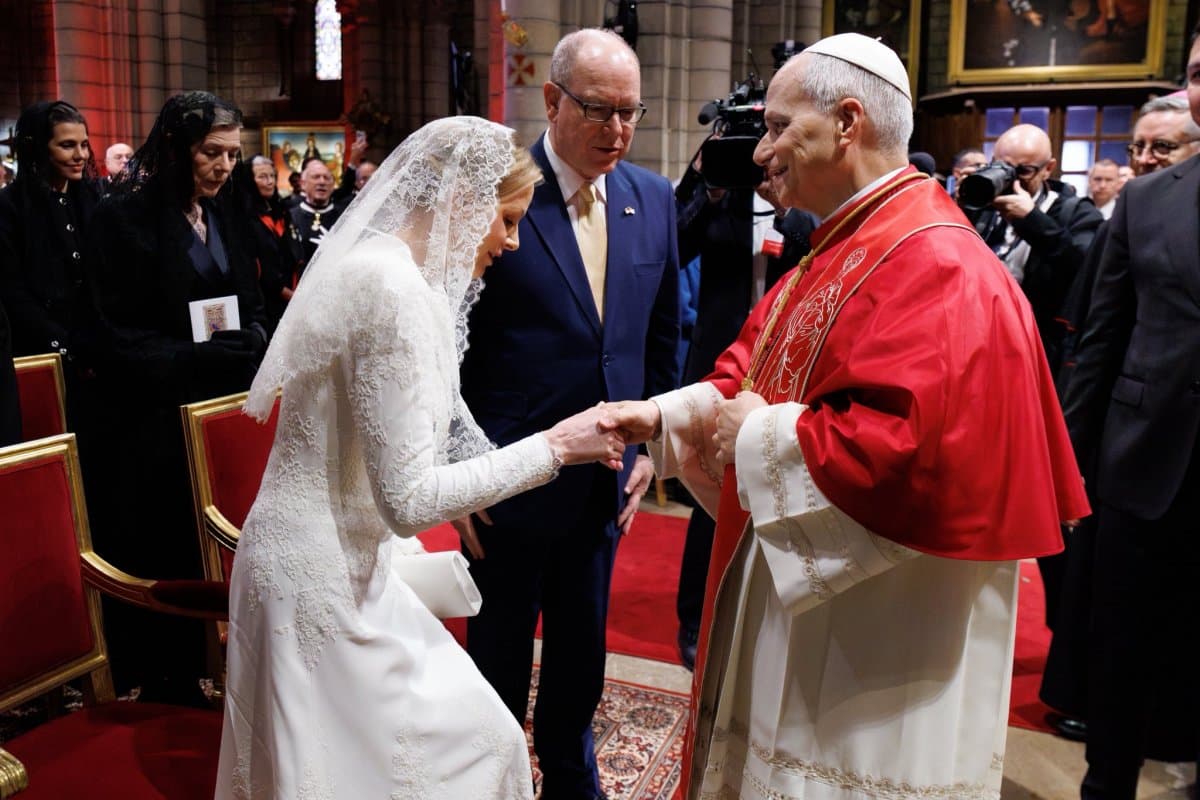
Pearl studs carry a quiet authority that even a three-carat diamond cannot replicate in certain rooms. When Princess Charlene of Monaco received Pope Leo XIV at the Prince's Palace on March 28, she demonstrated exactly why. Dressed in a long-sleeved Elie Saab gown featuring floral lace embroidery, a white mantilla, and white stilettos, Charlene wore just two pieces of jewelry: small pearl stud earrings and her Repossi engagement ring. For a nine-hour ceremony on one of the world's most scrutinized diplomatic stages, that was precisely enough.
Charlene belongs to the rare group of Catholic royal women granted the privilege du blanc, a Vatican protocol permitting them to wear white in the pope's presence. The color carries significant devotional weight; it belongs, by tradition, to the pontiff. Charlene has understood this code since a private audience with Pope Benedict XVI in January 2013 and again for a 2016 meeting with Pope Francis. Against an all-white ensemble, the jewelry equation effectively writes itself: nothing that introduces color, nothing that competes with the occasion's gravity. Pearls are the only gem that remain entirely within that register.
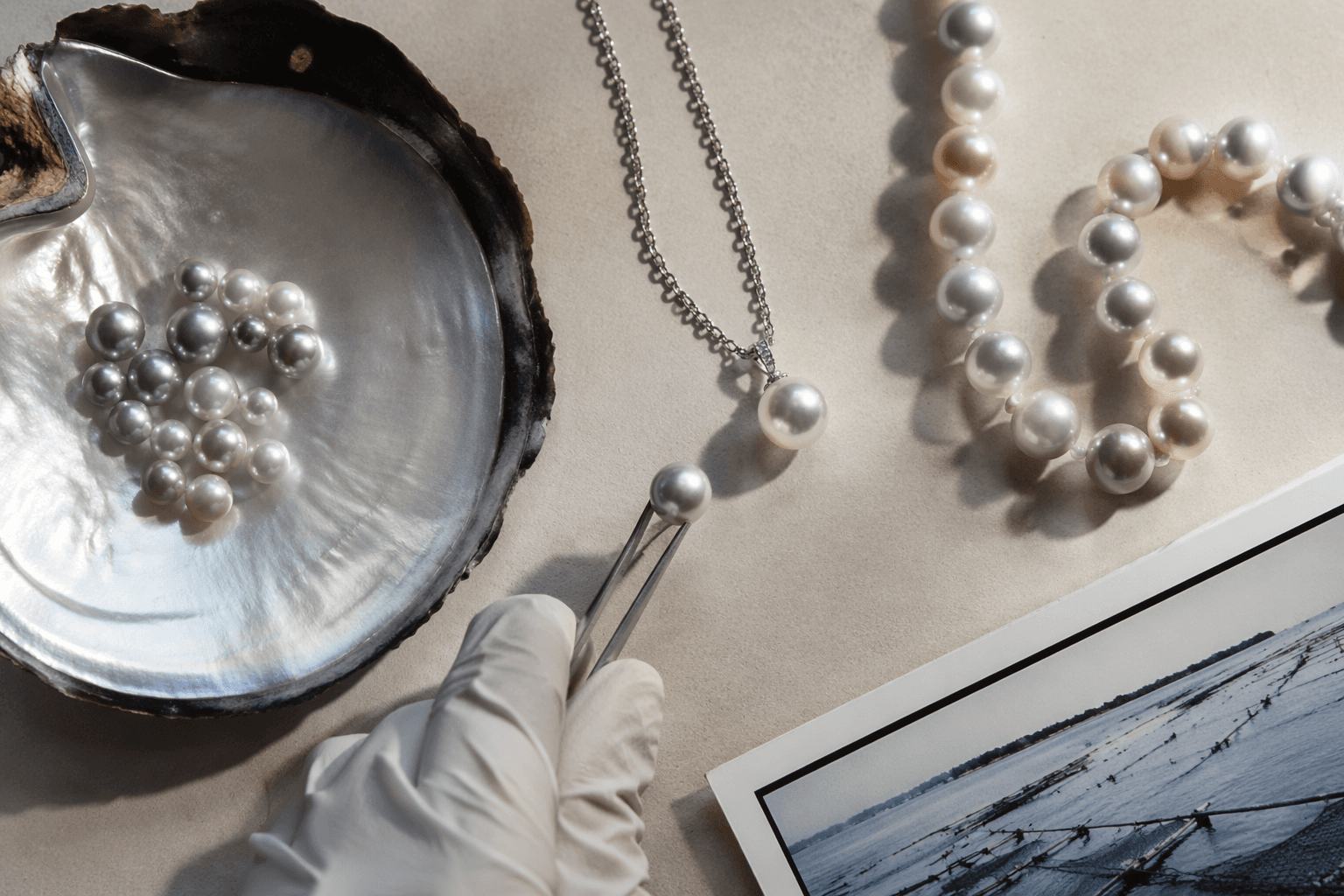
The studs Charlene wore read, from official photographs, as round pearls in the 7-8mm range. That diameter sits at the classic sweet spot for formal stud earrings: visible from several feet away, but never assertive. Their cream-to-white tone and apparent mirror-bright surface point strongly toward Akoya, cultivated in Japanese coastal waters, which produces the near-perfect spherical specimens with sharp reflective luster that have anchored formal European court dress for over a century. Freshwater pearl quality has improved considerably, but the roundness and surface sheen visible in the Palace photographs align with Akoya's characteristic finish. A matched pair of 7-8mm AAA-grade Akoya studs set in 18-karat white gold typically ranges from $400 to $2,200 depending on nacre depth and luster grading.
The engagement ring is far easier to document. Made by Parisian house Repossi, the ring centers a three-carat pear-cut diamond flanked by smaller accent stones in triangular configurations, all set in 18-karat white gold and estimated at $65,000. Pear cuts are among the most architecturally assertive of diamond shapes, their elongated point creating visual direction even against heavily embroidered fabric. In white gold rather than yellow, the setting stays cool and colorless, reading as a continuation of the ivory lace rather than a contrast to it. Together, the pearl studs and the ring accomplish something specific: one quiet note at the ear, one architectural note at the hand, nothing else. The formula reads as respect, not minimalism for its own sake.
Princess Gabriella, eleven years old, wore matching white lace beside her mother and kept her own accessories equally spare. The twinning was noted widely, but the jewelry logic behind it was the same: in the context of a papal visit, the dress is the statement; the gems are the punctuation.
Recreating the Monaco look does not require a Repossi commission. The visual logic rests on three specifications: round or near-round pearls in the 7-9mm range, a cool white or rhodium-finished metal tone, and a single diamond accent rather than layered pieces.

At the fine level, Mikimoto's Akoya pearl studs in 7-7.5mm set in 18-karat white gold deliver precisely the surface quality and roundness Charlene's look required. A pear-cut diamond ring in a four-prong satin-finish 18-karat white gold setting, with a center stone in the 0.75-1.5 carat range, completes the pairing at a total investment between $1,500 and $4,500. The critical specification is luster grade on the pearl: look for a sharp, reflective surface and nacre depth of at least 0.4mm, both of which are verifiable through GIA pearl grading reports now increasingly available from specialist retailers.
At the demi-fine level, 7-8mm AAA-grade Akoya studs in sterling silver with rhodium plating are available through pearl specialists and established online fine jewelers for $180 to $400. Rhodium plating here is non-negotiable: yellow-gold settings shift the color story away from the cool ceremonial palette entirely. For the ring, a lab-grown pear-cut diamond in a white-gold-fill or sterling-silver bezel runs $120 to $350 and preserves the pointed silhouette of the Repossi original. Total investment: well under $750.
For an heirloom restyle, the opportunity is often already sitting in a jewelry box. A single-strand freshwater pearl necklace of 7-8mm rounds, the kind inherited from a grandmother's 16-inch opera strand, can be disassembled and reset as studs for $80 to $150 at most independent goldsmiths. Cultivated freshwater pearl nacre has closed considerably on Akoya quality over the past decade; in a stud setting where the pearl faces the viewer directly rather than draping against fabric, the visual difference at conversational distance is minimal. Paired with a vintage pear-cut diamond ring sourced through a reputable estate dealer, the total cost of recreating Charlene's exact optical equation can stay under $400.
The practical rule is simple: keep the metal cool, keep the pearl round at 7mm or above, and let the hand carry one stone. Monaco's papal style moment worked because it understood that on some occasions, the most powerful jewelry choice is the one that asks nothing of the room.
This article was produced by Prism’s automated news system from verified source data, official records, and press releases, then run through automated quality and moderation checks before publishing. The system is built and supervised by the people who set the standards it runs under. Read our full AI policy.
Did this article answer your question?