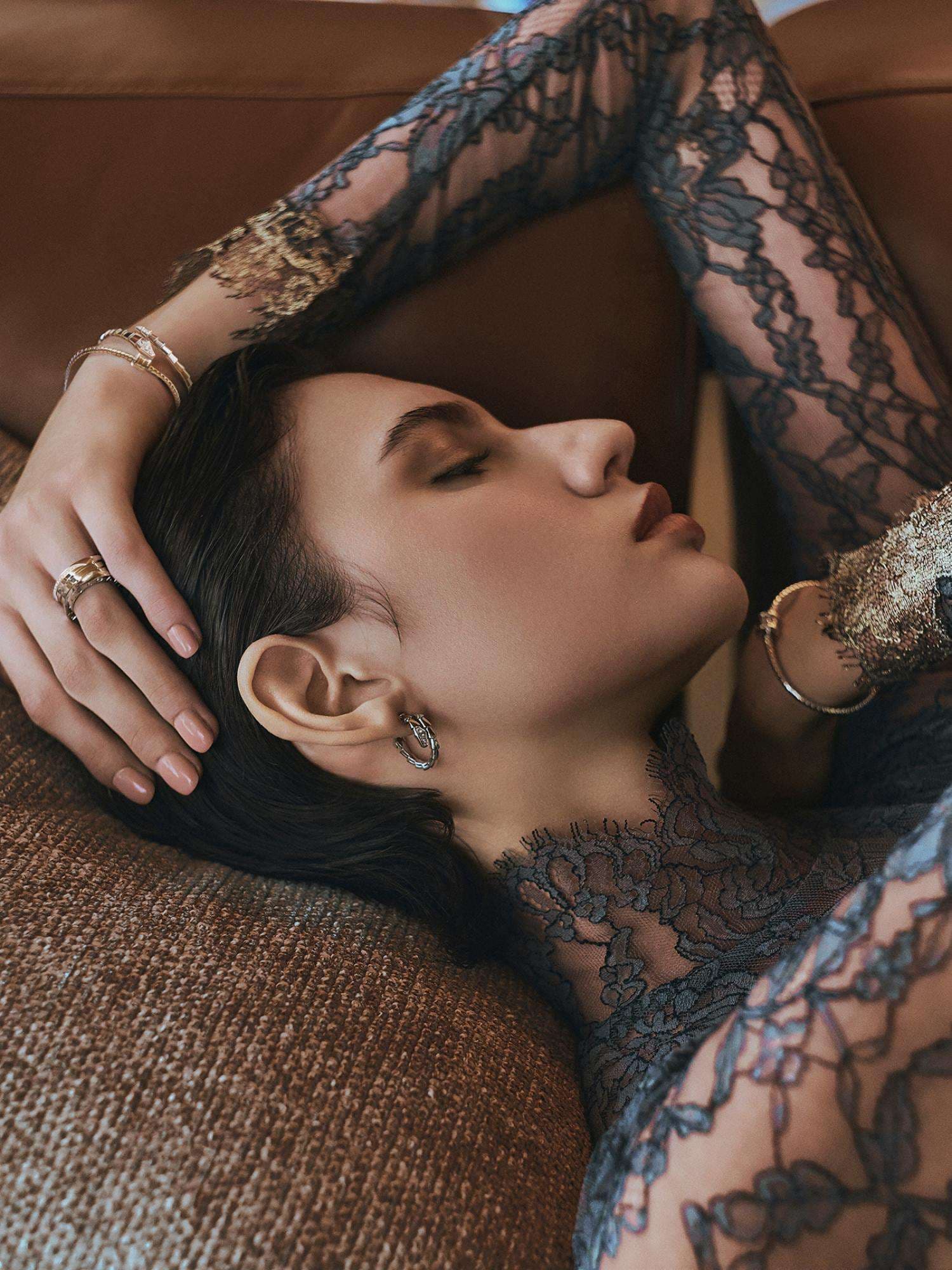
Spring 2026 floral jewelry blooms with mother-of-pearl accents
Mother-of-pearl gives spring’s flower trend a softer, smarter entry point: polished enough for evening, gentler on the budget than diamonds, and easier to live with than louder floral statements.
A flower trend with more than one texture
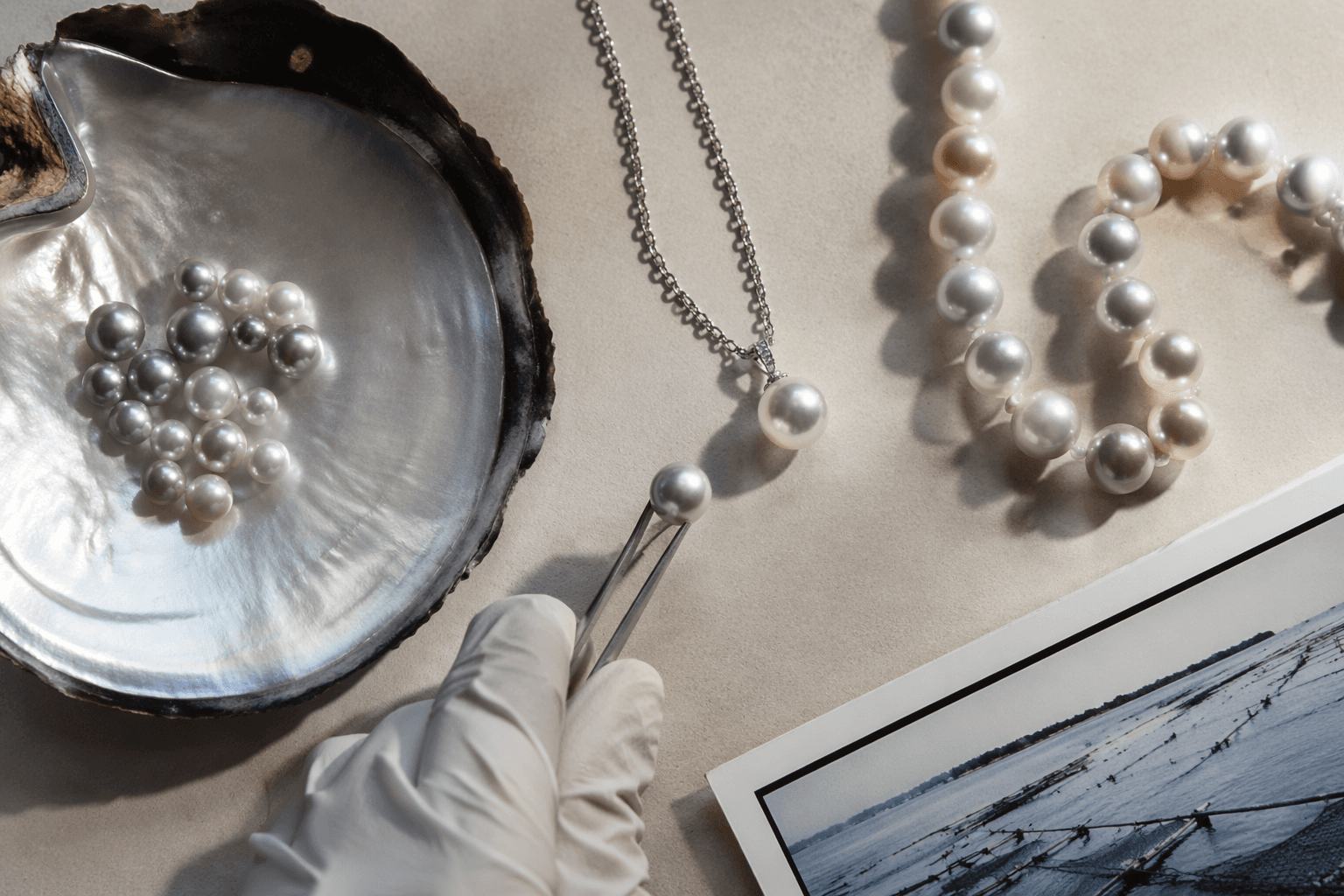
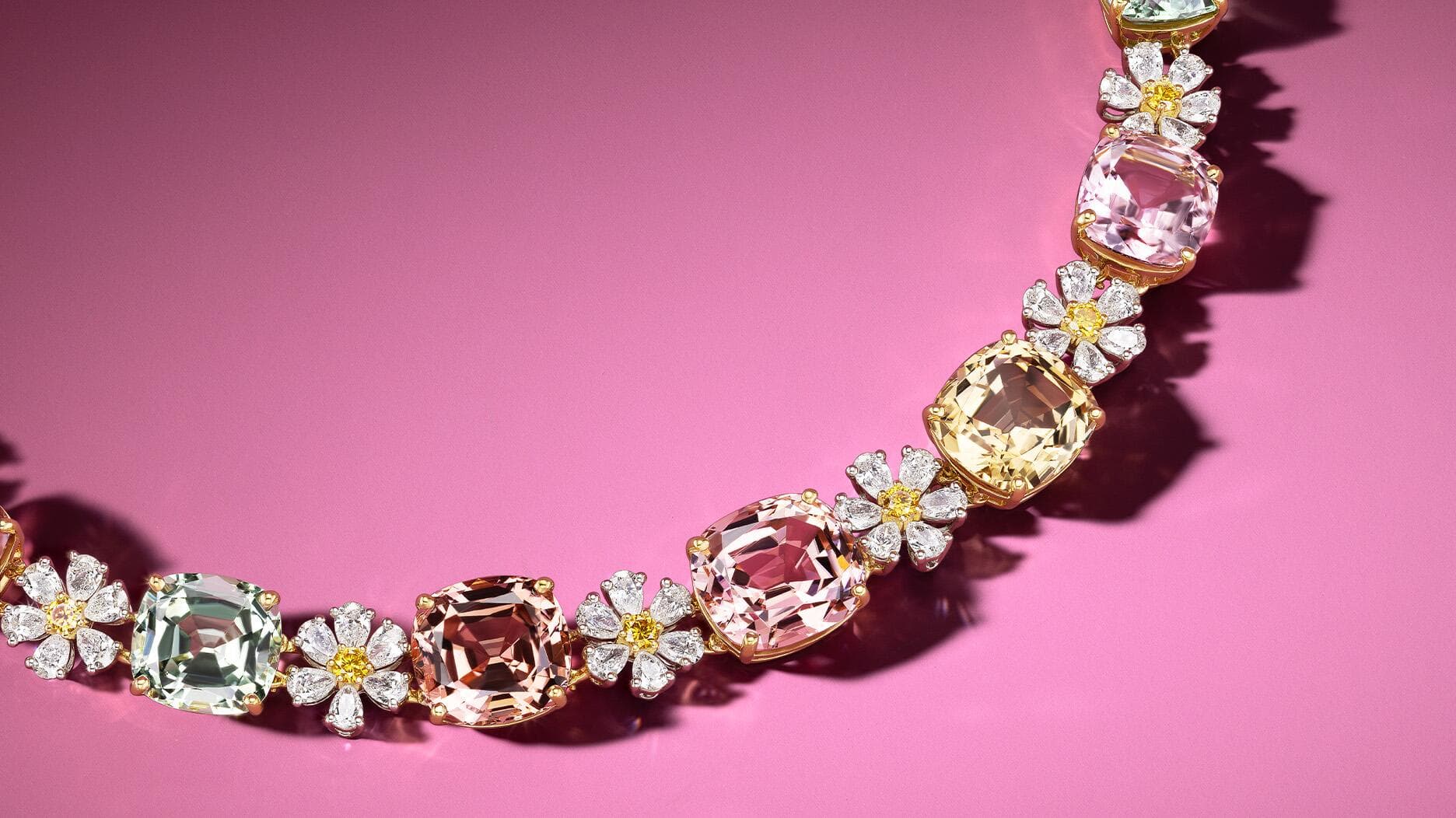
Spring 2026’s floral jewelry is not settling for one look. National Jeweler’s April 17 roundup pulls from many launches and shows blooms rendered in gold, diamonds, titanium, suede, horn, and hand-painted porcelain, which tells you this season is about texture as much as literal petals. In that mix, mother-of-pearl feels especially current because it brings glow without shouting, a quality that also matches the season’s wider pearl mood, from Paris Fashion Week’s “not-your-grandma’s pearls” to Prism News’s note that mother-of-pearl’s soft iridescence was quietly taking over spring jewelry.
That matters for anyone trying to buy the trend rather than just admire it. Floral jewelry can drift into costume fast, but nacre keeps the shape of a blossom while softening the effect, so the piece reads as jewelry first and novelty second. In practical terms, that makes mother-of-pearl one of the smartest ways to wear spring’s flower story in a form that can still move through real life.
Why mother-of-pearl feels so wearable
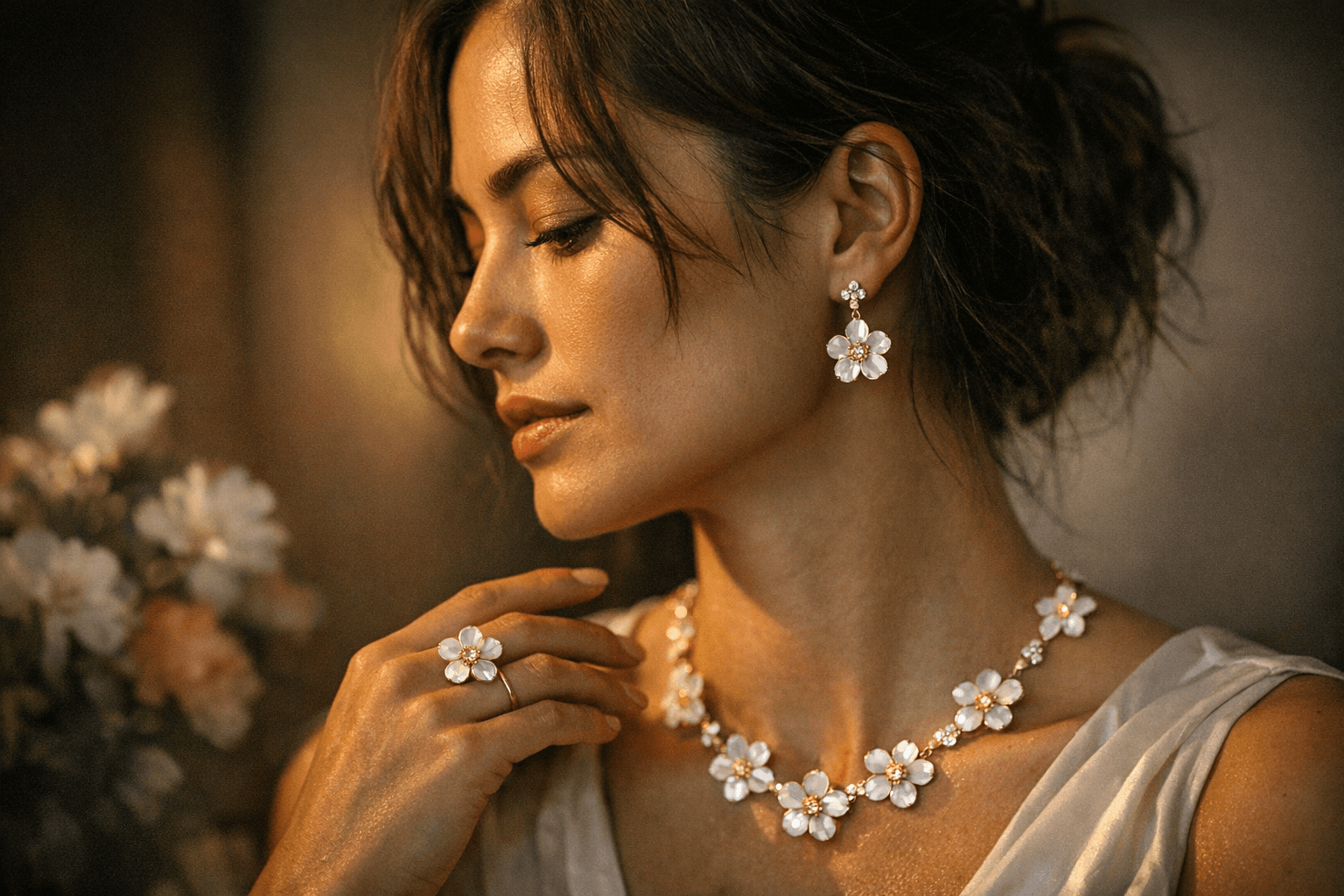
Mother-of-pearl has a naturally luminous surface that behaves like light on a petal, which is why it looks so at home in floral settings. Monica Rich Kosann’s sterling silver Flower studs make that clear: blue topaz boulets backed with mother-of-pearl, priced at $1,275. The design gives you color, sheen, and a clear flower motif without the density of a fully gem-set piece.
The same brand also sells Mother of Pearl Flower Stud Earrings in 18K gold with pavé white diamonds, and that is the important clue. Mother-of-pearl does not have to read casual or flat, and it does not have to stay in silver. Set in gold and edged with diamonds, it moves from daytime ease into evening polish without losing the soft, romantic character that makes it appealing in the first place.
How it compares with enamel, gemstones, and diamonds
If the goal is the most graphic flower, enamel still has the advantage in color. Enamel can give petals a painted, almost illustrated look, while hand-painted porcelain pushes that effect even further in the broader spring mix. The tradeoff is durability: enamel and porcelain can chip, so they often reward careful wear and storage more than constant handling.
Gemstone florals offer a more obviously precious look, especially when colored stones are used to define each petal. They can also be heavier on the budget, and the price climbs quickly once a flower becomes diamond-led. That is where mother-of-pearl stands out as the most versatile middle ground, especially when the same seasonal roundup includes Oscar Heyman’s $400,000 Flower necklace. Against that kind of high jewelry spectacle, nacre reads as the accessible way into the trend, not the compromise.
Diamonds remain the most durable and the easiest to justify for long-term wear if you want one floral jewel to work hard for years. They are also the least understated, which can be exactly the point in a statement necklace or cocktail ring. Mother-of-pearl sits between those poles: softer than diamond, less fragile-looking than enamel, and far more relaxed than a full gemstone bouquet.
What you are really paying for
Price in floral jewelry is not just about size. It is about material, setting, and how much of the flower is doing the visual work. Monica Rich Kosann’s sterling silver Flower studs at $1,275 show how mother-of-pearl can deliver a refined look without reaching into the territory of the headline-grabbing Oscar Heyman necklace, while the brand’s 18K gold and pavé diamond version shows how the same idea can be recast at a more luxurious level.
The fact that the Mother of Pearl collection also includes flower, heart, sun, compass, and locket designs says something important about value too. This is not a one-off seasonal stunt. It is part of a broader design language, which usually means the material is doing real work inside the brand, not merely filling a trend brief. That is the kind of detail worth noticing before you pay for a flower motif that may have a very short shelf life.
How to wear it from day to night
Mother-of-pearl floral jewelry is at its best when you want one piece to bridge outfits. A stud like Monica Rich Kosann’s blue topaz and mother-of-pearl Flower earrings can sit comfortably with a shirt, a knit, or a blazer in the daytime, then still hold its own with silk or a tailored dress at night. The softness of nacre keeps it from feeling overbuilt, even when diamonds are added around the edges.
That versatility is where it beats more overtly decorative florals. Enamel can be wonderful for color, but it often reads younger or more decorative. Heavy gemstone flowers can feel occasion-only. Mother-of-pearl, especially in a clean floral silhouette, works when you want the trend to look intentional rather than themed.
Who this look suits, and who should skip it
Mother-of-pearl floral jewelry suits anyone who likes jewelry with glow, not glare. It is especially strong for someone who wants spring’s flower trend in a form that feels polished enough for work, lunches, and dinner, and who prefers a softer surface to a fully paved one. If you already wear pearls, or if you like jewelry that leans romantic and coastal rather than sharp and glittering, this is the most natural entry point.
Skip it if you want a piece that can take rough treatment or if you want the strongest possible color impact. Diamonds will tolerate more wear, gemstone florals will bring more saturation, and enamel may give you the boldest graphic hit, but each asks for a different kind of commitment. Mother-of-pearl is the smartest buy when the goal is a flower that feels fresh now, easy to style later, and elegant enough to survive beyond one season’s mood.
This article was produced by Prism’s automated news system from verified source data, official records, and press releases, then run through automated quality and moderation checks before publishing. The system is built and supervised by the people who set the standards it runs under. Read our full AI policy.
Did this article answer your question?