acrostic jewelry turns gemstones into secret messages
Acrostic jewelry hides a message in the gemstones themselves, giving personalization the polish of fine jewelry and the intrigue of a secret code.
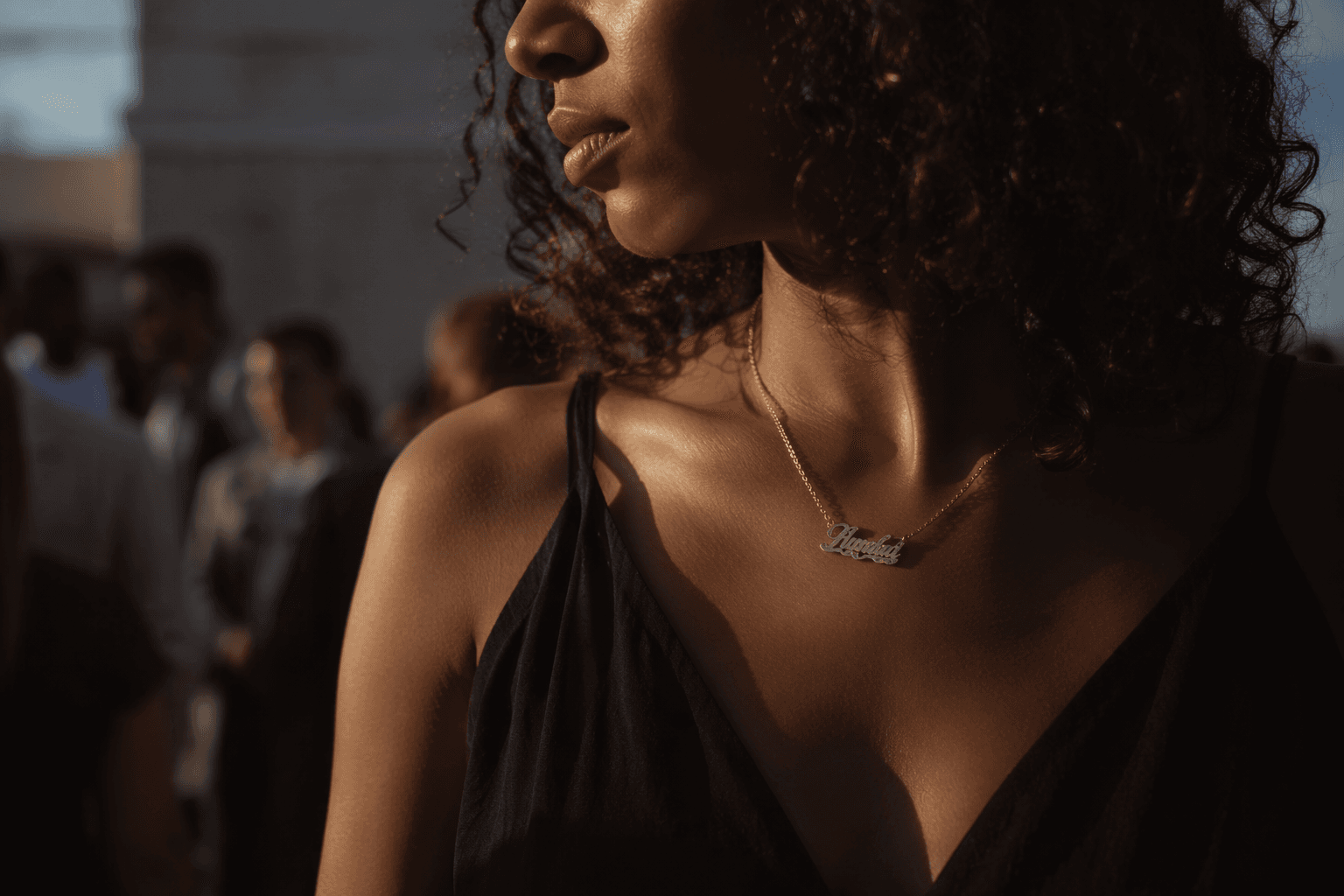
A name necklace tells the story outright. An acrostic jewel does something more seductive: it hides the message in the stones, so the piece reads first as color, sparkle, and line, and only then as a word. That is why the format still feels fresher than surface engraving, and why historic examples like REGARD, DEAREST, and SOUVENIR keep resurfacing as the sharpest version of personalized jewelry.
How the code works
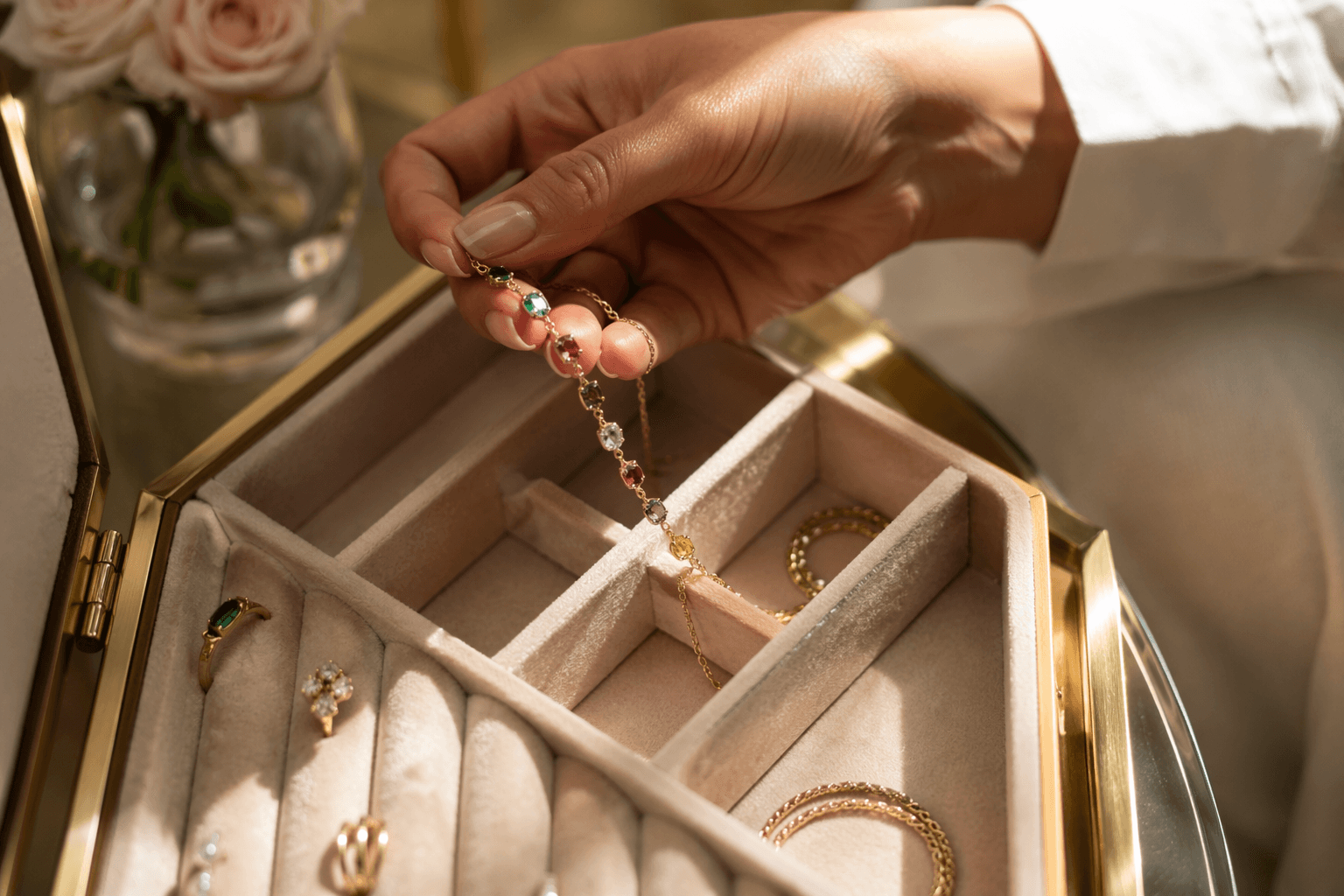
Acrostic jewelry spells a word with the first letter of each gemstone in the piece. In the classic REGARD example, ruby, emerald, garnet, amethyst, ruby, and diamond do the work of language, while the jewel itself still looks like a composed row of fine stones. The buyer chooses the word, the word determines the gem sequence, and the sequence becomes the design.
That is the reason acrostics sit in a different category from monogramming. A monogram sits on the surface; an acrostic builds meaning into the material. The effect is intimate without being obvious, which is why the format has always suited people who want the pleasure of personalization without the bluntness of having a name or date spelled out in plain view.
From French court to Georgian England
Gemological Institute of America credits Jean-Baptiste Mellerio, who lived from 1765 to 1850 and designed for Marie Antoinette and the French court, with inventing acrostic jewelry. The style developed in France in the early 19th century, then spread to England, where it gained broad popularity in Georgian England in the 1820s and 1830s before staying fashionable through most of the Victorian era, from 1837 to 1901. That timeline matters because acrostic jewelry belongs to a culture that prized coded feeling long before modern shorthand made private communication easy.
It also sits naturally beside the sentimental and mourning jewelry of the Georgian and Victorian periods. Those decades used initials, inscriptions, hairwork, and symbolic motifs to keep private emotion close to the body, and acrostics fit that world perfectly. The form could carry romance, grief, loyalty, or remembrance without announcing itself to anyone who did not know the gemstone alphabet.
Napoleon Bonaparte reportedly commissioned acrostic jewels for family members, which gives the category a political as well as personal reach. In other words, this was not just a parlor game for lovers. It was a courtly language of affection and allegiance, written in stones rather than ink.
Joséphine’s bracelets remain the clearest example
The most documented acrostic jewels are Empress Joséphine’s two gemstone-and-diamond bracelets, now held by the Danish Royal Property Trust. In 1806, Napoleon presented the pair to Joséphine as a keepsake after adopting her children, Eugène and Hortense. The bracelets are set with colored gemstones and diamond rosettes, and later exhibition material from Chaumet treated them as a decipherable message, with the initials in the stones spelling the children’s names.
Rapaport likewise reports that Napoleon commissioned acrostic bracelets from Nitot, including one that spelled Hortense. That consistency across royal collection records and later jewelry reporting is part of what gives the story its authority: the jewels are not simply decorative relics, they are legible objects with a very specific private purpose. In a category built on hidden meaning, Joséphine’s bracelets show exactly how the code works when it leaves the court and enters the archive.
The appeal today is the same one it had then. The message is present, but only for those who can read it. Everything else remains beautifully opaque: colored stones, diamonds, and a bracelet that looks elegant even to someone who never decodes a single letter.
Why the format feels modern again
Contemporary jewelers keep returning to acrostics because the format still solves a very current problem: how to make something personal without making it look literal. Jessica McCormack, Lulu Frost, Chaumet, Cartier, and Erica Weiner have all worked with the idea in modern form, and that range tells you the concept travels well, from high jewelry houses to smaller independent makers. The design logic never changes, but the setting does, and that is where the fashion value lies.
Chaumet’s presentation of Joséphine-era acrostic bracelets shows the cleanest museum-to-market continuity. The historical piece does not sit behind glass as a dead artifact; it becomes a template for how coded jewelry can still look desirable now. Erica Weiner’s modern acrostic ring page pushes the point further, since orders can take about six weeks to make, a detail that signals real bespoke demand rather than a novelty trend.
For anyone choosing one today, the best words are the ones that make a balanced sequence of stones and read cleanly in the acrostic alphabet. Historic touchstones like REGARD, DEAREST, and SOUVENIR work because they feel complete as words and graceful as gem combinations, with enough variation to make the line of stones visually interesting. The result is jewelry that gives you both pleasures at once: the look of a finely composed piece and the private charge of a message hidden inside it.
That is why acrostic jewelry still matters. It turns personalization into design logic, and design logic into a secret that wears like elegance.
This article was produced by Prism’s automated news system from verified source data, official records, and press releases, then run through automated quality and moderation checks before publishing. The system is built and supervised by the people who set the standards it runs under. Read our full AI policy.
Did this article answer your question?